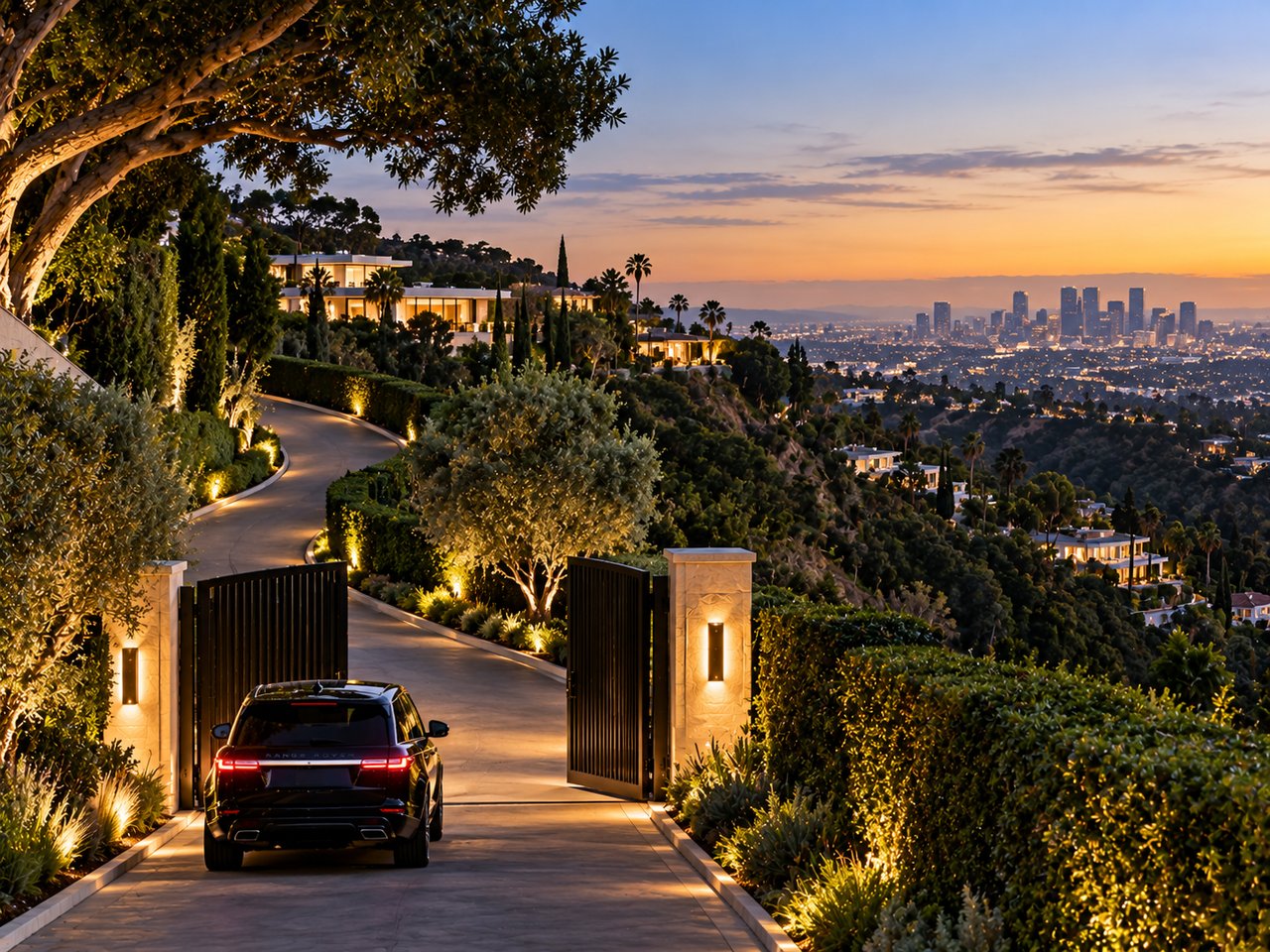
Redefining Luxury: Why Entry Trumps Expansion
Significant transactions in this market rarely surface through public listings. Deals worth tens of millions close through relationships and referrals, well before any property appears on the open market. Christina Pope at Sotheby's International Realty and EliteResidenceInternational.com works within this circle, where knowing what actually drives value comes before any discussion of access points or positioning.
The Evolution of High-End Buyer Priorities
The definition of luxury has shifted and price thresholds alone no longer define it. Lifestyle integration, design integrity, and location dynamics now shape what qualifies as exceptional.
Buyers in 2026 want homes that fit their daily lives, not properties built around occasional entertainment. Proximity to cultural venues, private services, and business centers now carries equal weight to physical property dimensions. Walkability to high-end dining, elite golf courses, and private marinas has become as meaningful as waterfront access itself.
A 2023 report from Wealth-X confirmed that high-net-worth buyers increasingly value curated experiences and exclusive community access over material possessions. Remote work patterns and a genuine desire for human connection in an increasingly digital world have accelerated this shift. Buyers expect both seclusion and accessibility from the same property — not a compromise between the two.
What Square Footage Cannot Buy
Raw size fails to capture what affluent buyers are actually after. A well-considered 5,500-square-foot residence can feel far more luxurious than a poorly configured 7,000-square-foot home. Ceiling height, natural light, room proportions, and how spaces flow into each other determine livability far more than dimensions on a floor plan.
Square footage is a starting point, nothing more. It says nothing about sightlines, setbacks, neighboring structures, or how the primary living spaces actually feel. Privacy is a good example of this. One property may sit behind mature landscaping with genuine separation from adjacent homes, while another, with a comparable lot size, remains fully exposed to passing traffic.
Location qualities cannot be manufactured through expansion. Certain view corridors, architectural provenance, exceptional privacy, or favorable orientations create a scarcity that no additional square footage can replicate. Two homes within the same community can have different traffic exposure, different elevations, and entirely different relationships with the properties around them.
The most desirable homes balance convenience with privacy — allowing residents to reach world-class dining, shopping, and culture without sacrificing personal space. School district boundaries alone create price differentials of USD 50 to USD 100 per square foot between homes that are otherwise nearly identical. These location advantages cannot be acquired through interior upgrades or property additions.
Access as the Ultimate Amenity
Access works as a compound advantage. Proximity to parks, beaches, trails, walkable districts, and curated community resources has become an extension of the home itself. Buyers treat these connections as lifestyle infrastructure, not optional extras.
Multi access point configurations offer operational flexibility that single-entry estates simply cannot match. For high-net-worth individuals managing demanding schedules, connectivity to multiple major thoroughfares reduces real time costs. Which access point a property offers determines both how smoothly daily life runs and how well the asset holds its position at resale.
The access point list reaches beyond physical entries. It includes cultural centers, business districts, private schools, and service networks. Properties offering unobstructed access to these resources maintain demand across economic cycles. Buyers who understand this prioritize location features that protect equity during market shifts — aware that specific neighborhood advantages support strong buyer interest regardless of broader conditions.
Ridge Route's Strategic Advantage in Bel Air
"Location, location, location." — Harold Samuel, Founder of Land Securities
Few corridors in Los Angeles demonstrate this principle as clearly as Bel Air's Ridge Route. Positioned between some of the city's most sought-after neighborhoods, the route offers something that neither price nor square footage can manufacture genuine geographic advantage.
Gateway Position Between Key Neighborhoods
Ridge Route sits at a natural intersection point, offering residents efficient connections to Beverly Hills, Westwood, and the broader Westside. This placement is not incidental. Properties along this corridor benefit from proximity to both the quiet seclusion expected in Bel Air and the cultural and commercial energy of adjacent neighborhoods. Buyers who understand location fundamentals recognize that a home's relationship to surrounding communities shapes daily life far more than its floor plan does.
Limited Supply and Controlled Development
Bel Air has long maintained tight restrictions on new development, and Ridge Route properties reflect that reality. The combination of hillside terrain, existing estate lots, and neighborhood preservation efforts keeps inventory genuinely scarce. Properties here do not compete in a crowded field. Scarcity of this kind rooted in geography and regulation rather than marketing sustains demand through market cycles that erode value elsewhere.
Historical Property Values Along the Route
Ridge Route properties have held their ground through fluctuating market conditions precisely because their advantages are fixed. View corridors, elevation, and multi-directional access cannot be replicated in another zip code. Homes along this stretch have consistently attracted buyers who value what cannot be added through renovation positioning that delivers both lifestyle quality and long-term equity protection.
The True Cost of Distance: Measuring What Matters
Proximity in luxury real estate is rarely what a map suggests. High-net-worth buyers measure distance through daily time allocation, opportunity costs, and lifestyle preservation. A property ten minutes from key destinations operates entirely differently from one demanding a thirty-minute commute, regardless of comparable square footage or architectural distinction.
Time Value for High Net Worth Individuals
Executive schedules leave little margin. Saving 15 to 20 minutes each day reshapes family rhythms, creating room for early meetings, fitness routines, or uninterrupted evenings at home. These gains accumulate over weeks and months, delivering the kind of lifestyle benefits no interior feature can replicate.
Properties offering reduced commute friction attract professionals whose earning capacity makes time their scarcest resource. Easy commute options save time and attract working professionals, increasing both demand and property value. The Ridge Route's multiple access point configuration speaks directly to this — residents can reach business districts, airports, and cultural venues through routing that adjusts to real traffic conditions rather than theoretical ones.
Access to Cultural and Business Centers
Properties near metro stations, highways, expressways, airports, and business hubs appreciate more quickly than isolated estates. The premium reflects genuine buyer preference, not speculation. Luxury buyers increasingly value the balance between career demands and quality time for family, recreation, and relaxation.
Cultural institutions, fine dining, and entertainment venues serve as lifestyle infrastructure for affluent buyers. Proximity to these resources changes how residents move through each day, removing friction between professional obligations and personal enrichment. The access point a property offers determines how smoothly those transitions happen.
Connectivity to Private Schools and Services
Educational proximity carries measurable financial weight. Homes within a ten-minute drive of elite private schools consistently sell for 8 to 15 percent more than comparable properties located farther out. Families understand this well shorter distances mean students can participate fully in extracurriculars and community activities, not simply attend class.
Map distances routinely mislead buyers unfamiliar with local traffic realities. A property listed as fifteen minutes from school may require thirty-five minutes during morning drop-off. Properties near respected private schools experience increased buyer demand, supporting stronger resale potential and long-term market stability. The access point list matters because it reflects real-world travel times, not the optimistic assumptions of a mapping application.
Property Liquidity and Resale Considerations
Liquidity in real estate depends on market depth, asset quality, and location characteristics. Properties in prime areas prove easier to sell and hold their value even during market slowdowns, while rental demand remains stable. Well-positioned assets maintain liquidity through slower cycles, while poorly chosen properties struggle regardless of what the broader market is doing.
Listings near top academies and cultural centers attract multiple offers or sell quickly, particularly when homes offer modern amenities and move-in readiness. Homes near respected institutions hold value better during downturns, providing a reliable floor under luxury pricing. The ability to generate stable rental income during a holding period adds further flexibility an advantage that poorly positioned properties simply cannot offer.
Multiple Access Points vs Single Large Estates
Estate configuration shapes daily life in ways floor plans rarely reveal. Properties built around multi access point systems offer advantages that single-entry estates simply cannot match, regardless of acreage or architectural distinction. Better connectivity translates directly to higher property value, as buyer demand follows convenience across every market segment.
Primary and Secondary Entry Options
Primary entry routes establish daily circulation patterns. Secondary access points add a layer of reliability that protects residents and property operations when disruptions arise planned or otherwise. A single point of entry leaves little room for error; any blockage, whether from construction, an event, or a traffic incident, creates complete disruption. Properties with dual-entry configurations maintain full functionality when one route becomes unavailable.
The practical benefits extend well beyond emergencies. Morning school runs, service appointments, and guest arrivals all flow more naturally when household traffic distributes across separate entry points rather than funneling through one gateway. From executives managing demanding schedules to families juggling multiple daily commitments, this kind of flexibility holds broad appeal.
Separate Guest and Service Entrances
Privacy at this level of real estate requires more than gated driveways. Discrete circulation systems allow guest access and service delivery to occur simultaneously, without either intersecting the other. Catering teams, household staff, and maintenance crews move through dedicated routes, leaving resident and visitor spaces entirely undisturbed.
For those who love to entertain, the right home makes all the difference. If you are considering a purchase in the near future or beginning your search, Christina Pope would be delighted to help you find a property designed for elevated living and effortless hosting. Christina Pope  310-404-9931
 [email protected]
Connectivity to Multiple Major Thoroughfares
Property appreciation rates respond to infrastructure connectivity more reliably than to interior finishes or design upgrades. Expressways and well-developed road networks connect residential addresses to business districts efficiently, reducing travel time and supporting long-term growth in surrounding areas. Properties positioned near multiple major roads attract diverse buyer profiles, from those commuting to business centers to those seeking straightforward access to airports and cultural venues.
Efficient road networks ease congestion and improve last-mile connectivity, a detail that registers clearly for buyers making daily use of these routes. Locations served by multiple thoroughfares perform consistently across market cycles precisely because they serve varied buyer needs at once. The access point list a property offers ultimately determines both its day-to-day usability and its long-term positioning within a shifting transportation infrastructure.
How Elite Agents Position Ridge Route Properties
Significant transactions in this market rarely appear on public listing platforms. They move through relationships, quietly, long before a property is formally presented. Christina Pope works within these circles, drawing on her background in Dubai's luxury market and her experience across Beverly Hills, Hollywood Hills, and Bel Air to identify buyers who already understand what location fundamentals mean for long-term value.
Christina Pope's Approach to Luxury Real Estate
Relationships come before transactions that are the foundation of Christina's approach. Her work spans luxury residential estates, branded residences, development opportunities, and strategic investments across Los Angeles and international markets including Dubai and the South of France. That breadth gives her a vantage point most agents simply do not have — one that allows her to spot opportunities aligning with both how a client wants to live and where they want their investment to stand years from now. She has represented CEOs of major corporations, influential figures in the fashion industry, and high-net-worth families working through complex cross-border transactions.
Identifying Buyers Who Understand Location Value
Elite agents present luxury properties as experiences, not data sheets. Bedroom counts and square footage are baseline expectations for buyers at this level; they are never the deciding factor. What Christina emphasizes instead are the qualities that cannot be added later: which access point configurations serve the property, how it connects to cultural centers, and what the surrounding neighborhood actually delivers day to day. Her clients understand that location characteristics are fixed, no renovation changes them and that high-end buyers consistently seek homes positioned well within desirable areas, not simply homes that are large.
The EliteResidenceInternational.com Network
EliteResidenceInternational.com places Christina's clients within the full reach of the Sotheby's International Realty network, opening doors to properties across the globe. Her years in Dubai gave her a genuine fluency in what upscale living looks like at an international level the hallmarks that discerning buyers expect and the nuances that distinguish a truly exceptional property from one that merely appears exceptional. Many of the opportunities she presents never reach public markets at all.
Conclusion
What truly determines value along Bel Air's Ridge Route has little to do with square footage. Ridge Route properties hold their appeal through connectivity to cultural centers, business districts, and thoroughfares that single-entry estates simply cannot match. Strategic buyers understand this. Location characteristics and multi-access configurations protect equity through shifting market conditions in ways that additional rooms and expanded square footage never will.
Christina Pope at Sotheby's International Realty and EliteResidenceInternational.com works closely with clients who recognize this distinction, matching them with properties that deliver both the lifestyle they are looking for and the long-term investment footing they expect. For those ready to move beyond measuring luxury by the foot, the conversation starts with understanding what actually drives value in Los Angeles real estate.
Key Takeaways
In luxury real estate, strategic positioning outweighs property size. Bel Air's Ridge Route properties demonstrate how multiple access points, connectivity to key destinations, and location advantages create more value than sprawling square footage alone.
• Access trumps expansion: Elite buyers prioritize properties with multiple entry points and connectivity to cultural centers, business districts, and private services over larger single-entry estates.
• Time is the ultimate luxury: Properties reducing daily commute times by 15-20 minutes deliver compounding lifestyle benefits that no interior amenity can replicate for high-net-worth individuals.
• Location creates irreplaceable value: Proximity to top private schools commands 8-15% price premiums, while properties near major thoroughfares maintain stronger liquidity during market downturns.
• Multi-access configurations provide operational flexibility: Separate guest and service entrances, plus connectivity to multiple major roads, offer redundancy and convenience that single-entry estates cannot match.
The shift from measuring luxury by square footage to evaluating it through strategic access points reflects a fundamental change in how sophisticated buyers assess property value. Ridge Route's positioning demonstrates that the best luxury properties don't compete on "more space"—they compete on "better living" through superior connectivity and location advantages that cannot be replicated through expansion.
FAQs
Q1. How do luxury real estate buyers prioritize location over property size? High-net-worth buyers increasingly focus on strategic positioning rather than square footage alone. They value properties that offer multiple access points to cultural centers, business districts, and private services. Time savings from reduced commutes, proximity to elite schools, and connectivity to major thoroughfares create lifestyle benefits that additional square footage cannot replicate. Properties with superior location characteristics maintain stronger resale value and liquidity across market cycles.
Q2. What makes Ridge Route properties in Bel Air strategically valuable? Ridge Route properties offer exceptional connectivity advantages through multiple access points and proximity to key destinations. Their positioning provides efficient routing to business centers, cultural venues, and private schools while maintaining the privacy and exclusivity expected in luxury real estate. This combination of accessibility and seclusion creates value that isolated estates cannot match, regardless of their size.
Q3. How much does proximity to private schools affect luxury property values? Homes located within a ten-minute drive of elite private schools typically sell for 8 to 15 percent more than comparable properties farther away. This premium reflects both daily convenience and stronger resale positioning. Proximity eliminates lengthy commutes and allows families to participate fully in school activities, making these properties consistently attractive to buyers with school-age children.
Q4. Why do multiple access points matter more than single-entry estates? Properties with multiple access points provide operational flexibility that single-entry estates cannot offer. They allow for separate guest and service entrances, connectivity to different major thoroughfares, and redundancy during traffic disruptions or emergencies. This configuration improves daily convenience, protects against service interruptions, and appeals to buyers managing complex schedules and household operations.
Q5. How does Christina Pope position luxury properties differently? Christina Pope focuses on identifying buyers who understand that location characteristics cannot be replicated through expansion. Rather than emphasizing square footage, she highlights strategic advantages like access point configurations, connectivity to cultural centers, and neighborhood composition. Her approach recognizes that sophisticated buyers prioritize properties offering both immediate lifestyle benefits and long-term investment value through superior positioning.