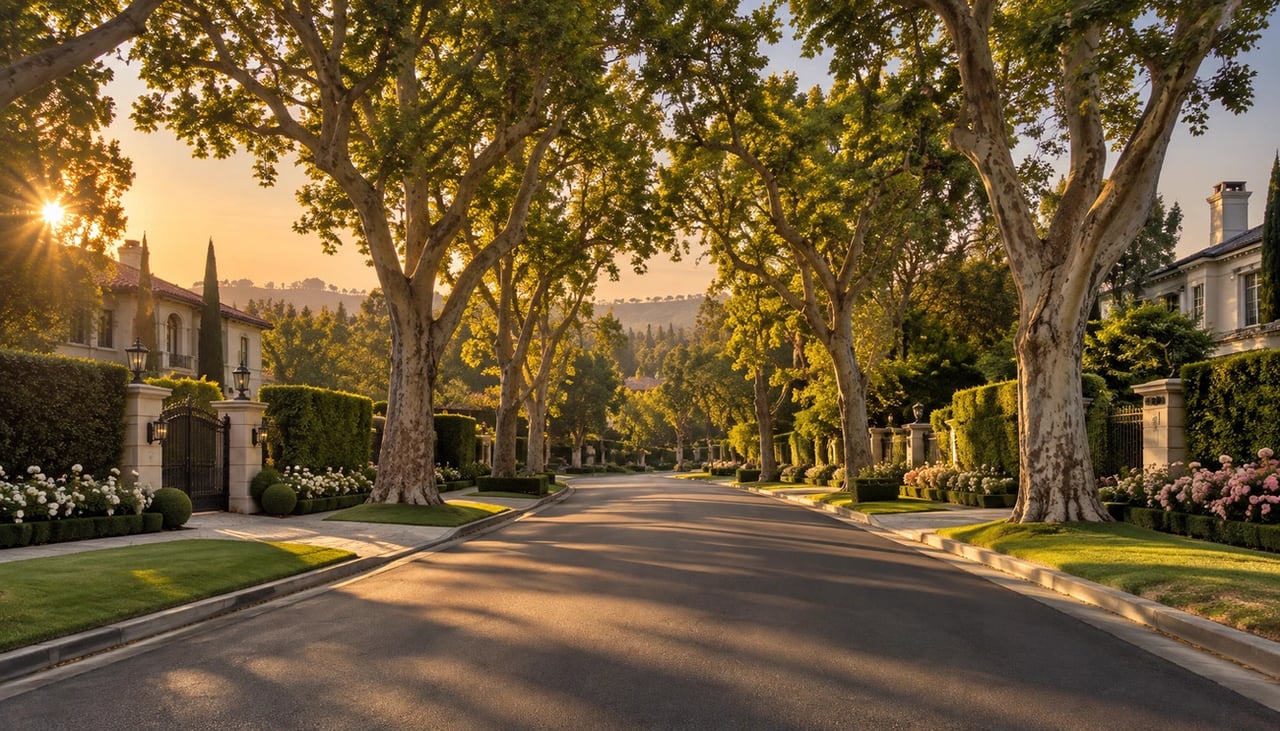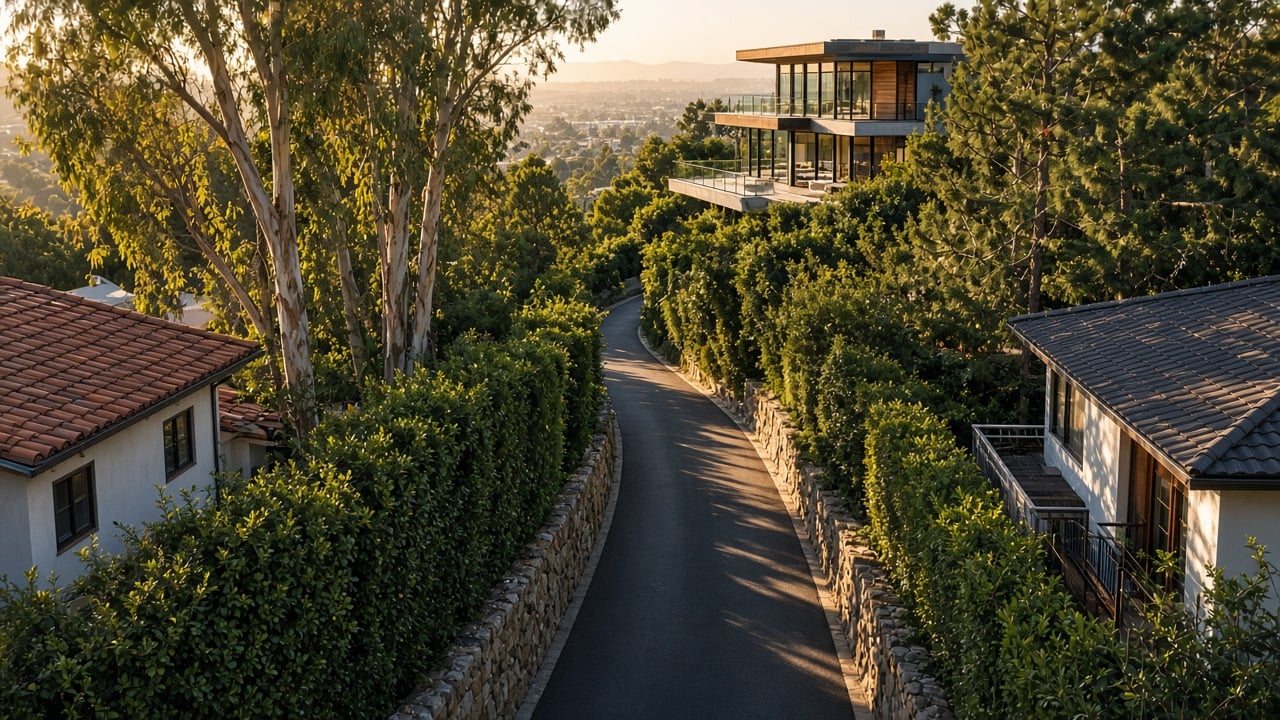
Most buyers in the Hollywood Hills still judge a house from the street. That habit is getting expensive. The listings that look like a driveway and nothing else are often the ones with the quietest living rooms, the most usable terraces, and the least headlight wash at night.
A Hollywood Hills flag lot is not a novelty. It is a parcel that meets the street with a thin strip of land (the pole) and opens into a larger pad behind other homes (the flag). From the curb it can look like an afterthought. From the house, it can feel like the street disappeared. Buyers who understand that gap are taking the privacy that street-front trophy homes keep promising and rarely deliver.
Christina Pope has walked enough of these poles to treat the approach as the first room of the house. If the driveway is the only thing you can see, you are not looking at a compromised listing. You are looking at a different product.
What a Flag Lot Actually Is
The name is literal. On a survey, the lot looks like a flag on a stick. The pole is the access: a driveway, sometimes shared, often steep, almost always narrower than the street-front neighbor's motor court. The flag is where the house, pool, and outdoor rooms sit, set back behind the first row of homes.
That setback is the entire thesis. Road noise drops. Passersby stop existing. Guest headlights hit someone else's garage, not your glass. In a neighborhood built on views, the better flag lots add a second amenity that views cannot buy: being unseen while you use them.
The Hills produced this shape for a practical reason. Hillside streets are finite. Large original parcels got cut so a rear pad could still reach the road. The result is a map full of skinny stems leading to serious houses. Tour vans stay on the boulevard. Owners live off it.
The Loophole Buyers Keep Missing
The loophole is not illegal. It is optical.
Street-front hillside homes sell presence. They announce architecture, scale, and sometimes the owner's taste before the gate even opens. A flag lot sells the opposite. It withholds. The market still under-reads that withholding as a defect, especially when the pole looks too tight for a car, let alone a life.
That misread is where the opportunity sits. Privacy in the Hills is now priced like a finish. Gated streets, hedges, and window films are all attempts to buy back what a well-placed flag already has. The buyers who will win the next cycle are the ones who stop paying a premium to be displayed and start paying for a lot that refuses to display them.
There is a catch, and it is not the driveway's manners. The catch is whether the pole can support the house you want to own, renovate, or rebuild.
Nine Feet on Paper, Twenty Feet in Practice
Los Angeles zoning is more permissive on driveway width than first-time hillside buyers expect. Under the city's single-family hillside development standards, every access driveway must be at least nine feet wide. That is the number that makes a paper-thin pole look legal on a listing sheet.
Fire access is a different conversation. For new construction and many additions, the Los Angeles Municipal Code also asks whether the lot has a continuous paved roadway at least 20 feet wide from the driveway apron to the hillside-area boundary. If the route is narrower, permits often need Zoning Administrator relief. Los Angeles Fire Department apparatus access is typically read as an unobstructed 20-foot fire lane with 13 feet 6 inches of vertical clearance, and the building's first-story walls generally need to sit within 150 feet of an approved access road.
That split is the real due diligence. An existing house on a skinny pole may be perfectly livable. The same pole can become the most expensive line item on a remodel if you assume nine feet of zoning width equals twenty feet of fire access. Buyers who skip that distinction fall in love with the pad and stall in plan check.
How to Underwrite the Pole
Treat the driveway as the asset, not the apology. Before you write an offer on a Hollywood Hills flag lot, the pole has to answer a short list of unromantic questions.
Title, not vibes
Confirm the lot was legally created. Confirm whether the pole is owned in fee or used through an easement. Shared driveways need recorded rights, not a handshake and a gate code. Maintenance, gates, drainage, and utility lines should be in writing. If they are not, price the fight.
Grade, width, and turnaround
Walk it. Drive it after dark. Measure the pinch points. A pole that works for a daily driver can still fail a fire truck, a concrete pump, or a furniture delivery. Dead-end drives often need an approved turnaround. If the only place to reverse is the motor court, that court is now infrastructure.
Guests, trash, and construction
Street parking in the Hills is not a plan. Ask where two cars sit when you have four people over. Ask how trash gets out. Ask where a dumpster lives during a kitchen job. Flag lots that feel serene on a Tuesday can feel hostile the first time a contractor cannot stage.
Fire, not just the view corridor
Much of this terrain sits in a wildland-urban mix. CAL FIRE's defensible-space rules put the first five feet around a structure in a different category than the rest of the yard. On a tight flag, that ember-resistant zone competes with landscaping, decks, and the privacy planting that made you want the lot. Budget for both.
Flag Lot vs. Street-Front Hillside Lot
Street-front hillside lot | Flag lot | |
|---|---|---|
What the street reveals | Architecture, scale, sometimes the living room | A driveway, a gate, maybe a mailbox |
Privacy from the road | You buy it with hedges, glass, and discipline | The lot shape does most of the work |
Guest arrival | Obvious | Needs lighting, wayfinding, and a place to park |
Remodel risk | Access is usually simpler | The pole can decide what you are allowed to build |
Buyer pool | Broader, more impulse | Narrower, more intentional |
Resale story | Curb appeal does the talking | You have to sell the pad, not the approach |
The table is the strategy. A street-front house is a marketing object. A flag lot is a living object. If you want to be seen, do not talk yourself into a pole. If you want to disappear without leaving the city, stop overpaying for frontage.
Who This Play Is For
This is not for the buyer who needs the house to photograph from the street. It is for the principal who works from home, entertains in the backyard, and would rather the tour vans and the headlights stay on the boulevard.
It is also for anyone comparing the Hills to Bel Air or Beverly Hills and assuming privacy only comes with a named gate and a guard. Some of the quietest outdoor rooms in Los Angeles sit behind driveways most buyers never pull into. The same hillside instinct shows up in Christina Pope's Tower Grove sale: discretion still commands the number. A Hollywood Hills flag lot is that instinct at a different scale. Less theater at the curb. More house behind it.
FAQ
What is a flag lot in the Hollywood Hills?
It is a parcel that reaches the street through a narrow strip of land and opens into a larger buildable area behind other homes. The skinny driveway is the pole. The house and yard sit on the flag. The layout is common in hillside tracts where a rear pad needed legal street access after a lot split.
How wide does a Hollywood Hills driveway have to be?
City hillside standards set a minimum access driveway width of nine feet. That is not the same as fire-apparatus access, which is commonly read as 20 feet of unobstructed width with 13 feet 6 inches of vertical clearance. Existing homes may function on a narrower pole. New construction and many additions can trigger the wider standard or a Zoning Administrator process.
Can you remodel a house on a Los Angeles flag lot?
Often yes, and the pole decides the scope. Additions, grading, and rebuilds in the hillside area can require a 20-foot continuous paved roadway to the hillside boundary, or relief from that rule. Measure the driveway, confirm fire access, and talk to planning before you price a renovation as if the lot were street-front.
Do flag lots have shared driveway easements?
Some do. Some own the pole in fee simple. Title should show whether the access is exclusive, shared, or granted by easement, and who pays to maintain gates, paving, and drainage. If the recorded documents are thin, do not assume neighbor custom will survive a sale.
Are flag lots a bad investment in Los Angeles?
They are a narrower product, not a lesser one. The buyer pool is smaller because curb appeal is weaker and access is more technical. The trade is privacy, quieter outdoor rooms, and less exposure to the street. That holds value when you underwrite the pole. It fails when you buy the pad and ignore fire, title, and construction access.
For those who want privacy they can actually use, the right lot shape makes all the difference. If you're considering a purchase in the near future or beginning your search, I'd be delighted to help you discover spaces designed for elevated living and effortless hosting.
Christina Pope 📞 310-404-9931 ✉️ [email protected]