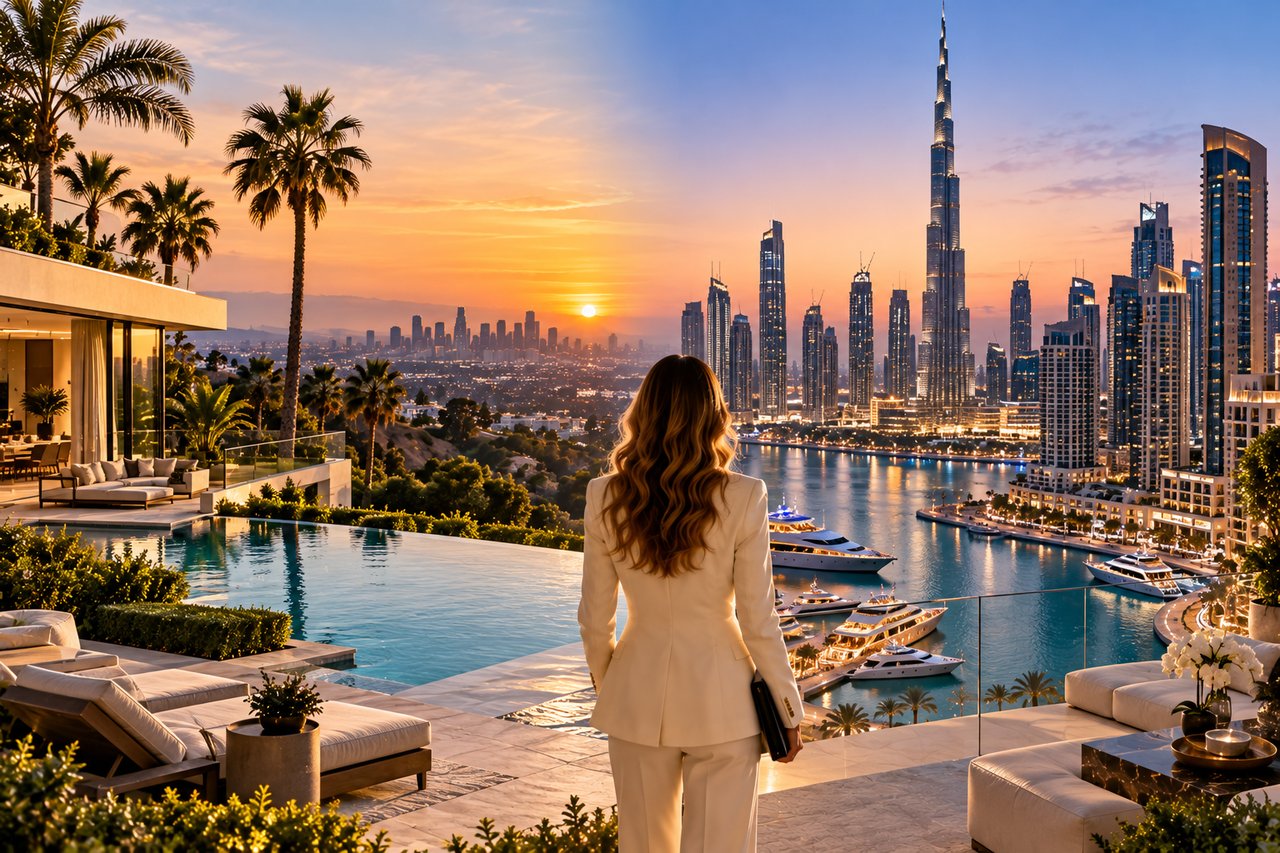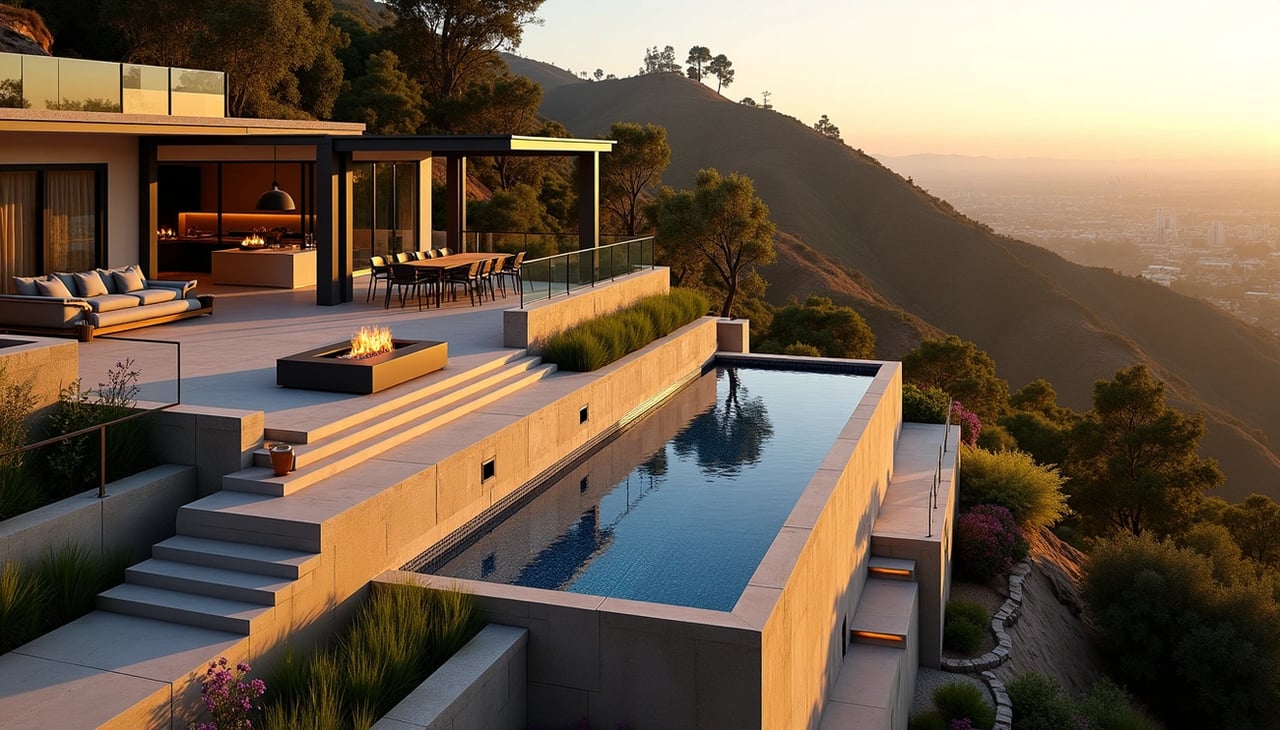
Hollywood Hills terracing converts steep slopes into valuable outdoor living spaces, though hillside home construction in Los Angeles typically costs double that of flat-land projects. Properties here face distinct challenges, particularly working within Very High Fire Hazard Severity Zones that mandate ignition-resistant materials and meeting geotechnical requirements for slope stability and drainage. Smart terracing creates functional outdoor rooms that capture views, establish privacy, and expand daily living while protecting long-term value. This guide covers evaluating your property's potential, selecting construction methods that ensure stability, designing multi-level outdoor spaces, and maintaining systems that preserve both safety and investment in the Hollywood Hills microclimate.
Evaluating your hillside property for terracing potential
Reading natural grade changes and slope angles
Slope measurement determines construction feasibility and cost projections. A 15% grade, where elevation changes more than 1.5 feet over a 10-foot horizontal distance, requires specialized attention to stability and drainage issues. Grades approaching 25% present significant challenges and often necessitate preservation rather than development. Field measurements using an 8-foot board reveal grade quickly: a 14-inch elevation change indicates 15% grade, while a 2-foot change signals 25%.
Topographic maps offer another assessment method. When 10-foot contour lines appear less than 65 feet apart horizontally, the slope exceeds 15%. Contour spacing of 40 feet between lines indicates the 25% threshold. Gentle slopes under 10% accommodate standard construction, while grades between 15% and 20% require stepped foundations and increased grading budgets. Slopes beyond 20% demand extensive earthwork, retaining walls, and stabilization measures.
Identifying optimal terrace locations for views
Existing flat areas within slopes minimize grading expenses and preserve natural terrain. Multiple shallow terraces maintain sightlines better than single deep drops that require view-obstructing railings. Properties sloping away from structures benefit from tiered designs that prevent tall retaining walls from dominating the foreground.
Natural features like prominent knolls and ridgelines guide placement decisions. Structures positioned to preserve these elements reduce cut-and-fill volumes while maintaining the hillside's visual character. South-facing slopes offer superior solar exposure, reducing heating costs and extending outdoor season usability.
Understanding soil conditions and drainage patterns
Los Angeles hillside construction on slopes steeper than 33% requires geotechnical reports mandated by the Department of Building and Safety. Engineers conduct borings and lab tests to assess bearing strength, drainage capacity, and landslide risk. Slope factor of safety must exceed 1.5 for static loads, with higher values required in seismic zones.
Soil composition varies significantly across Hollywood Hills properties. Colluvium, loose rock and dirt that shifts easily, appears frequently. Expansive clay swells with moisture and shrinks when dry, exerting pressure on retaining structures. Shallow bedrock complicates excavation and drilling operations.
Heavy rainfall reveals water concentration patterns and erosion potential. Water flowing downhill too rapidly carries soil and destabilizes structures. Natural swales and drainage courses should be preserved rather than filled, incorporating them as integral design elements.
Working within setback and height restrictions
Setback requirements mandate minimum distances from slope crests and toes per California Building Code 1808.7. Foundations positioned too close to slope edges face permit denial. The Baseline Hillside Ordinance applies to R1, RS, RE, and RA zoned properties designated on the Department of City Planning Hillside Area Map. Residential floor area calculations use slope band analysis, with different FAR multipliers applied to terrain sections based on gradient.
Construction methods that create stable outdoor platforms
Excavation and grading strategies for hillside lots
Cut and fill operations create level building platforms on sloped terrain. Engineers excavate higher ground and redistribute that material to raise lower areas, reducing external soil transport costs. Fill compaction must reach 90-95% relative density to prevent long-term settlement. Slopes under 10% accommodate standard grading, while grades between 15% and 20% require stepped foundations and specialized equipment maneuvering. Sites exceeding 20% demand extensive earthwork and stabilization techniques to control erosion during construction.
Terracing breaks steep slopes into multiple flat levels, distributing soil pressure more evenly across retaining structures. Spacing between terrace walls should equal at least double the wall height to maintain proper pressure distribution. Ground compaction equipment stabilizes bases before wall installation, preventing post-construction shifting after rainfall.
Retaining wall systems and material options
Mechanically stabilized earth systems combine geogrid reinforcement with wall blocks, resisting internal shear more effectively than gravity walls alone. These solutions cost less than conventional concrete walls through reduced fill requirements and allowance of on-site soils. Concrete interlocking blocks with built-in setback provide strength on gradients, forming stable stepped systems with minimal shifting. Geogrid selection depends on wall height: 3 Series handles applications up to 10 feet, while 5 Series supports structures exceeding 10 feet.
Foundation requirements for cantilevered decks
Cantilevered platforms extend 2-6 feet from primary support beams, costing $20-$50 per square foot. Doubled joists secured with lag bolts achieve 200 pounds per square foot load capacity. The industry applies a 1/3 cantilever ratio: for every foot of joist from house to beam, only one-third of that distance can overhang.
Waterproofing and drainage infrastructure
Grading must slope surfaces minimum 2% away from structures. Where physical barriers prevent proper drainage, French drains intercept groundwater through gravel-filled trenches with perforated pipe. Lots require 6 inches of fall within the first 10 feet from foundations.
Professional team selection
Geotechnical engineers conduct soil borings and stability analysis before construction begins. Luxury real estate decisions in Los Angeles unfold through trusted professional networks where discretion matches technical expertise. Christina Pope at Sotheby's International Realty (EliteResidenceInternational.com) connects discerning clients with specialized hillside contractors experienced in Hollywood Hills terracing projects.
Creating functional outdoor rooms on each level
Terracing divides slopes into distinct outdoor rooms, each serving specific functions while maintaining visual connection across levels.
Ground-level entertainment zones and fire features
Fire features anchor entertainment spaces and extend outdoor season usability into cooler months. Circular fire pits with surrounding Adirondack chairs create natural gathering spots, while fire tables at counter height provide surface area during non-fire times. Placement requires safe distance from structures and trees. Outdoor kitchens positioned on elevated platforms capture better views, with generous counter space supporting both weeknight dinners and weekend gatherings. Covered dining areas provide shade and structure for year-round functionality.
Pool terraces with safety and access considerations
Multi-level patio platforms provide access points at different elevations. Retaining walls support pool installations while preventing soil erosion. Proper drainage systems prove mandatory for hillside pool stability. Terracing creates opportunities for water features that interact with each level.
Garden terraces for landscaping and privacy
Eye-level planting on mid-level terraces simplifies maintenance access. Layered arrangements combine ground cover, mid-story shrubs, and taller backdrop plants for depth. Tall plantings on slopes function as privacy screens without requiring fencing.
Vertical circulation between outdoor spaces
Meandering paver walkways guide movement between levels while reinforcing design continuity. Strategically positioned pathways connect entertainment zones, dining areas, and garden spaces into cohesive outdoor living environments.
Long-term maintenance and value protection
Hillside terraces demand systematic care to protect both structural integrity and property value.
Drainage system upkeep and monitoring
Roof gutters and downspouts demand regular clearing, specifically during rainy season when debris accumulates. Terrace drainage ditches need frequent checks to ensure outlets remain open and functional. Subsurface drain weep-holes require clearing to prevent blockage during storms. After normal rainfall, terraces should drain completely within 2 days. Slow or standing water signals obstructions requiring immediate contractor assessment.
Plant selection for slope stability
Native grasses with fibrous root systems stabilize slopes effectively. Species like big bluestem, switchgrass, and prairie dropseed establish roots that prevent erosion. Full establishment takes 2-4 years. Multi-level planting, combining trees, shrubs, and groundcovers, intercepts precipitation before it hits soil, reducing surface erosion.
Material durability in Hollywood Hills climate
Concrete surfaces benefit from annual sealing, while pavers need joint sand replenishment. Natural stone requires periodic cleaning and sealing based on exposure.
Energy efficiency and water conservation
Monitor irrigation systems closely; minimal watering proves necessary during rainy months. Over-irrigation destabilizes slopes and wastes resources.
Impact on resale in luxury hillside market
Luxury real estate in Los Angeles operates through private conversations where discretion matches strategic value. Proper maintenance documentation strengthens positioning when opportunities arise. For those who love to entertain, the right home makes all the difference. If you're considering a purchase in the near future or beginning your search, Christina Pope at Sotheby's International Realty would be delighted to help you discover spaces designed for elevated living. Christina Pope 📞 310-404-9931 ✉️ [email protected]
Conclusion
Smart terracing converts challenging Hollywood Hills slopes into valuable outdoor living spaces, but success requires careful evaluation of grade, soil conditions, and drainage patterns. Strategic construction methods create stable platforms that expand usable square footage while protecting long-term investment. Proper maintenance of drainage systems and slope plantings preserves both structural integrity and resale value. Properties with well-executed terracing deliver functional outdoor rooms that capture views and extend daily living, particularly when guided by professionals experienced in hillside construction challenges.
Key Takeaways
Transform your steep Hollywood Hills property into valuable outdoor living space with these essential terracing insights:
• Evaluate slope angles carefully - Properties with 15-25% grades require specialized construction, while slopes over 25% need extensive stabilization measures and significantly higher costs.
• Invest in proper drainage systems - French drains, grading with 2% slope away from structures, and regular maintenance prevent costly water damage and soil instability.
• Use mechanically stabilized earth walls - Geogrid-reinforced retaining systems cost less than concrete walls while providing superior stability for multi-level terraces.
• Design functional outdoor rooms - Create distinct entertainment zones, pool terraces, and garden levels connected by meandering pathways for cohesive outdoor living.
• Maintain systems for long-term value - Regular drainage clearing, native plant establishment, and material sealing protect your investment and enhance resale potential in the luxury market.
Well-executed hillside terracing doubles construction costs but creates premium outdoor living spaces that capture Hollywood Hills views while ensuring structural stability and long-term property value protection.
FAQs
Q1. Is Hollywood Hills considered a wealthy neighborhood? Yes, Hollywood Hills is recognized as one of Los Angeles's most affluent areas, particularly neighborhoods like the Bird Streets which feature luxury estates and contemporary architecture. Properties in this hillside region command premium prices due to exceptional views, privacy, and proximity to entertainment industry hubs.
Q2. What makes the Bird Streets neighborhood so desirable in Hollywood Hills? The Bird Streets represents one of the most exclusive enclaves in Hollywood Hills, featuring streets with avian-themed names like Oriole, Blue Jay, and Robin Drive. This neighborhood is prized for its contemporary estates, modern architectural designs, and elevated positioning that maximizes panoramic city and canyon views above the Sunset Strip.
Q3. Why does hillside construction in Hollywood Hills cost significantly more than flat-land projects? Hillside construction in Los Angeles typically costs double that of flat-land projects due to specialized requirements including geotechnical engineering, extensive grading and excavation, retaining wall systems, enhanced drainage infrastructure, and compliance with Very High Fire Hazard Severity Zone regulations requiring ignition-resistant materials.
Q4. What slope percentage requires specialized construction attention in hillside development? Slopes with a 15% grade or steeper require specialized attention to stability and drainage. Properties approaching 25% grade present significant challenges often necessitating preservation rather than development, while slopes exceeding 20% demand extensive earthwork, retaining walls, and comprehensive stabilization measures.
Q5. How does proper terracing affect property value in the luxury hillside market? Well-executed terracing significantly enhances property value by transforming steep slopes into functional outdoor living spaces that capture views and expand usable square footage. Properties with properly maintained drainage systems, stable retaining structures, and thoughtfully designed multi-level outdoor rooms command premium prices in the Hollywood Hills luxury real estate market.