On Blue Jay Way, the view is rarely what decides a purchase. What decides it is the road that gets you home. The narrow, winding streets above the Sunset Strip often involve shared driveways and private easements, and these can quietly turn an exceptional house into an expensive problem.
Christina Pope, a Senior Global Real Estate Advisor with Sotheby's International Realty, sees this question on nearly every hillside purchase. This guide covers how to check legal access, inspect the route, and settle any risk before you close.
Step 1: Plan a Private Purchase on Blue Jay Way
Why many Bird Streets homes trade quietly
Many of the best opportunities in the Bird Streets are shaped in private conversations before anything goes public. Discretion affects when you hear about a home, how a showing is arranged, and how your offer is positioned.
Blue Jay Way has the full range, from early hillside houses to renovated Mid-Century homes to large contemporary builds. Each parcel deserves its own read, based on where it sits on the street, its privacy, and how you approach it.
Start with an access brief
Before a private showing, put together a short access brief that covers three things:
- Privacy. Gates, sightlines from the street, and how many homes share the approach.
- Arrival and timing. Household staff, guests, and evening access.
- Future use. Renovations, deliveries, and entertaining.
You can ask Christina for the access brief she uses with her buyers.
Before you tour a Bird Streets home
Request a private access review before you make an offer on a Bird Streets home. Call 310-404-9931 or email [email protected].
Step 2: Verify Legal Access Through Property Records
Title report, deed, and recorded access documents
Get the following from escrow:
- the preliminary title report
- the deed
- recorded easements, plats, and access agreements
- any amendments or releases
A driveway that looks established still isn't a legal right on its own.
Survey the driveway against the record
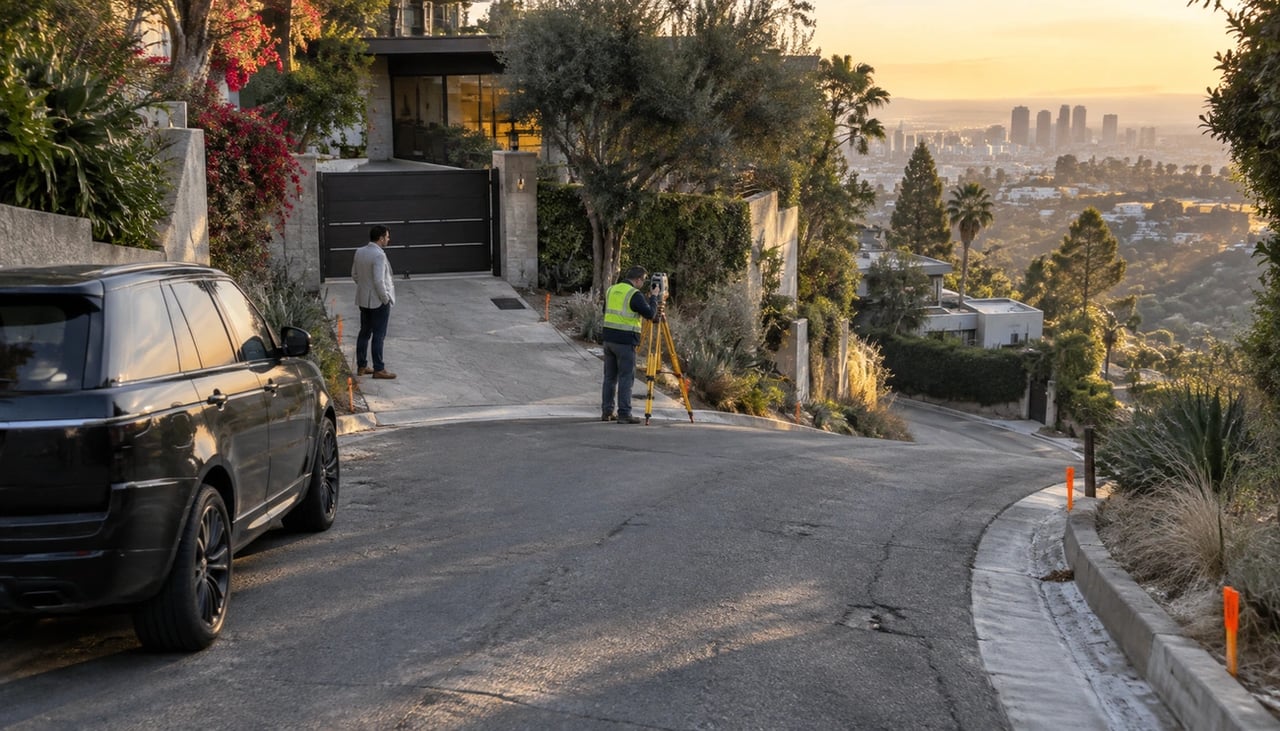
Have a surveyor compare the corridor described in the documents with the driveway as it actually runs on the ground. Lanes tend to drift over the years, so flag any gates, pinch points, and encroachments.
Public or private, segment by segment
Plats and title records show where the public street ends and the private road begins. A street's name, or the fact that people have used it for decades, doesn't prove the city maintains it.
Who can use the route, and for what
Check whether the documents limit access to named parcels, restrict commercial vehicles, or cover your guests, staff, and contractors.
Who pays for the road
California Civil Code Section 845 says that when several owners share a private road and no agreement covers its upkeep, they share maintenance costs in proportion to the use each one makes of it.
Review any road maintenance agreements, gate authority, unpaid contributions, and past disputes.
Have an attorney review any gaps
Unclear descriptions, missing maintenance terms, and conflicts between the survey and the title documents all carry risk. A real estate attorney can tell you what to require as a recorded correction before you close.
Step 3: Inspect the Full Route
Drive it day and night
Drive the full route in both directions, once in daylight and once after dark. Note where parked cars, oncoming traffic, or a gate affect how you get through.
Slope, turning space, parking, and gate clearance
Measure the steep sections, turning room, parking capacity, and gate operation. Confirm the current slope and clearance standards with the City of Los Angeles and your contractor, not with general rules of thumb.
Emergency access
Ask the Los Angeles Fire Department to confirm requirements for road width, turnarounds, and gate operation for that specific parcel.
Deliveries and construction
A route that works for daily life may not work for construction. Test it for delivery trucks and contractors before you plan any renovation.
Retaining walls and drainage
Look for cracking, movement, erosion, and standing water. Photograph and date everything you find.
Step 4: Resolve Access Risks Before Closing
10:52 AM
Issue found | What resolves it | What doesn't |
|---|---|---|
Unrecorded shared use | A recorded easement naming every affected owner, with a survey exhibit | A verbal assurance |
No maintenance terms | A recorded maintenance agreement | Relying on neighbor goodwill |
Survey and title mismatch | A corrected, recorded legal description | A credit alone |
Remaining repair cost | A price adjustment or credit | A promise to fix it later |
10:52 AM
Build deadlines into the contract
Set separate written periods for inspections, receiving title and survey materials, and attorney review. A complex hillside approach may justify more time than the standard window.
Keep an access file
Keep the owner's title policy, endorsements, exceptions, final survey, photos, and every recorded instrument together in one file. That file makes your eventual resale much easier.
Conclusion
In the Bird Streets, the buyers who do best treat access as seriously as they treat privacy and design. Review the title, the survey, the shared-road duties, and the route itself before you close. Clear documentation and recorded fixes protect how you live in the home and what it's worth when you sell.
If you're considering Blue Jay Way or anywhere else in the Bird Streets, Christina Pope offers buyers a private access review before they make an offer. Call 310-404-9931 or email [email protected]. You can also reach her through EliteResidenceInternational.com.
Frequently Asked Questions
Are Bird Streets roads public or private?
Both. Most named streets in the Bird Streets are public, but many homes are reached by a private lane or a shared driveway. Plats and title records show exactly where the public portion ends, so verify each piece of the route separately.
Who pays to maintain a shared driveway in Los Angeles?
Under California Civil Code Section 845, owners who share a private road with no written agreement split maintenance in proportion to their use. A recorded maintenance agreement overrides that default, so ask escrow for one early.
What should a title report show about access?
It should show recorded easements that name the parcels that benefit, the route, and the permitted uses, along with any plats, access agreements, and releases. A surveyor should then confirm the driveway actually runs inside that recorded corridor.
How do you fix an access problem before closing?
Get a real estate attorney's review, require a signed and recorded correction that names every affected owner, and negotiate a credit for any remaining cost. Then confirm your title policy covers the corrected access.
Can someone review access on a Bird Streets home before I make an offer?
Yes. Christina offers buyers a private access review that checks the recorded easements, the shared-road duties, and the route itself before they make an offer. Call 310-404-9931 or email [email protected].