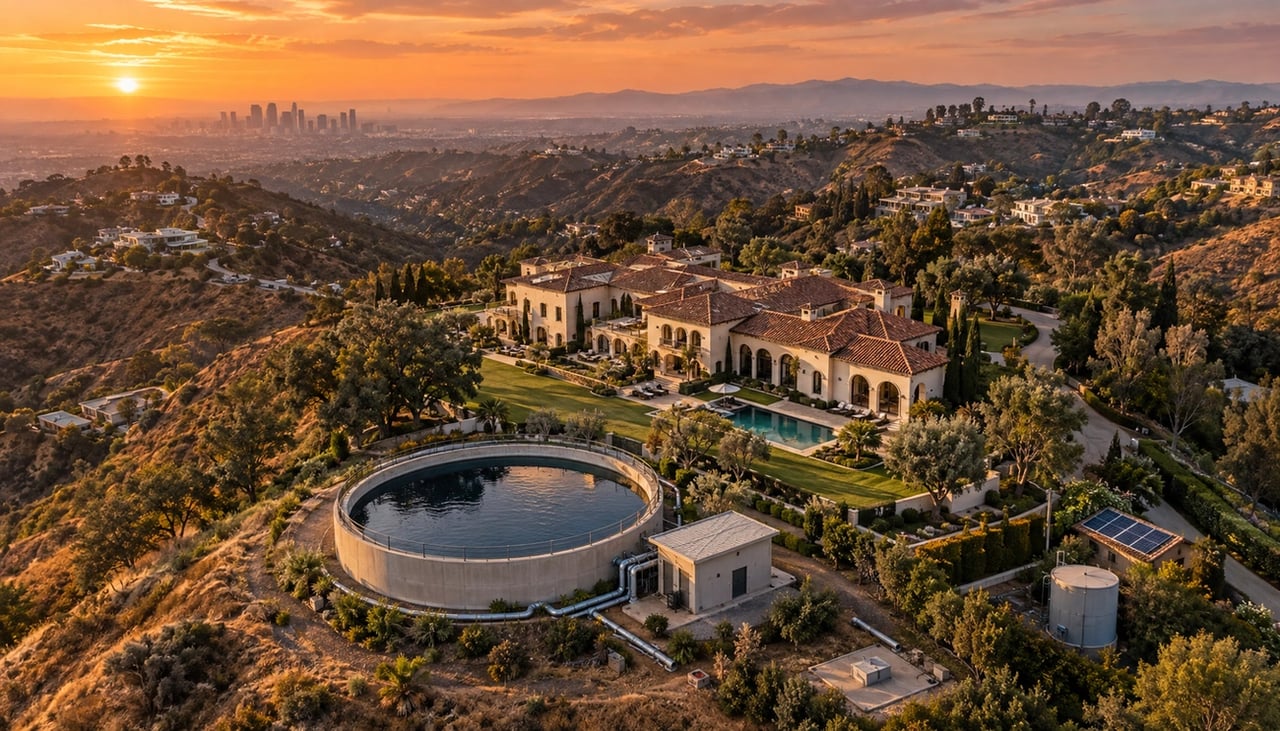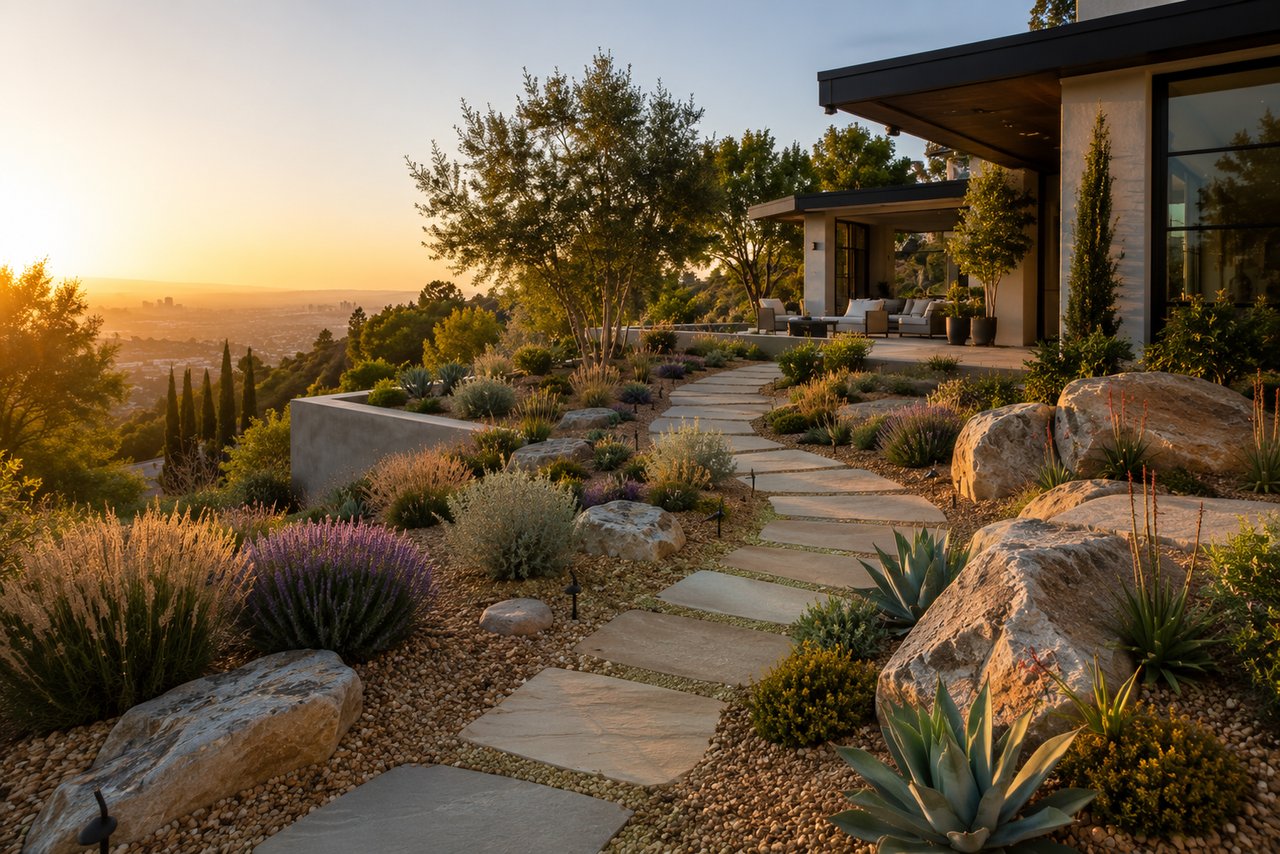
Ten days before this was written, the California Board of Forestry and Fire Protection did something six years of drafts, delays, and public hearings hadn't managed: it actually finalized the rule. On August 19, 2026, the board voted unanimously to approve California's Zone 0 regulation the first rule of its kind in the country governing the five feet of ground immediately surrounding every home in a high fire hazard zone. For Los Angeles' hillside luxury estates, many of which built their entire landscape identity around lush plantings hugging the foundation, that's not an abstract policy development. It's a design problem arriving on a real calendar.
What Zone 0 Actually Requires
Zone 0 sits inside California's existing three-tier defensible space framework: Zone 0 covers the first 5 feet from any structure, Zone 1 extends from 5 to 30 feet, and Zone 2 runs from 30 to 100 feet or the property line, whichever comes first. Zone 0 carries the strictest standard of the three, because research from the Insurance Institute for Business & Home Safety has consistently found that wind-driven embers, not direct flame contact, cause most home ignitions during wildfires meaning the ground immediately touching the house is where the real risk concentrates.
Under the finalized rule, that 5-foot ring needs to be free of combustible mulch, dead or dying vegetation, and stored firewood, with roofs and gutters kept clear of debris. Living plants aren't banned outright, but they need to be spaced, pruned, and kept from touching siding or overhanging the roofline. Non-combustible fencing and gates are required within the zone, combustible decking has to be replaced or the space beneath it fully enclosed, and any accessory structures within the zone need ignition-resistant exterior materials.
The Timeline Homeowners Actually Need to Know
The rule isn't fully in force yet, and the exact compliance dates are still moving through the final stages of the regulatory process. The approved regulations now head to the state's Office of Administrative Law for legal review and a brief additional public comment period, with officials anticipating an effective date around the end of September 2026. Once effective, new construction is expected to be required to comply immediately, while existing structures get a phased compliance schedule that local fire agencies help administer within the boundaries set by the state. The rule applies to properties in State Responsibility Areas and to Very High Fire Hazard Severity Zones within city and county jurisdictions — a designation that covers substantial portions of hillside Los Angeles, including large stretches of Bel Air, the Hollywood Hills, Pacific Palisades, and parts of Beverly Hills' upper canyon streets. Given how recently this was finalized, confirming a specific property's exact compliance timeline directly with the relevant fire authority is the right move rather than relying on any single source's summary.
Why This Hits LA's Luxury Landscape Design Especially Hard
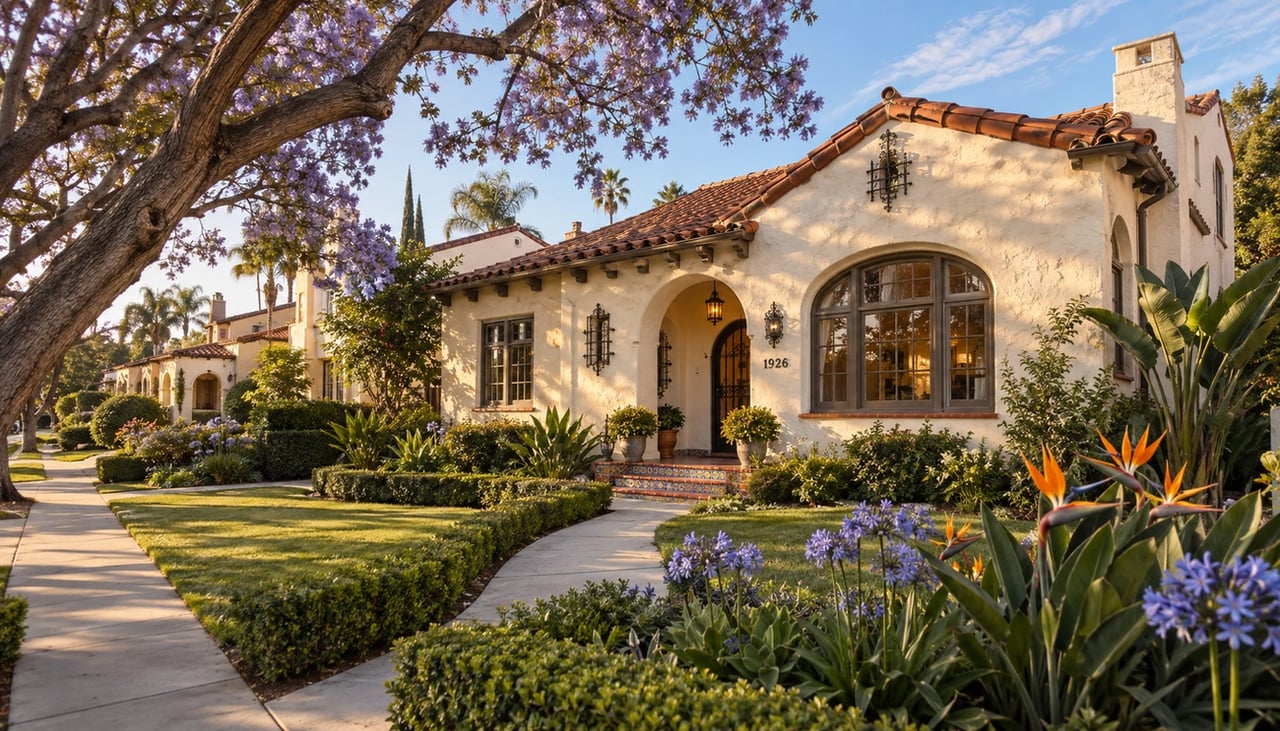
Luxury hillside landscaping in Los Angeles has spent the last two decades building toward exactly the look Zone 0 now discourages: lush, layered foundation plantings that soften the transition from architecture to hillside, bark mulch beds framing entries, wood-clad pergolas and trellises attached directly to the house, and wood gates and fencing chosen specifically for their warmth against stone and glass. None of that is inherently wrong architecturally — it's simply the aesthetic language that Zone 0's ember-resistant standard is now directly at odds with, at least within the critical 5-foot band closest to the structure.
What Compliant Luxury Landscaping Actually Looks Like
The better designers responding to this shift aren't treating Zone 0 as a loss to be minimized, they're treating it as a design constraint with real aesthetic upside. A hardscape-first approach immediately around the structure gravel, natural stone, or pavers rather than mulch can read as intentional and sculptural rather than sparse, particularly when paired with a well-considered transition into fuller planting starting just beyond the 5-foot line. Metal or masonry gates and fencing can replace wood without sacrificing warmth if the material palette is chosen deliberately rather than defaulted to the cheapest compliant option. Ember-resistant mesh venting, now increasingly available in finishes that don't look purely utilitarian, and enclosed or fully cleared under-deck space round out the practical requirements without requiring the home to look like a fire station.
The Real Estate Angle: Disclosure and Insurance
This isn't purely a landscaping conversation, it's increasingly a transaction one. California's AB 38 already requires documented wildfire-hardening compliance disclosure at the time of sale for homes in high-hazard zones, meaning Zone 0 compliance is likely to become a standard disclosure item well before most sellers expect it to matter. On the insurance side, carriers and the state's Safer from Wildfires program already offer premium discounts tied to verified ember-resistant conditions a meaningful consideration in a Los Angeles hillside insurance market where non-renewals and FAIR Plan reliance have become genuine concerns for high-value properties. A documented, compliant Zone 0 isn't just a legal box to check; it's increasingly a marketability and insurability advantage at resale.
What Buyers and Sellers Should Do Right Now
Sellers with mature, foundation-hugging landscaping especially older hillside estates where the planting design predates any of this regulatory conversation are better served starting the redesign now than waiting for a hard enforcement deadline to force a rushed, less thoughtful renovation. Documenting the work as it's completed also positions the property for both the AB 38 disclosure requirement and any available insurance discount.
Buyers evaluating a hillside property should specifically ask whether Zone 0-compliant work has already been done, is budgeted, or hasn't been addressed at all and factor the answer into offer negotiations. On an older estate with extensive mature landscaping directly against the structure, that gap can represent a real, quantifiable cost that's easy to overlook next to the more obvious line items in a purchase decision.
Malibu — With coastal bluffs and canyon lots sitting squarely in Very High Fire Hazard Severity Zones, Malibu buyers are increasingly asking whether a property's yard already meets Zone 1 (0–30 ft "lean, clean, green") and Zone 2 (30–100 ft reduced-fuel) defensible space standards before they'll write an offer with California's new statewide Zone 0 ember-resistant rule (approved by the Board of Forestry in August 2026, pending final sign-off) poised to push that scrutiny even closer to the foundation. Malibu neighborhood guide →
Pacific Palisades — Every rebuild here now falls under the 2026 WUI Code, which requires CAL FIRE or LAFD sign-off on defensible-space landscaping before a certificate of occupancy is issued. Buyers touring rebuilt or new-construction homes are treating drought-tolerant, ember-resistant yards as a baseline expectation rather than an upgrade. Pacific Palisades neighborhood guide →
Bel Air — Hillside estates here sit in Very High Fire Hazard Severity Zones too, and luxury buyers are steering landscape architects toward non-combustible hardscape, spaced-out plantings, and gravel or stone perimeters in place of the dense, view-softening greenery that once defined the neighborhood's privacy hedges. Bel Air neighborhood guide →
Hidden Hills — The gated, equestrian character of this market means buyers are rethinking pasture-adjacent landscaping and fencing materials in the same breath as defensible space non-combustible fencing is one of the specific line items the incoming statewide Zone 0 rule calls out. Hidden Hills neighborhood guide →
Hollywood Hills — Steep canyon lots with mature, view-framing landscaping face some of the tightest tradeoffs between fire-hazard clearance and the lush look buyers love; expect more conversations about fire-resistant plant palettes replacing the eucalyptus and dense brush classic to these hillsides. Hollywood Hills neighborhood guide →
Brentwood — In the hillside pockets bordering the Santa Monica Mountains, buyers are asking sellers for defensible-space documentation the same way they'd ask about a roof's age, especially on properties adjacent to open canyon land. Brentwood neighborhood guide →
Beverly Hills — Flats properties are largely outside the highest-severity fire zones, but the hillside estates north of Sunset are not, and buyers there are folding fire-resistant landscaping costs into their renovation budgets alongside the usual finish-out list. Beverly Hills neighborhood guide →
Key Takeaways
- California's Zone 0 regulation, finalized August 19, 2026, is the first rule of its kind in the country, governing the 5 feet immediately surrounding any structure in a high fire hazard zone.
- The rule targets embers, not flames — requiring non-combustible surfacing, managed vegetation, and non-combustible fencing within that 5-foot ring, since wind-driven embers cause most home ignitions in wildfires.
- An effective date is expected around the end of September 2026, with new construction required to comply immediately and existing structures on a phased schedule — worth confirming directly given how recently the rule was finalized.
- Large portions of hillside Los Angeles, including Bel Air, the Hollywood Hills, and Pacific Palisades, fall within the Very High Fire Hazard Severity Zones this rule applies to.
- Compliance is increasingly tied to real estate outcomes, through AB 38's disclosure requirements at sale and insurance discount programs tied to verified member-resistant conditions.
FAQs
Q1. Is California's Zone 0 wildfire landscaping rule already in effect? Not quite yet. The California Board of Forestry approved the final regulations on August 19, 2026, but they still need to clear a legal review by the Office of Administrative Law, with an effective date expected around the end of September 2026.
Q2. Which Los Angeles neighborhoods does Zone 0 apply to? It applies to properties in State Responsibility Areas and to Very High Fire Hazard Severity Zones within city and county jurisdictions, which covers substantial portions of hillside Los Angeles neighborhoods including Bel Air, the Hollywood Hills, Pacific Palisades, and upper canyon areas of Beverly Hills.
Q3. What specifically has to change within 5 feet of my home under Zone 0? Combustible mulch, dead or dying vegetation, and firewood must be removed. Living plants need to be managed and kept from touching the structure or overhanging the roof. Combustible fencing and gates within the zone need to be replaced with non-combustible materials, and decking or under-deck spaces need to comply with ember-resistant standards.
Q4. Do existing homes have to comply immediately, or is there a grace period? Under the current draft, new construction is expected to need to comply immediately upon the effective date, while existing structures are expected to receive a phased compliance schedule, with details still being finalized as the rule completes its final regulatory review.
Q5. Does Zone 0 compliance actually affect insurance or home value? It can. California's AB 38 already requires documented wildfire-hardening disclosure at the time of sale in high-hazard zones, and some insurance carriers and the state's Safer from Wildfires program offer premium discounts for verified ember-resistant conditions, making compliance relevant to both marketability and ongoing insurance costs.
Conclusion
For two decades, Los Angeles' luxury hillside landscaping has leaned into lush, foundation-hugging design as a signature look. Zone 0 doesn't eliminate that aesthetic — it just draws a hard line five feet from the house where that look needs to change. The buyers and sellers who treat this as a design opportunity now, rather than a compliance headache to defer, are the ones who'll have already solved the problem by the time it becomes a standard question at every closing table in fire-hazard Los Angeles.
If you're buying or selling a hillside property and want a clear read on what Zone 0 actually means for a specific landscape, Christina Pope can help you think through the real estate implications before they become a negotiation surprise.  310-404-9931
  [email protected]
Christina Pope — Sotheby's International Realty EliteResidenceInternational.com | 310-404-9931 | [email protected]
This article reflects the status of California's Zone 0 regulation as of late August 2026. The rule was recently finalized by the Board of Forestry and remains subject to final legal review; effective dates and phased compliance timelines may change. Confirm current requirements with the relevant local fire authority before making landscaping or purchase decisions.