Los Angeles hosting culture stands at a crossroads in 2026. The city's event landscape has abandoned traditional formal gatherings for something entirely different. Hosts now favor micro-events capped at 50 to 100 high-value guests, creating opportunities for sensory detail and personal connection that large-scale events simply cannot match. This shift responds directly to digital fatigue and the declining draw of conventional galas. The meeting sector in LA County generated almost $16 billion in business sales in 2019, supporting nearly 100,000 jobs. Today's Los Angeles hosting culture demands smaller gatherings with deeper impact and more meaningful experiences.
This examination reveals why formal events continue losing ground, defines what makes experiential gatherings successful, and shows how LA's distinct neighborhoods reshape event outcomes.
Why Traditional Formal Events Are Losing Ground in Los Angeles
The High-Cost, Low-Impact Problem
Production costs have squeezed event budgets across Los Angeles while returns continue to shrink. Financial limitations now rank as the primary concern for 63.5% of event planners, making traditional large-scale gatherings harder to justify with each passing quarter. Employer budget cuts force professionals to personally fund conference attendance, turning every event registration into a stark value proposition. Inflation hits every component: flights, hotels, car rentals, and venue fees have escalated beyond what most organizations can reasonably absorb. Event organizers now face a fundamental question about whether formal galas and large conferences deliver enough measurable impact to warrant their mounting expense.
Declining Engagement at Large-Scale Events
Attendance data tells the story of a sector losing steam. Half of surveyed associations reported decreased attendance at their meetings, while Broadway audiences remain down 17% from pre-pandemic levels. Professional associations saw the sharpest declines, though some trade associations managed modest increases. International participation dropped especially hard, with one medical organization reporting a 30% decline in global attendance. Another April 2025 conference experienced attendance drops between 15% to 19% due to U.S. travel restrictions and visa delays. Large-scale events no longer command the automatic draw they once enjoyed.
The Digital Fatigue Factor
Well-attended events still struggle with engagement challenges. Beyond attendance issues, 42.7% of event planners report difficulty maintaining participant interest during programs. Virtual conference fatigue mirrors the exhaustion professionals experience from endless daily video calls. Presentation after presentation creates a mental endurance test that attendees increasingly choose to avoid. High-quality content has become more critical than ever, with 79.7% of event professionals identifying it as the single most important success factor. Events without dynamic, interactive elements watch audiences tune out or simply leave.
Changing Expectations of LA Attendees
Los Angeles audiences have completely redefined what makes an event worth attending. Passive arts experiences appeal less to younger attendees who treat various formats as simply "a night out" rather than distinct categories. The pandemic taught people how precious their time really is and made them far more selective about commitments. Professionals now select events based on peer interaction opportunities rather than marquee keynote speakers. They want human connection and experiences that streaming services cannot deliver. The value question drives every registration decision, especially when companies remain understaffed and employees cannot easily step away from work.
What Defines Experiential Gatherings in LA's Hosting Culture
Experiential events reshape Los Angeles hosting through sensory design, interactivity, storytelling, and personalization. These gatherings invite participants to explore, react, and connect in ways that build emotional attachments and drive memory retention. Los Angeles culture has embraced this shift because active participation increases engagement far beyond what passive viewing delivers.
Micro-Immersion: The 50-100 Guest Model
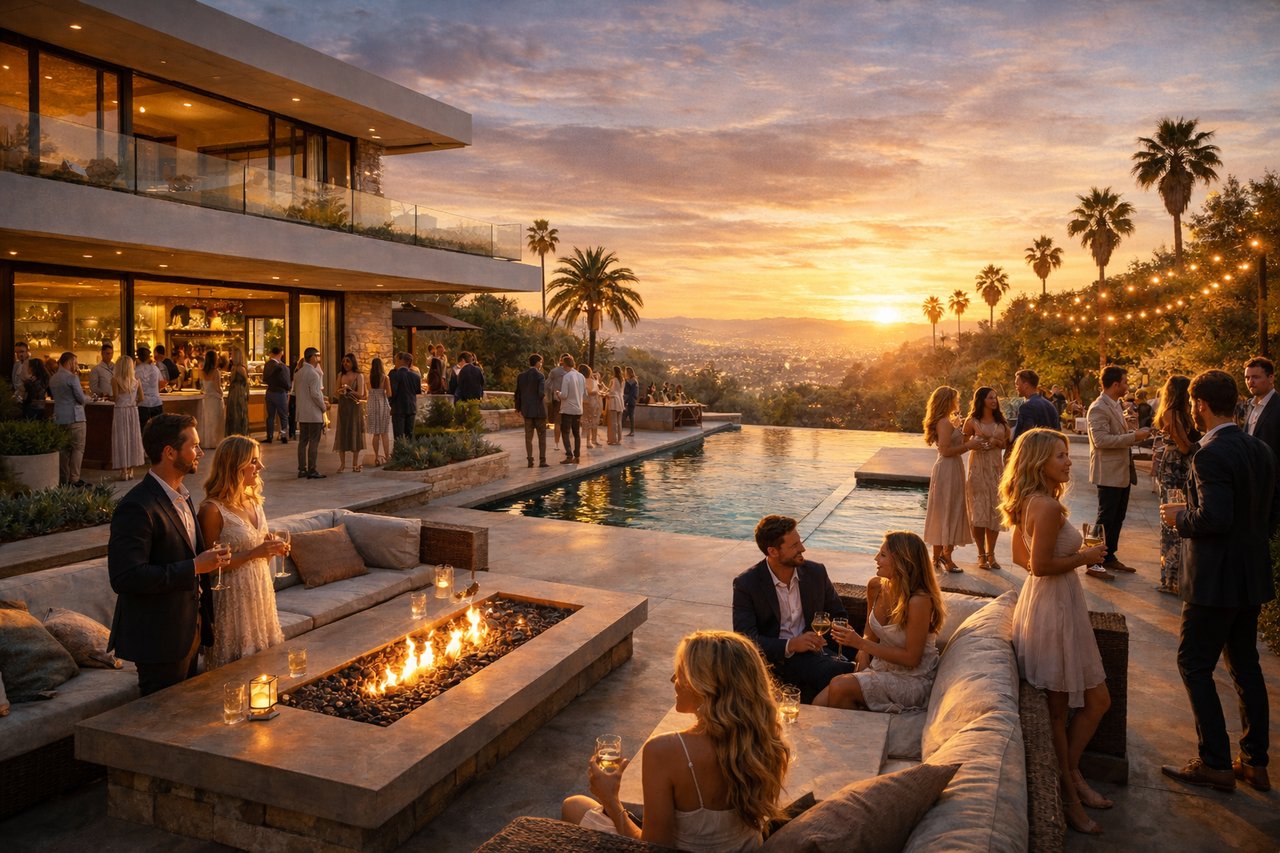
Intimate gatherings between 50 and 100 attendees define the new Los Angeles hosting standard. This model allows hosts to focus on meaningful relationships rather than production scale. Smaller groups enable deeper interactions, personalized attention, and reduced logistical stress while maintaining full event experiences. Attendees remain comfortably seated during ceremonies that flow seamlessly into receptions, with every element customized to reflect the gathering's unique narrative. The micro-immersion approach prioritizes quality over quantity, creating space for genuine connection.
Sensory Design Over Visual Backdrops
Multisensory engagement strengthens recall and emotional impact through interactive visuals, spatial sound, hands-on touchpoints, and intentional scents. Lighting design enhances mood through dynamic LED systems and projection mapping, while curated soundscapes influence energy levels and support storytelling. Scent triggers memory and emotion more powerfully than most realize. Floral arrangements, essential oil diffusers, and branded fragrances leave lasting impressions. Texture plays a vital role through velvet cushions, rustic wooden tables, and silk drapes that shape physical interaction. Food becomes part of the entertainment through interactive stations and chef-led experiences.
Interactive Elements That Drive Participation
Participation transforms attendees from spectators into contributors. Interactive formats include product immersion lounges, participatory workshops, and hybrid experiences blending physical and digital engagement. Live demonstrations, hands-on product experiences, and breakout discussion groups promote in-depth dialog and actionable takeaways. Gamification through scavenger hunts and participation quests encourages networking while leaderboards spark competitive energy.
Built-in Personalization and Intimacy
Personalization tailors experiences to individual interests through branded cocktails, chef-led tastings, and custom menu pairings. Smart tools adapt content and activations based on real-time interaction data, delivering customization at scale without fragmenting the overall narrative. Personalized elements increase satisfaction and loyalty while making each moment feel uniquely relevant.
How Los Angeles Neighborhoods Shape Event Experiences
Geographic diversity across Los Angeles creates distinct event environments, each reflecting neighborhood identity and community values. These districts reshape hosting culture through location-specific programming that honors local character.
Silicon Beach Tech-Forward Activations
Tech professionals gather at networking events designed to combat remote work isolation. These activations capitalize on LA's 5G-equipped convention infrastructure and connections to 168 cities through LAX. Silicon Beach events focus on peer collaboration and skill development through structured networking rounds followed by open mixers.
DTLA Arts District Cultural Immersion
Converted warehouses and live-work lofts house art galleries, performance spaces, and outdoor murals throughout the Arts District. First Thursday monthly gatherings coordinate activations across over 30 galleries and businesses. Downtown art programs attract 200,000 patrons annually into the local economy, with over 60% of audiences identifying as Millennials.
Malibu and Coastal Estate Gatherings
Private Malibu estates accommodate intimate settings for 50 to 200 guests, where contemporary design meets ocean views. Properties handle seated dinners for up to 50 or cocktail receptions for larger groups, offering direct beach access and indoor-outdoor flow. Coastal gatherings emphasize exclusivity and natural settings over elaborate production.
West Hollywood Content Creation Spaces
Be Kind Studios hosts wellness-driven brand activations and influencer events across three customizable spaces. The Reformer Room, Rooftop with skyline views, and Infrared Heated Room accommodate movement-based brand experiences. West Hollywood's central location connects to legendary music venues and major LA events.
Culver City Wellness-Focused Events
Culver City's 3rd Annual Wellness Fair on April 29, 2026, features interactive booths and hands-on activities focused on mental, emotional, and physical health. Community wellness events deliver relaxing experiences and meaningful connections in supportive environments, with programming addressing chronic disease awareness, mental health, and preventive care.
Key Elements That Make LA Experiential Events Successful
Success in Los Angeles hosting culture rests on four strategic elements that serve practical needs while extending reach.
Creator-Friendly Environments
The best experiential events are designed to be documented. Guests capture moments, tag brands, and extend reach organically beyond the event day. Shareable moments amplify impact long after gatherings conclude, turning attendees into active promoters through social media distribution.
Neuro Inclusive Design and Quiet Zones
Around 20-25% of the world population is neurodivergent, yet 85% of neurodivergent individuals may opt out of attending events due to concerns about overstimulation. Designated quiet zones with comfortable seating and adjustable lighting provide essential decompression spaces. Sensory accommodations including noise-canceling headphones, fidget tools, and calming color palettes create environments where all attendees can participate fully.
Hyper-Local Food and Beverage Narratives
Hotels and venues partner with local farmers, fishermen, and artisans to source fresh, seasonal ingredients. This approach supports the local economy, reduces carbon footprint associated with food transport, and offers guests authentic regional tastes. Craft beers, local wines, and artisanal spirits prominently featured on menus enhance experiences while promoting regional specialties.
Phygital Integration for Broader Reach
Phygital events merge physical and digital worlds into fully immersive experiences. These hybrid formats eliminate geographical limits, allowing worldwide participation in real time while interactive elements like live chats and augmented reality drive engagement.
Conclusion
Los Angeles hosting culture has evolved beyond reversible trends. The shift toward experiential micro-gatherings reflects fundamental changes in how professionals value their time and what audiences expect from events. Success now depends on creating intimate, multisensory experiences that prioritize connection over scale. Hosts who embrace personalization, neuro inclusive design, and neighborhood-specific programming will thrive, while those clinging to traditional formal formats will continue struggling to justify costs and attract committed attendees.
Key Takeaways
Los Angeles hosting culture is undergoing a dramatic transformation as intimate, experiential gatherings replace traditional formal events. Here's what event hosts and attendees need to know about this shift:
• Micro-events with 50-100 guests deliver higher engagement and ROI than large-scale formal gatherings, allowing for deeper connections and personalized experiences.
• Multisensory design trumps visual backdrops - successful LA events now integrate interactive elements, curated scents, spatial sound, and hands-on experiences to create lasting memories.
• Neighborhood identity drives event success - from Silicon Beach tech activations to DTLA arts immersion, location-specific programming that reflects local character resonates most with attendees.
• Neuro Inclusive design is essential - with 20-25% of the population being neurodivergent, quiet zones and sensory accommodations ensure all guests can participate fully.
• Creator-friendly environments amplify reach - events designed for social media documentation extend impact beyond the gathering day through organic attendee promotion.
The future of LA hosting prioritizes quality over quantity, creating intimate spaces where meaningful connections flourish over passive consumption. This shift reflects broader changes in how professionals value their time and what constitutes a worthwhile investment in networking and entertainment.
FAQs
Q1. Why are traditional formal events becoming less popular in Los Angeles? Traditional formal events are declining due to rising production costs that don't justify the returns, decreased attendance rates, and digital fatigue among participants. Financial constraints affect 63.5% of event planners, while engagement challenges plague even well-attended gatherings. Attendees now prioritize meaningful peer interactions and value-driven experiences over passive, large-scale galas that require significant time and financial investment.
Q2. What is the ideal guest count for experiential gatherings in LA? The optimal size for experiential gatherings in Los Angeles typically ranges between 50 and 100 attendees. This micro-immersion model allows hosts to focus on quality over quantity, enabling deeper interactions, personalized attention, and meaningful relationship building. Smaller groups reduce logistical stress while maintaining full event experiences with customized elements that reflect each gathering's unique narrative.
Q3. How do different LA neighborhoods influence event experiences? Each Los Angeles neighborhood creates distinct event environments based on local identity. Silicon Beach hosts tech-forward networking activations, the DTLA Arts District offers cultural immersion with galleries and performance spaces, Malibu provides exclusive coastal estate settings, West Hollywood features content creation spaces for influencer events, and Culver City focuses on wellness-oriented community gatherings. Location-specific programming that reflects neighborhood character drives the most successful events.
Q4. What makes an experiential event successful in Los Angeles? Successful experiential events incorporate four key elements: creator-friendly environments designed for social media documentation, neuro inclusive design with quiet zones for the 20-25% of neurodivergent attendees, hyper-local food and beverage narratives featuring regional ingredients and artisans, and phygital integration that merges physical and digital experiences to extend reach beyond geographical limits.
Q5. What is multisensory design and why does it matter for events? Multisensory design engages multiple senses through interactive visuals, spatial sound, curated scents, varied textures, and experiential food presentations. This approach strengthens memory recall and emotional impact far more effectively than traditional visual backdrops alone. Elements like dynamic lighting, essential oil diffusers, tactile materials, and chef-led food experiences create lasting impressions that transform attendees from passive spectators into active participants.