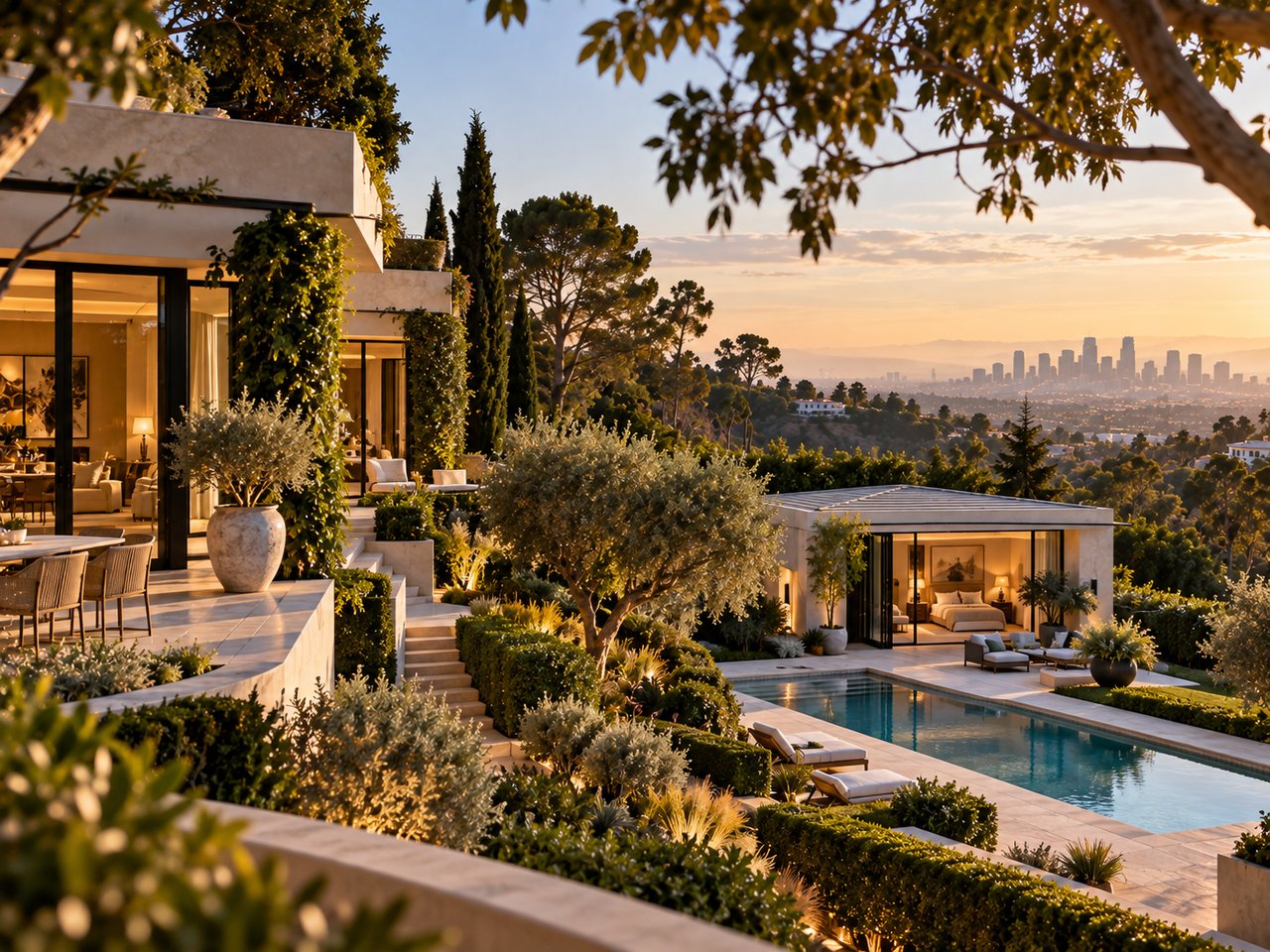
Architectural framing in Hollywood Hills properties determines whether homeowners just have a view or live with it. The most sought-after residences in Los Angeles don't just offer panoramic vistas. They choreograph how those views unfold through strategic window placement and sightline design. This difference matters because good design has been shown to increase surrounding property values and can command substantial price premiums. Traditional real estate marketing focuses on what buyers can see. Informed clients understand that framing architecture and architectural framing systems transform static exposure into daily experiences worth the investment.
The Difference Between Owning a View and Living With It
High-end real estate transactions in Los Angeles unfold through private channels where architectural intent separates compelling properties from ordinary ones. The Hollywood Hills market operates on relationships and discretion. Many exceptional homes change hands before public listing. Buyers who understand this difference recognize that architectural framing systems determine whether a panorama becomes part of daily life or remains a passive backdrop.
What High-End Buyers in Hollywood Hills Actually Pay For
Properties in Hollywood Hills command premiums because of location, views, and architectural styles. The Bird Streets offer the most prestige with commanding views above the city. But buyers focus more on features beyond raw exposure: infinity pools, expansive outdoor spaces, and privacy that comes with hillside settings. The moment when a buyer first sees the view often becomes the defining moment of the showing. Luxury homes designed to reveal these views dramatically generate powerful first impressions. They do this through expansive glass walls or terraces positioned to frame the skyline. Design and architecture prove decisive in determining value. This results in higher selling prices and shorter time on the market.
How Traditional Real Estate Photography Misses the Point
Real estate photographers emphasize room size with very wide lenses, which distorts objects and makes them appear out of scale. Architectural photography thinks about how spaces interact and requires 4 to 12 hours on location compared to the single hour allocated for real estate shoots. Architects spend time thinking about window placement and special features like skylights, which produce profound effects at certain times of day. Architectural photographers wait for exact light timing and use techniques like lens shifting to eliminate doors while maintaining perspective. This approach captures the intentional relationship between architecture and scenery rather than documenting square footage.
The Private Market Reality: Off-Market Properties Frame Differently
Many exceptional properties never appear on public portals. Off-market real estate preserves privacy, avoids unnecessary exposure, and creates exclusivity that can increase perceived value. Top agents in Hollywood Hills maintain relationships that create access to off-market opportunities. Lack drives desire in exclusive real estate circles. Buyers must demonstrate serious intent and financial readiness to access curated listings unavailable to the general public. These transactions depend on trust and professional networks.
Architectural Framing Systems That Transform Static Views Into Daily Experiences
Windows don't just provide views in Hollywood Hills properties. Sightlines, defined as the visible edges and profiles of window frames, determine what residents see and experience. Narrow sightlines minimize visual obstructions and maintain divided lite character that oversized plate glass cannot deliver. Window placement must frame key visual focal points through adjacency diagrams and occupant movement pattern analysis. Large glazing expanses should orient toward specific landscapes or skylines and make views an intentional part of spatial composition rather than an afterthought.
Window Placement and Sightline Choreography
Strategic window positioning creates hypothetical lines from eye to view and brings pleasant vistas into focus while concealing private spaces. Floor-to-ceiling windows with minimal sightlines create walls that appear invisible and make rooms feel larger. Clerestory windows increase vertical sightlines and allow natural light deeper into spaces. Natural light travels more freely and brightens interior rooms without artificial lighting when windows arrange throughout a home.
Corner Glass Solutions and Vanishing Boundaries
Corner windows provide panoramic views and uninterrupted connections between indoors and outdoors. Vitrocsa's Turnable system enables glass panels to slide around corners and hide within nearest solid walls. These systems leave only 10-millimeter grooves that mark where inside meets outside. Thin framing coupled with sliding pocket doors creates disappearing glass walls when panels retreat into hidden pockets.
Strategic Corridor Design for View Sequences
Spatial sequences activate sites through choreographed movement with nodes to contemplate and act. Spaces with contrasted qualities, such as secluded versus expanded or bright versus shaded, offer rich sensorial experiences when alternated. Arrival sequencing builds anticipation by concealing views upon approach and then reveals them once inside. Entry transitional areas improve overall spatial experience when developed well.
How Architectural Framing Plan Determines Movement Through Space
Flow becomes stymied when static focal points in structural elements or lighting remain unaddressed. The successive linking of spaces produces urban rhythm through fluid spatial quality that encourages directional movement. Sequences carry emotional value since final meaning results from relationships between space, event, and movement. Movement through sequenced spaces creates the place itself.
Christina Pope—Sotheby's International Realty
EliteResidenceInternational.com
Why Hollywood Hills Topography Demands a Different Approach to View Framing
Hillside properties in Los Angeles present architectural challenges that flat parcels cannot replicate. Elevated positioning provides expansive views and increased privacy. It also lets you create layered architectural forms. Exceptional luxury residential architecture works with the slope instead of fighting it.
Working With Dramatic Elevation Changes
Sloped sites provide what flat lots require expensive engineering to achieve. Grade separation creates privacy between different areas of the property and between neighboring structures. Hillside sites offer multiple view opportunities at different elevations and orientations. You can position living areas at different levels to capture distinct view experiences. Upper levels might offer distant mountain vistas while lower areas provide intimate garden views. This vertical layering creates homes that offer visual variety throughout daily use.
Sunset Timing and Western Exposure Considerations
Each exposure has its own temperament. You'll find it works better to embrace these characteristics than to resist them.
Privacy Requirements at Premium Viewpoints
Hillside architecture gives built-in privacy. You get seclusion while maintaining open views of the world below.
Balancing City Lights With Canyon Darkness
Strategic window placement and sizing optimize views while controlling light and maintaining energy efficiency. Large glazed areas face optimal view corridors. More modest windows provide light without compromising privacy or thermal performance.
The Financial Reality of Experiential Architecture in Los Angeles
"You must know when to stop and not overdo anything…I had to suppress the idea of building something egotistical that says, 'Look at me, here I am sitting on top of this hill as a great house…'" — Pierre Koenig, Renowned Midcentury Modern architect, designer of Case Study House #22 (Stahl House) in Hollywood Hills, expert in view-oriented hillside architecture
## The Financial Reality of Experiential Architecture in Los Angeles
Luxury real estate in Los Angeles operates through private conversations where strategic decisions about architectural framing determine financial outcomes. The most important transactions unfold within trusted circles, where timing and architectural intelligence carry equal weight with market positioning.
What Buyers Pay for Framed Moments vs. Raw Exposure
Architectural investment ranges from 8% to 15% of total construction costs for luxury homes. Complete services including construction administration can reach 16% to 20% of construction costs. Research demonstrates that unobstructed views add an average premium of 15% to property prices. Buyers proved willing to pay nearly $233,000 in premium for properties with full views compared to units without any view exposure.
Resale Value of Thoughtfully Sequenced Views
Architect-designed homes sold for an average of 12% more per square foot than houses of the same size in the same area. Homes valued above $1 million saw that premium jump to 19%. These properties sell three times faster than generic alternatives. Custom architectural design adds 10% to 15% to property value compared to non-architect designed homes.
When Architectural Wall Framing Justifies Premium Pricing
Well-designed homes command market premiums of $300,000 to $450,000 on $3 million properties and often exceed total architectural fees. Properties gained $11.40 in capital appreciation for every dollar spent on architectural fees. Architectural framing systems create market differentiation that proves valuable in luxury residential markets.
The Risk of Over-Designing for Views You Already Own
Luxury upgrades don't always increase value. Overbuilding occurs when investors add upgrades that exceed what the local market supports. It becomes easy to overestimate what buyers will pay without strong data and hyperlocal comparables. Upgrades that outpace local market expectations can erode returns.
Conclusion
Architectural framing separates properties that simply possess views from those that turn them into daily experiences. This difference determines financial outcomes in Los Angeles luxury real estate, where well-designed homes command documented premiums and sell substantially faster. Buyers should understand that the most exceptional properties often change hands through private channels before pursuing architectural modifications. Timing and strategic positioning matter as much as design itself in these transactions.
Key Takeaways
Strategic architectural framing transforms Hollywood Hills properties from simple view ownership into immersive daily experiences that command significant market premiums.
• Experiential design drives value: Architect-designed homes sell for 12-19% more per square foot and three times faster than generic properties with similar views.
• Strategic window placement creates choreographed experiences: Sightline design, corner glass solutions, and spatial sequencing turn static panoramas into dynamic living environments.
• Hillside topography demands specialized framing approaches: Elevation changes, sunset timing, and privacy requirements need custom architectural solutions that work with natural terrain.
• Private market rewards thoughtful design: Off-market Hollywood Hills transactions prioritize architectural intelligence over raw exposure, with premiums reaching $450,000 on $3 million properties.
• Over-designing poses financial risks: Architectural upgrades must align with local market expectations to avoid eroding returns despite having superior views.
The most successful Hollywood Hills properties don't just showcase views—they orchestrate how residents encounter them through deliberate architectural choices that create lasting emotional connections and measurable financial returns.
FAQs
Q1. What is the difference between owning a view and experiencing it in Hollywood Hills homes? Owning a view means having visual access to scenery, while experiencing it involves strategic architectural design that choreographs how those views unfold through daily living. Thoughtfully designed homes use window placement, sightline design, and spatial sequencing to transform static panoramas into dynamic moments that become part of everyday life, rather than just passive backdrops.
Q2. How much value does architectural framing add to luxury properties? Architect-designed homes with strategic framing sell for 12-19% more per square foot than similar-sized houses without architectural design. Properties with well-designed view framing can command premiums of $300,000 to $450,000 on $3 million homes, and research shows that for every dollar spent on architectural fees, properties gain $11.40 in capital appreciation. Additionally, these homes sell three times faster than generic alternatives.
Q3. What are corner glass solutions and how do they enhance views? Corner glass solutions are advanced window systems that allow glass panels to slide around corners and disappear completely into adjacent walls, creating virtually invisible boundaries between indoor and outdoor spaces. These systems leave only minimal grooves where inside meets outside, providing uninterrupted panoramic views and making rooms feel substantially larger by eliminating traditional corner obstructions.
Q4. Why do hillside properties in Hollywood Hills require different architectural approaches? Hillside topography presents unique challenges including dramatic elevation changes, varying sunset timing with western exposure, privacy requirements at premium viewpoints, and the need to balance city lights with canyon darkness. Elevated positioning naturally provides privacy and multiple view opportunities at different levels, allowing architects to create layered experiences that capture distinct vistas from various areas of the home.
Q5. Can you over-design a property for views and hurt its value? Yes, overbuilding occurs when architectural upgrades exceed what the local market supports. While strategic framing adds value, upgrades that outpace local market expectations can erode returns. Without strong data and hyperlocal comparables, it's easy to overestimate what buyers will pay, making it essential to align architectural investments with market realities rather than simply maximizing view exposure.