Luxury buyers across Los Angeles are abandoning their coastal mansions at rates never seen before. Los Angeles real estate news confirms what industry insiders have quietly observed: the wealthy are walking away from oceanfront properties that once represented the pinnacle of California living. Climate threats have intensified dramatically across Southern California, with nearly 18 inches of rain falling in just two months this year 8 inches above normal. This extreme weather pattern represents only one piece of a much larger puzzle reshaping the region's most exclusive properties.
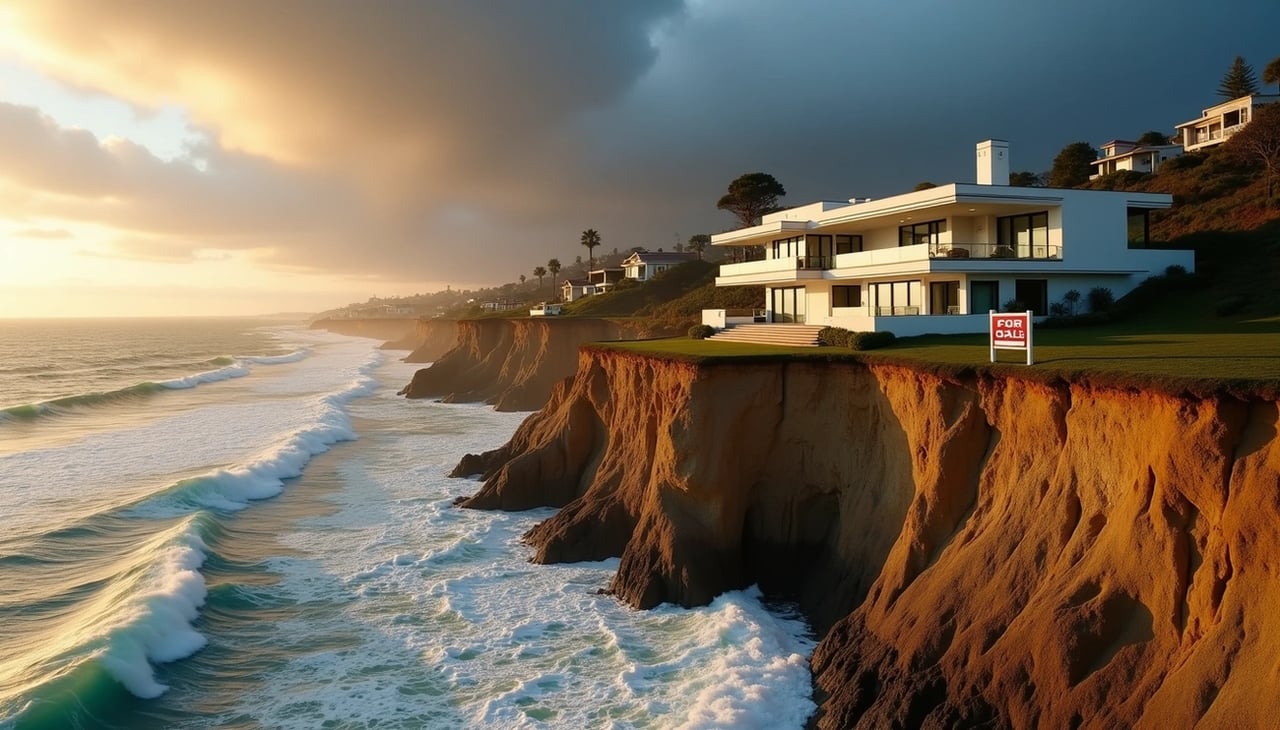
Ocean views have long defined luxury real estate, yet the market tells a different story today. The Los Angeles Times reports that approximately $150 billion in California coastal property faces potential flooding and erosion damage by 2100. Scientists predict 100 meters of sea cliff destruction in coming years, placing countless multimillion-dollar estates in jeopardy. Home sales in Los Angeles County dropped 7.9% this past May compared to the previous year, reflecting these mounting concerns among luxury buyers.
Financial consequences paint an even grimmer picture. Record-breaking weather-related damages totaling $128.2 billion struck the United States in 2024 alone. A UCLA Anderson School of Management report projects between $76 billion and $131 billion in property damage and capital losses specifically within the Los Angeles area. Properties in high-risk zones continue struggling to maintain their value, while buyer interest in hillside and canyon homes has dropped significantly.
The growing role of climate risk in luxury real estate

Image Source: Marc Lyman
Climate change now drives luxury real estate decisions more than prestige or location preferences. Devastating wildfires consumed 55,082 acres of L.A. County in 2025, destroying over 16,251 structures and 12,585 housing units. The Palisades Fire burned 23,700 acres through one of the city's wealthiest neighborhoods, where average home prices reach $3.5 million.
Insurance companies responded swiftly and decisively. State Farm dropped coverage for 70% of its Pacific Palisades customers, approximately 1,600 homeowners. Annual premiums in these elite neighborhoods jumped to $7,520, nearly five times the L.A. average of $1,583. Ultra-luxury properties valued between $8-10 million now face annual premiums ranging from $50,000-$70,000.
California's FAIR Plan has become the reluctant refuge for many homeowners, yet its $3 million residential coverage cap falls far short of protecting luxury properties. This coverage gap has created substantial vulnerability throughout Los Angeles County.
Population shifts reflect these harsh realities. More residents leave high-risk fire counties like Ventura and Santa Cruz than move into them. Commercial real estate premiums have climbed 88% over five years, demonstrating insurers' serious concerns about climate risks across all property sectors.
Climate resilience now competes directly with ocean views and architectural distinction as the primary factor in luxury real estate investment decisions. The market has spoken clearly: environmental safety outweighs traditional status symbols.
The financial fallout: insurance, lending, and stalled deals
Insurance has become the single biggest obstacle killing luxury real estate deals across Los Angeles. 13% of California Realtors watched transactions collapse in 2024 because buyers simply could not secure homeowners insurance—nearly double the previous year's rate. January's devastating fires, which caused up to $150 billion in property damage, made an already difficult situation nearly impossible.
Pacific Palisades exemplifies this crisis perfectly. Average home values around $3.3 million mean nothing when State Farm abandoned 1,600 policy holders in this single neighborhood. These homeowners found themselves pushed toward California's FAIR Plan, a safety net that barely covers luxury properties.
California's FAIR Plan faces its own severe problems. The Los Angeles wildfires triggered $4 billion in expected losses, leading to a proposed 36% rate increase. The plan's $3 million coverage limit leaves most luxury homeowners dangerously exposed, particularly those with estates worth significantly more.
Insurance companies have gained approval to charge all customers additional fees totaling over $150 million. This cost-shifting approach means even homeowners in low-risk areas will see higher premiums, spreading the financial burden across the entire state.
Luxury properties in high-fire zones now sell for $43,900 less than comparable homes in safer areas. More troubling for sellers, many transactions simply stall indefinitely as buyers struggle with insurance requirements that seem impossible to meet.
New preferences shaping the 2026 luxury market
Wealthy homebuyers across Los Angeles are quietly reshaping the luxury landscape as priorities shift dramatically in 2026. Oceanfront locations no longer hold the same appeal they once did. Today's discerning purchasers value entirely different qualities when selecting their next estate.
Privacy and security have emerged as paramount concerns for affluent buyers, with over 80% citing security as a top priority. Properties in secure neighborhoods featuring advanced biometric systems, private entry points, and extensive monitoring command premium prices despite climate concerns elsewhere.
Wellness-focused design has shifted from luxury amenity to absolute necessity. Modern estates now routinely incorporate cold plunge pools, infrared saunas, and meditation spaces. Homes with biophilic elements that connect architecture with nature are particularly sought after, especially in Newport Coast and Laguna Beach.
The "mansion tax" has fundamentally altered buying patterns. This ULA tax imposes additional fees of 4.45% on properties above $5 million and 5.95% above $10 million. Affluent Californians are exploring alternatives in tax-advantaged states like Texas, Florida, and Tennessee.
For those who love to entertain, the right home makes all the difference. If you're considering a purchase in the near future or beginning your search, I'd be delighted to help you discover spaces designed for elevated living and effortless hosting. Christina Pope  310-404-9931
  [email protected]
Conclusion
Climate change has created a defining moment for Los Angeles luxury real estate, forcing coastal property owners to confront an entirely new market reality. Wealthy buyers face difficult decisions as insurance costs surge, financing becomes complicated, and environmental risks turn prized oceanfront estates into potential financial burdens. The movement away from coastal mansions reflects a permanent shift in how luxury real estate value gets determined.
The financial impact reaches far beyond immediate concerns. Properties in high-fire zones sell for nearly $44,000 less than comparable homes elsewhere, while insurance premiums have reached unsustainable levels. The FAIR Plan's $3 million coverage cap leaves luxury homeowners seriously vulnerable, particularly as California faces increasingly severe climate events.
Affluent buyers have adapted their priorities accordingly. Security features, wellness amenities, and tax advantages now matter more than traditional status markers like ocean proximity. Wealthy homeowners seek climate resilience, privacy protections, and financial sustainability above all else. Many have started exploring opportunities in states with better tax structures, suggesting a significant wealth migration may follow.
For those who love to entertain, the right home makes all the difference. If you're considering a purchase in the near future or beginning your search, I'd be delighted to help you discover spaces designed for elevated living and effortless hosting. Christina Pope 310-404-9931 [email protected]
The Los Angeles luxury market continues changing as climate realities redefine premium property characteristics. Coastal mansions once symbolized California real estate success, yet their vulnerability now exceeds their prestige. Wealthy buyers, always focused on protecting their investments, have recognized this reality ahead of others—an early signal of broader market changes ahead.
Key Takeaways
Climate change and insurance crises are fundamentally reshaping Los Angeles luxury real estate, forcing wealthy buyers to abandon traditional coastal properties for safer alternatives.
• Climate risks drive luxury exodus: Devastating 2025 wildfires and $150 billion in projected coastal property damage by 2100 are pushing affluent buyers away from oceanfront mansions.
• Insurance crisis kills deals: 13% of California real estate transactions collapsed in 2024 due to insurance unavailability, with State Farm dropping 70% of Pacific Palisades customers.
• Financial penalties mount: Properties in high-fire zones now sell for $44,000 less than comparable homes, while luxury insurance premiums reach $50,000-$70,000 annually.
• Buyer priorities shift dramatically: Wealthy purchasers now prioritize security features, wellness amenities, and climate resilience over traditional status symbols like ocean views.
• Tax implications accelerate migration: California's mansion tax of up to 5.95% on properties above $10 million is driving affluent buyers to explore tax-advantaged states like Texas and Florida.
This transformation represents a permanent recalibration of luxury real estate values, where climate resilience and financial sustainability now outweigh traditional prestige factors in high-end property decisions.
FAQs
Q1. How is climate change affecting luxury real estate in Los Angeles? Climate change is significantly impacting luxury real estate in Los Angeles, with coastal properties facing increased risks from flooding, erosion, and wildfires. This has led to a shift in buyer preferences towards safer, more resilient properties away from traditional oceanfront locations.
Q2. What are the insurance challenges for luxury homeowners in high-risk areas? Luxury homeowners in high-risk areas are facing severe insurance challenges, including skyrocketing premiums and limited coverage options. Some insurance companies have dropped coverage entirely, forcing homeowners to rely on inadequate state-backed plans with low coverage limits.
Q3. How are luxury buyers' preferences changing in the Los Angeles real estate market? Luxury buyers are now prioritizing properties with enhanced security features, wellness amenities, and climate resilience. There's a growing interest in safer communities, often located inland or in neighboring counties, that offer better long-term value and protection against environmental risks.
Q4. What financial impacts are luxury homeowners experiencing due to these changes? Luxury homeowners are facing significant financial impacts, including decreased property values in high-risk zones, difficulty securing adequate insurance coverage, and potential losses from natural disasters. Some are also dealing with additional taxes on high-value properties, prompting consideration of relocation to more tax-friendly states.
Q5. Are there any emerging trends in luxury home features as a result of these shifts? Yes, emerging trends in luxury homes include the integration of advanced security systems, eco-friendly and resilient design features, and wellness-focused amenities. There's also a growing demand for smart home technologies that can help mitigate climate-related risks and enhance overall property resilience.