Mount Olympus real estate rarely makes headlines. It moves through private conversations, careful timing, and trusted access. This neighborhood sits within roughly 300 acres of the Hollywood Hills and was graded and built as one 1963 project that required the change of nearly 12 million cubic yards of earth. Recent closed sales ranged from $1,700,000 to $6,850,000 among homes measuring 1,920 to 7,957 square feet. Buyers learning about Mount Olympus Hollywood Hills real estate before renovating should understand this shared development history as well as the asking price.
Buying Mount Olympus Real Estate: Privacy, Timing, and Price
Buyers entering this market soon learn that the usual home-buying playbook does not apply. Pricing opacity, limited inventory, complex financing, and regulatory concerns set luxury transactions apart from typical residential purchases. A multimillion-dollar hillside estate exists in a completely different market than a standard single-family home, and treating them the same way can result in expensive mistakes.
Why Los Angeles luxury purchases need a different approach
Buyers who only search public listings have only part of the picture. Pocket listings and off-market deals often close before they reach the MLS, so buyers who rely only on advertised inventory may see just 60 to 70 percent of what's actually available. Buyers usually overpay in this segment because of emotional attachment, incomplete market analysis, or accepting a seller's asking price without question. A fiduciary-minded advisor focuses on the buyer's long-term position rather than the speed of a closing.
Finding most important homes that never reach the open market
About 25 percent of Los Angeles luxury transactions bypass the MLS, moving through invitation-only networks built on trust and timing. Industry estimates place off-market activity at 15 to 20 percent of transactions in this tier, with homes changing hands privately before a listing is written. Compass's Private Exclusive network, California's largest, provides consistent pre-market inventory in Beverly Hills, Bel Air, Holmby Hills, and Malibu for homes above $5 million. Sellers of homes priced at $10 million or more often request proof of funds before allowing access. A cold ask without verified financing rarely receives a second look. Private exclusive listings often sell at a 2 to 5 percent discount compared to equivalent MLS properties because the buyer pool is smaller, though off-market does not automatically mean underpriced.
Using recent closed sales rather than asking prices
Truly comparable sales above $5 million are limited in areas such as Bel Air and Beverly Hills. Strong offers rely on a narrow group of closed transactions that match the property's micro-location, lot profile, view corridor, and condition. A properly priced offer tends to attract serious interest within the first two to three weeks instead of sitting on the market. Financing makes this even more important. Appraisals in luxury markets often fall below the purchase price, and lenders will not cover the difference. Understanding likely appraisal outcomes before making an offer helps buyers avoid an unwelcome surprise at closing.
Private buyer guidance: Christina Pope, Sotheby's International Realty, EliteResidenceInternational.com
Christina Pope is a Senior Global Real Estate Advisor with Sotheby's International Realty. She ranks among the brokerage's Top 100 advisors in corporate offices and among Los Angeles's top 10 advisors. Her experience includes luxury residential estates, branded residences, and cross-border transactions, shaped by years in Dubai's luxury market. She serves clients in Beverly Hills, Bel Air, Malibu, Brentwood, Hidden Hills, Pacific Palisades, and the Hollywood Hills, including Mount Olympus.
People who enjoy entertaining know that the right home makes a difference. Buyers planning a purchase soon, or those beginning a search for Mount Olympus real estate for sale, may want to contact Christina directly for guidance on homes designed for elevated living and effortless hosting: Christina Pope, 📞 310-404-9931, ✉️ [email protected].
What Mount Olympus Homes Reveal Before Renovation
Every home on this hillside reflects choices made more than six decades ago, well before any renovation sketch is drawn. Those early decisions shaped the land and explain why some estates have room to expand while others do not.
How the 1960s development shaped today's estates
Mount Olympus developed differently from most Los Angeles hillside neighborhoods. Architects such as R.M. Schindler, Richard Neutra, and John Lautner spent decades creating custom designs for individual sloping lots. Their homes worked with the terrain, one parcel at a time. Mount Olympus followed another path. Developers cut flat building pads directly into the hillside, much like MountainGate and upper Bel-Air during the same era. This approach placed homes closer together than in a typical custom hillside enclave. Today, the neighborhood has roughly three houses per acre.
The timing also mattered. Construction overlapped with Hollywood's move into its New Hollywood period and Los Angeles's growing music industry. Entertainment figures and rock stars came looking for privacy and architecture that felt new. Graded pads and a design culture rooted in modernism still shape the possibilities and limits of renovation today.
Original homes versus remodeled and rebuilt properties
Current listings reveal a clear divide. Prices start around $2 million for smaller homes and rise above $20 million for architectural standouts with substantial grounds. The median usually falls between $3 million and $5 million based on size, condition, and architectural pedigree.
Original homes often feature post-and-beam framing, flat or butterfly rooflines, angular forms, and glass walls. These details define 1960s and 1970s modernism. Newer homes favor sleek contemporary lines, smart-home systems, and eco-friendly features. The shift from the original design palette is clear.
Many period homes have undergone major renovations or complete rebuilds that retain modernist principles. Buyers divide into two groups. Some seek untouched mid-century homes to restore, while others value the lot and view most and intend to demolish the existing structure and build again.
Why views, layout, and usable land affect renovation value
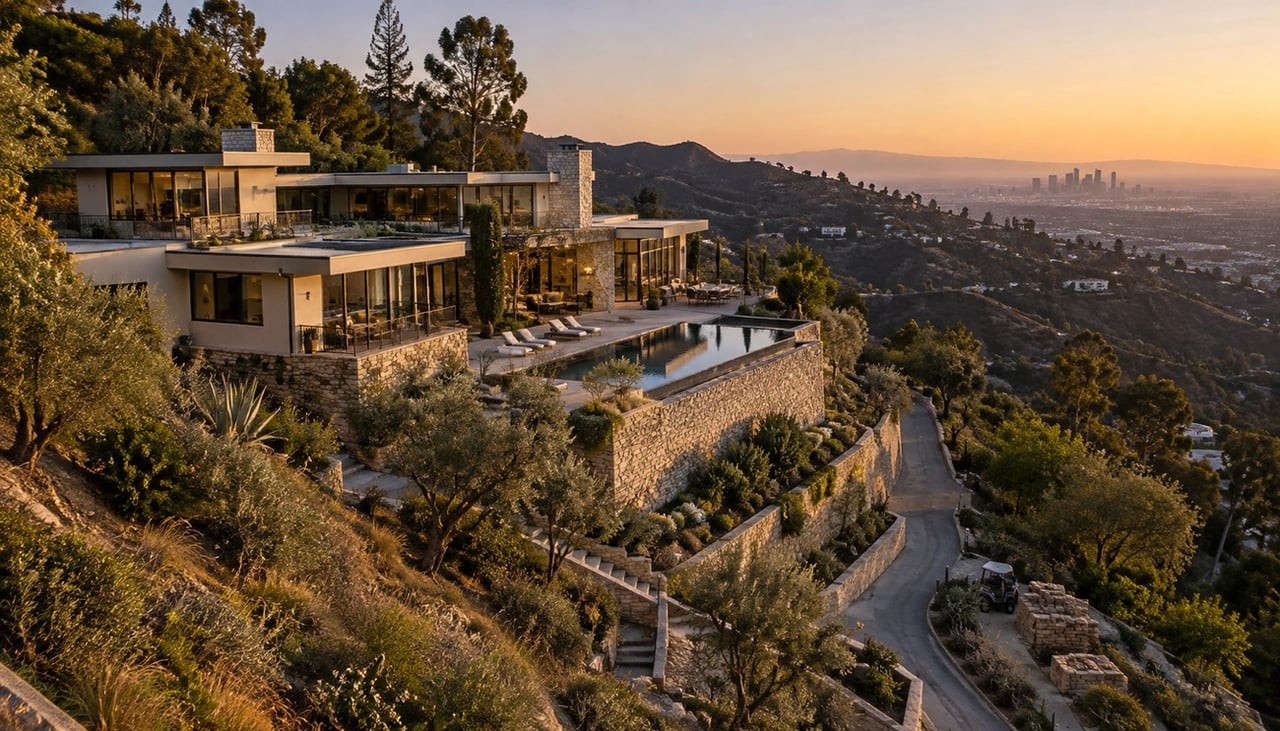
Views drive prices here. Homes with unobstructed panoramas from downtown Los Angeles to the Pacific can command millions more, especially when they overlook the basin and city lights at night. South-facing parcels carry added value because of their sunset exposure.
Lot size also shapes each property's potential. Most parcels sit on steep grades. Some are compact hillside lots, while larger estates can approach an acre. The terrain often calls for multi-level layouts, extensive decking, or infinity-edge pools instead of conventional single-story plans.
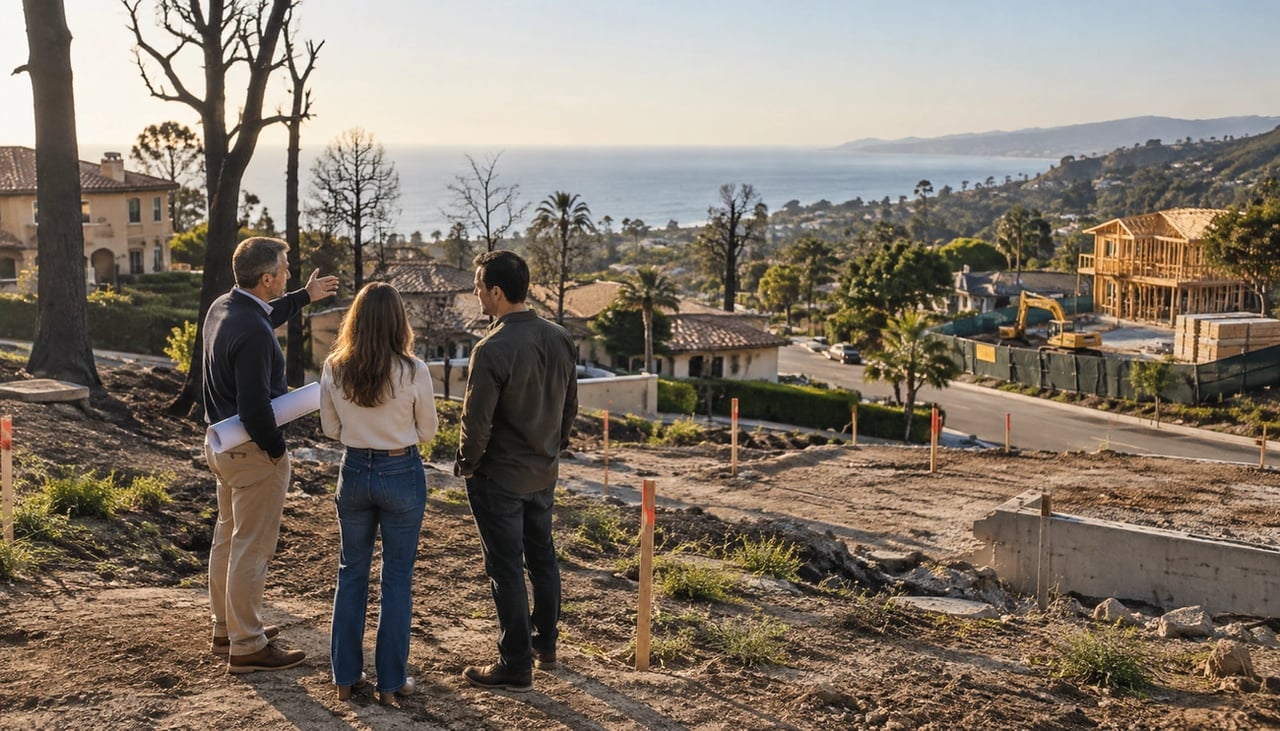
Buyers should assess fire exposure, which is common in hillside communities, and earthquake-engineering requirements before setting a renovation scope. Narrow driveways can restrict parking for large gatherings, and storms can create road-access issues. Modest HOA fees also support community upkeep.
Hillside Risks to Check Before Making an Offer

Image Source: Weinstein Construction
Turning Renovation Plans into a Workable Budget
Discretion does not end when the purchase closes. It carries into how the renovation is planned, priced, and permitted. A design vision becomes a budget that can withstand scrutiny when it starts with the records already on file with the city, rather than a contractor's first bid.
Matching the scope to surveys and approved building recordsLADBS's online system and the newer PRISM platform contain building permits dating to 1905, certificates of occupancy from 1940, soils and geology reports, plot plans, and approved building plans. Reviewing these records before finalizing the scope shows what the city approved for the lot and what merely exists today.
Checking Los Angeles hillside rules and permit needs The Baseline Hillside Ordinance governs new construction and additions on hillside-fronting lots. Grading, retaining walls, pools, and most remodels each require separate permits.
Testing plans for pools, additions, and outdoor space A hillside pool covered by this ordinance requires a geotechnical report that addresses slope stability before LADBS approves it. Grading and retaining-wall reviews can extend the timeline to 10 to 20-plus weeks.
Choosing an architect, engineer, and hillside contractor A hillside feasibility study completed before design can estimate grading quantities, access width, and geotechnical exposure. These costs can rival the house's cost on a steep lot.
Budgeting for site work, permits, and hidden repairs Standard residential remodels in Los Angeles usually take 6 to 10 weeks for plan check. New residential construction takes 4 to 8 months, and every correction cycle adds another 2 to 6 weeks.
Planning the approval timeline and construction schedule A county-issued permit expires if work does not begin within 12 months. It also lapses after work stops for more than 180 days, while extensions require written requests and fees.
Questions to Ask Before Committing to the Estate
A hillside estate closing here comes down to a handful of direct questions, not a feature checklist. Christina Pope of Sotheby's International Realty, EliteResidenceInternational.com, guides private buyers through these conversations before they sign a contract.
Can the purchase contract allow enough time for due diligence? Soil reports and permit history, along with slope-stability studies and fire-zone insurance quotes, take time to gather. Standard suburban-sale contracts rarely allow enough time to complete that work on a graded hillside pad.
Will the finished home justify the total investment? Renovation costs on a Mount Olympus lot rise quickly once the budget includes grading, retaining walls, and fire-hardening materials. The finished value must exceed that total before buyers submit an offer, not afterward.
Could Measure ULA affect a future sale at the expected price? Deals that close after June 30, 2026, face a 4% transfer tax on sales between $5.40 million and $10.90 million. The rate rises to 5.5% on sales of $10.90 million or more, in addition to the city's base transfer tax. UCLA research found that the odds of a property selling above the $5 million threshold fell by as much as 55% since the tax took effect. Any resale projection prepared today should account for that math.
bove the Boulevard: Three Hollywood Hills Homes on the Market Now
Here are three active listings that show the range of the Hollywood Hills: a 1932 villa in Hollywood's first historic district, a reimagined estate above the Bird Streets, and a view property on Nightingale Drive ready for its next chapter.
2001 Holly Hill Terrace, Whitley Heights, Los Angeles, CA 90068 (listings)
Listed at $1,995,000 · 5 Bedrooms · 5 Bathrooms · 4,241 Sq. Ft.
This 1932 Mediterranean Revival villa sits at the end of a quiet cul-de-sac in Whitley Heights, Hollywood's first National Register historic district. It was once home to Jane Fonda and Roger Vadim, and later, for 35 years, to actors Bryan Clark and Jo Deodato Clark. It is one of only two homes in the neighborhood protected by a Los Angeles Conservancy facade easement, and an active Mills Act contract reduces property taxes (buyer to verify). A grand staircase rises from Holly Hill Terrace to the formal entry, and a second entrance off Grace Avenue opens into the top of the house. Terraced gardens with mature fruit trees step down to a pool and spa, and a lower-level guest suite has its own entrance and full kitchen.
Listing agent: confirm in MLS before publishing.
8951 Appian Way, Hollywood Hills, Los Angeles, CA 90046 (listings)
Listed at $4,885,000 · 5 Bedrooms · 5 Full and 1 Half Bathrooms · 4,236 Sq. Ft.
Perched above the famed Bird Streets, this 1937 estate has been carefully transformed and blends original brick arches with warm modern design and a hint of Old Hollywood glamour. The living room has a statement arched picture window, and retractable walls of glass open to the pool and canyon. The primary level offers a panoramic outlook across canyon, city, Downtown and ocean. Outside, a PebbleTec pool and spa sit among mature oaks, fire pits and Art Deco touches. An adjoining vacant lot is included, offering future potential (buyer to verify).
Listing courtesy of Eliraz Malka of Coldwell Banker Realty.
9353 Nightingale Drive, Bird Streets, Los Angeles, CA 90069 (listings)
Listed at $9,995,000 · 4 Bedrooms · 6 Bathrooms · 7,022 Sq. Ft.
Nightingale Drive is widely considered one of the premier view streets in Los Angeles, and this roughly 7,000-square-foot 1961 residence in Doheny Estates captures views from Downtown to the Pacific. Soaring ceilings and dramatic volumes give it real scale, and it already includes a theater and wine cellar. The seller has commissioned architectural plans that will go to the buyer. For a developer or end user, it is a chance to build a true Bird Streets trophy property on one of the city's most coveted streets.
Listing agent: confirm in MLS before publishing.
Buying and Renovating a Mount Olympus Hillside Estate: Neighborhood Blurbs
Bel Air
Bel Air and Mount Olympus share a hillside logic: graded pads, steep grades, and homes whose potential depends on the ground beneath them. Christina Pope advises buyers to look past the finishes to soils, slope stability, retaining walls, drainage, and fire exposure, and to pull permit history before sketching a renovation. A realistic budget includes site work, engineering, and approvals, not just interiors. In both neighborhoods, the buyers who do the homework tend to like the surprises best. Bel Air guide →
Beverly Hills
Beverly Hills offers flatter lots in many areas, which makes a useful comparison for buyers weighing a hillside estate. Christina Pope, with deep international experience in the Dubai luxury market, advises setting the two side by side: a hillside lot can bring views and privacy, and it can also bring grading, retaining walls, and longer approval timelines. A buyer should model the full cost of the project against recent closed sales of similar homes before making an offer, not after. Beverly Hills guide →
Hollywood Hills
Mount Olympus sits within the Hollywood Hills, where graded building pads and 1960s hillside development still shape what an owner can do today. Christina Pope advises buyers to start with the lot: what the city approved, what exists now, and what hillside rules allow for additions, pools, and rebuilding. Geotechnical reports, fire-zone insurance quotes, and slope-stability studies take time, so the contract should leave room for them. Original homes and rebuilt ones each have a story, and the records tell it. Hollywood Hills guide →
Brentwood
Brentwood has its own hillside parcels, and the same questions apply: how steep is the lot, what do the permits show, and what would a renovation involve? Christina Pope advises buyers to request permit records, surveys, and specialist reports early, and to ask a contractor with hillside experience to review the site before the design is drawn. Budgeting for engineering and approval timelines alongside finishes keeps a renovation plan realistic. Brentwood guide →
Pacific Palisades
For many Pacific Palisades buyers, renovation and rebuilding questions overlap with permits, insurance, and timelines that vary by lot. The honest pivot is that a hillside renovation here should be planned around what the city will approve, not just what a designer can imagine. Christina Pope advises verifying permits and approvals, requesting insurance terms early, and bringing an architect and engineer in before committing. Good documentation makes a long project feel shorter. Pacific Palisades guide →
Hidden Hills
Hidden Hills is a gated community with larger, generally flatter lots, so it is a limited match for a steep-hillside renovation topic. The honest pivot is that renovation here follows a different rulebook: community guidelines and city approvals govern additions and changes. Christina Pope advises buyers comparing Hidden Hills with a hillside estate to weigh how each lot would be built and maintained, and to confirm what is permitted before planning improvements. Hidden Hills guide →
Malibu
Malibu shares the hillside buyer’s concerns and adds coastal ones, including bluff conditions, drainage, and coastal permitting. Christina Pope advises buyers to review permit history and specialist reports, obtain address-specific insurance quotes, and confirm what renovation is feasible before committing. Whatever the setting, the best offers come from a budget that includes site work, engineering, and time. The view is the reward for doing the homework. Malibu guide →
Considering a hillside estate and want the numbers checked first? Christina Pope, Senior Global Real Estate Advisor (CA DRE# 02022142), can be reached at 310.404.9931 or through Contact. Explore Global Listings, request a Home Valuation, see Relocation support, read the Blog, or learn more About Christina.
Conclusion
Mount Olympus real estate favors buyers who value discretion over speed. Success depends on verified soils reports, accurate permit history, and realistic renovation budgets rather than curb appeal alone. Each estate presents its own concerns despite the neighborhood’s graded hillside origins, from slope stability to fire-zone insurance costs, and buyers should examine them before submitting an offer. Experienced guidance from Christina Pope at Sotheby’s International Realty, EliteResidenceInternational.com, can help buyers avoid the expensive surprises common in this market. Patience and precision, not urgency, separate a sound hillside purchase from a costly renovation mistake.
Key Takeaways
Buy Mount Olympus hillside estates with disciplined due diligence to protect both renovation potential and long-term value.
- Access off-market inventory through trusted networks, but base offers on recent closed sales, likely appraisal values, and verified financing—not asking prices.
- Evaluate the lot before the home: inspect soils, slopes, retaining walls, drainage, fire exposure, and equipment access for costly hidden constraints.
- Pull permit history, surveys, and geology records before designing. Confirm existing improvements and test pools, additions, and grading against hillside rules.
- Build renovation budgets around site work, engineering, permits, fire-hardening, and delays—not just finishes. Hillside approvals can add months to timelines.
- Model the finished home’s resale value before offering, including Measure ULA’s 4%–5.5% transfer tax on qualifying future sales.
FAQs
Q1. What should buyers inspect before purchasing a Mount Olympus hillside home?
Check soil and slope stability, foundations, retaining walls, drainage, fire exposure, and road access. Review permit records and obtain an address-specific insurance quote before closing.
Q2. Do hillside renovations in Mount Olympus require permits?
Most remodels, additions, pools, retaining walls, and grading work require permits. Los Angeles hillside rules can limit what you can build, so confirm feasibility before finalizing plans.
Q3. What costs should a hillside renovation budget include?
Include engineering, soil studies, grading, drainage, retaining walls, permits, and fire-resistant materials—not just interior finishes. Allow room for hidden repairs and approval delays.
Q4. How long can hillside renovation approvals take?
Standard Los Angeles remodel plan checks typically take 6–10 weeks. Projects involving pools, grading, or retaining walls can take 10–20 weeks or longer, with corrections adding more time.
Q5. How can buyers judge whether a Mount Olympus renovation is worth the investment?
Compare the purchase price and full renovation budget with recent closed sales of similar homes. Account for views, usable land, condition, and potential resale taxes, including Measure ULA where applicable.