The Home Speakeasy Movement in Los Angeles
"I think speakeasies create a sense of mystery and glamor and a little bit of specialness." — Ellie Redders, Owner and principal of Ellie Redders Interiors
The speakeasy trend has left commercial bars and moved into residential spaces. St. Louis Magazine reports that designers and homeowners create hidden, atmosphere-heavy rooms in basements, butler's pantries, and behind bookshelf doors. Los Angeles embraced this move in unexpected ways through office speakeasies that blend exclusivity with workplace culture. Sidley Austin's Century City office installed a vintage bar so large the ceiling required raising, while Mob Scene concealed their modern watering hole behind a janitor's closet.
Two elements separate a home speakeasy from a standard bar: the hidden entrance and the immersive atmosphere. A home bar serves a function. A speakeasy creates experience through disguised doors that transition visitors into moody, separated spaces. The space remains just another nice bar without that concealed entrance.
Cost varies based on scope. A simple conversion using paint, lighting and a hidden door runs $2,000 to $5,000. Custom builds with bookshelf doors, built-in bars and professional finishes reach $15,000 to $40,000 or more. The hidden door alone costs $3,000 to $10,000 for professional installation.
Intimacy matters more than size. Small spaces like converted closets or corners achieve atmospheric goals with ease. Homeowners spending more time entertaining privately accelerated this movement after the pandemic.
Designing Your LA Speakeasy at Home
"Hidden behind a secret bookcase door, our vision for The Speakeasy was to create an intimate, indulgent escape." — Nicole Webster, Co-creative director of EM Design Studio
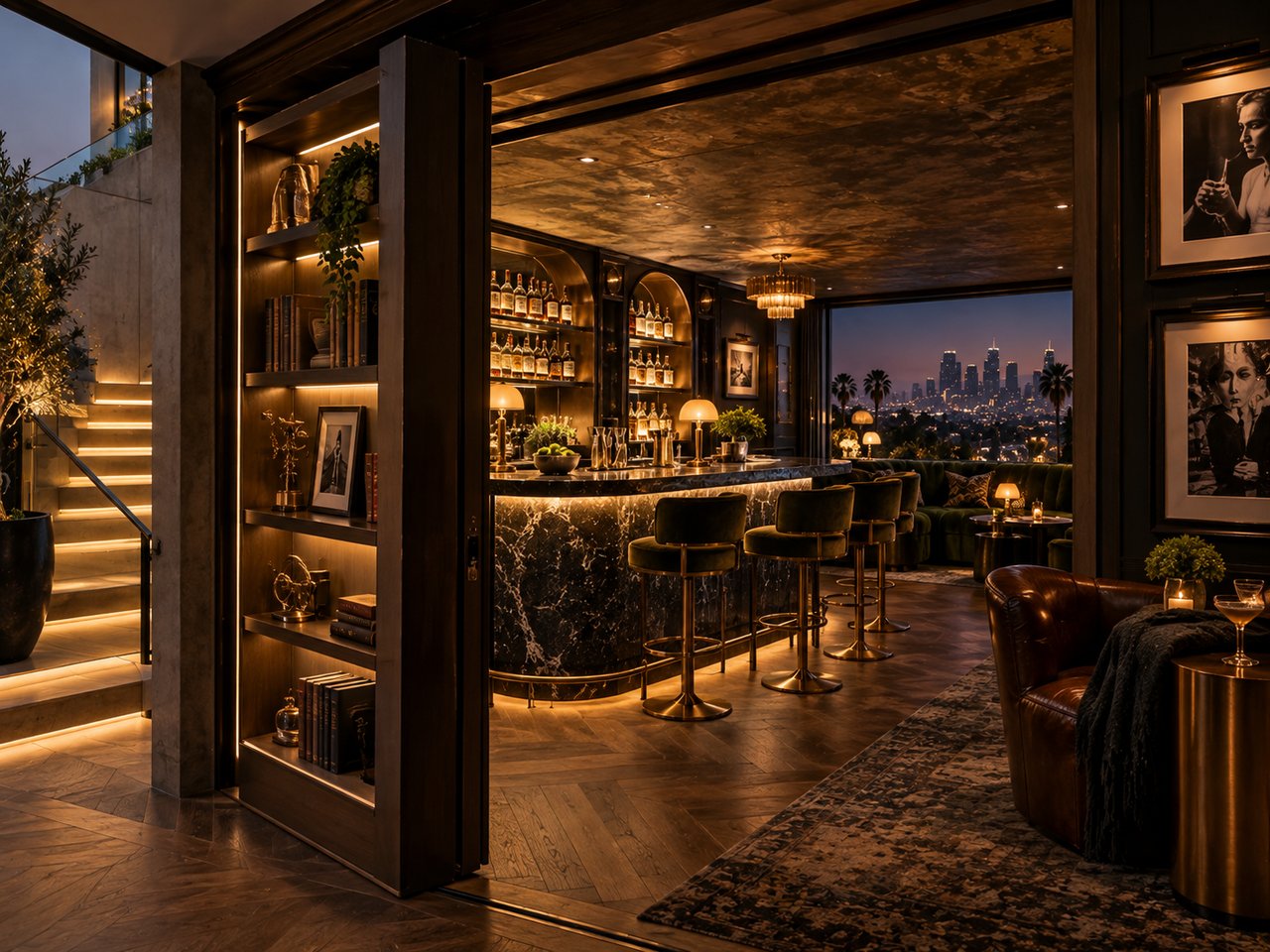
Authentic speakeasy vibes start with the entrance. Bookshelf doors remain the gold standard. They swing open on heavy-duty pivot hinges that transfer weight to the floor rather than standard hinges. Flush wall panels are invisible alternatives and line up seams with trim patterns. They use magnetic latches instead of handles. Wine racks that pivot on hidden touch latches provide thematic coherence for la speakeasy culture.
Interior design blends Art Deco and Bauhaus with Edwardian opulence. Walls get color-drenched in forest green or deep navy to create immersive atmospheres. Dark wood paneling in walnut or reclaimed barn wood adds warmth and acoustic absorption. Velvet upholstery in emerald or burgundy absorbs light rather than reflecting it. This reads as moody and luxurious.
Lighting follows the 2200K rule: no overhead fixtures. Only warm-amber bulbs in table lamps, wall sconces, and under-cabinet strips behind the bar. Edison bulbs with exposed filaments cast amber glows reminiscent of candlelight. Bar pendant lights featuring aged brass and copper finishes establish focal points.
The bar itself showcases marble or butcher-block tops with open shelving lit by 2200K LED strips. Brass bar tools and vintage glassware complete the setup. The right home makes all the difference for those who love to entertain. If you're thinking about a purchase in the near future or beginning your search, I'd be happy to help you find spaces designed for better living and effortless hosting. Christina Pope  310-404-9931
  [email protected]
The Cultural Shift Behind Private Entertainment Spaces
Luxury real estate in Los Angeles operates through private conversations and strategic timing rather than public headlines. The most important transactions unfold within trusted circles where discretion carries as much weight as value. Visibility remains secondary to precision for those who understand this world.
This discretion extends to how homeowners entertain. Gen-Z and millennials now prefer intimate home gatherings over crowded restaurants and bars. The post-pandemic period accelerated a renewed focus on intentional design for entertaining. Environments are curated for effortless hospitality rather than mere aesthetics. Previous generations viewed home bars as basement additions. Modern homeowners integrate them into open-plan kitchens and multifunctional living spaces.
The financial case strengthens this change. Homes with dedicated entertainment areas like bars can see up to 42% increases in resale value when executed thoughtfully. Over 60% of luxury property specialists report that indoor/outdoor merging with bar areas ranks among the most sought-after features. This represents a 10% increase year-over-year. Homes featuring well-laid-out bars sell faster and command higher price points in specific markets.
These spaces change how people connect. Home bars create natural gathering points for conversation and laughter. The need to leave home for quality experiences is eliminated.
Christina Pope—Sotheby's International Realty
EliteResidenceInternational.com
Conclusion
The speakeasy trend moved from LA's nightlife scene into residential spaces that blend exclusivity with sophisticated entertaining. Homeowners who invest in these hidden bars create atmospheric gathering points and boost property value. Resale increases reach 42%. The right home makes all the difference for those who love to entertain. Spaces designed for sophisticated living offer a lifestyle boost and smart investment. Christina Pope—Sotheby's International Realty 310-404-9931 [email protected] EliteResidenceInternational.com
Key Takeaways
Los Angeles homeowners are transforming the classic speakeasy concept from commercial venues into exclusive private entertainment spaces that combine old Hollywood glamor with modern luxury living.
• Hidden entrances are essential: Bookshelf doors and concealed panels distinguish authentic speakeasies from standard home bars, creating immersive experiences through mystery and transition.
• Investment ranges from $2,000 to $40,000+: Basic conversions start at $2,000-$5,000, while custom builds with professional finishes reach $15,000-$40,000 or more.
• Home bars boost property value by up to 42%: Well-designed entertainment spaces significantly increase resale value and appeal to luxury buyers seeking curated hosting environments.
• Design follows the 2200K lighting rule: Authentic speakeasy atmosphere requires warm-amber lighting (no overhead fixtures), dark color palettes, velvet upholstery, and Art Deco elements.
• Cultural shift toward private entertaining: Post-pandemic lifestyle changes and Gen-Z/millennial preferences favor intimate home gatherings over crowded public venues, making home speakeasies both lifestyle upgrades and strategic investments.
The trend reflects how modern homeowners are reimagining residential spaces to prioritize privacy, exclusivity, and intentional design for effortless hospitality.
FAQs
Q1. What's the difference between a home bar and a home speakeasy? The key difference lies in two elements: the hidden entrance and the immersive atmosphere. A home bar serves a functional purpose, while a speakeasy creates an experience through disguised doors (like bookshelf entrances) that transition visitors into moody, separated spaces. Without that concealed entrance, the space remains just another nice bar rather than an authentic speakeasy.
Q2. How much does it cost to build a speakeasy in your home? Costs vary based on the project scope. A basic conversion using paint, lighting, a bar cart, and a hidden door typically runs $2,000 to $5,000. Custom builds with bookshelf doors, built-in bars, soundproofing, and professional finishes can reach $15,000 to $40,000 or more. The hidden door alone costs $3,000 to $10,000 for professional installation.
Q3. Do home speakeasies increase property value? Yes, significantly. Homes with dedicated entertainment areas like bars can see up to 42% increases in resale value when executed thoughtfully. Over 60% of luxury property specialists report that well-designed bar areas rank among the most sought-after features, and homes featuring these spaces sell faster and command higher price points in specific markets.
Q4. What lighting should I use to create an authentic speakeasy atmosphere? Follow the 2200K rule: avoid overhead fixtures and use only warm-amber bulbs in table lamps, wall sconces, and under-cabinet LED strips behind the bar. Edison bulbs with exposed filaments cast amber glows reminiscent of candlelight, while bar pendant lights with aged brass and copper finishes establish focal points for an authentic speakeasy vibe.
Q5. Why are homeowners choosing to build private speakeasies instead of going to public bars? Post-pandemic lifestyle changes have accelerated a cultural shift toward private entertaining. Gen-Z and millennials now prefer intimate home gatherings over crowded restaurants and bars, focusing on intentional design for effortless hospitality. Home speakeasies create natural gathering points for conversation while offering privacy, exclusivity, and the convenience of quality experiences without leaving home.