Los Angeles HPOZ rules determine how homeowners can modify properties across more than 30 historic districts citywide. For Miami relocators accustomed to a different set of preservation standards, these regulations carry real weight before any offer is made on a character home. HPOZs account for roughly 2% of all parcels in Los Angeles, yet their influence on renovation timelines and costs is anything but small. What follows covers how Los Angeles historic districts differ from Miami's system, where to find neighborhoods such as Hancock Park HPOZ and Windsor Square HPOZ, which changes require approval, and how to use the HPOZ Los Angeles map to confirm whether a property falls within a regulated area.
What Makes Los Angeles Historic Districts Different From Miami
"The HPOZ is about ensuring that growth is compatible with the neighborhood, that each of us can improve and enlarge our own homes and protect our property values while maintaining the unique character of Holmby Westwood." — Holmby Westwood Property Owners Association, Community organization advocating for historic preservation
Preservation rules in Los Angeles are structured very differently from what Miami buyers are used to. Those differences shape how long approvals take, how much oversight property owners face, and how much flexibility remains once an offer closes.
HPOZ vs. Miami Historic Preservation Board
Each Los Angeles historic district runs its own Preservation Plan through a neighborhood-specific board. Properties in Hancock Park HPOZ follow different guidelines than those in Windsor Square HPOZ, even though both protect early 20th-century residential architecture. Each HPOZ Board carries five members, with at least three required to be renters or owners within that specific district. Boards covering multiple districts expand to seven members.
Miami's system is centralized. A single Historic and Environmental Preservation Board reviews projects across all designated areas citywide, applying the Secretary of the Interior's Standards for Rehabilitation as its baseline, with supplemental guidelines for areas such as Morningside and MiMo/Biscayne Boulevard. Review authority stays consolidated rather than distributed among individual neighborhoods.
The result is a meaningful difference in consistency. Los Angeles tailors guidelines to each district's distinct period and character across more than 30 HPOZs. Miami favors uniform standards, which creates a more predictable process — though one that accounts less for neighborhood-specific context.
How Los Angeles zoning overlays work
HPOZs function as zoning overlays established under Los Angeles Municipal Code Section 12.20.3, each applied to a defined geographic area. These overlays add a specialized layer of regulation on top of the underlying base zoning rather than replacing it. Anyone seeking to develop within an overlay must satisfy both sets of requirements.
A property might carry standard R1 single-family base zoning while also falling within an HPOZ boundary, which opens two separate review paths. Base zoning addresses use, density, and setbacks. The HPOZ overlay addresses exterior modifications and historic character. Miami's zoning approach integrates these considerations within a single framework, which is a meaningful structural distinction for buyers moving between the two markets.
The Office of Historic Resources administers the citywide program, maintaining district surveys and handling staff-level approvals. Major projects go to each neighborhood's HPOZ Board, reviewed against that district's own Preservation Plan.
Property rights and review authority
HPOZ review under LAMC 12.20.3 covers only exterior features visible from the public right-of-way. That includes facades of contributing structures — windows, doors, porches, roofs, additions, and secondary structures. For new construction and non-contributing properties, boards apply guidelines around massing, orientation, and setback.
A Certificate of Appropriateness provides design-review clearance but does not stand in for a building permit. Approved projects still proceed through standard building department plan check before any work begins. Work done without HPOZ review in a local historic district can trigger Department of Building and Safety Code Enforcement action and associated fines.
Miami also requires Certificates of Appropriateness for modifications within its historic sites and districts. One notable difference: Miami offers Transfer of Development Rights programs, allowing owners to sell unused development rights as a way to offset preservation costs. Los Angeles takes a different approach to financial relief, directing qualifying owners toward Mills Act property tax benefits instead.
Where to Find HPOZ Neighborhoods in Los Angeles
City Council has designated thirty-five neighborhoods as HPOZs as of 2023, stretching from San Pedro to San Fernando. These districts range considerably in scale — some cover just two blocks, others encompass hundreds of structures. For Miami relocators evaluating character homes, each neighborhood carries its own architectural identity and preservation requirements worth knowing before making an offer.
Hancock Park HPOZ and Westside districts
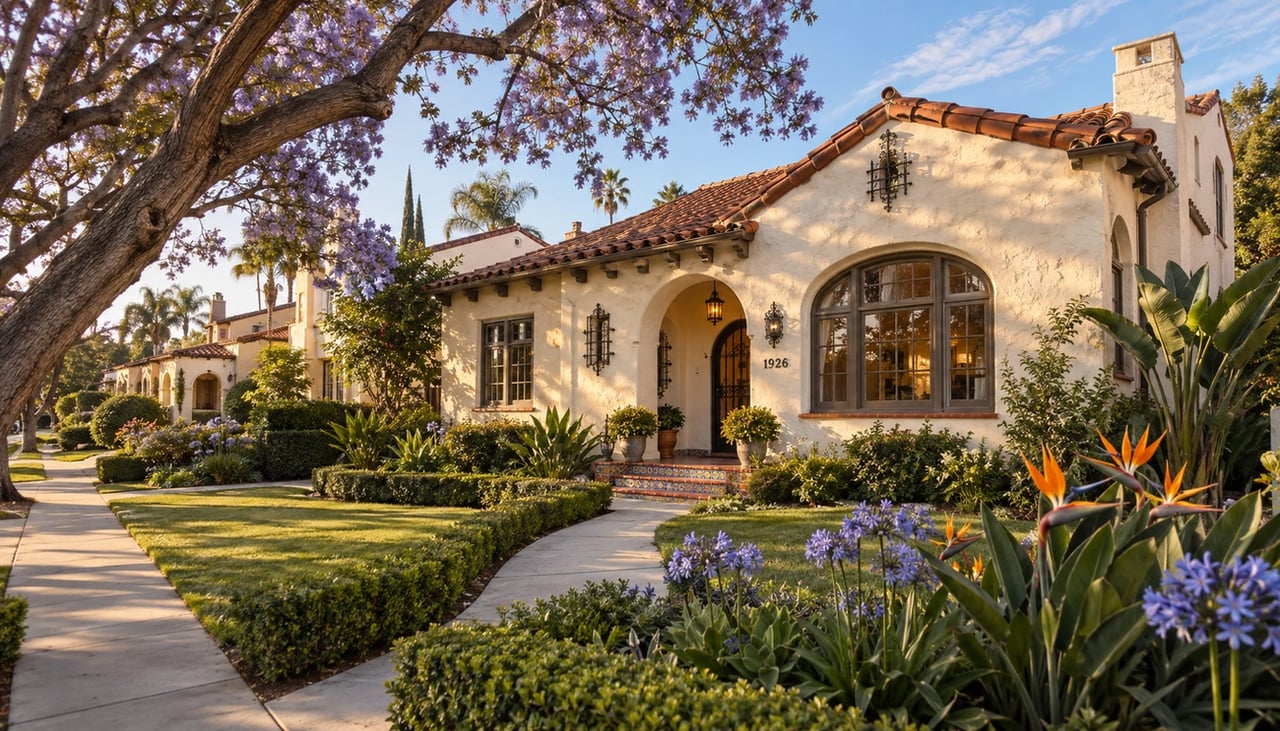
Hancock Park occupies the eastern portion of the original Rancho La Brea area, developed for residential use during the 1920s by G. Allan Hancock. The district is home to palatial two-story Period Revival residences — Tudor Revival, English Revival, Spanish Colonial Revival, Mediterranean Revival, and American Colonial Revival among them. The Historical Resources Survey identified 91% of structures as contributing. Sixty-six blocks and 1,282 parcels make up the HPOZ, with 1,171 of those parcels holding contributing status. Boundaries run from Melrose Avenue on the north to Wilshire Boulevard on the south, and from Rossmore Avenue on the east to Highland Avenue on the west. City Council adopted the Hancock Park HPOZ in 2008.
Windsor Square HPOZ and Mid-Wilshire area
Windsor Square traces its origins to the Windsor Square Investment Company's 1911 subdivision of Rancho La Brea land. Lots were designed with a minimum 100-foot frontage and over 300-foot width — marketed at the time as the most exclusive and largest upper-class subdivision in Los Angeles history. Today, nearly 90% of the 1,100 homes retain their original street-facing facades from the early 1920s. The architectural range is broad, from early Craftsman and Beaux Arts to Spanish Colonial, Mediterranean, Tudor, French, and American Colonial Revival, with Contemporary and California Ranch examples also present. City Council adopted Windsor Square HPOZ in 2004.
West Adams and Jefferson Park
West Adams is well regarded for its Craftsman and Victorian homes. Jefferson Park, known locally as "The Bungalows," holds over 2,000 structures — one of the largest collections of Arts & Crafts bungalows anywhere in the country. A notable portion of Jefferson Park houses were built using prefabricated kits sourced from Sears and Pacific Ready-Cut Homes. The HPOZ boundaries run from Adams Boulevard on the north to Exposition and Jefferson Boulevards on the south, between 7th Avenue on the west and Western Avenue on the east. The district received City Council adoption in 2011.
Silver Lake and Los Feliz
Los Feliz falls within the Hollywood Grove Historic Preservation Overlay Zone, where any exterior change visible from the street must be consistent with the neighborhood's historic character. Spanish Colonial, Tudor, Storybook, and Craftsman styles define its residential streets. Silver Lake has documented historic resources, though it carries fewer blanket overlays than Los Feliz.
Using the HPOZ Los Angeles map to identify districts
LA City Planning maintains the official list and boundary maps for all designated HPOZs, searchable by address. Street signs within HPOZ areas also display additional signage marking the preservation zone — a useful on-the-ground indicator for anyone exploring neighborhoods in person.
What Renovations Require HPOZ Approval
Every property within a Los Angeles historic district is subject to additional review for exterior renovations, additions, new construction, and other exterior changes — including those that may not require a building permit, such as landscaping and paint. Work carried out without HPOZ review may result in Department of Building and Safety Code Enforcement action and related fines.
Exterior changes that need review
HPOZ boards review alterations to the facades of contributing structures, covering windows, doors, porches, roofs, additions, and secondary structures. Anything visible from the street typically falls within scope — exterior walls and finishes, roofs and chimneys, porches and entries, windows and doors, trim and detailing, garages and accessory structures, driveways, front fencing, and front yard landscaping. The measure of approval is compatibility in scale, materials, and proportion with the original style and streetscape.
LAMC 12.20.3 limits HPOZ review to exterior features visible from the public right-of-way. Projects that commonly require at least staff review include additions that alter rooflines, facade material changes, roofing material changes where the roof is visible or character-defining, removal or alteration of character-defining features, new or altered fences, visible mechanical equipment, and garage additions.
Work you can do without board approval
Ordinary maintenance that leaves original materials, design, and details intact is generally exempt. Replacement in kind — matching material, profile, and appearance — can be handled at the staff level. Repainting within an already-approved color scheme typically requires no HPOZ review. Interior work with no exterior visibility falls outside the scope of HPOZ design review entirely. When there is any uncertainty, written confirmation of exemption should be secured before work begins.
Contributing vs. non-contributing properties
Each district's Historic Resource Survey classifies properties as either Contributing — which includes Contributing Altered — or Non-Contributing. Contributing structures date to the neighborhood's period of significance and have not been compromised by major alterations or additions. Non-contributing structures may have been heavily altered or built outside that period. Contributing properties carry stricter exterior review standards, while non-contributing properties allow more flexibility, though compatibility with the neighborhood remains a requirement for both.
How Miami building standards differ from LA requirements
Miami applies the Secretary of the Interior's Standards for Rehabilitation across historic buildings of all materials, extending to both exterior and interior conditions. Those standards also address related landscape features, the building's site and environment, and any attached, adjacent, or related new construction. Los Angeles HPOZ review is narrower — limited to exterior features visible from the public right-of-way, with interior conditions outside its reach entirely.
The HPOZ Review Process and Timeline
Projects submitted to the Office of Historic Resources follow one of four distinct review paths based on scope, visibility, and property status: Certificate of Appropriateness (COA), Certificate of Compatibility (CCMP), Conforming Work on a Contributing Structure (CWC), or Conforming Work on a Non-Contributing Structure (CWNC). Each path carries its own board review requirements and filing fees.
Staff-level review vs. board hearings
Routine or like-for-like projects that meet objective guidelines can often be approved at the staff level, without a board hearing. Others move from staff review to the district's HPOZ Board for consultation. The Los Feliz HPOZ Board, for example, holds public hearings for larger or more visible projects. Major alterations, visible additions, demolition, new primary structures, and compatibility questions all go before the HPOZ Board at a public meeting.
Preparing your application and documentation
Applications are submitted through the Department's Online Application System. A complete submission includes existing photos, a site plan, elevations, material samples or spec sheets, and a narrative explaining how the design meets district guidelines. The review clock starts only once all required information has been submitted and the application is deemed complete. Reaching out to an OHR HPOZ planner for preliminary feedback before finalizing design decisions can save meaningful time.
Expected approval timelines
Staff-level approvals take several weeks, depending on City workload and how complete the application is at submission. Once deemed complete, Conforming Work projects carry a 21-day review limit. Board-reviewed projects can run several months, factoring in scheduling, any required environmental checks, and permit processing. The COA and CCMP process allows up to 75 days from the point the application is considered complete.
What happens if your project is denied
A 15-day appeal window applies to projects requiring a Certificate of Appropriateness or Certificate of Compatibility. Starting work ahead of approvals risks stop-work orders, financial penalties, and mandatory restoration. Work completed without permits may need to be fully reversed, with any original historic material restored or reconstructed.
Costs and Financial Considerations for Buyers
"Properties within designated districts frequently exhibit stronger appreciation than comparable homes outside those areas, making them strategic choices for long-term investors." — Brett Furman Group, Specialist in residential properties, including historic homes
Owning an HPOZ property comes with cost layers that go beyond a standard purchase and renovation budget. For buyers relocating from Miami, some of these figures will look familiar, while others reflect how Los Angeles structures its own approach to preservation.
Review fees and architectural costs
HPOZ Certificate of Appropriateness fees range from USD 567.60 for projects not involving new construction to USD 2,047.20 for additions exceeding 750 square feet. Historic Resources Building Permit Clearance adds USD 939.60 for larger projects. Architectural fees typically fall between 8 and 15% of total construction cost for full-service project management — on a USD 1.5 million renovation, that translates to USD 120,000 to USD 150,000 in architectural services alone. Preservation consultants familiar with HPOZ requirements are worth engaging early, as compliant designs from the outset reduce the back-and-forth that extends timelines.
Budget differences from Miami renovations
Historic remodeling in Miami runs USD 150 to USD 400 per square foot, carrying a 20 to 40% premium over standard residential work. Los Angeles historic projects carry comparable premiums, driven by period-appropriate materials and the specialized labor required to work within them. Pre-permit architectural costs in Miami typically fall between USD 8,000 and USD 20,000, while Los Angeles HPOZ review fees remain on the lower end — though the architectural services attached to those applications represent the more significant line item.
Mills Act property tax benefits
The Mills Act offers qualified historic property owners a revolving 10-year contract that substantially reduces annual property tax obligations. Savings commonly range from 40 to 60% of the annual tax bill, and across Los Angeles, Mills Act contract holders collectively save more than USD 20 million in property taxes each year. Contracts transfer automatically to new owners at the time of sale, which makes them a genuine asset at resale. The city currently holds an eligibility threshold of USD 1.5 million assessed value for single-family residences, and it is worth noting that no new application cycles have opened since 2020.
Impact on resale value and market positioning
HPOZ designation tends to work in a property owner's favor rather than against them. Consistent architectural character across an entire block builds the kind of market confidence that supports strong resale values. Buyers drawn to Hancock Park HPOZ and comparable districts come with high expectations for authenticity — expectations that HPOZ guidelines actively protect. Properties that remain within those guidelines sell with less friction and regularly command premiums, while modifications made outside them introduce risks that are difficult to price away at resale.
A home in one of these neighborhoods is both a lifestyle choice and a considered investment. If you are beginning your search or simply want to understand what ownership in one of these districts looks like in practice, Christina Pope would be glad to help. 📞 310-404-9931 ✉️ [email protected]
Conclusion
Los Angeles historic preservation rules shape renovation timelines, approval processes, and long-term property value in ways that differ materially from what Miami buyers are accustomed to. Buyers evaluating character homes in Hancock Park HPOZ, Windsor Square HPOZ, or any of the city's thirty-five designated districts would do well to confirm HPOZ status before making an offer. Knowing which exterior changes require board review, how staff-level approvals differ from public hearings, and where Mills Act benefits offset compliance costs leads to more realistic budgets and fewer surprises. Properties maintained in accordance with HPOZ guidelines hold their architectural integrity and tend to hold their value within protected neighborhoods.
Key Takeaways
Los Angeles operates 35+ Historic Preservation Overlay Zones (HPOZs) with decentralized, neighborhood-specific boards—unlike Miami's centralized Historic and Environmental Preservation Board. This means renovation guidelines vary significantly between districts like Hancock Park and Windsor Square, requiring buyers to understand each area's unique preservation standards.
• HPOZ review applies only to exterior changes visible from public right-of-way, not interior work, with approval timelines ranging from 21 days for staff-level conforming work to 75+ days for board-reviewed projects.
• All exterior modifications—including windows, doors, roofing, additions, and even front yard landscaping—require HPOZ approval before work begins, with violations triggering stop-work orders and mandatory restoration.
• Certificate of Appropriateness fees range from $567 to $2,047 depending on project scope, while architectural services typically add 8-15% of construction costs to renovation budgets.
• Mills Act contracts deliver 40-60% property tax reductions for qualified historic properties, saving Los Angeles homeowners collectively over $20 million annually and transferring automatically to new buyers.
• HPOZ designation functions as a value driver rather than burden—properties maintaining architectural integrity command premiums and demonstrate stronger appreciation than comparable non-designated homes, making them strategic long-term investments.
Before purchasing a character home in Los Angeles, verify HPOZ status using LA City Planning's official maps and consult with preservation specialists to understand district-specific guidelines, realistic renovation timelines, and total compliance costs that differ materially from Miami's preservation framework.
FAQs
Q1. What is an HPOZ and how does it affect property owners in Los Angeles? An HPOZ (Historic Preservation Overlay Zone) is a zoning overlay that regulates exterior modifications to properties within designated historic districts in Los Angeles. Property owners must obtain approval before making visible changes to their home's exterior, including alterations to windows, doors, roofing, additions, and even front yard landscaping. Los Angeles has 35+ HPOZs, each with its own preservation board and specific guidelines tailored to the neighborhood's architectural character.
Q2. Which Los Angeles neighborhoods have HPOZ designations? Major HPOZ neighborhoods include Hancock Park, Windsor Square, West Adams, Jefferson Park, Silver Lake, and Los Feliz. Hancock Park features palatial 1920s Period Revival homes with 91% contributing structures, while Windsor Square contains nearly 1,100 homes from the early 1920s with 90% retaining original facades. Jefferson Park has over 2,000 Arts & Crafts bungalows, many built from Sears and Pacific Ready-Cut kit homes. You can verify HPOZ status using LA City Planning's official maps searchable by address.
Q3. What types of renovations require HPOZ approval? Any exterior change visible from the street requires HPOZ review, including modifications to walls, roofs, windows, doors, porches, garages, driveways, fencing, and landscaping. Ordinary maintenance that doesn't change original materials or design is typically exempt, and interior-only work doesn't require review. Contributing properties face stricter scrutiny than non-contributing structures, though both must meet neighborhood compatibility guidelines.
Q4. How long does the HPOZ approval process take? Staff-level approvals for conforming work take approximately 21 days once the application is complete, while projects requiring board review can extend to 75+ days depending on complexity. The timeline includes application submission through the Department's Online Application System, completeness review, and either staff approval or scheduling for a public HPOZ Board hearing. Major alterations, visible additions, and new construction typically require board hearings.
Q5. Are there financial benefits to owning property in an HPOZ district? Yes, Mills Act contracts provide 40-60% property tax reductions for qualified historic properties, saving Los Angeles homeowners collectively over $20 million annually. These contracts transfer automatically to new buyers. Additionally, HPOZ properties often demonstrate stronger appreciation than comparable non-designated homes, as the consistent architectural character across protected neighborhoods supports market confidence and commands premiums at resale.