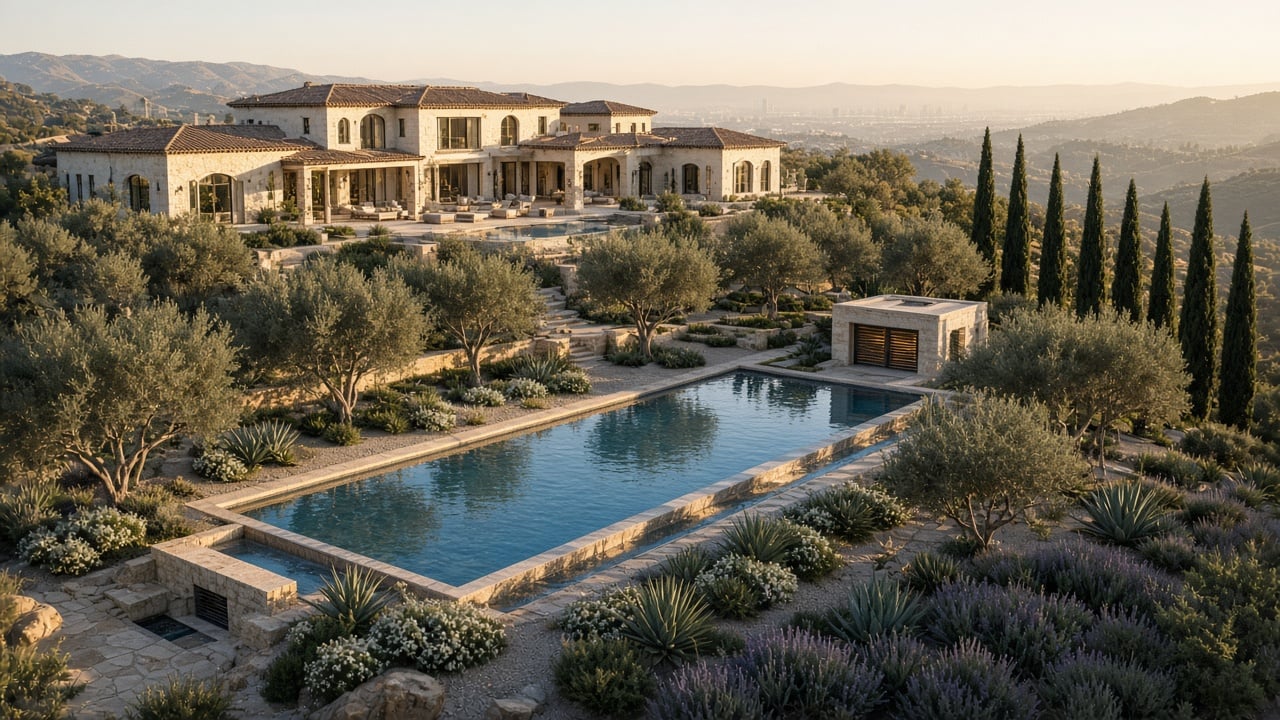
Looking for private water storage systems for a Los Angeles luxury estate in 2026? You are not alone. Across Bel Air, Malibu, Pacific Palisades, and the Hollywood Hills, high-net-worth buyers are treating on-site water reservoirs, residential fire protection water tanks, and estate cisterns as must-have infrastructure, not optional ranch equipment.
In today’s LA luxury market, square footage and view corridors still matter. So does a harder question on every serious tour: How much water is on the property, and how long will it last if hydrants, pressure, or power fail? Luxury agent Christina Pope sees that shift in buyer conversations from canyon compounds to Westside trophy homes, the same buyers researching resilience before they compare wine cellars.
This guide explains what private water storage systems are, why LA estates are installing them in 2026, how fire codes and drought landscaping fit in, which neighborhoods feel the demand first, and how sellers should market (and buyers should verify) on-site reservoirs.
What are private water storage systems on LA luxury estates?
Private water storage systems are on-site tanks, cisterns, or reservoirs that hold water for fire protection, irrigation, domestic backup, or a hybrid of all three. On Los Angeles luxury estates, the most common setups include:
Fire protection water tanks (dedicated fire supply)
Residential fire protection water tanks store a reserved volume for firefighting or wildfire roof-sprinkler systems. They are often sized and plumbed to fire-department connection standards so engines can draft even when municipal fire flow is weak or overloaded. Dedicated fire volume should not be drained by landscape irrigation.
Rainwater cisterns and non-potable irrigation storage
Estate cisterns and rain-capture systems store non-potable water for gardens, orchards, hardscape cooling, and acreage irrigation. In Los Angeles County, non-potable cistern plumbing must protect the potable (drinking) supply under Public Health cross-connection rules.
Domestic backup water storage and well pairing
On parcels with private wells, rebuild sites, or unreliable utility service, domestic water storage tanks buffer low well yield and support household use. County rebuild guidance sometimes pairs wells under certain flow thresholds with minimum potable storage volumes.
Hybrid estate water systems (the 2026 luxury package)
The highest-performing LA luxury estate water systems combine tanks with solar, battery backup, generators, WUI-rated construction, vegetation management, and wildfire roof sprinklers. Marketing language that once led with marble now leads with 10,000-gallon water storage, private wells, and fire shutters especially in canyon listings.
Related search terms this section targets: on-site water reservoir, residential cistern Los Angeles, fire water tank for home, estate water storage California, private fire hydrant water supply.
Why LA luxury estates are adding on-site water reservoirs in 2026
1. Wildfire readiness is a top buyer filter for WUI homes
Los Angeles County’s wildland–urban interface (WUI) reality has changed how buyers underwrite hillside and canyon real estate. In Very High Fire Hazard Severity Zones, buyers in Bel Air, Malibu, Pacific Palisades, and hillside Hollywood Hills ask whether a home can wet roofs, support apparatus, and run pumps if street pressure and electricity fail.
Private on-site water storage for wildfire protection answers that question with gallons, not guesses. Roof-sprinkler vendors increasingly market auxiliary water sources dedicated tanks and, where allowed, pool draw because a hydrant on a map is not the same as water when every neighbor is pulling at once.
2. California fire code already contemplates private fire water tanks
Private fire protection water supply tanks are not a new invention. California Fire Code frameworks and local AHJ (authority having jurisdiction) policies allow or require on-site tanks where municipal fire flow is inadequate common in rural, canyon, and hillside settings. Plan check typically covers:
- Minimum fire-flow and duration for the structure size and sprinkler status
- Tank capacity and dedicated fire volume
- Outlet diameter, fire-department connections, and access setbacks
- Approved tank materials and engineered drawings (often NFPA-referenced)
Los Angeles County fire-flow tables and neighboring-county residential tank standards (for example San Diego and Riverside guidance) show how seriously regulators treat on-site fire water supply. Luxury owners in 2026 often install more capacity than the minimum because redundancy sells even when a street hydrant exists.
3. Drought landscaping still drives cistern demand
Fire headlines did not erase Southern California’s water story. Estate landscaping, citrus alleys, and acreage irrigation remain costly and scrutinized. Rainwater harvesting cisterns and non-potable storage let owners bank wet-season water for dry-season irrigation without relying solely on imported municipal supply.
That matters for gated acreage lifestyles in Hidden Hills and large compounds near Beverly Hills and Brentwood: operational independence is part of the luxury fantasy.
4. Insurance, rebuilds, and “turnkey resilience” language move the market
Carriers, lenders, and rebuild specialists ask harder hazard-mitigation questions. Homes marketed with documented water storage for fire protection, sprinklers, ignition-resistant materials, and defensible space read as lower-friction assets. Out-of-town buyers who followed LA fire seasons remotely now want proof on the listing sheet.
Buyers touring Christina Pope’s Westside inventory from her Traded deal at 1501 Tower Grove Drive to placements on Zillow increasingly ask: Where is the water storage system, what is the capacity, and is the fire volume dedicated?
5. Design-forward tanks no longer ruin the architecture
Modern buried or bermed water tanks, screened above-ground reservoirs, and discreet fire connections let estates keep a clean arrival sequence. 2026 buyers want private water storage systems that photograph as architecture, not industrial yard clutter.
Private water storage vs swimming pools for fire protection
A swimming pool is not automatically a fire protection water tank. Pools can sometimes serve as an auxiliary source for certain wildfire systems, but dedicated residential fire water tanks are engineered for:
- Guaranteed usable volume
- Approved outlets and fire-department connections
- Access and setbacks for apparatus
- Often a reserved fire reserve that irrigation cannot empty
How to market (or inspect) an estate water storage system
For sellers listing LA luxury homes with cisterns or tanks
- State gallons of total storage and gallons reserved for fire separately
- Disclose fill method (auto-fill, well, rain capture, municipal)
- Note pump type and backup power (solar, generator, battery)
- Confirm AHJ approvals, inspections, and cross-connection protection
- Bundle with solar, battery, generator, and WUI construction in the amenity stack
For buyers evaluating on-site reservoirs
- Verify capacity against the home’s size, zone, and fire-flow story
- Inspect tank condition, valves, and connection hardware
- Ask whether volume is shared with irrigation
- Review permits and as-built plans
- Budget for maintenance the same way you would for a pool or HVAC plant
Best Los Angeles neighborhoods for private water storage demand (2026)
Neighborhood | Search / buyer intent | Why on-site reservoirs resonate |
|---|---|---|
Malibu fire protection water tank, coastal canyon estate cistern | Distance from reliable hydrants, canyon fire behavior, self-sufficiency lifestyle | |
Pacific Palisades rebuild water storage | Rebuild and WUI awareness; documented mitigation sells | |
Bel Air luxury estate water tank | Hillside access, prestige buyers wanting turnkey readiness | |
Hollywood Hills fire cistern | Exposure, access constraints, view estates with WUI risk | |
Hidden Hills estate irrigation cistern | Acreage, privacy, landscape water load | |
Beverly Hills private water storage | Flats and hillside edges; landscaping + redundancy narrative | |
Brentwood estate cistern | Large lots and landscape programs adjacent to canyon risk |
Conclusion: private water storage is now a luxury amenity with underwriting logic
Private water storage systems are becoming one of the clearest signals that an Los Angeles luxury estate was built or upgraded for 2026 realities. On-site reservoirs support wildfire response, drought-conscious landscaping, and operational independence when municipal pressure or power is strained. From Topanga canyons to coastal and hillside trophy corridors, buyers are underwriting risk as carefully as design and on-site water reservoirs help listings clear that bar.
If you are selling a home with fire tanks or cisterns or shopping for private water storage in Bel Air, Beverly Hills, Malibu, Pacific Palisades, Hollywood Hills, Brentwood, or Hidden Hills get a system-level reading before you price or waive contingencies.
Contact Christina Pope or connect on LinkedIn for a private consultation on LA luxury estates with water resilience features.
Frequently Asked Questions
1. What are private water storage systems for Los Angeles luxury estates?
Private water storage systems are on-site tanks, cisterns, or reservoirs that hold water for fire protection, irrigation, domestic backup, or a combination. On LA luxury estates they often include dedicated fire protection water tanks, rainwater cisterns for landscaping, and hybrid systems paired with solar generators, and wildfire roof sprinklers.
2. Why are LA luxury homes adding on-site water reservoirs in 2026?
Because buyers now treat water resilience as a core amenity. On-site reservoirs support wildfire defense, irrigation during drought constraints, and backup supply when street hydrants or power are unreliable especially in Malibu, Pacific Palisades, Bel Air, and the Hollywood Hills.
3. Do I need a permit for a residential fire water tank or cistern in Los Angeles County?
Usually yes for meaningful systems. Fire protection water tanks may require a fire-department plan check for capacity, connections, materials, and setbacks. Non-potable irrigation cisterns must protect potable plumbing under Public Health rules. Well-related domestic storage can involve Drinking Water Program requirements, especially for fire rebuilds. Always verify with your local AHJ before installation.
4. Does a private water storage system increase home value in LA?
It can improve marketability and buyer confidence in fire-exposed and acreage segments, similar to solar-plus-battery packages. Any price premium depends on documented capacity, dedicated fire volume, condition, permits, and design integration. Use accurate listing language “10,000-gallon dedicated fire protection water tank” outperforms vague “water storage.”
5. Which LA neighborhoods have the strongest demand for estate cisterns and fire tanks?
Demand is strongest where fire hazard, access, or acreage irrigation collide: Malibu, Pacific Palisades, Bel Air, Hollywood Hills, and Hidden Hills. Beverly Hills and Brentwood still add systems for landscaping and redundancy, but canyon and WUI parcels feel the urgency first.