Few properties carry the weight of genuine history. The Samuel Goldwyn Estate does. Designed in 1934 by architects Douglas Honnold and George Vernon Russell, this Georgian Revival residence in Beverly Hills sold in 2015 for $25 milliona transaction that passed quietly through the kind of trusted circles where luxury real estate in Los Angeles most often changes hands. Spanning 10,982 square feet with seven bedrooms and ten bathrooms, the estate holds National Historic Landmark status, placing it at a rare point where Hollywood's golden age meets the standards of modern luxury. Properties of this distinction are not simply bought and sold — they are inherited by those who recognize what they truly represent.
Christina Pope—Sotheby's International Realty, EliteResidenceInternational.com
The Property at 1200 Laurel Lane: Samuel Goldwyn Estate Beverly Hills Overview
Location and Site Details
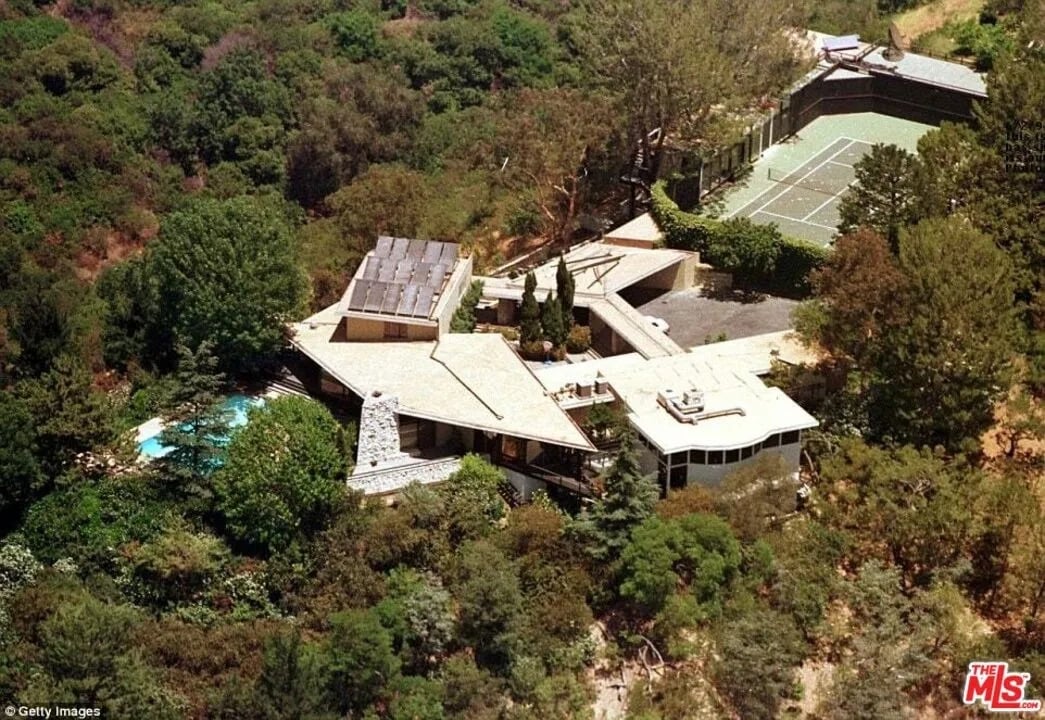
Tucked behind the Beverly Hills Hotel on a secluded cul-de-sac, 1200 Laurel Lane occupies a world of its own. Frances Howard, actress and wife of Samuel Goldwyn, was the one who convinced her husband to acquire the 2.5-acre parcel a choice that shaped what would become one of the city's most storied addresses. A gated motor court announces the entrance, giving way to expansive lawns, a rose garden, and formal landscaping that unfolds across the grounds. The elevation within the Beverly Hills foothills affords genuine privacy, and the master suite veranda frames views of the city lights below.
The north-south tennis court drew the likes of Charlie Chaplin and Katharine Hepburn during the estate's most celebrated years. A swimming pool with an attached pool house complete with a kitchenette and a four-car garage topped by a guest apartment round out the property's offerings.
The $25 Million Transaction in 2015
When Samuel Goldwyn Jr. passed away in January 2015 at 88, the estate entered the market for the first time in eight decades. It listed that March at $39 million, then moved to $28 million by summer before the transaction closed at $25 million on September 4, 2015 the first transfer of ownership outside the Goldwyn family since the home was built.
Goldwyn Jr. had first tested the market in 2008 at $24 million, but those efforts came to nothing. The 2015 sale was different a clean transfer, final and historic.
What Makes This Estate Historically Significant
Douglas Honnold, a Fellow of the American Institute of Architects and one of Beverly Hills' recognized Master Architects, brought the residence to life in 1934. What he designed was more than a family home the estate functioned as a working production facility. The paneled library doubled as a 35-millimeter screening room, and "Wuthering Heights" was among the films shaped within its walls.
Goldwyn Sr. mortgaged the property more than once to fund his independent productions a testament to the conviction behind his work. That commitment yielded "The Best Years of Our Lives," which took the Academy Award for Best Picture in 1946.
Christina Pope—Sotheby's International Realty, EliteResidenceInternational.com
Inside the 1934 Samuel Goldwyn Estate: Architectural Design and Features
"To provide meaningful architecture is not to parody history but to articulate it." — Daniel Libeskind, Famous Architect
Georgian Revival Style and Original Architects
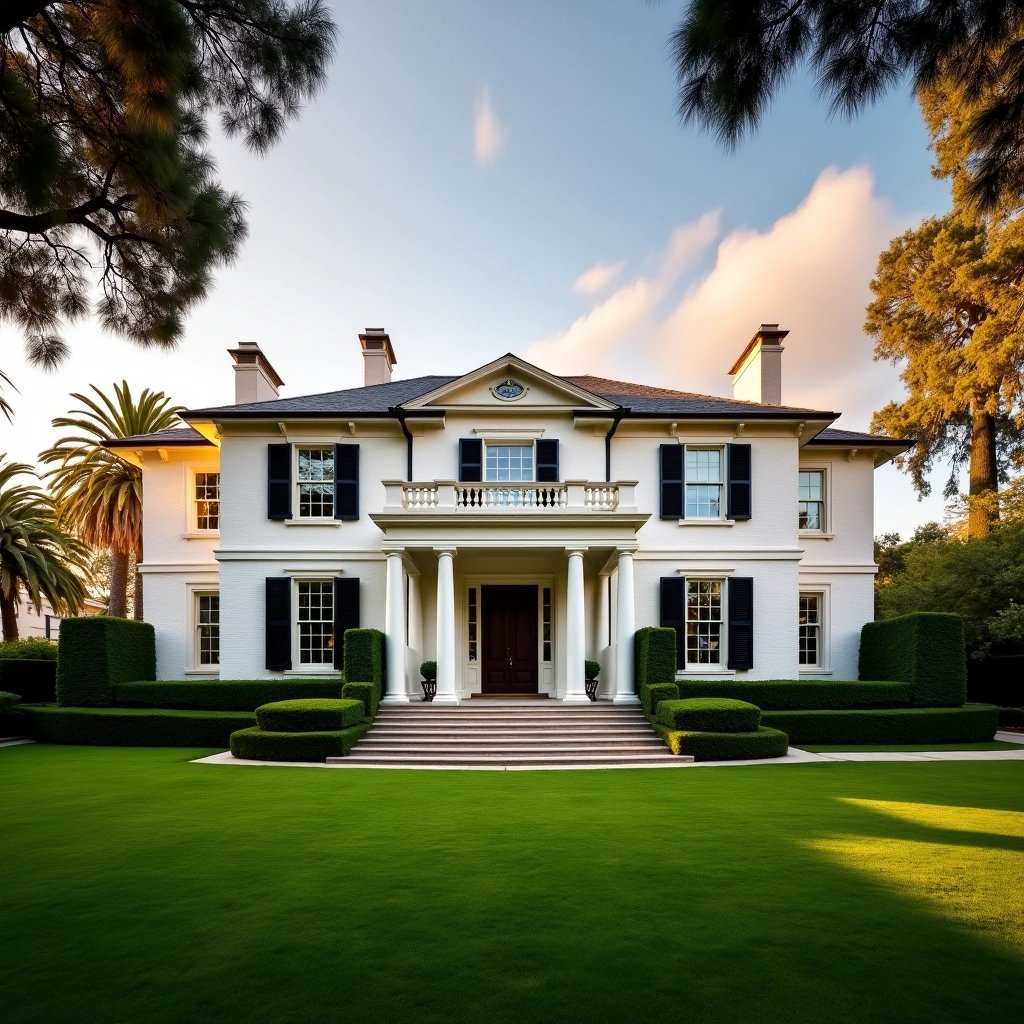
The Goldwyn commission marked the first major project for architects Douglas Honnold and George Vernon Russell a beginning that reflected well on all parties involved. Their Georgian Revival approach brought symmetry and classical proportion to a two-story stucco structure that still stands as one of Beverly Hills' finest examples of the style. Goldwyn's biographer A. Scott Berg captured it simply: "a gleaming white house with black trim, its two wings forming a welcoming obtuse angle". Frances Howard had only one instruction for her husband regarding the design the house must be white. That clarity of vision carried through every detail.
Samuel Goldwyn Estate Interior Spaces
The 11,000-square-foot residence unfolds across two stories with seven bedrooms and ten bathrooms. A galleria entrance sets the tone, leading to ground-floor rooms appointed for both daily life and grand entertaining among them, a formal dining room with a table that seats 20 guests. The main lounge, dressed in heavy green drapery, connects to a card room, while four bedrooms occupy the first floor. A curving staircase draws the eye upward to the master suite on the second level. Guests have their own separate entrance on the main floor, and a fully independent apartment sits above the four-car garage.
The Screening Room and Entertainment Areas
The paneled library held a dual purpose that few homes could claim: it functioned as a working 35-millimeter screening room, with outer doors opening directly onto the large patio. Private film previews took place here during Hollywood's golden era — an intimate setting for work that would eventually reach audiences worldwide. A card room and gym round out the estate's entertainment spaces[83].
Outdoor Amenities: Pool, Tennis Courts, and Gardens
The grounds move across multiple terraces with ease a swimming pool with cabana, a tool shed, and tennis courts sunken into the landscape. Formal rose gardens, an expansive lawn, and a pool house fitted with a kitchenette complete the picture. These are spaces built for the pleasure of gathering, where the outdoor setting matches the caliber of everything within.
For those who love to entertain, the right home makes all the difference. Whether you are beginning your search or ready to move forward, I would be glad to help you find a property designed for elevated living. Christina Pope 📞 310-404-9931 ✉️ [email protected]
Christina Pope—Sotheby's International Realty, EliteResidenceInternational.com
From Samuel Goldwyn to Taylor Swift: The Estate's Ownership Timeline
Samuel Goldwyn's Era (1934–1974)
Samuel Goldwyn and Frances Howard moved into the completed estate in 1934, and the house became inseparable from Goldwyn's career almost immediately. He mortgaged the property repeatedly to back his independent productions — "Wuthering Heights" (1939), "The Little Foxes" (1941), and "Hans Christian Andersen" (1952) among them. That willingness to risk the house itself on his work speaks to the man's conviction. It paid off. His 1946 production "The Best Years of Our Lives" won the Academy Award for Best Picture. Goldwyn lived in the home until his death there in 1974 at the age of 94.
The Golden Age of Hollywood Gatherings
The social life of the estate during these years reads like a registry of Hollywood's finest. Dinner parties brought together Charlie Chaplin, Clark Gable, Katharine Hepburn, Irving Berlin, Marlene Dietrich, and Ginger Rogers under the same roof. Eleanor Roosevelt attended a private gathering ahead of the "Wuthering Heights" premiere. President Richard Nixon presented Goldwyn with the Presidential Medal of Freedom at the house in March 1971 a moment that underscores just how much this address meant beyond the film industry.
Samuel Goldwyn Jr.'s Stewardship (1974–2015)
Samuel Goldwyn Jr. took up residence in 1976 and carried on the family tradition with quiet distinction. His producing credits included "Mystic Pizza" (1988), "Master and Commander" (2003), and "The Secret Life of Walter Mitty" (2013). He produced the Academy Awards ceremony twice and took home an Emmy in 1988. Upon his passing in January 2015 at 88, the property entered the market for the first time as a true transfer of legacy — listed at $39 million.
Taylor Swift's Purchase and Vision
Taylor Swift acquired the estate in September 2015 for $25 million, becoming the first owner outside the Goldwyn family since the house was built. Rather than remake the property, she chose to honor it. Working with architect Monique Schenk, Swift undertook careful restoration reconstructing original windows, rebuilding pool cabana columns, and preserving the details that define its character. The Beverly Hills Cultural Heritage Commission recognized these efforts with landmark designation in 2017.
Christina Pope—Sotheby's International Realty, EliteResidenceInternational.com
Preservation Efforts and Historic Landmark Status
"It has been said that, at its best, preservation engages the past in a conversation with the present over a mutual concern for the future." — William Murtagh, Noted preservationist
The Path to Beverly Hills Historic Designation
The estate's significance was not a recent discovery. The property first appeared in the city's 1985 Historic Resource Survey, identified as potentially eligible for individual landmark listing. Following her purchase, Taylor Swift initiated the formal designation process, working with the Beverly Hills Cultural Heritage Commission to move the estate from eligible to protected.
The estate met Criterion A on several counts: its age, the high artistic value of its Georgian Revival character, the integrity it retained from its original period, and its continued cultural relevance to the community. Under Criterion B, it qualified both as exceptional work by master architect Douglas Honnold and as a property associated with a figure of great historical importance.
The commission's response was telling. Noah Furie, its vice chair, called the residence "one of the great estates in this city" and expressed the commission's pleasure that the owner would "keep this house and spend the money to restore it". Mayor Lili Bosse described it simply as "a true community gem". The estate received National Historic Landmark status in 2017.
Restoration Work and Architectural Integrity
Architect Monique Schenk worked closely with Swift to honor the original structure — preserving what could be saved and carefully replicating what time had worn away. Windows were reconstructed, pool cabana columns rebuilt, and the Wisteria foliage draping the facade kept intact. Wooden details, including lattice panels and finials, were restored with the same attention given to the grander architectural elements. The result is a property that wears its age with dignity rather than apology.
Christina Pope—Sotheby's International Realty, EliteResidenceInternational.com
Conclusion
The Samuel Goldwyn Estate is the kind of property that reminds buyers why certain homes endure. Its craftsmanship, history, and landmark standing place it well beyond ordinary real estate — and it rewards those with the patience and discernment to recognize that.
For clients who value both legacy and livability, homes designed for elevated living and effortless entertaining remain some of the most sought-after in Beverly Hills. Christina Pope would be glad to help you find yours.
📞 310-404-9931 ✉️ [email protected]
Christina Pope—Sotheby's International Realty, EliteResidenceInternational.com
Key Takeaways
The Samuel Goldwyn Estate stands as a rare intersection of Hollywood history, architectural excellence, and modern luxury preservation. Here's what makes this property significant for discerning buyers and real estate enthusiasts:
• Historic pedigree commands premium value: The 1934 Georgian Revival estate sold for $25 million in 2015, demonstrating how architectural significance and celebrity provenance drive luxury real estate valuations in Beverly Hills.
• Landmark status protects investment longevity: Achieving National Historic Landmark designation in 2017 ensures architectural integrity while adding cultural cachet that enhances long-term property value and prestige.
• Strategic restoration balances preservation with modernization: Working with specialized architects to restore original elements while adapting spaces for contemporary living maintains historic character without sacrificing functionality.
• Location and privacy define ultra-luxury: Positioned on a secluded 2.5-acre cul-de-sac behind the Beverly Hills Hotel, the estate demonstrates how strategic site selection creates irreplaceable value in competitive markets.
• Entertainment-focused design remains timeless: Original features like the 35-millimeter screening room, tennis courts, and formal dining for 20 guests prove that homes designed for sophisticated entertaining retain appeal across generations.
The estate's journey from Hollywood's golden age through careful stewardship to modern preservation illustrates how the most significant luxury properties transcend typical real estate transactions—they represent cultural legacy, architectural achievement, and strategic investment combined.
FAQs
Q1. Who is the current owner of the Samuel Goldwyn Estate? Taylor Swift purchased the Samuel Goldwyn Estate in September 2015 for $25 million. She has since worked with architect Monique Schenk to restore the property's original elements while preserving its historic character, and successfully obtained National Historic Landmark status for the estate in 2017.
Q2. Where exactly is the Samuel Goldwyn Estate located in Beverly Hills? The estate is situated at 1200 Laurel Lane on a secluded 2.5-acre cul-de-sac behind the Beverly Hills Hotel. The property is one of three lots on Laurel Lane and features a gated motor court entrance, providing exceptional privacy in the Beverly Hills foothills.
Q3. What architectural style defines the Samuel Goldwyn Estate? The estate showcases Georgian Revival architecture, designed in 1934 by architects Douglas Honnold and George Vernon Russell. The two-story structure features a gleaming white stucco exterior with black trim, symmetrical design, and classical proportions spanning approximately 11,000 square feet with seven bedrooms and ten bathrooms.
Q4. What makes the Samuel Goldwyn Estate historically significant? The property served as both a family residence and active film production facility from 1934 to 2015 under continuous Goldwyn family ownership. It hosted Hollywood legends, featured a 35-millimeter screening room where films like "Wuthering Heights" were produced, and represents the work of master architect Douglas Honnold, earning it National Historic Landmark status.
Q5. What special amenities does the Samuel Goldwyn Estate include? The estate features a 35-millimeter screening room, formal dining room seating 20 guests, north-south tennis courts, swimming pool with cabana and kitchenette, four-car garage with guest apartment, rose garden, and multiple entertainment spaces including a card room and gym across its expansive grounds.