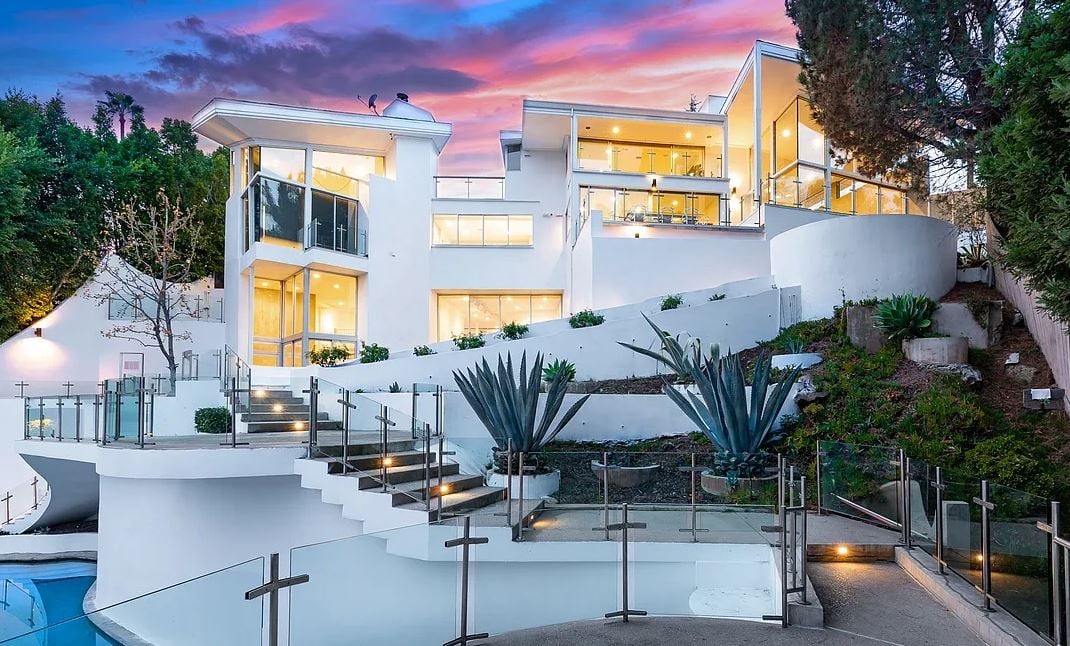
Celebrity properties throughout Hollywood Hills face an unexpected reality—extended market times that would have been unthinkable just years ago. Los Feliz homes now sit unsold for 219 days on average in 2025, representing a 50 percent increase from September. Brentwood residences remain vacant for approximately 185 days, while Santa Monica properties linger for 161 days. Even prestigious addresses with glamorous histories encounter serious price corrections, as demonstrated by the Spelling manor in Holmby Hills selling for $110 million 33 percent below asking price.
Star power no longer guarantees swift sales. Gene Simmons' Benedict Canyon estate sold for $28 million after starting at $48 million, and Joe Pesci's Jersey Shore property required two years to find its buyer. Those exploring abandoned mansions or celebrity-owned properties for sale discover this growing inventory signals a market realignment that extends far beyond typical seasonal patterns.
Los Angeles faces an accelerated exodus, with 38.1 percent of local home shoppers examining properties in other states as of June 2025. The numbers tell the story clearly Los Angeles' median list price of $1.2 million creates quite a contrast with Atlanta's $420,000. Yet behind these public statistics exists a quieter reality within luxury real estate: the most significant transactions occur through private conversations where discretion and timing carry equal weight with property value.
What makes a celebrity home 'abandoned' in Hollywood Hills
Hollywood Hills luxury real estate operates under its own rules, where "abandoned" carries meanings that extend beyond simple vacancy. These properties exist at the crossroads of celebrity status, market dynamics, and personal priorities. Elite real estate movements happen through exclusive networks and private relationships, where timing and connections outweigh public marketing efforts.
Not just empty—why these homes are left behind
Celebrity properties rarely become abandoned due to financial distress or neglect. Instead, these estates enter limbo for subtler reasons. A-list relocations for career moves or lifestyle changes often leave behind highly customized homes that resist easy transition to new owners.
Luxury agents quietly refer to certain properties as "personality homes"—residences so precisely tailored to their famous owners that they repel mainstream luxury buyers. Recording studios, specialized athletic facilities, or bold architectural statements may reflect the original owner's vision yet limit broader market appeal.
Portfolio diversification creates another path to abandonment. Celebrities often acquire multiple properties across various markets, transforming some residences into seasonal homes that sit vacant for months while remaining technically unavailable for purchase.
The difference between off-market and unsellable
Strategic off-market properties operate differently from truly problematic homes. Off-market listings—known as pocket listings—deliberately avoid public exposure, allowing privacy-focused sellers to test market response without creating visible listing histories.
Unsellable properties tell a different story. These homes have survived multiple price cuts, agent changes, and marketing campaigns yet remain vacant. Extended market presence creates its own stigma—potential buyers question what problems exist when desirable properties fail to attract offers.
Properties sometimes occupy a middle ground between listed and private availability. Agents remove listings temporarily to refresh market statistics, then reintroduce them as seemingly new offerings. This practice adds to Hollywood Hills' inventory of seemingly abandoned properties.
How industry shifts create ghost listings
Entertainment industry changes reshape Hollywood Hills real estate patterns. Studio proximity once demanded Los Angeles residences, but streaming platforms and remote production reduce this necessity significantly.
Tax strategy now drives housing decisions more than geography. States without income taxes—Florida, Texas, Nevada—attract celebrities focused on earnings optimization. This shift transforms many Hollywood Hills properties from primary homes to occasional retreats.
Economic uncertainty affects even wealthy buyers, especially those with project-based rather than steady income streams. High-net-worth individuals with variable cash flow often delay major purchases during market volatility, leaving luxury inventory without serious buyers.
A celebrity home achieves true "abandoned" status when it exists in extended limbo—neither successfully marketed nor definitively withdrawn. These properties represent suspended decisions, shaped by personal circumstances and market forces that affect even the most privileged homeowners.
8 abandoned celebrity homes that tell a bigger story
Prestige addresses don't guarantee quick sales anymore. These eight celebrity real estate properties reveal how even famous ownership cannot overcome fundamental market shifts, pricing missteps, and changing buyer expectations.
1. Jennifer Lopez and Ben Affleck's mega-mansion
The former couple's 38,000-square-foot Beverly Hills estate remains unsold months after their January 2025 divorce. Originally priced at $68 million in July 2024, the property dropped to $52 million by September 2025. Despite featuring 12 bedrooms, 24 bathrooms, a 12-car garage, sports lounge, boxing ring, and basketball court, the sprawling mansion sits empty while they carry a $20 million mortgage.
2. Jim Carrey's 2-year market struggle
Carrey's Brentwood home demonstrates the challenges facing ultra-personalized estates. The asking price has fallen from $29 million in February 2023 to $18.75 million—nearly a 35% reduction. The modernized mid-century property includes an Art Deco theater and meditation platform, yet multiple deals have collapsed due to wildfire concerns and evolving buyer priorities.
3. Gene Simmons' price drop saga
The KISS frontman cut his Beverly Hills Canyon asking price by $1.5 million to $12.5 million. His glass-and-steel hillside estate, crafted by Swiss firm Design21, offers panoramic views and features 12-foot ceilings, an infinity pool, and energy-efficient systems. The continued availability proves celebrity status alone cannot ensure rapid sales.
4. Rihanna's design misfire
Rihanna's $6.8 million Hollywood Hills purchase became a costly lesson in hidden defects. Rainfall exposed serious construction problems, leading the singer to sue the sellers for $8.5 million. Her experience illustrates how abandoned celebrity properties may conceal expensive flaws beneath attractive exteriors.
5. Serena Williams's 'too normal' estate
Williams' former Bel-Air residence currently asks $13.5 million after selling for under $8 million in 2020. The tennis star owned this Mediterranean-style property from 2006 to 2019, but its conventional 6,101-square-foot layout lacks the distinctive features luxury buyers now expect. Sometimes being too ordinary creates its own sales challenges.
6. Tom Girardi's legal baggage
The disgraced attorney's Pasadena property carries the weight of scandal. Girardi, now 85 and serving seven years for embezzling $15 million from clients, leaves behind a contaminated asset. His home—frequently showcased on "Real Housewives of Beverly Hills" during his marriage to Erika Jayne—represents how legal troubles poison real estate values, with any proceeds likely earmarked for victim compensation.
7. Pierce Brosnan's niche esthetic
Brosnan's Thailand-inspired Malibu compound required a decade to complete and features temple-style architecture with distinctive green clay-tile roofing. The oceanfront estate spans 12,500 square feet, including a 4,000-square-foot primary suite. While architecturally striking, the highly specific design narrows the buyer pool to those willing to embrace such a singular vision.
8. Michael Jordan's overpriced Illinois compound
Jordan's Highland Park mansion stands as the ultimate celebrity pricing cautionary tale. After 12 years on the market, it sold for $9.5 million—a devastating 67% below its original $29 million asking price. The 56,000-square-foot property featured a regulation basketball court, "23"-branded gates, and Jordan memorabilia throughout, proving excessive personalization can backfire spectacularly. Even promotional gimmicks like offering complete Air Jordan collections with purchase failed to attract buyers.
How do you find abandoned mansions in Hollywood Hills?
Finding luxury properties within Hollywood Hills demands access to information that rarely reaches public channels. Standard search methods and advertised listings represent only the surface layer of what's available. Serious buyers recognize that the most compelling opportunities require both specialized knowledge and established relationships to discover.
Using public records and foreclosure data
Foreclosure filings offer one direct avenue for identifying distressed luxury properties. U.S. properties with foreclosure filings—including default notices, scheduled auctions, and bank repossessions—have increased 57% year-over-year according to real estate data firm ATTOM. These legal proceedings typically commence 60-120 days after missed mortgage payments, establishing a timeline for prepared buyers to act.
Mortgage payments aren't reported late until the 30th of the month, allowing informed investors to identify potential opportunities before they become public knowledge. County records offices and specialized subscription databases provide access to pre-foreclosure and notice of default filings that precede most public listings.
Tapping into luxury agent networks
Hollywood Hills' most exclusive properties rarely surface on public platforms. Elite agents maintain relationships specifically designed to facilitate discrete transactions among high-net-worth individuals. These professionals serve as gatekeepers, controlling access to off-market opportunities based on client qualifications and established trust.
For those who love to entertain, the right home makes all the difference. If you're considering a purchase in the near future or beginning your search, I'd be delighted to help you discover spaces designed for elevated living and effortless hosting. Christina Pope  310-404-9931
  [email protected]
Exploring off-market platforms and whisper listings
"Whisper" or "pocket" listings control the luxury segment where privacy concerns outweigh immediate sales pressure. These discrete offerings allow sellers to gauge market response without establishing a public record. Off-market transactions have seen a resurgence since the pandemic began, according to industry professionals.
Sellers often approach these transactions with predetermined price expectations, agreeing to sell only upon receiving their target figure. These arrangements provide buyers exclusive access before properties reach broader markets. Whisper listings remain highly sought despite National Association of Realtors policies that limit their promotion.
Monitoring expired and withdrawn listings
Expired listings those whose contracts concluded without selling differ substantially from withdrawn listings that owners removed before contract expiration. Each category represents distinct opportunities with varying implications for potential buyers.
Withdrawn properties frequently indicate strategic repositioning rather than abandonment. Expired listings may signal fundamental pricing or property concerns. Some sellers temporarily remove properties to reset market time statistics, creating fresh impressions when relisted.
Properties that start as quiet listings but fail to sell eventually reach public markets at reduced prices. One oceanfront home originally priced at $110 million couldn't find a buyer off-market despite premium representation demonstrating how even exceptional properties sometimes require broader market exposure.
Why buyers are hesitant even with celebrity names
Celebrity ownership fails to guarantee the premium sales one might expect. Savvy buyers approach these properties with growing caution, recognizing that glamor often masks practical considerations that determine purchase decisions in today's luxury market.
The illusion of value in celebrity ownership
Famous names draw attention to listings, yet this visibility rarely creates premium sales. Brokers note celebrities can push up neighborhood prices over time, though most high-net-worth individuals refuse to purchase based solely on star association. Celebrities themselves often overpay when acquiring properties Justin Bieber reportedly purchased a home at premium prices due to competition, later selling at a loss.
Privacy concerns and paparazzi culture
Buyers of celebrity properties inherent potential privacy challenges beyond architectural features. Luxury home shoppers require properties set back from streets with substantial hedges, plus security systems rivaling government facilities. Many reject otherwise desirable homes lacking these protective elements.
High carrying costs and taxes
Los Angeles' "mansion tax" (ULA) adds substantial costs to luxury transactions, with properties over $5 million facing significant taxation. This reality prompted celebrities including Mark Wahlberg and Brad Pitt to sell mansions before implementation, while Jennifer Lopez's 2023 Bel Air estate sale contributed $1.87 million to ULA coffers. Ongoing expenses for security, specialized maintenance, and property taxes create hesitation among potential buyers.
Changing buyer preferences post-pandemic
The pandemic altered luxury homebuyer priorities permanently. Contemporary buyers emphasize properties blending opulence with functionality, featuring dedicated office spaces, expansive outdoor areas, and private retreats. Older celebrity homes that prioritized status over these essentials often languish without serious offers, regardless of their famous pedigree.
The future of abandoned celebrity homes in L.A.
Los Angeles luxury real estate continues its quiet transformation, driven by economic forces that celebrity status cannot override. Industry professionals witness these changes as properties remain unsold and buyer priorities shift permanently.
Will tax incentives bring buyers back?
Los Angeles' mansion tax (Measure ULA) altered the luxury market immediately upon implementation. This transfer tax 4% for sales above $5 million and 5.5% above $10 million chilled transactions across the high-end segment. Potential sellers have withdrawn listings or relocated to independent L.A. County cities like Beverly Hills and Malibu where the measure doesn't apply.
How streaming and remote work are reshaping demand
Work-from-home culture has permanently changed housing priorities. Remote work averages 1.6 days weekly in the U.S., with projections indicating 20% of full workdays will be supplied from home long-term, compared to 5% pre-pandemic. Entertainment professionals no longer need proximity to production facilities, fundamentally altering Hollywood Hills' value proposition.
For those who love to entertain, the right home makes all the difference. If you're considering a purchase in the near future or beginning your search, I'd be delighted to help you discover spaces designed for elevated living and effortless hosting. Christina Pope 310-404-9931 [email protected]
The rise of secondary homes in other states
High-net-worth individuals now prioritize residences in tax-advantaged locations. Entertainment professionals relocated permanently after the pandemic, with three 2025 listings attributed directly to work shortages. This geographic shift appears sustainable rather than temporary.
What this trend means for Hollywood's identity
Los Feliz and Silver Lake properties now average 219 days listed—50% longer than September figures. Celebrity homes throughout Los Angeles represent more than real estate inventory; they symbolize an industry adapting to fundamental changes that may prove irreversible.
Conclusion
Celebrity properties throughout Hollywood Hills now tell a different story about luxury real estate. These homes expose fundamental shifts that extend well beyond famous ownership buyer priorities have changed, economic pressures have intensified, and lifestyle considerations now outweigh status symbols. Market times beyond 200 days in prestigious neighborhoods signal permanent change rather than temporary adjustment.
Star association no longer commands premium prices. High-net-worth buyers make decisions based on practical value, not celebrity pedigree. Properties with extreme personalizations face harsh market realities regardless of their famous creators. The lessons from Gene Simmons and Michael Jordan properties speak clearly about pricing and customization limits.
External pressures accelerate this transformation. Los Angeles' "mansion tax" has cooled transactions above $5 million, while remote work reduces the need for studio proximity. Tax-friendly states continue drawing wealth away from California.
The most valuable transactions occur through private networks where relationships and timing matter more than public exposure. Buyers seeking these properties need connections with elite agents, access to off-market platforms, and specialized data sources that most lack.
Hollywood Hills real estate success now depends on functionality over fame. Properties offering privacy, security, home offices, and outdoor space will outperform those built purely for entertainment. The right property, presented through proper channels to qualified buyers, still commands appropriate pricing—with realistic timing expectations.
This market evolution reflects how wealth expresses itself in physical space. Some celebrity homes will continue sitting vacant while others find new owners who value the property itself. The constant remains discretion—these transitions happen far from public view, exactly as the most discerning clients prefer.
Key Takeaways
The luxury real estate market in Hollywood Hills is experiencing a dramatic shift, with celebrity-owned properties struggling to sell despite their famous pedigrees and glamorous histories.
• Celebrity homes in Los Feliz now sit unsold for 219 days on average—a 50% increase, with properties facing brutal price corrections regardless of star power.
• LA's "mansion tax" (4-5.5% on sales above $5M) and remote work trends are driving wealthy buyers to tax-friendly states like Florida and Texas.
• Over-personalized celebrity properties with extreme customizations often become "unsellable," as seen with Michael Jordan's mansion selling 67% below asking after 12 years.
• Off-market "whisper listings" and elite agent networks control access to the best opportunities, requiring insider connections to discover abandoned luxury properties.
• Modern luxury buyers prioritize functionality over celebrity status, seeking privacy, security, home offices, and outdoor spaces rather than entertainment-focused designs.
The transformation reflects a broader shift where practical considerations now outweigh star associations in luxury real estate decisions, fundamentally changing how wealth manifests in physical spaces.
FAQs
Q1. Are there really abandoned celebrity homes in Hollywood Hills? Yes, there are several high-profile properties in Hollywood Hills that have been on the market for extended periods, some for years. These homes, despite their celebrity pedigrees, face challenges in finding buyers due to various factors including overpricing, over-customization, and changing market dynamics.
Q2. How long do luxury homes typically stay on the market in Los Angeles? In recent years, luxury properties in Los Angeles have been taking longer to sell. For example, homes in Los Feliz are now averaging 219 days on the market, which is a 50% increase from previous years. This extended time on market is indicative of a shifting luxury real estate landscape.
Q3. Why are celebrities having trouble selling their homes? Celebrities often face difficulties selling their homes due to factors such as over-personalization, unrealistic pricing, high carrying costs, and changing buyer preferences. Additionally, the allure of celebrity ownership doesn't necessarily translate to added value for potential buyers, who are more focused on practical considerations.
Q4. How can I find information about abandoned mansions in Hollywood Hills? Finding information about abandoned mansions often requires insider knowledge. Strategies include monitoring public records and foreclosure data, connecting with luxury real estate agent networks, exploring off-market platforms, and keeping an eye on expired and withdrawn listings. However, many high-end transactions occur privately and never reach public listings.
Q5. What impact has the "mansion tax" had on luxury real estate in Los Angeles? The "mansion tax" in Los Angeles, which imposes additional transfer taxes on properties sold for over $5 million, has significantly impacted the luxury real estate market. It has led to a decrease in high-end transactions and prompted some sellers to withdraw listings or relocate to areas where the tax doesn't apply, such as Beverly Hills or Malibu.