Luxury real estate in Los Angeles rarely moves on headlines. It moves through private conversations and careful timing, where discretion carries as much weight as the property itself. What has shifted is what buyers ask for once those conversations begin. Inquiries around safe rooms and estate security have grown steadily, driven by concerns over global instability and social unrest, and more than two-thirds of agents now report security as a growing concern among their clients.
That shift is showing up in how estates are designed and valued. Luxury panic rooms, home security rooms, and luxury gun safe rooms are becoming part of the brief rather than an afterthought, with the market valued near $645 million and expected to reach $1049.1 million by 2030. For buyers considering homes with panic rooms for sale, or weighing a luxury home safe room as part of a custom build, privacy and protection have become equal priorities.
Why UHNW Buyers Are Prioritizing Security in 2026
Christina Pope of Sotheby's International Realty, who works with clients through EliteResidenceInternational.com, has watched Los Angeles transactions move further from public view each year. Her clients rarely need an open house. What they need is an advisor who understands when visibility serves them and when it works against them.
Why Los Angeles luxury real estate works differently
Beverly Hills, Bel Air, and Holmby Hills sellers want full control over who knows a property is available before anything else gets discussed. The Valerie Fitzgerald Group has closed more than USD 3.50 billion in Los Angeles luxury real estate over 25 years, a meaningful share of it sold off market and out of public view. Showings happen by private appointment, buyers are qualified through proof of funds and confidentiality agreements, and one contact manages the file from start to close. That structure is precisely why security planning begins before a sale closes, not after.
Why many major sales never reach the open market
Compass reported that 35% of its roughly 22,000 listings carried a private or coming-soon tag as of its fourth-quarter 2024 results. A 2026 study across five major metros found the largest brokerage controlling between 29.7% and 39.5% of unit sales, representing both sides of the transaction on 21% to 41% of its own deals. Redfin recorded pocket listings climbing from 2.4% to 4.0% of all US sales since the Clear Cooperation Policy took effect in 2020. Len Blavatnik's USD 115.00 million purchase of an 8.5-acre East Hampton estate, closed off market in July 2025, remains the most expensive single residential parcel ever sold in the Hamptons.
Privacy, timing, and positioning in a discreet property search
Some estimates place off-market sales at 30% to 50% of ultra-luxury transactions above USD 10.00 million in Manhattan, Aspen, Palm Beach, and the French Riviera. Silicon Valley and finance-sector buyers increasingly route purchases through LLCs and privacy trusts, working through whisper listings that never reach the MLS — a decision Ken DeLeon of DeLeon Realty describes as security planning rather than pricing strategy.
How public exposure can shape a household's security needs
Media attention and an active social presence raise reputational risk for prominent families. Public knowledge of a residence or daily routine gives criminals exactly what they need to plan a burglary. The UK's National Protective Security Authority recommends layered defenses, including a safe room where family members and household staff can retreat and wait for help to arrive.
Separating real threats from perceived risks
One in three high-net-worth individuals reported a financial scam within a six-month period. The FBI's Internet Crime Center logged more than USD 16.00 billion in online crime losses in 2024, a 33% increase. Ninety-three percent of UHNW individuals rely on family offices, yet 43% of those offices reported a cyberattack — a figure that climbs to 62% among offices managing over USD 1.00 billion. Only 54% trained every staff member. The exposure is real, and for families whose assets, routines, and residences are known, the gap between awareness and preparation carries genuine consequences.
How Luxury Safe Rooms Combine Protection and Comfort

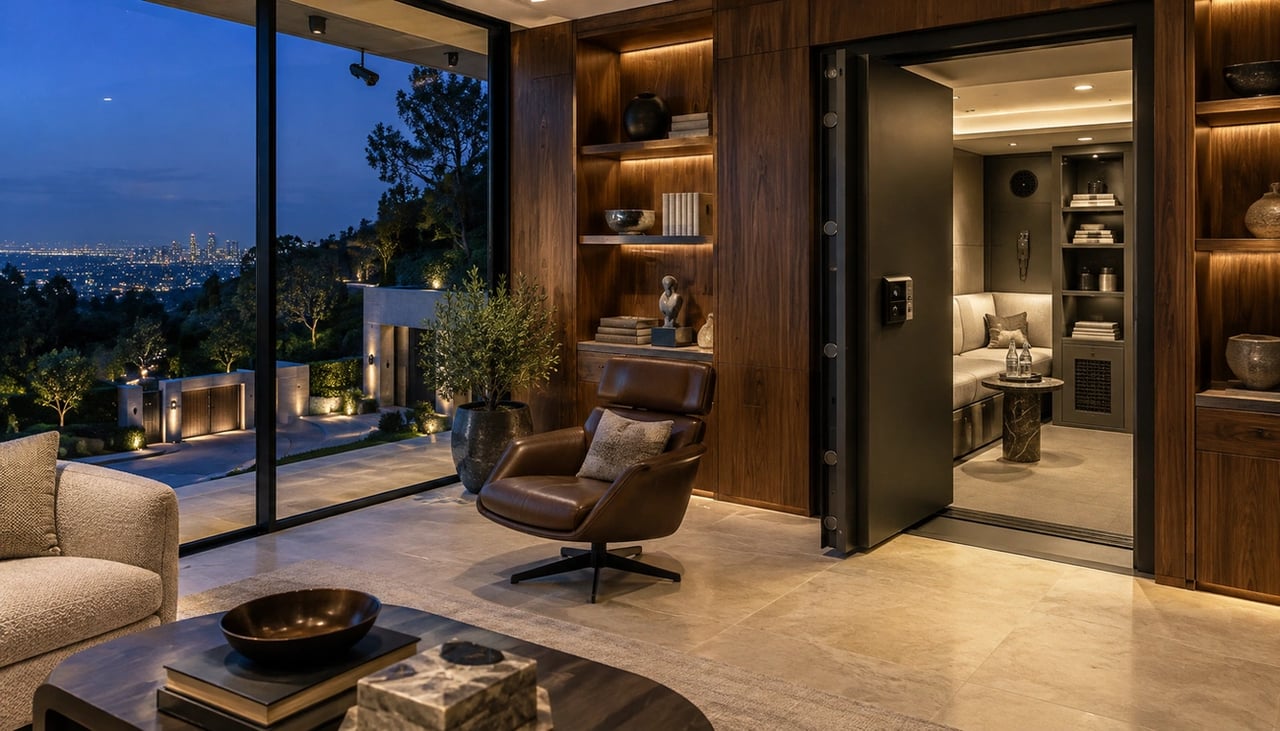
Image Source: Minerva Luxury Designs
Not every secure space in a luxury property serves the same purpose, and that distinction shapes every design decision that follows. A household weighing a luxury safe room against a vault or a storm shelter needs to know what each one actually protects before construction begins.
Luxury panic rooms, storm shelters, and vaults serve different needs
A vault room protects what a household owns. A safe room protects the people inside it. A panic room goes further, adding the communications and ventilation infrastructure needed to shelter for hours rather than minutes. Storm shelters are engineered primarily against high wind, while a safe room meeting FEMA 320 or ICC 500 criteria works against both intrusion and severe weather. High-asset estate buyers increasingly request both functions built into a single room, provided the structural plan accounts for valuables storage and human shelter from the outset.
Threat-rated walls and doors matched to the property's risks
FEMA P-320 and P-361 set the construction and testing standards for residential safe rooms, including doors rated to withstand a 15-pound 2x4 fired at 100 miles per hour. Doors built for a luxury gun safe room typically carry UL 752 or NIJ ballistic ratings, with multi-point locking systems anchored deep into concrete or wall studs. Steel stud walls faced with Kevlar or bullet-resistant sheeting, then finished in sheetrock or tile, deliver that level of protection without the appearance of a bunker.
Backup power, ventilation, and reliable communication
A self-contained generator is standard in most higher-end installations, keeping lights and systems running when the rest of the house loses power. Well-appointed safe rooms add redundant communication — landline, cellular booster, and satellite — paired with independent filtered ventilation and twelve to twenty-four hours of battery backup.
Discreet design that preserves daily use
Most clients retrofit an existing bedroom, closet, or home office rather than build from scratch, since quick access from wherever the family spends time matters more than square footage. Doors engineered for homes with panic rooms for sale can be finished behind wood veneer or bookcase fronts, built to the same weight and hardware as any standard interior door.
How Safe Rooms Fit Into Estate Security
A luxury safe room works best as one layer inside a wider security plan, not a standalone answer. Perimeter systems, trained staff, and protected networks all need to function together for the room to serve its purpose when it matters most.
Perimeter monitoring and access controls provide early warning
Effective perimeter security rests on four principles: deterrence, detection, delay, and response. Sensors mounted on boundaries, buried in lawns, or run along fiber-optic cable can detect footsteps and climbing attempts well before anyone reaches the house. A thorough property survey typically divides the grounds into four to eight zones, so an alert points to exactly where a breach occurred rather than issuing a general warning. Thermal cameras and two-way audio help confirm real threats and reduce false alarms, keeping the response proportionate.
Security teams and household staff coordinate the response
Hardware alone does not make a safe room effective. Firms that build these spaces for high-net-worth families also train security personnel and household members on locks, alarms, and communication systems under simulated conditions. Regular drills keep everyone calm and clear on what to do, so that a planned response holds up when an actual incident unfolds.
Cybersecurity protects connected systems and personal data
Connected locks, cameras, and alarms carry their own vulnerabilities. Weak passwords and unpatched firmware can give an attacker access to the entire home network. Isolating smart home devices on a separate network, enabling multi-factor authentication, and selecting products that carry the Cyber Trust Mark all reduce that exposure in a meaningful way.
What Buyers Should Check Before Investing
"Working with an architectural partner that has experience specifying the correct wall configurations and other details for your panic room is paramount in having the construction executed properly." — Ryan Meagher, Pre-construction manager at BVM Contracting
> "Working with an architectural partner that has experience specifying the correct wall configurations and other details for your panic room is paramount in having the construction executed properly." > — Ryan Meagher, Pre-construction manager at BVM Contracting
Finding homes with panic rooms for sale through a private search
Properties with panic rooms rarely appear on public listings. A trusted advisor with discreet access to the right inventory matters far more than any search filter.
Independent checks of security claims, permits, and emergency access
Ask which standard the contractor meets — FEMA P-361 or ICC 500 — since compliance requirements shift by edition and funding date. Verify permits and confirm the door assembly was tested as a complete unit, not separately.
Comparing an existing safe room with a custom retrofit
Most owners retrofit an existing closet or bedroom rather than build from scratch, since panels install over existing walls and doors swap in with minimal disruption.
Installation costs, ongoing upkeep, and insurance requirements
A closet conversion typically runs USD 15,000 to USD 40,000 depending on entry points and armor level, while basic storm shelters range from USD 2,500 to USD 8,000. Insurers rarely discount premiums for a shelter, since it protects the people inside, not the structure itself.
Resale appeal without assuming a guaranteed return
A well-finished safe room adds real daily utility. Buyers should treat it as a security upgrade rather than a certain increase in resale value.
Private guidance: Christina Pope, Sotheby's International Realty, EliteResidenceInternational.com
Christina Pope understands that the right home does more than check boxes — it supports the life a client actually wants to live. For buyers who value both security and refined living, she brings the expertise and access to find exactly that: 📞 310-404-9931, ✉️ [email protected].
Luxury Safe Rooms and Estate Security: Neighborhood Blurbs
Bel Air
Bel Air estates often have the space and privacy to build security into the design, and a safe room works best when it is planned with the rest of the property. Christina Pope advises buyers to treat security as one layer: perimeter detection, access control, a trained household, and a room that protects the people inside. Ask which standard any existing room was built to, whether permits are on file, and how the door assembly was tested. A well-finished room should be easy to reach and discreet. Bel Air guide →
Beverly Hills
Beverly Hills buyers often value privacy as much as the address, and a private, well-managed search protects it. Christina Pope, with deep international experience in the Dubai luxury market, advises keeping property details confidential, verifying buyers before showings, and sharing sensitive information such as floor plans and security layouts only when necessary. A safe room can be a practical upgrade, but it should be treated as protection, not a guaranteed boost to resale value. Beverly Hills guide →
Hollywood Hills
Hollywood Hills homes combine views and openness with hillside access, so security planning starts with the site: sightlines, entry points, and how emergency responders would reach the property. Christina Pope advises buyers to walk the grounds with a security professional, confirm where a safe room could realistically be added or retrofitted, and ask whether glass walls and terraces call for additional measures. Good design can keep a home open to the view and still thoughtful about protection. Hollywood Hills guide →
Brentwood
Brentwood’s established homes often offer an existing bedroom, closet, or office that could be converted into a secure room, which makes a retrofit worth considering. Christina Pope advises buyers to ask a qualified contractor about wall construction, door assemblies, ventilation, backup power, and communication before committing, and to confirm permits and any insurance implications. The best locations are quick to reach from where the household spends its day. Quiet, well-planned protection suits a quiet street. Brentwood guide →
Pacific Palisades
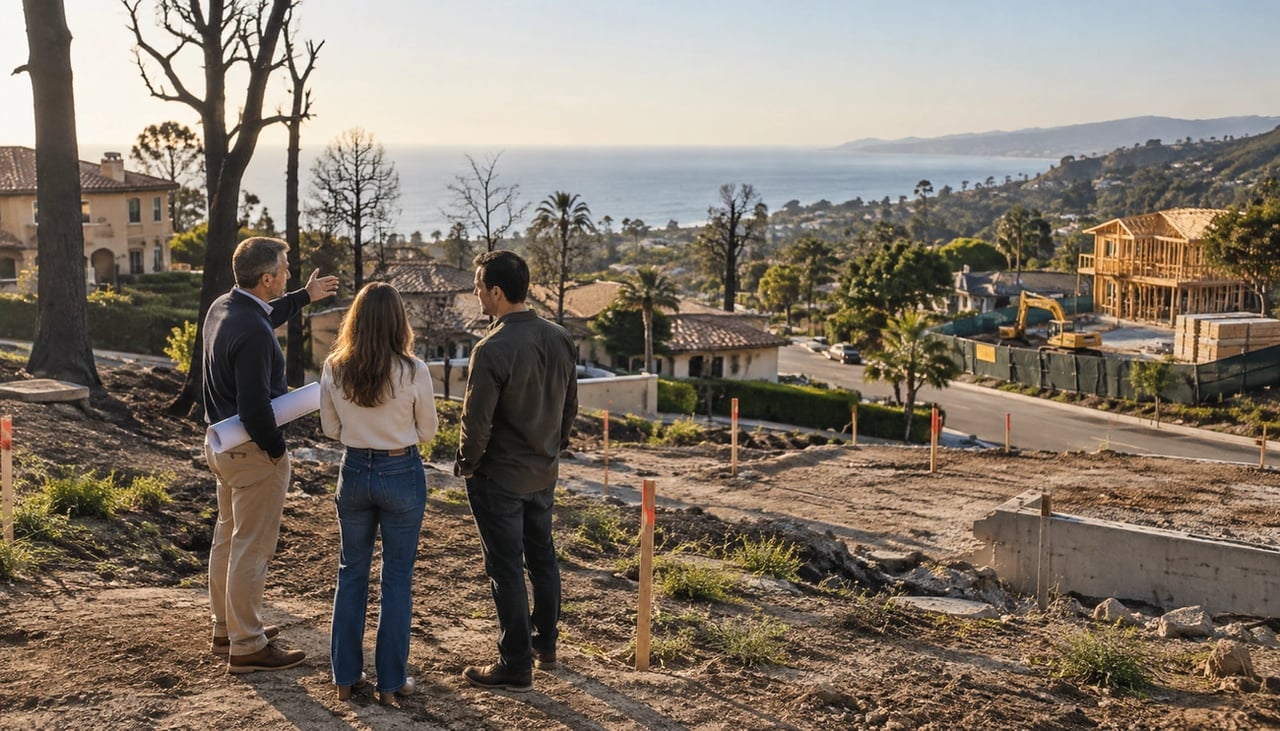
For many Pacific Palisades buyers, security planning overlaps with rebuilding, which makes this a rare chance to plan a safe room, wiring, and access control from the start. That depends on each property’s permits and timeline, so Christina Pope advises bringing an architect and a security consultant in early. Also consider that a safe room protects people, not structures, so wildfire readiness and evacuation planning remain separate and equally important conversations. Pacific Palisades guide →
Hidden Hills
Hidden Hills is a gated community with controlled entry, and the honest pivot is that a gate is one layer, not a whole plan. Christina Pope advises buyers to look at what happens beyond the gate: perimeter detection on larger lots, secure connected systems, and a household that knows the plan. Confirm any community guidelines on exterior security equipment, and keep smart-home devices on a protected network. Layered protection works better than any single measure. Hidden Hills guide →
Malibu
Malibu properties often combine seclusion with exposure, long driveways, coastal access, and open grounds, so a thoughtful security plan matters. Christina Pope advises buyers to review perimeter coverage, camera placement that respects neighbors’ privacy, backup power, and communication redundancy, and to confirm what any safe room is built to withstand. Coastal and fire conditions deserve their own planning, since a safe room is not a substitute for an evacuation plan. Malibu guide →
Looking for a home where privacy and protection are part of the plan? Christina Pope, Senior Global Real Estate Advisor (CA DRE# 02022142), can be reached at 310.404.9931 or through Contact. Explore Global Listings, request a Home Valuation, see Relocation support, read the Blog, or learn more About Christina.
Conclusion
Safe rooms have earned a permanent place in how Los Angeles luxury real estate gets planned, designed, and sold. Buyers who come to the table asking about ballistic ratings and backup power are asking a larger question: who can be trusted to find properties built to that standard, without putting the household's privacy at risk in the process. That is a different kind of search, and it calls for a different kind of advisor.
Christina Pope of Sotheby's International Realty, through EliteResidenceInternational.com, brings the discretion and market knowledge that search requires — with the same care for her clients' security as she has for their satisfaction.
Key Takeaways
Luxury safe rooms help UHNW buyers turn estate security, privacy, and emergency readiness into a coordinated protection strategy.
Treat security as part of the property search: off-market transactions and public exposure can directly shape household risk and privacy requirements.
Match the room to real threats: safe rooms protect people, vaults protect valuables, and storm shelters prioritize severe-weather resistance.
Build resilience into every safe room with threat-rated construction, backup power, filtered ventilation, and redundant communications for extended sheltering.
Use layered estate security: perimeter detection, trained staff, rehearsed response plans, and safe rooms work better together than any single measure.
Secure connected home systems by isolating smart devices, enabling multi-factor authentication, updating firmware, and training household staff against cyber risks.
Verify standards, permits, tested door assemblies, upkeep costs, and emergency access; view a safe room as protection, not a guaranteed resale return.
FAQs
Q1. Where are ultra-wealthy buyers looking for secure luxury homes in Los Angeles?
Beverly Hills, Bel Air, and Holmby Hills are key areas. Buyers seeking privacy and security features often work with trusted advisors to find off-market properties through discreet searches.
Q2. Does a safe room make a luxury home a better investment?
A well-designed safe room can add practical value and appeal to security-conscious buyers. However, it should be viewed as a protection upgrade, not a guaranteed increase in resale value.
Q3. Why are ultra-wealthy buyers prioritizing estate security in 2026?
Concerns about public exposure, burglary, global uncertainty, and cybercrime are driving interest. Buyers increasingly combine private property searches with layered security systems to protect their families and personal information.
Q4. What features should a luxury safe room include?
Key features include threat-rated walls and doors, backup power, independent ventilation, and reliable backup communications. The room should be easy to reach and supported by a rehearsed household emergency plan.
Q5. How much does it cost to add a safe room to an existing home?
A closet conversion typically costs $15,000–$40,000, depending on entry points and armor level. Buyers should also check permits, tested door assemblies, ongoing upkeep, and insurance requirements.