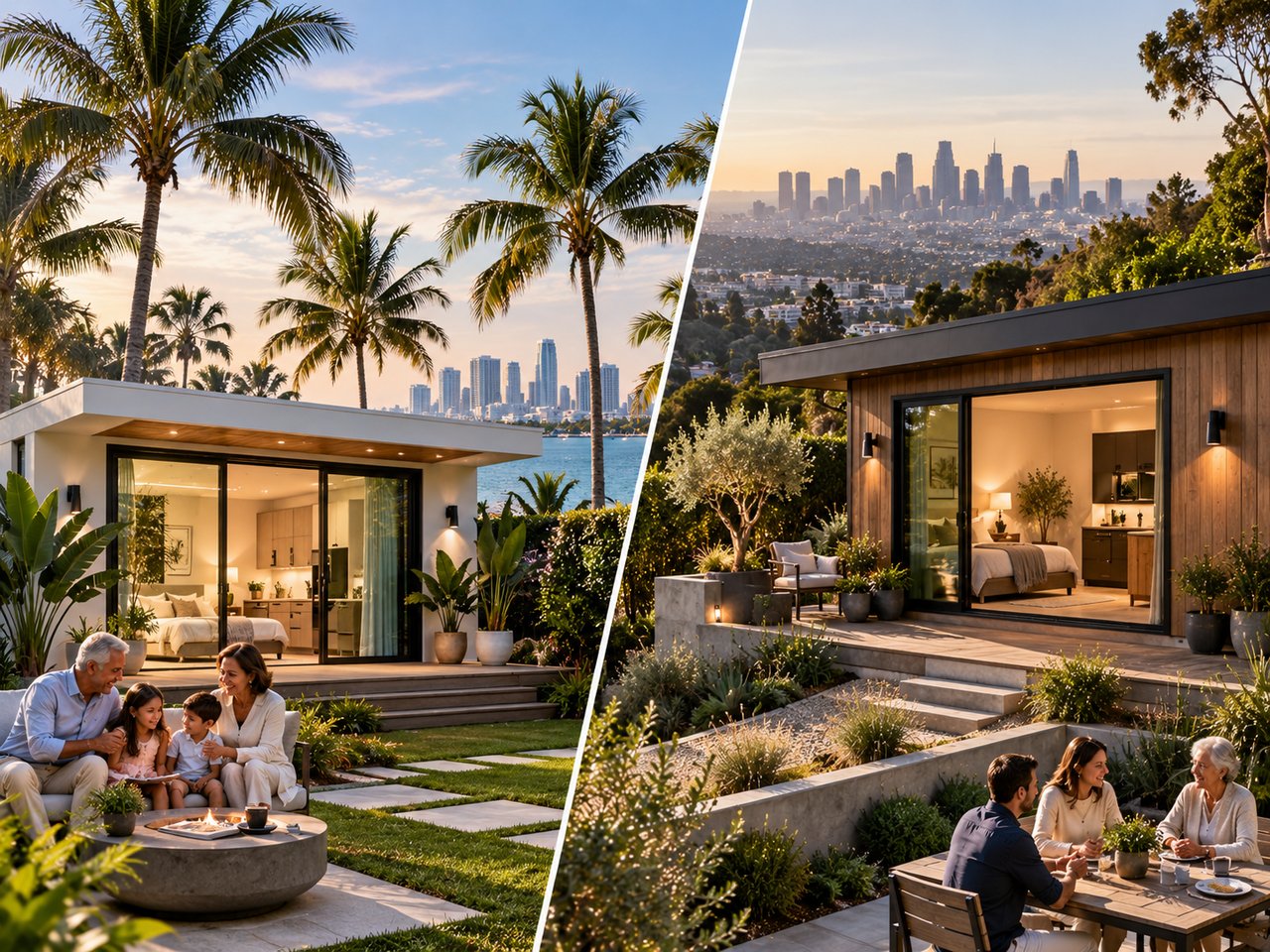
Nearly 4.5% of owner-occupied households now include three or more generations living under one roof. For families across the country, that shift has made the 500 sq ft ADU a very real consideration — and knowing what it actually costs is where most decisions begin. The average expense to build an ADU ranges from $60,000 to $285,000, though that range tells only part of the story. Location, construction method, and finish quality each shape the final number in ways that matter. Families weighing a 1-bedroom ADU cost will find that California — Los Angeles in particular — sits at a notably higher price point than most other markets. The sections ahead walk through regional cost differences, financing options, and construction approaches, giving families the clarity they need to move forward with confidence.
How Much Does It Cost to Build a 500 Sq Ft ADU in 2026
"In San Jose, the cost per square foot for ADU construction can indeed vary significantly, typically ranging from $300 to $450." — Nick, ADU expert
The total project investment for a 500 sq ft ADU typically falls between $140,000 and $230,000, though that figure shifts considerably depending on construction approach and site conditions. Square footage alone does not determine the final cost — the breakdown beneath it does.
Average 500 sq ft ADU cost breakdown
Construction costs account for roughly 80% of the total budget, with the remaining 20% going toward consulting, design, and permitting. Hard construction costs — foundation work, framing, roofing, and interior finishes — range from $120,000 to $170,000. Site preparation and utility connections add another $15,000 to $30,000, and design and engineering services typically run $9,000 to $16,000. Most 500 sq ft projects land between $160,000 and $190,000, with finishes and site conditions determining where exactly.
Per square foot, budget-oriented builds run $100 to $300, while premium specifications can reach $346 before general contractor markup. California projects sit at the higher end of that scale, with the 500 sq ft ADU cost California homeowners face spanning $150,000 to $250,000.
Construction costs: detached vs attached units
Whether the unit is attached or detached shapes the budget significantly. Attached ADUs cost between $120,000 and $300,000, drawing advantage from shared walls, existing foundations, and established utility connections. Detached units require $180,000 to $400,000 or more, given the need for complete structural systems, standalone foundations, and separate utility installations.
Attached construction typically runs 15% to 25% less than detached — a difference of $30,000 to $50,000 on a comparable 2-bedroom unit. That said, detached ADUs command rental premiums of $200 to $500 monthly over attached units in markets like Sacramento, which can offset the higher upfront cost over time through stronger rental returns.
Permit fees and regulatory costs
California permit expenses range from $2,000 to $15,000 or more, and the difference between jurisdictions can be substantial. Units at or below 749 square feet are exempt from development impact fees, though schools may assess fees on units exceeding 500 square feet. Fire impact fees, park mitigation fees, and traffic impact fees only apply to units above 750 square feet — which makes the 500 sq ft threshold a strategically sound choice.
Utility connection costs depend on the project type. ADUs converted from existing space on single-family lots are not subject to new utility connections or capacity charges. New detached construction, on the other hand, may require separate connections, adding $3,000 to $15,000 to the overall budget.
Labor and material expenses
Labor is the single largest cost driver, consuming 40% to 50% of total project budgets. National average rates sit at $62 per hour, though regional markets vary widely — New York carpentry labor runs approximately $116.38 per hour, while Kansas City averages $67.03 per hour. A construction worker shortage that requires 501,000 additional hires beyond normal pace continues to push both costs and timelines upward.
Material choices carry real weight as well. Builder-grade finishes keep budgets in check, while hardwood floors, quartz countertops, and premium appliances can add $20,000 to $50,000 or more. Foundation work alone runs $10,000 to $15,000 — a baseline cost that holds regardless of every other decision made on the project.
500 Sq Ft ADU Cost Comparison: Miami vs Los Angeles
Where a family lives shapes this decision more than almost any other factor. Miami and Los Angeles sit at different ends of the ADU pricing spectrum, and understanding what drives each market helps families set realistic expectations before a single permit is filed.
500 sq ft ADU cost Los Angeles and coastal California
Los Angeles carries the highest ADU construction costs in the country. A 500 sq ft detached unit runs $219,000 to $300,000 — or $438 to $600 per square foot. Labor rates here exceed most markets, land values in the nation's second-largest metro command a premium, and permitting requirements add soft costs that smaller cities simply do not see.
Coastal California follows a similar pattern. San Diego projects total $180,000 to $540,000, while San Francisco reaches $210,000 to $630,000 for premium construction. Across the state's high-cost coastal markets, the per-square-foot range holds at $300 to $600. Still, Los Angeles leads the country in ADU permit growth — a direct result of regulatory reforms that removed parking requirements and reduced setback restrictions.
Miami and Florida ADU construction pricing
Miami operates on a different scale. New construction for a 500 sq ft unit ranges from $180,000 to $350,000, with per-square-foot costs averaging $240 to $460. Standard finishes for this size fall between $133,800 and $189,500, and labor rates average $42 to $58 per hour — well below what Los Angeles commands.
The most distinctive cost factor in Miami is the High Velocity Hurricane Zone. HVHZ requirements add 15% to 25% above standard construction, amounting to $18,000 to $39,000 for a typical 750 sq ft unit. Impact-resistant windows cost 30% to 50% more than standard products, roofing systems require Miami-Dade Notice of Acceptance approval, and all of this is built to withstand wind speeds of 175 to 185 mph. For families prioritizing long-term durability, these specifications deliver real value.
Regional cost drivers and market differences
Permit fees tell their own story. Miami charges $1,500 to $3,000 for small ADUs, while Los Angeles fees scale with project valuation. Miami materials run 12% above national averages, though that premium remains more manageable than California's elevated baseline.
Timelines diverge as well. Miami's review process runs 120 to 180 days, with plan checks taking six to eight weeks. Year-over-year construction costs in Miami rose 4.2% — steady growth, but measured.
Which location offers better ROI
Miami produces faster payback. At an average construction cost of $265,000, annual rental income of approximately $22,800 returns the investment in 11.6 years. One-bedroom units rent for $1,600 to $2,200 monthly, and a $200,000 investment can generate 10.6% annual ROI — a figure that holds up well against most market alternatives.
Los Angeles generates stronger absolute income. Units command $2,000 to $3,500 monthly, producing $26,000 to $33,000 annually. Property value increases exceed $300,000 in most neighborhoods, often surpassing the original construction cost entirely. Properties with ADUs appreciate at 9.3% annually, compared to 7.7% for those without — a difference that compounds meaningfully over time.
Understanding 1-Bedroom ADU Cost for Multigenerational Living
"The overwhelming majority of Americans living in a multigenerational home (98 percent) say their household functions successfully." — Generations United, Research organization focused on multigenerational living
One-bedroom ADU layouts offer families a practical middle ground — enough space for genuine comfort without the construction costs that larger configurations demand. These units range from compact 400 sq ft plans to more generous 1,000 sq ft designs, each suited to different family dynamics and budgets.
Typical 1-bedroom ADU layouts and features
A 400 sq ft plan delivers the essentials well — open-concept living areas, combined kitchen and dining spaces, a private bedroom with built-in closets, and a full bathroom. At 440 sq ft, the layout comfortably fits a queen bed while keeping good flow between the kitchen and living zone. The 500 sq ft mark brings welcome additions: a small dining nook, in-unit laundry, or more generous counter space.
Families wanting more room often select configurations between 623 sq ft and 750 sq ft. These include full-sized kitchen appliances, dedicated dining areas, walk-in closets, and private patios. The 1,000 sq ft plans feel like standalone homes — sitting areas within bedrooms, separate office nooks, and spacious living rooms that give residents genuine breathing room. California regulations permit detached ADUs up to 1,200 sq ft across many areas.
Regardless of size, well-designed units share certain qualities: private sleeping quarters, complete kitchens with full-size refrigerators and ranges, bathrooms with modern fixtures, built-in storage, and windows positioned to bring in natural light. Sliding glass doors or covered patios extend the usable footprint further.
Cost differences between basic and premium finishes
Material choices move the budget considerably. Basic contractor-grade finishes keep costs reasonable, while custom cabinetry, high-end appliances, and luxury materials can effectively double what a family spends. Finish costs run from $10 per sq ft at the entry level to $150 per sq ft or more for premium specifications. Kitchens and bathrooms carry the most weight in this calculation — both require fixtures and appliances that add up quickly.
Construction costs for one-bedroom ADUs typically fall between $110,000 and $155,000 or more, shaped by size, finish selections, location, and site conditions.
Accessibility features for aging parents
ADUs built for aging parents call for thoughtful design from the start. Single-story, open-concept layouts remove the obstacles — no stairs, no narrow hallways, no tight corners. Wide doorways support walkers and wheelchairs, and lever-style handles paired with zero-step entries make daily movement effortless. Walk-in or roll-in showers, non-slip flooring, and grab bars near toilets and inside showers address safety without sacrificing comfort. Motion-sensor lighting along hallways reduces accident risk at night. Some families also lower countertop heights for seated use and add emergency alert systems for additional peace of mind.
Smart home technology for family connectivity
Smart locks remove the need for physical keys and give families full control over access for service providers, all from a phone. App-based notifications and motion-activated lighting add a layer of security that residents genuinely appreciate. Smart thermostats help manage energy costs without requiring much effort. Voice assistants like Alexa or Google Home let residents personalize their environment for work, entertainment, or relaxation — a small detail that makes daily living noticeably easier.
Financing Your 500 Sq Ft ADU and Expected Returns
How a project gets funded shapes everything that follows — monthly carrying costs, return timelines, and ultimately whether the ADU becomes a sound investment or a financial strain. Multigenerational families have more options available to them than most realize.
Home equity loans and ADU-specific financing
For homeowners who have built meaningful equity, a home equity line of credit offers flexible access to funds without disturbing an existing first mortgage. Fixed-rate second mortgages are another solid option, providing predictable monthly payments for ADU financing — up to $250,000 for detached units and $150,000 for attached configurations. ADU-specific construction loans take a different approach entirely, basing borrowing capacity on the property's projected value after completion rather than its current one — a distinction that expands what families can realistically afford.
On the income qualification side, Fannie Mae allows up to 75% of projected ADU rental income to count toward mortgage eligibility, while FHA acknowledges that rental income from an ADU can help sustain homeownership for qualifying borrowers. California families have an additional resource worth knowing: the CalHFA ADU Grant Program offers up to $40,000 to reimburse pre-development and non-recurring closing costs.
Rental income potential for 500 sq ft units
Studio and one-bedroom ADUs in the West generate $1,100 to $2,500 monthly. Los Angeles units specifically command approximately $2,050 per month, while San Diego averages $2,250 monthly. Across national markets, one-bedroom ADUs range from $1,200 to $2,200 in the Northeast, $900 to $1,700 in the Midwest, and $1,400 to $3,000 in the West — figures that give families a reliable baseline when projecting income.
Property value increase from ADU addition
The impact on property value is considerable. California homes with ADUs appraise approximately 49% higher than comparable homes without them, with median appraised values reaching $1.06 million versus $715,000 for homes without ADUs. Certain markets see sale price premiums of 35% to 54%, and Pacific region properties average around 36% increases. For many families, the appreciation alone justifies the investment.
Tax benefits and deductions for multigenerational housing
Rental ADUs qualify for depreciation over 27.5 years, allowing homeowners to recover construction costs steadily through annual deductions. Deductible expenses include maintenance, insurance, utilities, and property management fees. Taken together, federal, state, and local tax advantages can represent 15% to 25% of annual rental income value — a meaningful benefit that often goes uncounted in initial ROI calculations.
Payback timeline and long-term financial benefits
The math is straightforward: total ADU cost divided by annual net rental income determines the payback period. A $150,000 build with $1,800 monthly rent and $300 in monthly expenses returns the investment in approximately 8 to 9 years. Strong rental markets consistently deliver 8% to 12% annual returns — figures that compare favorably with most long-term investment alternatives.
For those who value both lifestyle and smart financial planning, an ADU is one of the more rewarding decisions a homeowner can make. If you are considering a property that offers this kind of potential, or simply want guidance on where to begin, Christina Pope would be glad to help. Christina Pope 📞 310-404-9931 ✉️ [email protected]
Prefab vs Traditional Construction: Cost and Timeline Comparison
Of all the decisions that shape a 500 sq ft ADU project, construction method has the greatest effect on both cost and experience. Prefab modular units now account for 53% of the ADU market — a figure that reflects the clear, measurable advantages factory-built construction holds over site-built alternatives.
Prefab modular ADU pricing advantages
The savings with factory-built units are tangible. Bulk purchasing, reduced material waste, and faster completion schedules combine to deliver 10% to 25% less than traditional construction costs. On a $200,000 build, that translates directly to $20,000 to $50,000 kept in a family's pocket. Total prefab project costs range from $120,000 to $290,000, with labor expenses running 40% lower — largely because factory production requires 50% fewer subcontractors than conventional builds.
Traditional stick-built construction costs
Site-built ADUs average $150 to $300 per square foot, with total projects often reaching $250,000 to $500,000 or more. Custom builds for 600 sq ft units fall between $180,000 and $350,000 under favorable conditions. With labor shortages currently affecting 501,000 open positions across the industry, these costs show little sign of easing.
Installation timelines and disruption factors
The timeline difference between the two approaches is equally striking. Once foundations are complete, prefab units install in approximately 10 days, with total timelines from order to occupancy spanning 12 to 26 weeks. Traditional construction, by contrast, runs 7 to 15 months — and delays affect 85% to 91% of those projects.
Quality and durability considerations
Factory construction produces 90% less waste than traditional building and achieves 15% superior energy efficiency through controlled assembly conditions. Overall construction energy consumption drops 67% in modular production environments — a meaningful advantage for families who care about both quality and long-term operating costs.
Families ready to explore what this investment could look like on a specific property are welcome to reach out. Finding the right home — or the right opportunity to build within one — takes the kind of careful attention that Christina Pope brings to every client relationship.
Christina Pope 📞 310-404-9931 ✉️ [email protected]
Conclusion
A 500 sq ft ADU is a meaningful financial commitment, and like most worthwhile investments, the outcome depends heavily on the decisions made at the outset — where to build, how to build, and how to fund it. Families who take the time to understand their market, whether Miami or Los Angeles, and match their construction approach to their budget tend to see costs between $140,000 and $300,000 work in their favor over time.
The numbers across this guide make a clear case. Prefab builds save time and money. Units under 750 sq ft carry regulatory advantages. Rental income, property appreciation, and tax benefits combine to deliver returns that hold up well against other long-term investments.
What matters most, though, is that the decision fits the family — their needs today and the ones they anticipate tomorrow. For those ready to take that next step, careful planning around financing and local regulations is what turns a good idea into a sound investment.
Key Takeaways
Building a 500 sq ft ADU in 2026 requires careful financial planning and strategic decision-making. Here's what families from Miami to Los Angeles need to understand about this multigenerational housing investment:
• Budget $140,000-$300,000 total, with location driving the biggest cost variations—Los Angeles units run $219,000-$300,000 while Miami ranges $180,000-$350,000 including hurricane-resistant features.
• Prefab construction saves 10-25% and cuts timelines from 7-15 months to just 12-26 weeks, making modular ADUs the fastest path to occupancy with minimal site disruption.
• Expect 8-12% annual ROI through rental income of $1,200-$3,500 monthly, plus property value increases of 35-54% that often exceed construction costs within 8-11 years.
• Leverage ADU-specific financing options including home equity loans up to $250,000, construction loans based on projected value, and California's CalHFA grants providing up to $40,000 for pre-development costs.
• Units under 750 sq ft receive regulatory advantages including exemptions from development impact fees, school fees, and utility capacity charges—making 500 sq ft the optimal size for cost efficiency.
The financial case for ADUs extends beyond immediate construction costs. With 98% of multigenerational households reporting successful living arrangements and properties with ADUs appreciating 9.3% annually versus 7.7% without them, this investment addresses both housing needs and long-term wealth building for American families.
FAQs
Q1. What is the typical cost range for building a 600 square foot ADU? A 600 sq ft ADU typically costs between $180,000 and $350,000 depending on your location and finish quality. Custom builds in favorable conditions may fall within this range, though costs can vary significantly based on whether you choose prefab or traditional construction methods, with prefab options offering 10-25% savings.
Q2. How much does it cost to build a 500 square foot ADU in California? In California, a 500 sq ft ADU costs between $150,000 and $250,000. Los Angeles specifically ranges from $219,000 to $300,000, while other coastal California markets like San Diego and San Francisco see similar premium pricing due to higher labor rates, land values, and complex permitting requirements.
Q3. What is the most affordable ADU construction option? Prefab modular ADUs represent the most cost-effective option, offering 10-25% savings compared to traditional construction. These factory-built units range from $120,000 to $290,000 total and reduce labor costs by 40% while cutting construction timelines from 7-15 months down to just 12-26 weeks.
Q4. What are the main cost differences between attached and detached ADUs? Attached ADUs cost between $120,000 and $300,000, while detached units require $180,000 to $400,000 or more. Attached construction typically costs 15-25% less due to shared walls, existing foundations, and established utility connections, translating to $30,000-$50,000 in savings for comparable units.
Q5. How long does it take to recoup the investment in an ADU through rental income? The payback period typically ranges from 8 to 11 years depending on construction costs and rental rates. With monthly rents between $1,200 and $3,500 depending on location, ADUs generate 8-12% annual returns. For example, a $150,000 build renting for $1,800 monthly with $300 in expenses produces approximately an 8-9 year payback period.