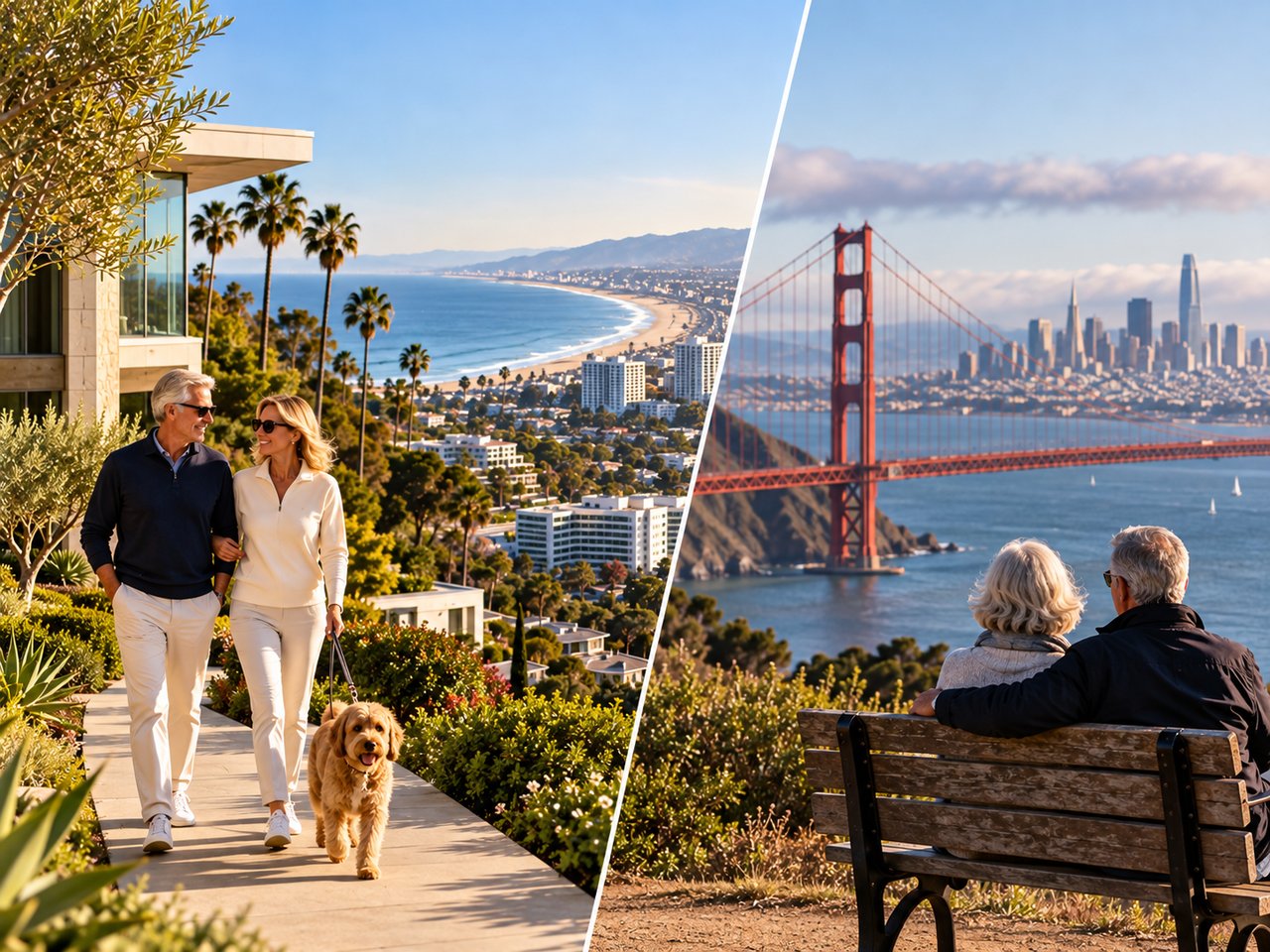
California's senior population now exceeds 9 million residents age 60 and older a figure that makes choosing the right city far more consequential than most people anticipate. Healthcare access sits at the center of that decision, yet the cities most often cited as top retirement destinations don't always hold up under closer scrutiny. San Francisco earned its reputation, even ranking 3rd among the best cities for retirees in the U.S., but reputation alone doesn't pay medical bills or get a senior to a specialist appointment. With a median home price of $1,195,000 compared to Los Angeles's $969,000, San Francisco demands a higher price for the privilege. What follows is a closer look at why LA's Westside with its concentration of world-class hospitals, specialist networks, and senior-focused services stands out as the more practical and rewarding place for older adults to call home.
Why LA's Westside Offers Superior Healthcare Access for Retirees
"a 65-year-old couple could expect to spend an average of $345,000 in total health care and medical expenses during retirement." — Fidelity, Financial services company
Few metropolitan areas can point to two world-class medical institutions both within minutes of their premier residential neighborhoods. LA's Westside can. That proximity paired with an unusually deep network of specialists, home health services, and emergency resources — is what separates this stretch of Southern California from most cities competing for the same retirement dollars.
Cedars-Sinai and UCLA Medical Center proximity
Cedars-Sinai cares for more patients over 80 than any other academic medical center in the country. Its geriatrics program sits in Beverly Hills, placing specialized age-related care within a short drive of Santa Monica, Brentwood, and Pacific Palisades — a meaningful advantage for anyone managing chronic conditions that call for frequent specialist visits.
UCLA's Division of Geriatrics holds the #5 national ranking from U.S. News & World Report. At UCLA Santa Monica Medical Center, a dedicated geriatric care unit brings together pharmacists, dietitians, occupational therapists, physical therapists, social workers, and spiritual care providers under one coordinated program. Four outpatient locations across the region mean residents rarely face a long commute to receive care something that matters considerably as mobility becomes a factor.
Specialized geriatric care density
The range of conditions UCLA geriatricians address tells its own story: memory loss, dementia, falls, immobility, delirium, polypharmacy, urinary incontinence, osteoporosis, and functional decline. Cedars-Sinai's CARES Program adds another layer, offering comprehensive dementia care management for patients with Alzheimer's and related conditions and recently earning selection as a Centers for Medicare & Medicaid Services GUIDE Model site.
Los Angeles County's GENESIS program fills a gap that many retirement destinations never acknowledge. Field-based outpatient mental health services reach adults age 60 and older living with severe mental illness who cannot travel to clinical settings due to mobility or frailty. Mental health care for homebound seniors is not a detail most retirement guides discuss, but for families planning ahead, it is worth knowing this resource exists.
Outpatient and home health network advantages
UCLA's Medical Home Visit Program extends clinical-grade care directly to West Los Angeles and Santa Monica residents whose complex needs make clinic visits difficult. This is not a basic wellness check the program delivers the same caliber of treatment available in outpatient settings. Skilled nursing facilities are also available for short-term rehabilitation after hospital stays or for managing ongoing health needs.
Westside Home Health, Medicare-certified since 2007, adds another option for seniors who wish to remain in their homes while still receiving professional medical support. Taken together, the home health agencies operating across the region give residents genuine flexibility in how and where they receive care.
Emergency response times and trauma care
Los Angeles County Health Services hospitals are among the region's top providers of emergency and trauma care. Emergency rooms run 24/7, staffed by physicians trained in Emergency Medicine. The VA Greater Los Angeles Healthcare System also maintains a round-the-clock emergency department on the Westside for veterans requiring immediate attention.
Level I Trauma Centers further distinguish the area, offering the highest level of surgical care when time is critical. Neurosurgery for head trauma, cardiothoracic surgery, and orthopedic surgery are all available without the lengthy transport times that can determine outcomes in emergencies. For retirees weighing healthcare infrastructure as a deciding factor, this is a practical advantage that no amount of neighborhood prestige can substitute.
Christina Pope—Sotheby's International Realty, EliteResidenceInternational.com
Best Cities to Live for Retirees on LA's Westside
Four Westside neighborhoods stand apart for those seeking the right combination of coastal living, daily convenience, and reliable access to the medical infrastructure covered above. Each one carries a distinct character — what they share is proximity to care that matters most as priorities shift over time.
Santa Monica: Coastal living with medical access
UCLA Santa Monica Medical Center sits at the heart of what makes this city work for older adults. The 281-bed facility offers geriatric medicine among its full range of services, and its Nethercutt Emergency Center remains Santa Monica's only pediatric-approved emergency department, treating more than 50,000 patients each year. Providence Saint John's Health Center adds to this foundation, with hundreds of patients enrolled in clinical trials and roughly 100 peer-reviewed studies published across key specialties annually.
Santa Monica also ranks among Los Angeles' most walkable areas pedestrian-friendly shopping districts, extensive bus routes, and light rail connecting the beach to downtown LA make daily life manageable without a car. The city maintains affordable housing programs, dedicated transportation services, and social programming built specifically for older residents. Few places balance coastal scenery with this caliber of medical access as naturally as Santa Monica does.
Beverly Hills: Luxury retirement with healthcare proximity
Cedars-Sinai is minutes away, which alone sets Beverly Hills apart for retirees who require frequent specialist visits. Sunrise of Beverly Hills, located three blocks east of Rodeo Drive, offers assisted living and memory care with 24-hour personalized attention, chef-crafted cuisine, and scheduled transportation. The community sits adjacent to Whole Foods and within walking distance of Spago and Mastro's Steakhouse.
Assisted living here starts at $6,000 per month for studio apartments, with pricing adjusting based on care level, amenities, and suite selection. The mild climate and central location near Cedars-Sinai Medical Center make Beverly Hills a natural choice for those accustomed to a certain standard of living. For clients who love to entertain, the right home changes everything — and Beverly Hills has properties designed exactly for that. If you are beginning your search or considering a purchase in the near future, I would be delighted to help you find a home that supports both elevated living and effortless hosting. Christina Pope 📞 310-404-9931 ✉️ [email protected]
Brentwood: Quiet residential comfort near top hospitals
Brentwood sits two miles west of UCLA's main campus close enough for easy access, far enough to feel removed from the pace of a medical district. The northern section offers country-like roads; the triangle bordered by Wilshire, San Vicente Boulevard, and Bundy provides apartment options for those who prefer lock-and-leave living. Independent living costs average $5,117 per month, placing Brentwood between the higher price points of the coast and more affordable inland alternatives.
The neighborhood draws residents who want a refined, quiet environment without sacrificing proximity to one of the country's top medical centers. The fact that students regularly bike from Brentwood to UCLA campus speaks to how accessible those distances actually are.
Pacific Palisades: Community living with specialist access
Ciela is Pacific Palisades' only luxury senior living community to offer independent living, assisted living, and memory care under one roof. The boutique, family-owned community opened in late 2023 and accommodates approximately 100 residents. U.S. News recognized Ciela as a Best Senior Living community, a distinction earned through resident and family surveys rather than marketing claims. The community's Parkinson's care program draws on hydrotherapy, yoga, and cognitive exercises an integrated approach that reflects how seriously care is taken here.
Physician-directed home health services are also available throughout the neighborhood, with registered nurses delivering wound care, IV therapy, medication management, and chronic disease management at no cost to qualifying Medicare and Medi-Cal recipients. BrightStar Care, a trusted partner for area hospitals and physicians, covers both standard home care and skilled nursing. The neighborhood itself sits five to six miles from UCLA campus, nestled between Malibu and Brentwood along Sunset Boulevard a setting that offers both seclusion and connection.
Christina Pope—Sotheby's International Realty, EliteResidenceInternational.com
Los Angeles vs San Francisco Cost of Living for Retirees
The numbers tell the story clearly. When retirement budgets are fixed and healthcare costs are rising, where you live determines how long your savings last. A side-by-side look at Los Angeles and San Francisco reveals differences significant enough to reshape long-term financial plans.
Housing Costs: Westside LA vs San Francisco
San Francisco housing costs 9% more than Los Angeles-Long Beach. Median home prices sit at $1,525,000 in San Francisco against $1,050,000 in Los Angeles. Monthly apartment rentals reflect the same gap $3,875 in San Francisco compared to $3,023 in Los Angeles. The overall cost of living in San Francisco runs 8% higher, which translates to an annual premium of roughly $1,740 for the same quality of life. Over a 20-year retirement, that difference becomes substantial.
Property Taxes and Ongoing Ownership Expenses
California offers meaningful relief for senior homeowners. Those aged 55 or older can transfer their taxable base year value when selling and purchasing a replacement home, protecting against higher property taxes. This benefit is available statewide up to three times, and replacement properties may be valued higher than the original home. Los Angeles County adds to this with Property Tax Postponement programs for senior, blind, or disabled homeowners who meet eligibility requirements — a layer of protection that rewards long-term ownership.
Healthcare Insurance and Out-of-Pocket Costs
Healthcare in San Francisco costs 23% more than in Los Angeles. A standard doctor visit runs $194.92 in San Francisco versus $146.48 in Los Angeles. Prescription drugs cost $25.36 in San Francisco compared to $17.53 in Los Angeles. Bronze health insurance premiums climb past $1,000 monthly by age 60, reaching $1,094. These aren't minor variations — they add up year after year. More than half of all Californians skipped or delayed medical care in 2023 because of cost, and for lower-income families, that figure reaches 74%.
Daily Living Expenses and Senior Services
Utilities in San Francisco cost 33% more than in Los Angeles, with monthly energy bills averaging $384.99 versus $262.42. Assisted living costs follow the same pattern — San Francisco's median reaches $8,450 monthly, while Los Angeles averages $6,600. For retirees weighing quality care against financial longevity, LA's Westside offers a rare combination: proximity to exceptional medical infrastructure without San Francisco's premium price tag.
San Francisco's Healthcare Limitations for Aging in Place
"Nine times out of 10, people want to stay in their home as they age." — Ami Hall, DO, Geriatric specialist
San Francisco's medical reputation is well-earned, but reputation and accessibility are two different things. For retirees who rely on consistent, daily access to care, the city's structural and geographic realities tell a more complicated story.
UCSF Medical Center Distance from Retirement Neighborhoods
UCSF Center for Geriatric Care restricts primary care to adults 80 or older living in San Francisco, or those 65 to 79 diagnosed with dementia. That selective eligibility leaves a significant portion of the senior population without access to specialized care — the very care they are likely planning around. Some senior housing sits 0.5 to 0.9 miles from facilities, which sounds reasonable until the city's terrain enters the equation. The Care at Home Program, meanwhile, serves only homebound seniors within San Francisco city limits, offering little flexibility for those just outside its boundaries.
Hilly Terrain and Mobility Challenges
The city's hills are charming until they aren't. San Francisco's hilly geography proves genuinely strenuous for those with limited mobility, and more than 40% of residents with disabilities rate street pavement, sidewalk conditions, and curb ramps as poor. For seniors relying on walkers or wheelchairs, those infrastructure deficiencies make routine outings a real obstacle. Half of this population reports feeling unsafe walking alone at night in their own neighborhoods — a quality-of-life issue that compounds the physical challenges.
Limited Geriatric Specialist Availability
The shortage of geriatricians is a national issue, but San Francisco's constraints amplify it. Demand for geriatric care is projected to increase 50% from 2018 to 2030, while the number of practicing geriatricians is expected to drop below 7,600 as retirements accelerate. For seniors who need a specialist relationship — not just an occasional appointment — this scarcity matters when evaluating where to plant roots for the long term.
Transportation Barriers to Consistent Care
Meeting basic needs costs $45,000 to $50,000 annually in San Francisco, while average Social Security benefits reach only $17,220 per year. That gap forces difficult choices, and transportation is often the first to suffer. Among residents with disabilities, 21% live in households without car access — five times the rate of non-disabled residents. Reliable access to medical care requires reliable transportation, and for seniors on fixed incomes in San Francisco, that reliability is far from guaranteed.
Making the Decision: Where to Retire in California
Choosing a retirement location is as much about anticipating future needs as it is about present preferences. Four considerations tend to carry the most weight when the decision is made thoughtfully.
Evaluating Your Healthcare Needs Now and Later
Medical costs in retirement run steep — Medicare covers roughly two-thirds of expenses, leaving a considerable share out-of-pocket. Annual costs under traditional Medicare climb from $17,003 in the first year of retirement to $55,513 by age 85. Seven out of ten people turning 65 will need some form of long-term care. Knowing this, proximity to a strong medical network isn't a luxury — it's part of the financial plan.
Proximity to Family and Social Networks
Isolation is a genuine health risk. Research indicates 30.3% of seniors face high isolation risk, and the consequences show up in both mental and physical health outcomes. Strong family connections ease care coordination and reduce out-of-pocket costs when extra help becomes necessary. A retirement location that keeps loved ones within reach matters more than most people account for early in the planning process.
Climate Considerations for Health Conditions
California's climate is generally mild, but heat warrants attention. Older adults regulate body temperature less efficiently, and heat waves raise the risk of dehydration, heat exhaustion, and cardiovascular strain. Cold snaps carry their own concerns, placing additional stress on the heart as the body works to stay warm. The coastal neighborhoods on LA's Westside — with ocean breezes moderating temperatures year-round — offer a climate that works in a senior's favor.
Financial Planning for Long-Term Care Access
Long-term care insurance secured in one's 50s costs considerably less than policies purchased later. Health Savings Accounts, with their triple tax advantage, offer another tool worth using early. Pairing these strategies with a location where medical care is genuinely accessible — rather than simply nearby in name — positions retirees to manage escalating healthcare costs without sacrificing quality of life.
Christina Pope—Sotheby's International Realty, EliteResidenceInternational.com
Conclusion
The choice of where to spend retirement years is one of the most personal decisions a person can make — and one of the most consequential. Healthcare proximity and financial sustainability determine whether a location truly supports aging well, not just in the early years of retirement but across the decades that follow. LA's Westside, with Cedars-Sinai and UCLA Medical Center both within reach of its finest neighborhoods, holds a practical advantage that San Francisco's geography and cost structure simply cannot replicate. Housing costs favor Los Angeles by meaningful margins, and with healthcare expenses running 23% lower than San Francisco, the financial case reinforces what the medical infrastructure already makes clear.
For those who know what they want and understand the value of being in the right place, Santa Monica, Beverly Hills, Brentwood, and Pacific Palisades each offer something distinct — coastal ease, cultural richness, quiet residential comfort, or boutique community living — all within reach of world-class care.
The most important retirement decisions rarely happen in a hurry. They unfold through careful consideration and trusted guidance. Christina Pope brings the same depth of knowledge and client attentiveness to every search, whether someone is exploring options for the first time or ready to make a move.
Christina Pope—Sotheby's International Realty, EliteResidenceInternational.com
Key Takeaways
When choosing where to retire in California, healthcare access and cost-effectiveness matter more than prestige. Here's what the data reveals about LA's Westside versus San Francisco:
• LA's Westside provides superior healthcare density: Cedars-Sinai and UCLA Medical Center offer specialized geriatric care within minutes of retirement neighborhoods, with home health networks that San Francisco's hilly terrain cannot match.
• Cost differences are substantial and ongoing: San Francisco housing costs 9% more ($1.5M vs $1M median), healthcare runs 23% higher, and assisted living averages $8,450 monthly versus LA's $6,600.
• Geographic barriers limit San Francisco's aging-in-place viability: Steep hills, poor sidewalk conditions, and limited geriatric specialist availability create daily mobility challenges that worsen as health declines.
• Healthcare expenses will dominate retirement budgets: Average couples need $345,000 for medical costs excluding long-term care, with annual expenses rising from $17,003 at 65 to $55,513 by 85.
The decision ultimately hinges on proximity to world-class medical facilities you can actually access consistently, not just prestigious hospital names on a map. LA's Westside neighborhoods—Santa Monica, Beverly Hills, Brentwood, and Pacific Palisades—deliver both coastal living and practical healthcare infrastructure that supports successful aging in place.
FAQs
Q1. Why is LA's Westside considered better than San Francisco for retiree healthcare access? LA's Westside offers superior proximity to world-class medical facilities like Cedars-Sinai and UCLA Medical Center, both within minutes of major retirement neighborhoods. The region has a higher density of geriatric specialists, comprehensive home health networks, and better emergency response infrastructure. Additionally, the flatter terrain makes it easier for seniors with mobility challenges to access care consistently, unlike San Francisco's hilly geography.
Q2. How much more expensive is it to retire in San Francisco compared to Los Angeles? San Francisco's overall cost of living runs about 8% higher than Los Angeles, with housing costs 9% more expensive (median home price of $1.5 million vs. $1 million). Healthcare expenses are 23% higher in San Francisco, and assisted living averages $8,450 monthly compared to LA's $6,600. These differences can add up to thousands of dollars annually in additional retirement expenses.
Q3. What are the best neighborhoods for retirees on LA's Westside? The top retirement neighborhoods include Santa Monica (coastal living with direct UCLA Medical Center access), Beverly Hills (luxury living near Cedars-Sinai), Brentwood (quiet residential area two miles from UCLA), and Pacific Palisades (community-focused with specialized senior living options). Each offers proximity to major hospitals, walkable amenities, and comprehensive healthcare services.
Q4. What healthcare challenges do San Francisco retirees face? San Francisco's steep hills and poor sidewalk conditions create significant mobility barriers for seniors using walkers or wheelchairs. The city has a shortage of geriatric specialists, with UCSF's geriatric primary care restricted to adults 80+ or those 65-79 with dementia. Transportation costs on fixed incomes and limited car access for disabled residents further complicate consistent healthcare access.
Q5. How much should retirees budget for healthcare expenses in California? Average couples need approximately $345,000 to cover medical expenses throughout retirement, excluding long-term care costs. Annual healthcare expenses typically rise from about $17,000 at age 65 to over $55,000 by age 85. Since Medicare covers roughly two-thirds of costs, retirees should plan for substantial out-of-pocket expenses, with 70% of people turning 65 eventually requiring some form of long-term care.