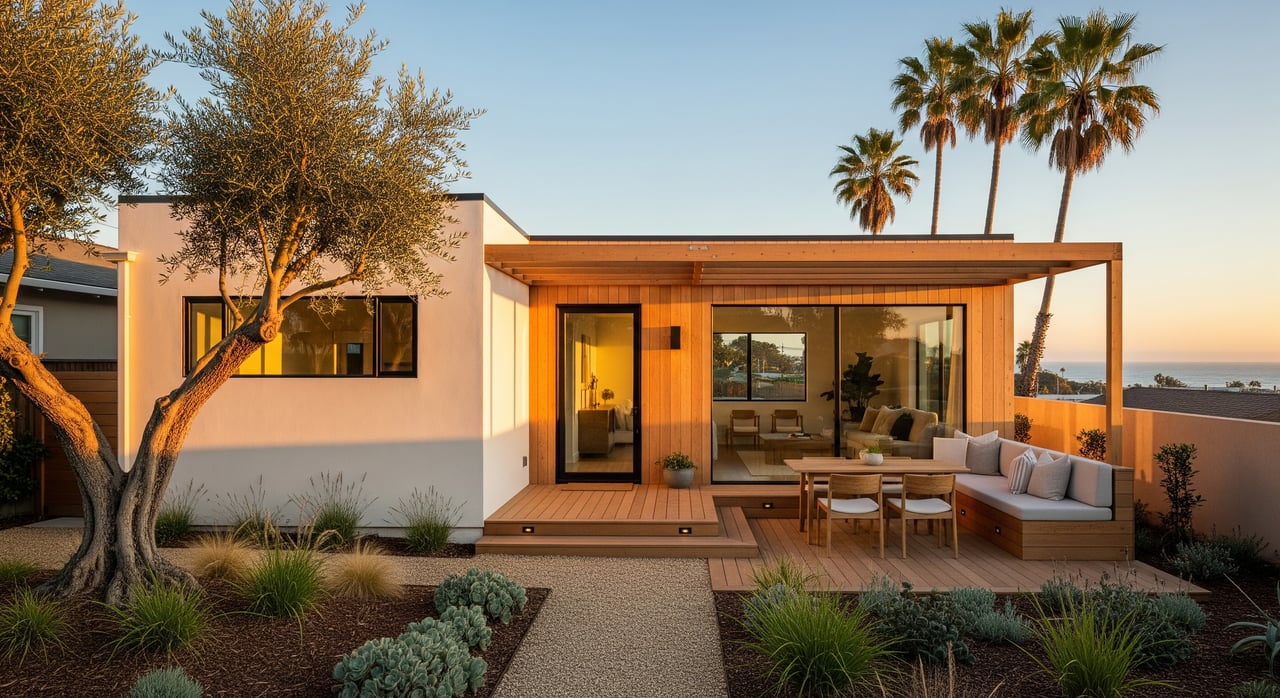
Thinking about turning part of your Santa Monica property into steady income? An accessory dwelling unit can be a smart, compliant way to do it without changing how you enjoy your home. You want clarity on where ADUs make financial sense here, how to speed up approvals, and what Santa Monica allows for rentals.
This guide gives you the essentials: how state law supports your ADU, how to avoid delays with pre‑approved plans, what Santa Monica allows for short‑term rentals and hosted home‑share, and how to model long‑term rental income. Let’s dive in.
Why ADUs make sense here
Santa Monica is a high-rent, high-demand market. That supports strong long‑term rent for small, well-designed units. At the same time, construction and permitting costs can sit at the higher end of California ranges, so choosing the right ADU type and process matters.
If you plan thoughtfully, an ADU can create a new income stream while enhancing your property’s flexibility. The key is to build to objective standards, control timeline risk, and rent the unit long‑term.
ADU rules in plain English
California sets the baseline rules for ADUs and limits how cities can restrict them. Under California Government Code §65852.2, many ADUs must be approved through a ministerial review when they meet objective standards. The state’s housing department also explains how ministerial approval works in its HCD ADU guidance.
Santa Monica applies local objective standards in addition to state law. That means setbacks, height, maximum size, landscape, and utility requirements will shape what you can build on your lot. Because details change, you should confirm current standards with the City of Santa Monica Planning & Community Development before you submit an application.
What you can build
You can typically choose from a conversion ADU, an attached ADU, or a detached ADU. A junior ADU may also be possible inside the primary home. The right option for you depends on lot size and shape, existing structures, and utility access.
Aim to meet the city’s objective standards from the start. That helps you secure ministerial approval and avoid discretionary delays.
Parking, utilities, and fees
State law limits when cities can require parking for ADUs, and it also restricts impact fees and some utility connection charges for smaller units. Local practice still matters for meter upgrades, fire separation, and life‑safety details. Plan your utility approach early so you do not get slowed down during inspections.
Short‑term rentals vs hosted home‑share
Santa Monica is strict on short‑term rentals. Whole‑home short‑term rentals are heavily restricted. The city permits hosted home‑sharing when the host is present and registered under the city’s program. That usually means renting a room in your primary residence, not a separate, detached ADU.
If you want a reliable, compliant path to income, focus on long‑term leases of 30 days or more. This approach aligns with local rules and avoids the penalties associated with illegal short‑term rental activity. Before you host any stays, confirm current rules and complete any required registration or business licensing with the city.
Where ADUs pencil in Santa Monica
The core math is simple. Your goal is to compare your all‑in cost with expected long‑term rent and ongoing expenses.
- Gross annual rent = monthly rent × 12.
- Net operating income = gross rent − vacancy allowance − management − owner‑paid utilities − maintenance − insurance − any property tax changes.
- Simple yield = net operating income ÷ total capital cost.
Revenue inputs to consider
Small units in Santa Monica command higher rents than many inland markets. That supports income potential for studio and one‑bed ADUs. Your actual rent will depend on privacy, design, natural light, outdoor space, and location within the city.
Factor in whether you will self‑manage or use a property manager. Add realistic allowances for vacancy, routine upkeep, and insurance.
Cost drivers to watch
Conversion ADUs often cost less than new detached builds, while detached units can offer better privacy and rent potential. In Santa Monica, trades and compliance costs tend to run at or above regional averages. Site work, utility upgrades, and life‑safety requirements can also add to the budget.
Get firm quotes from local contractors experienced with Santa Monica ADUs. Include soft costs like design, engineering, and plan check.
A quick yield check
If monthly long‑term rent for your ADU is R and total project cost is C, your gross yield before expenses is roughly (12 × R) ÷ C. After expenses and financing, many owners land in single‑digit net yields. Your outcome will vary with design choices, cost control, and financing terms.
Speed the process with pre‑approved plans
Pre‑approved plans are plan sets a city has already reviewed for common zoning and building standards. When your site conditions fit, they can shorten plan check, lower soft costs, and make contractor bidding more predictable.
- Benefits: faster permitting, fewer revisions, clearer scope.
- Limitations: site‑specific issues like odd lot shapes, protected trees, or utility locations may still require adjustments.
Even when you do not use a pre‑approved set, you should design to the city’s objective standards. Ministerial review under state law supports a streamlined path when plans match those standards.
A practical fast‑track checklist
- Pre‑application: contact the City of Santa Monica planning counter for ADU intake, checklists, and objective standards.
- Site assessment: verify setbacks, lot coverage, easements, trees, slopes, and utility stub locations.
- Choose ADU type: conversion, attached, detached, or a junior ADU inside the primary dwelling.
- Select a plan path: use pre‑approved plans if available, or hire a designer with Santa Monica ADU experience.
- Submit a complete packet: site plan, architectural set, energy compliance, and structural details as needed for ministerial review.
- Coordinate permits: secure inspections, utility approvals, meter upgrades if required, and final occupancy sign‑off.
- Operate compliantly: rent 30+ days, register for business licensing and taxes if required, and keep records.
Compliance and risk essentials
- Verify zoning and objective standards for your parcel with the city before you start.
- Ask the Santa Monica Rent Control Board whether the ADU or primary home is subject to local rent control rules.
- Update your insurance to reflect an income unit. Consider landlord coverage. Confirm that policies exclude short‑term rental activity where prohibited.
- If you use a property manager, ensure they understand Santa Monica’s hosted home‑share and short‑term rental rules.
Avoid common pitfalls
- Assuming short‑term rentals are allowed for a detached ADU. They are heavily restricted. Hosted home‑share requires the host’s presence and registration.
- Submitting incomplete plans that miss objective standards like height, setbacks, or fire separation.
- Overlooking utility upgrades or meter needs that delay inspections.
- Forgetting registration, business license, or tax obligations once you lease the unit.
Your next step
If you want a compliant, income‑producing ADU in Santa Monica, start by confirming objective standards with the city and assembling a design that qualifies for ministerial review. From there, lock in your budget, pick the right plan path, and focus on long‑term tenancy for stable returns.
Ready to map options for your property and rental goals on the Westside? Join Christina’s Inner Circle for direct, senior‑level guidance on ADUs, premium rentals, and neighborhood strategy with Elite Residence International.
FAQs
Are short‑term rentals allowed for ADUs in Santa Monica?
- Santa Monica heavily restricts whole‑home short‑term rentals; hosted home‑sharing can be permitted when the host is present and registered. Long‑term leases of 30+ days are the safer, compliant path.
How does state law help my ADU approval in Santa Monica?
- Under California Government Code §65852.2 and HCD’s ADU guidance, qualifying ADUs receive ministerial review against objective standards, which streamlines approval.
Do I need to provide parking for an ADU?
- State law limits when cities can require ADU parking; the specifics depend on your site and local rules. Confirm parking requirements with the City of Santa Monica during pre‑application.
Will my ADU be subject to Santa Monica rent control?
- It depends on when the unit is built and whether it meets the Rent Control Board’s definitions. Check with the Santa Monica Rent Control Board before setting your lease strategy.
Can pre‑approved plans reduce my timeline?
- Yes. When your site fits a pre‑approved plan’s parameters, plan check can move faster and with fewer revisions. You still must address site‑specific issues and complete required inspections.