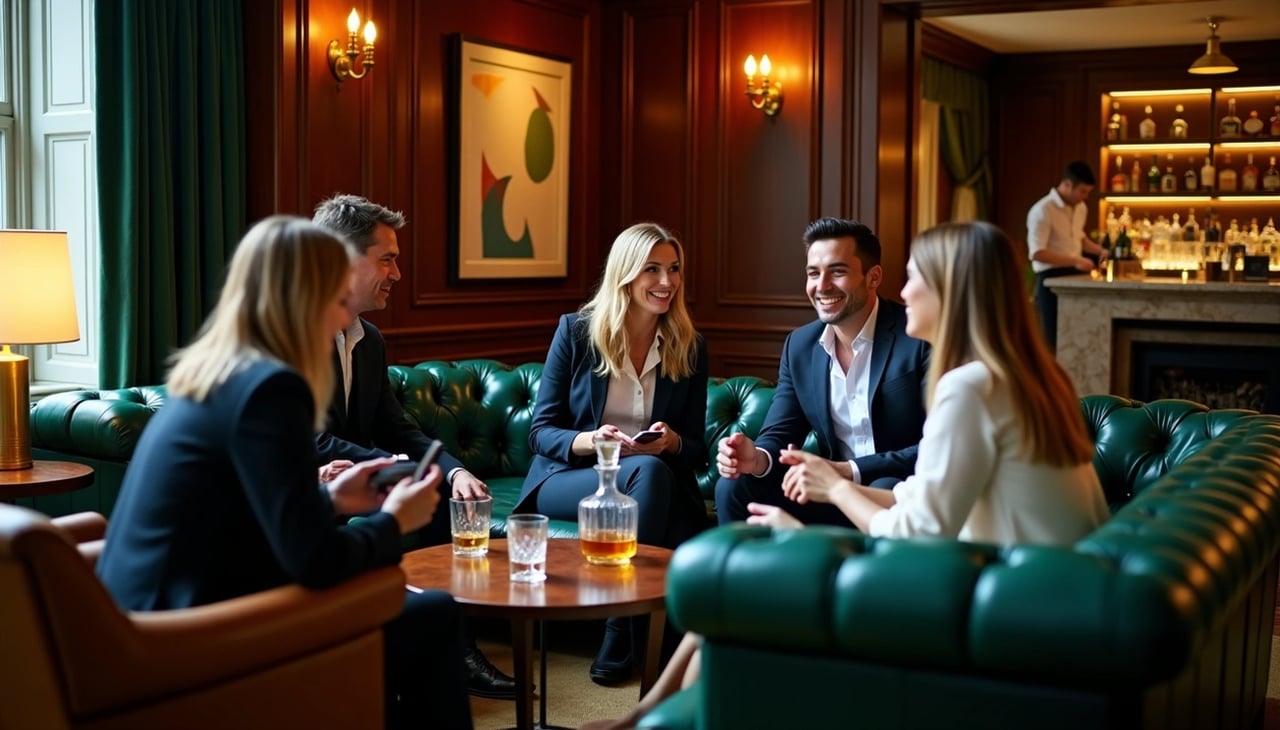
Exclusive members only clubs face overwhelming demand, with some receiving over 10,000 applications as people abandon public social media. Private clubs have multiplied across major cities since the pandemic's end, changing how individuals socialize and network. The shift goes beyond trends—it shows a fundamental change in how people value privacy, authenticity, and status in our exposed digital world. This article examines why members clubs are replacing traditional social platforms, how membership club vetting processes work, what private members clubs actually deliver, and whether this members only social club boom represents lasting change in social interaction.
The Death of Public Social Media as We Knew It
"Social media is like crack-immediately gratifying and hugely addictive." — Gary Vaynerchuk, CEO of VaynerMedia, prominent entrepreneur and social media strategist
Social media usage dropped roughly 10% among adults in developed countries between 2022 and 2024. The decline marked the beginning of what many now call the post-social media era, where platforms that once promised connection became stages for performance, surveillance, and commercial exploitation.
Instagram Fatigue and the End of Authenticity
The authenticity crisis stems from floods of unverified, formulaic content that buried genuine human voices. Instagram chief Adam Mosseri acknowledged the problem in a 2026 New Year's post, writing that deepfakes were becoming indistinguishable from real photos and videos. His solution, advising creators to post less polished content to prove their humanity, drew criticism from users who pointed out that Meta's own algorithm changes had destroyed livelihoods and undermined years of audience-building.
Nearly a third of all social media users now post less than a year ago, with Gen Z leading the exodus. The shift reflects a broader realization: social media stopped being social. Personal sharing moved to direct messages and one-to-one conversations as users learned the downside of broadcasting private lives online. Public shaming, viral embarrassments, and the constant pressure to perform for algorithms made the original deal—trading content for audience reach—no longer worthwhile for anyone not pursuing influencer careers.
Platforms filled the void left by real users with AI-generated content, coined "AI slop," and sponsored posts. Users reported seeing a single post from actual friends, followed by towers of advertisements and influencer videos. The connection disappeared. The fear of missing out evaporated. What remained were thinly disguised ecommerce sites sprinkled with AI oddities.
The Privacy Crisis That Changed Everything
Data privacy violations accelerated the departure. By 2023, 81% of U.S. adults felt data collected by companies would be used in ways people weren't comfortable with, while 70% expressed little to no trust in how companies use AI in their products. Among college-educated Americans, 70% were skeptical that managing online privacy would make any difference.
The skepticism proved justified. One study found 65% of websites continued using tracking cookies after users explicitly opted out. Meta faced a $1.30 billion settlement over privacy violations on Facebook and Instagram. Young users, particularly aware of privacy risks, began suppressing personal sharing and limiting engagement. Platforms flagged as privacy-invasive, such as TikTok, Facebook, WhatsApp, and Instagram in 2025 rankings, saw distrust spread beyond individual platforms to social media as a whole.
Consequently, 66% of U.S. consumers said they would no longer trust a company after a data breach. The consequences extended beyond immediate fallout, as breached users experienced decreased trust, commitment, and spending that, while often short-lived, created lasting wariness.
When Exclusivity Became the New Currency
Luxury brands recognized that social media's mechanics pushed them toward behaviors undermining exclusivity. Algorithms rewarded constant posting, creating frequency bias. Viral formats encouraged imitation. Engagement metrics measured breadth of attention rather than depth or quality. For luxury, these behaviors cut into brand equity.
Scarcity enabled pricing power, protected margins, and created cultural aspiration. Luxury brands began treating social media as publication rather than broadcast, designing content arcs and silence with intention. They built gated digital experiences to mirror offline exclusivity: invitation-only livestreams, Close Friends lists, private previews, encrypted client groups. These carefully rationed experiences reminded audiences that access must be earned.
The shift reflected a fundamental understanding. Overexposure weakens desire. Homogenization blurs distinction. Without discipline, ubiquity becomes erosion. Members clubs emerged as the physical manifestation of this principle, offering what public social media could no longer provide: genuine privacy, curated access, and status without performance.
Why Members Only Clubs Are Filling the Social Void
"The interesting thing about social media is that it allows you to maintain relationships with many more people than you can have a genuine face-to-face relationship with." — Robin Dunbar, Anthropologist known for Dunbar's number on social networks
The Pandemic Created a Loneliness Epidemic
About one-in-two adults in America reported experiencing loneliness before the pandemic cut off access to friends, loved ones, and support systems. The isolation worsened during lockdowns, with research showing a 5% increase in loneliness prevalence across individual studies. Young adults faced particularly acute distress, with 44% of those aged 18-24 in the United Kingdom reporting loneliness during lockdown, compared to only 16% before restrictions.
The health consequences are severe. The mortality impact of being socially disconnected resembles smoking up to 15 cigarettes a day, exceeding risks associated with obesity and physical inactivity. Loneliness correlates with cardiovascular disease, dementia, stroke, depression, anxiety, and premature death. The economic burden is substantial, with lack of social contacts among older adults associated with an estimated $6.70 billion in additional Medicare spending annually.
Digital Burnout Drove People to Real Spaces
Screen fatigue emerged as a documented psychological and physiological condition. Extended screen time causes eye strain, headaches, blurred vision, neck and back pain. Blue light from screens disrupts sleep patterns by suppressing melatonin, creating cycles where rest never feels refreshing.
Mental symptoms are equally damaging. Constant digital engagement depletes emotional and creative energy, manifesting as irritability, reduced attention span, emotional numbness, and withdrawal. Digital content creators experience particularly high rates of mental health struggles, with 10% reporting suicidal thoughts related to their work, nearly double the broader U.S. population. The constant bombardment of notifications triggers small stress responses, keeping cortisol levels elevated and preventing the nervous system from fully relaxing.
Status Without the Public Performance
Digital detoxing transformed from wellness trend into status symbol. The ability to opt out signals privilege in a hyperconnected age. Choosing to disconnect demonstrates financial and emotional freedom that no longer seeks validation through visibility, instead finding value in curated absence. For wealthy consumers, the ability to disappear temporarily became a rare indulgence, the ultimate escape from constant reachability.
Plum Guide reported a 17% rise in searches for unplugged properties, while 27% of adults planning holidays intended to reduce social media use during trips. Offline presence became more intentional than endless scrolling, with people sending handwritten letters, making phone calls, hosting dinner parties, and volunteering in real communities.
No Phones, No Photos, No Problem
Private members clubs capitalized on this desire. Some institutions enforce strict photography bans, with admission fees reaching $2,400 and waiting lists longer than established restaurants. Venues place stickers over phone camera lenses or use signage reminding attendees of house rules. At clubs in New York, including House of Yes, Elsewhere, Refuge, and Signal, phone policies created more collective energy. Members report preferring to live in the moment rather than document experiences. Soho House prohibits photography at all 43 locations across 17 countries, designating specific spaces for phone calls to encourage presence. The shift proves most palpable on dance floors, where phones function as blockages disrupting energy flowing through crowds.
How Private Members Clubs Actually Work in 2026
Private members clubs operate through structured frameworks that balance exclusivity with accessibility across different demographic and financial segments. The mechanics become clear once you understand the layers.
Membership Tiers and What They Cost
Most member clubs use tiered pricing structures, typically offering three levels labeled Basic, Plus, and Premium. Basic memberships often provide digital-only access to website resources, newsletters, online communities, and virtual events. Plus tiers add physical facility access, discounted services, and voting rights. Premium levels include exclusive benefits such as priority reservations, personal concierge services, and access to private events.
Real pricing varies dramatically. Core Club charges initiation fees reaching $100,000 for families and annual dues approaching $15,000. Zero Bond sets annual fees at $4,400 with a $5,000 initiation fee for members over 45[144]. Aman commands a $200,000 initiation fee plus $15,000 annual dues[144]. Casa Cipriani maintains a $2,000 initiation fee with annual dues ranging from $2,500 to $3,900 based on age.
Country clubs structure memberships differently. Royal Oaks offers Equity Golf, Equity Executive, Young Professional, Equity Sports, and Equity Social categories, each providing different facility access and reservation privileges. The Hills Country Club presents multiple golf membership tiers from Limited Classic (two courses, Sunday-Thursday only) to Signature Golf (all four courses, any day) with optional XLife benefits including 50% off dining and travel reciprocity.
The Vetting Process: Who Gets In and Why
Nearly every prestigious club requires sponsorship from current members. Primary sponsors advocate throughout the process while secondary sponsors (usually two to five) provide additional endorsements. Sponsors must maintain sufficient standing and typically need membership tenure of two to five years.
Applications demand detailed personal histories including educational background, professional achievements, community involvement, and family information. Financial disclosures often require bank statements, tax returns, or institutional reference letters. Background checks range from basic criminal searches to deep investigations of financial history, public records, and social media activity.
Membership committees review applications over periods ranging from several months to years. Candidate names post in member areas for 30 to 90 days, during which any member can register objections. Final approval occurs through committee votes, board reviews, or full membership votes. Background screening costs typically incorporate into initiation fees or pass through as separate application charges.
What You Actually Get for Your Money
Members receive consistently high-quality services, facilities, and staff. Amenities include state-of-the-art fitness equipment, dining facilities, childcare centers, private dining rooms, cultural activities, and wellness programs. Networking opportunities connect individuals with similar backgrounds. Personalized concierge services handle reservations, event organization, and daily logistics. The private environment provides secure spaces for relaxation and business activities.
Status symbolism accompanies membership, representing success within like-minded communities. Professional development offerings include seminars, workshops, and mentoring programs. High financial barriers ensure members can comfortably afford initiation fees exceeding $100,000 at top clubs plus ongoing dues without strain.
Different Types of Members Clubs Taking Over
Four distinct categories dominate the membership club landscape, each serving different needs while maintaining curated access and privacy.
Restaurant and Dining Clubs
Private dining clubs solve reservation scarcity for establishments that constantly disappoint VIPs. ZZ's Club in Hudson Yards charges $30,000 initiation for two members plus $10,000 annually, offering Carbone Privato upstairs with what one visitor described as "Medici opulence". Chubby Cattle pioneered NFT-based dining memberships with silver, gold, and black tiers promising free food for life at all 10 locations. Chez Margaux charges $1,800 yearly for members under 31 and $2,600 for those older, anchored by a Jean-Georges Vongerichten restaurant.
Coworking and Professional Network Clubs
Professional network clubs blend workspace with intentional connection-building. Coworking spaces host workshops, mixers, and skill-sharing sessions where members collaborate on projects and exchange expertise. Membership directories allow professionals to filter by skills and interests, creating targeted networking opportunities.
Social and Entertainment Clubs
Remedy Place operates as a social wellness club frequented by celebrities and executives, offering self-care experiences designed to deepen human connection. Parlor Social Club uses app-based algorithms to curate crowds and experiences, offering traditional club benefits without location-based commitment.
Digital Members Clubs Without Physical Spaces
Digital clubs eliminate physical overhead entirely. NYLON Membership received 10,000 applications, accepting only 1,200 people with average followings exceeding 300,000. Syndicate11 maintains just 376 handpicked members whose combined social reach exceeds 506 million across platforms. Parlor Social charges $40 monthly for full access to curated events throughout the city. Brands pay for access to these pre-vetted influencer networks, replacing traditional PR firms.
For those who appreciate entertaining in style, the right home creates the foundation for memorable gatherings. Properties near prestigious clubs often reflect the same attention to detail and exclusivity that members seek. Christina Pope knows how location and lifestyle intersect, having worked with discerning clients who understand that true luxury lies in thoughtful curation rather than mere display.  310-404-9931
  [email protected]
The Business Behind the Boom
Why Developers Are Betting Big on Membership Models
Developers see clear advantages in membership-based businesses. Malls face empty anchor spaces and underused upper floors, and private clubs fill large footprints while creating steady, recurring traffic. Well-curated members clubs position properties as exclusive lifestyle destinations rather than transactional retail. Properties within a mile of established private members clubs sell faster than similar properties further away. Research found demand for properties within a 15-minute drive of Soho Farmhouse exceeded twice the average for the area, attracting 2.3 times higher buyer interest.
The Economics of Recurring Revenue vs One-Time Transactions
Recurring revenue delivers predictable cash flow unlike traditional sales models relying on one-time purchases. This stability allows companies to manage expenses, plan growth, and make strategic investments. Annual recurring revenue helps companies project cash flow, set budgets, and build roadmaps. Customers grow more valuable over time, with repeat customers spending 67% more than new ones. Subscription models compound growth as revenue builds with each new subscriber. One-time sales provide immediate revenue, but subscriptions require customer retention to capture full value.
Which Clubs Will Survive and Which Will Fail
Financial sustainability determines survival. Clubs with dues structures and initiation fees that reflect true operational costs stay stable through economic downturns. Recent industry data shows member resignation rates increased 63% in 2023 while new membership inquiries dropped 50% from 2021, reflecting operational failures rather than market weakness. Clubs generating 30-40% of revenue from business services like private office rentals and event hosting prove more resilient. Traditional clubs depending on joining fees from new members face revenue decline and deferred maintenance. Managing financial performance across multiple business models creates complexity that catches most developers unprepared.
Luxury real estate operates through private conversations where timing matters. For those seeking properties near exclusive membership clubs, discretion counts. Christina Pope – Sotheby's International Realty – EliteResidenceInternational.com
Conclusion
The movement from public social media to exclusive members clubs represents a significant recalibration of how status, connection, and privacy function in modern life. This change extends beyond social preferences into real estate decisions, as properties near prestigious clubs command premium valuations and faster sales. Luxury real estate operates through private conversations where timing carries considerable weight, much like the membership world itself.
Christina Pope understands the hallmarks of this exclusive lifestyle from her years working with discerning clientele who value discretion and quality. For those who love to entertain, the right home makes all the difference. Those considering a purchase or beginning their search can rely on Christina's expertise to discover spaces designed for elevated living and effortless hosting. She knows that the most meaningful opportunities unfold quietly within trusted circles, where access must be earned and privacy is paramount.
Christina Pope – 310-404-9931 – [email protected] – Sotheby's International Realty – EliteResidenceInternational.com
Key Takeaways
The rise of exclusive members clubs reflects a fundamental shift away from public social media toward privacy, authenticity, and curated connections. Here are the essential insights from this transformation:
• Social media fatigue drives exodus: Adult usage dropped 10% as AI-generated content and privacy violations replaced authentic human connection, making exclusivity the new social currency.
• Loneliness epidemic fuels demand: Post-pandemic isolation affects half of American adults, creating unprecedented demand for real-world spaces that prioritize genuine relationships over digital performance.
• Premium pricing reflects true value: Top clubs charge $100,000+ initiation fees plus $15,000 annual dues, proving wealthy consumers will pay significantly for privacy and curated access.
• Digital detox becomes status symbol: Phone-free environments and photography bans create authentic experiences, with the ability to disconnect signaling ultimate privilege and freedom.
• Recurring revenue models win: Membership clubs generate predictable cash flow and compound growth over time, making them attractive investments compared to one-time transaction businesses.
The transformation represents more than a trend—it's a fundamental restructuring of how people value connection, privacy, and status in an increasingly exposed digital world. Success in this space requires understanding that scarcity creates desire, while overexposure weakens exclusivity.
FAQs
Q1. What's driving the sudden popularity of exclusive members clubs? Members clubs provide a curated environment where privacy, authentic connections, and luxury converge without the performance pressure of public social media. They offer refuge from digital fatigue while creating spaces where professional networking, wellness, and social life blend seamlessly in phone-free environments that prioritize genuine human interaction over online validation.
Q2. How much do elite private members clubs typically cost? Membership costs vary significantly by club prestige and location. Top-tier clubs like Core Club in New York charge initiation fees up to $100,000 with annual dues around $15,000, while Aman commands $200,000 initiation plus $15,000 yearly. Mid-range options like Zero Bond charge $5,000 initiation and $4,400 annually, with many clubs offering age-based discounts for younger professionals.
Q3. What professional organization supports club management as a career? The Club Managers Association of America (CMAA) serves as the leading professional association for membership club managers. With over 6,000 members managing more than 3,000 country, city, athletic, yacht, and military clubs, CMAA focuses on advancing club management as a profession through education, networking, and industry standards.
Q4. What benefits justify the high membership fees at private clubs? Members receive state-of-the-art facilities, personalized concierge services, exclusive networking opportunities with vetted professionals, priority reservations, and access to private events. Beyond amenities, membership provides status symbolism, professional development programs, and secure environments for both business and relaxation—all within communities of like-minded individuals who share similar values and backgrounds.
Q5. How do members clubs differ from traditional social media platforms? Unlike public social media that encourages constant performance and content creation, members clubs enforce privacy through photography bans and phone-free policies. They prioritize real-world connections over digital validation, offer curated access rather than open broadcasting, and create scarcity-based value instead of algorithm-driven engagement, making genuine human interaction the primary currency rather than likes and followers.