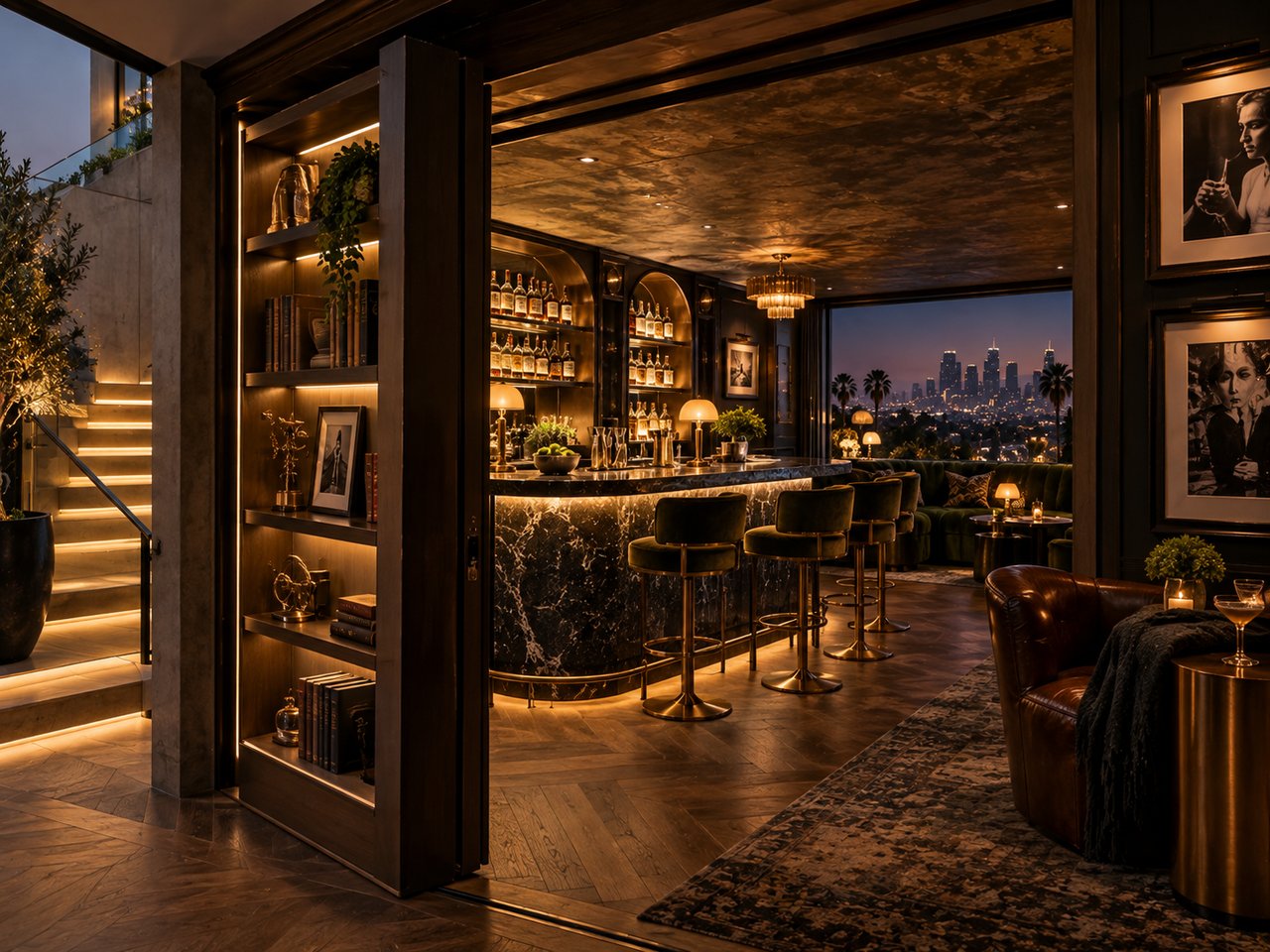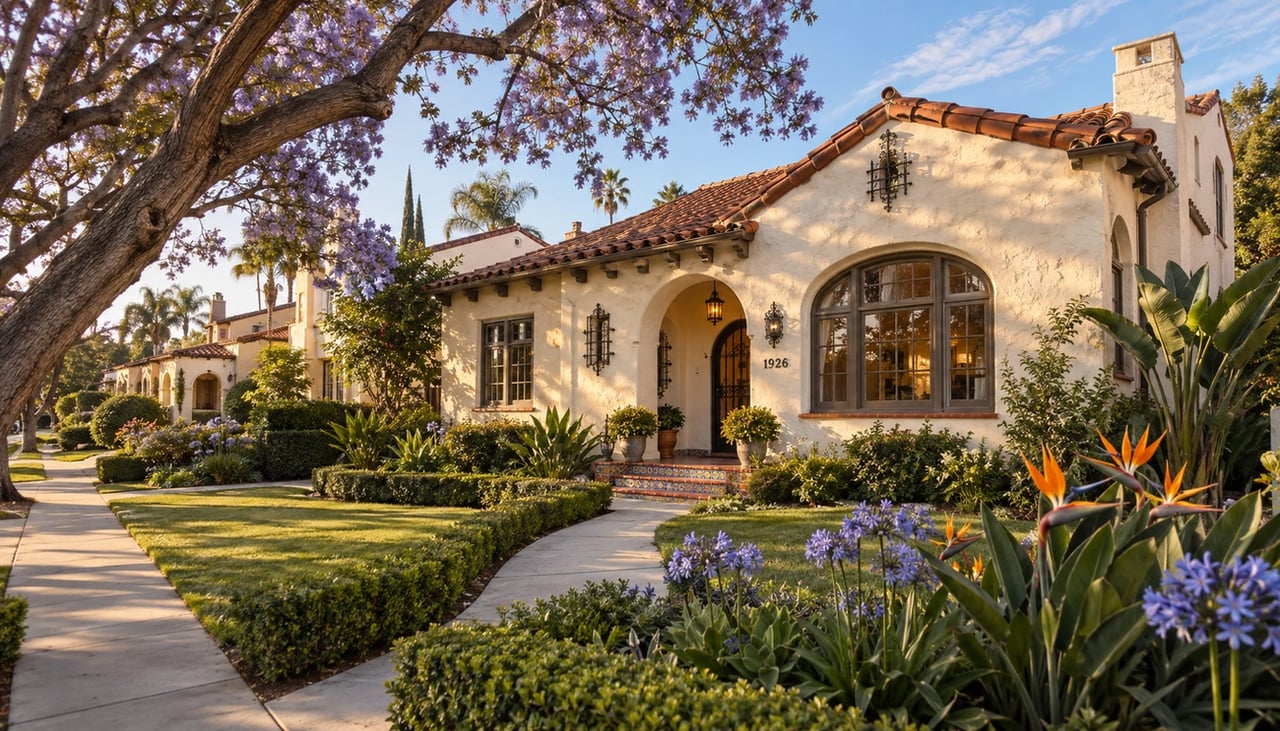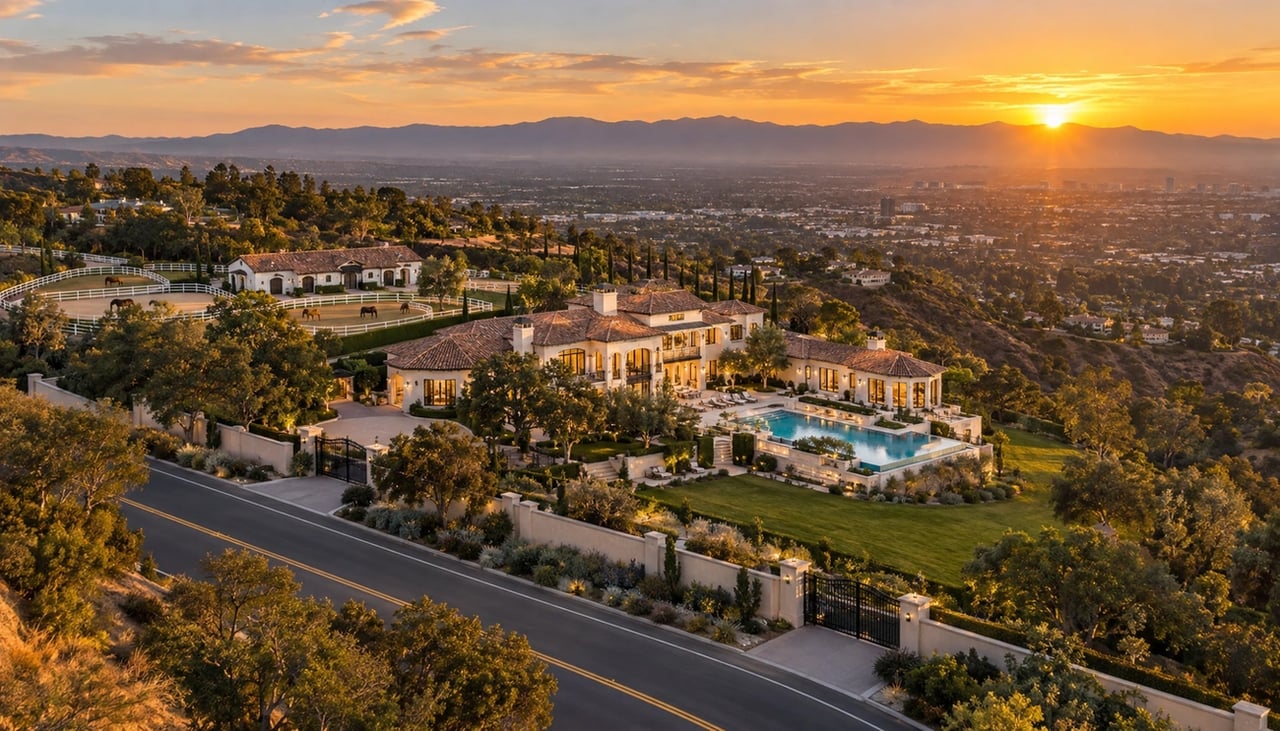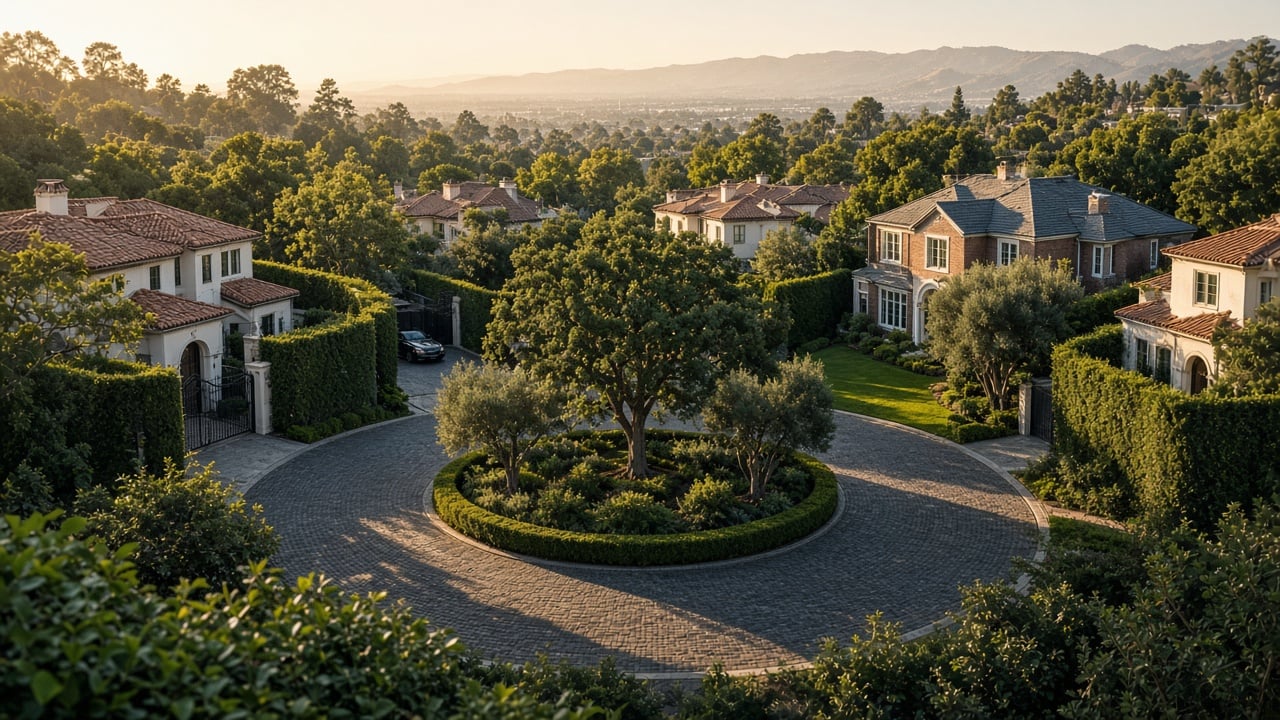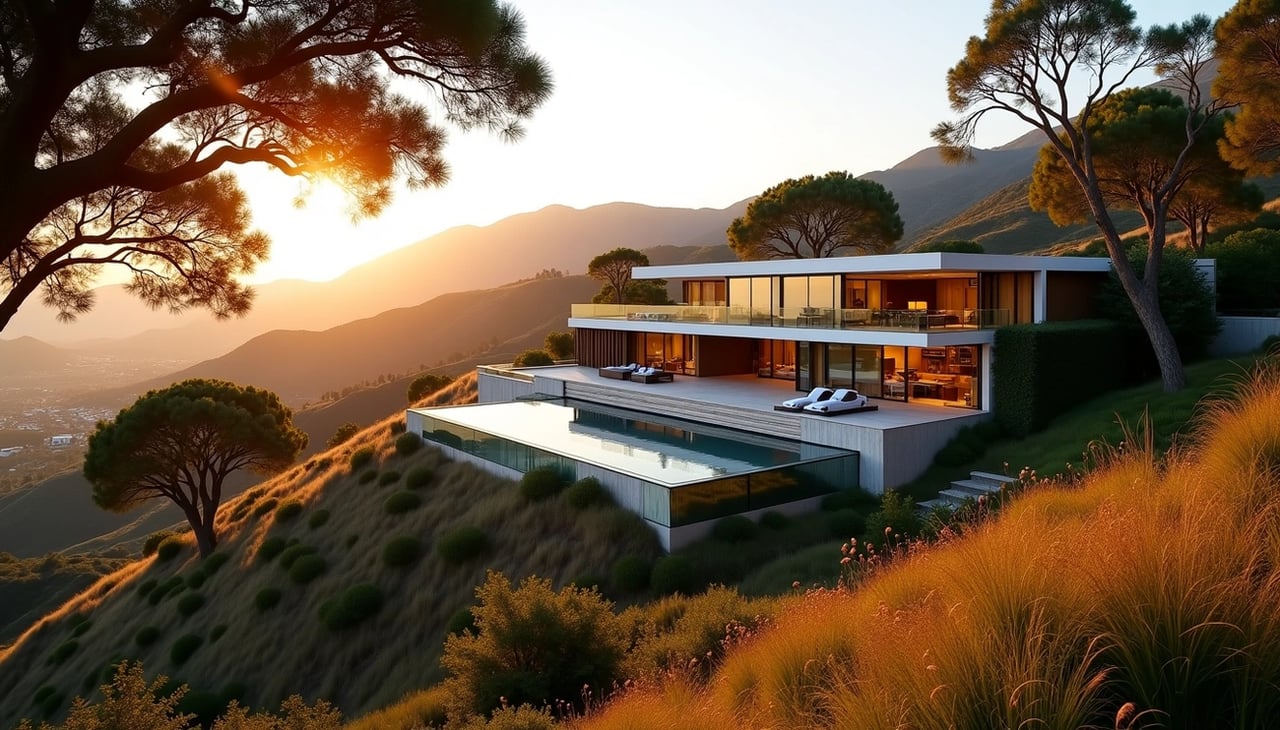
Bel air estate privacy doesn't rely on imposing gates or visible security measures. The neighborhood was conceived in 1923 as an exclusive, low-density residential enclave in the hills above Sunset Boulevard and has attracted those who value discretion for decades. Bel Air's approach to seclusion is rooted in something more sophisticated: the natural topography itself. Canyons and ridges create built-in separation. Strategic setbacks add another layer. Architectural design and landscape layering complete the privacy equation.
Bel-air estate architecture works with hillside terrain in ways that explain why bel-air properties remain among the most sought-after in Los Angeles. Those evaluating bel air estates reviews or working with bel air property management need to recognize these privacy strategies to appreciate what makes these homes exceptional.
How Bel Air's hillside topography creates natural privacy
Luxury real estate in Los Angeles operates through private channels where discretion matters as much as valuation. The most important bel-air properties change hands within trusted networks. Understanding what creates their value requires recognizing how terrain itself functions as a privacy asset.
Bel Air spans ridgelines and steep canyons along the Santa Monica Mountains north of Sunset Boulevard and west of Beverly Glen. Short distances change elevation by dozens of feet and transform privacy dynamics between neighboring parcels. Sloped lots command 10-20% higher property values because grade separation creates privacy between different areas of the property and between homes and neighboring structures.
Grade changes provide built-in sound buffering and framed views. They create natural screening. Ridgeline parcels deliver strong privacy from below. Downhill neighbors cannot view upper terraces or living spaces. Canyon settings provide intimacy and quiet with mature trees that act as visual barriers. Rim or bench lots sit at canyon edges on terraced pads, sheltered yet raised enough to maintain separation from properties below.
Vertical relationships determine seclusion. Steep lots raise bel air estate privacy when homes sit above neighbors, though vegetation and privacy louvers may be necessary when an adjacent parcel sits higher.
Architectural design strategies that enhance seclusion
Architects working on hillside properties employ specific design tactics that maximize seclusion without sacrificing light or views. The approach centers on controlling sightlines through building form rather than relying on landscape screening alone.
Massing stepped with the slope avoids large expanses of tall walls that would otherwise expose interior spaces. Vertical building walls should not exceed 15 feet in height above grade, with any walls above this stepped back by a minimum distance of ten feet. This terraced approach reduces visual mass and creates privacy layers between levels.
Clerestory windows positioned high on walls bring light deep into spaces without creating viewing opportunities from neighboring properties. Light enters at angles that eliminate direct sightlines while flooding rooms with illumination. Low-positioned windows near floor level provide views out to landscape without exposing interior spaces to external viewing. A 16-inch-tall band of glass that runs the length of a room sits below the sightlines of anyone outside.
Interior courtyards function as powerful privacy tools. U-shaped courtyards wrap around three sides of outdoor space, and O-shaped courtyards completely enclose garden or pool areas with zero external sightlines. Side elevations feature intentionally restrained glazing with limited window openings of smaller size or high fixed glass that reduce direct views between neighboring units.
Main glazing orientations toward water views and private outdoor living areas. This allows interiors to feel open without exposing residents to close adjacencies.
Landscape elements and property features that complete the privacy layer
Strategic plantings layer over architectural privacy measures to complete the seclusion framework. Native shrubs such as Toyon create dense, evergreen hedgerows that function as natural barriers while supporting local ecosystems. Arborvitae varieties deliver year-round screening. American Arborvitae reaches 20 to 30 feet in height with a 12-foot spread that can be trimmed to control width. Emerald Arborvitae grows between 10 and 15 feet tall and maintains a trimmed width of just 2 feet when planted in hedges. Plants require spacing of 2 to 3 feet between them. North Privet grows up to 3 feet per year and reaches mature heights of 8 to 12 feet.
Motor courts positioned between driveways and entry doors provide functional privacy zones. Walls or fences enclose these spaces and create soundproofing and visual barriers while accommodating guest parking. Berms—mounded hills of earth—block unwanted views without vertical construction in the same way. Sight lines from neighboring properties determine berm placement and height.
The right home makes all the difference if you love to entertain. I'd be happy to help you find spaces designed for refined living and effortless hosting if you're thinking about a purchase in the near future or beginning your search. Christina Pope  310-404-9931
  [email protected]
Conclusion
Hillside architecture transforms Bel Air's natural terrain into a privacy framework that operates without visible barriers. Topography, strategic massing and layered landscape elements work together to create seclusion that feels organic rather than forced. Those evaluating properties in this market need to understand how elevation and architectural form combine with plantings to reveal what creates value in these estates. The most compelling homes utilize all three elements and deliver discretion that cannot be replicated on flat parcels elsewhere in Los Angeles.
Key Takeaways
Discover how Bel Air's most exclusive estates achieve unparalleled privacy through intelligent design that works with nature rather than against it.
• Topography creates natural barriers: Bel Air's canyons, ridges, and elevation changes provide built-in privacy worth 10-20% higher property values without requiring gates or walls.
• Strategic architectural massing maximizes seclusion: Stepped building forms, clerestory windows, and interior courtyards control sightlines while maintaining natural light and views.
• Layered landscape screening completes privacy: Native plantings like Toyon and Arborvitae, combined with berms and motor courts, create organic visual barriers that enhance architectural privacy measures.
• Elevation relationships determine privacy success: Properties positioned above neighbors on ridgelines gain superior seclusion, while canyon settings offer intimacy through mature tree screening.
This sophisticated approach to privacy through design demonstrates why Bel Air estates command premium valuations—they deliver discretion that feels natural and effortless rather than fortress-like.
FAQs
Q1. How does Bel Air's natural terrain provide privacy without gates? Bel Air's hillside topography features canyons, ridges, and significant elevation changes that create natural separation between properties. These grade variations offer built-in sound buffering, visual screening, and sightline interruption. Properties on sloped lots command 10-20% higher values specifically because the terrain itself functions as a privacy asset, eliminating the need for imposing gates or visible security measures.
Q2. What architectural techniques maximize privacy in hillside homes? Hillside architects use stepped massing that follows the slope, keeping vertical walls under 15 feet before stepping back. Clerestory windows positioned high on walls bring in natural light without creating viewing opportunities from neighboring properties, while low-positioned windows near floor level provide outward views without exposing interiors. Interior courtyards in U, O, or L configurations create outdoor spaces with controlled or zero external sightlines.
Q3. Which plants work best for creating natural privacy screens? Native shrubs like Toyon create dense, evergreen hedgerows while supporting local ecosystems. Arborvitae varieties provide year-round screening, with American Arborvitae reaching 20-30 feet in height and Emerald Arborvitae growing 10-15 feet tall while maintaining a trimmed width of just 2 feet. North Privet grows rapidly at up to 3 feet per year, reaching mature heights of 8-12 feet, making it ideal for quick privacy establishment.
Q4. How do elevation differences between properties affect privacy? Vertical relationships between parcels determine seclusion levels. Homes positioned above neighbors on ridgelines gain superior privacy, as downhill properties cannot easily view upper terraces or living spaces. Canyon settings provide intimacy through mature tree barriers, while rim or bench lots sit at canyon edges on terraced pads, offering both shelter and elevation separation from properties below.
Q5. What role do motor courts and berms play in estate privacy? Motor courts positioned between driveways and entry doors create functional privacy zones that provide soundproofing and visual barriers while accommodating guest parking. Berms—mounded hills of earth—block unwanted views without requiring vertical construction. Their placement and height are determined by analyzing sight lines from neighboring properties, offering a natural alternative to walls or fences.