Climate Advantages and Year-Round Wellness Usability by Location
Bel Air's Hillside Microclimates and Protected Positioning
Bel Air's position in the Santa Monica Mountains foothills creates distinct microclimates within short distances. Elevation shifts of dozens of feet between neighboring properties transform sun exposure, wind patterns and thermal conditions for outdoor wellness area design. West and southwest orientations maximize afternoon sun for hot tub and sauna installations. East-facing placements favor morning wellness routines with cooler evening temperatures. The hillside terrain naturally buffers wind and allows outdoor relaxation areas to function comfortably even during California's widespread westerlies. Protected canyon positions can extend outdoor wellness area usability by reducing wind chill factors that affect exposed sites.
Pacific Palisades Coastal Breezes and Temperature Moderation
Pacific Palisades benefits from direct coastal influence, with ocean proximity moderating temperature extremes throughout the year. The Coast Range parallels the coastline within 50 miles and creates a maritime climate west of these mountains. Daily temperature variations remain modest compared to inland valleys. Coastal breezes provide natural cooling during warmer months. This thermal stability reduces the operational costs for outdoor wellness installations, as heating systems for saunas and hot tubs work more efficiently without extreme cold. Wind patterns in coastal basins follow a diurnal cycle, offshore at night and onshore during day, which outdoor wellness area design can utilize for natural ventilation.
Hidden Hills Valley Climate and Seasonal Considerations
Hidden Hills presents a Mediterranean climate with exceptional conditions for home outdoor wellness area installations. The location delivers 281 sunny days annually, well above the national average of 205 days. Average temperatures range from 50°F in winter to 80°F in summer, with only 4.7 days annually dropping below freezing. Annual precipitation totals just 18 inches, concentrated in winter months, while July records near-zero rainfall. This pattern creates 275 days of comfortable weather conditions each year, approximately nine months of optimal outdoor wellness area usability. August reaches peak temperatures around 91°F, still manageable for morning and evening wellness sessions. The valley positioning provides wind protection while maintaining comfortable humidity levels throughout summer months.
Outdoor Wellness Area Ideas: From Basic to Ultra-Luxury
Hot Tubs and Traditional Saunas
Cedar hot tubs serve as foundational outdoor wellness installations. They deliver muscle relaxation, mood improvement, deeper sleep, and better circulation. Traditional wood-burning saunas promote detoxification through sweating and improve cardiovascular health while easing muscle tension. Saunas positioned to take advantage of surrounding landscapes create calm, intentional experiences rather than feeling disconnected from the property.
Infrared Saunas and Barrel Sauna Installations
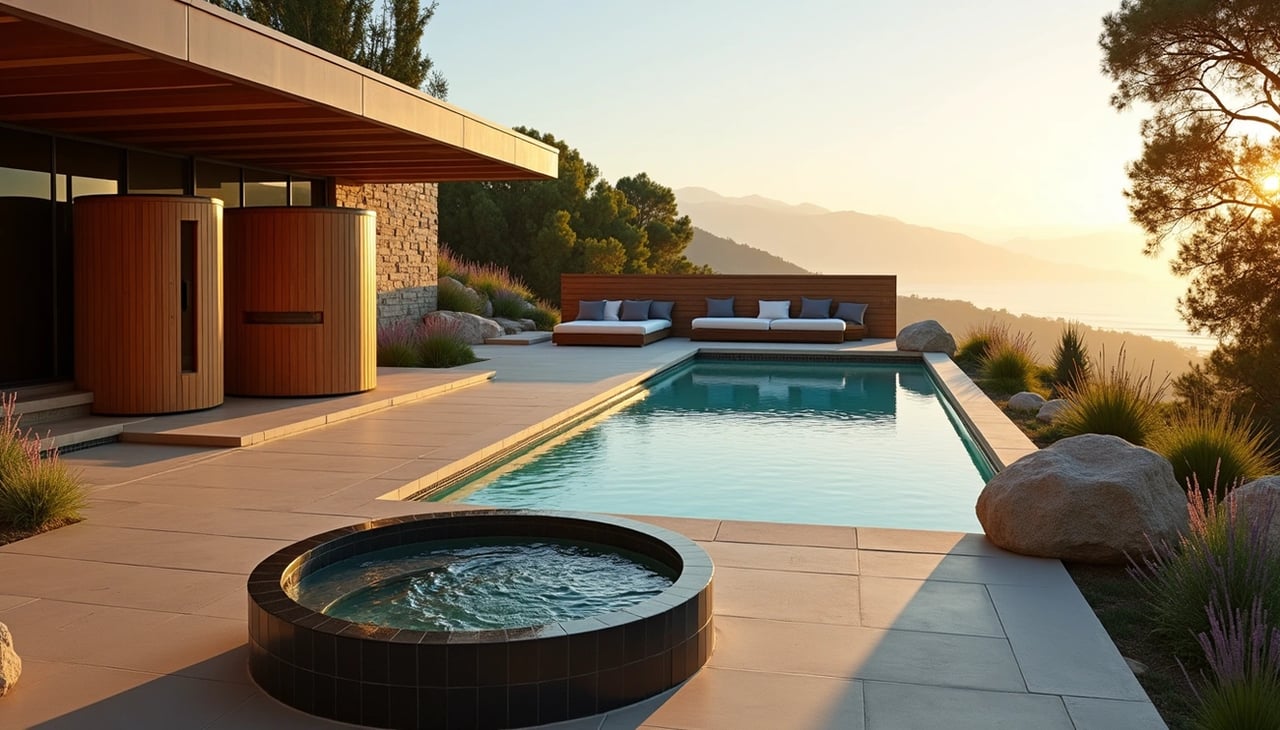
Infrared saunas provide gentle, penetrating warmth through compact, energy-efficient models that heat quickly. Barrel sauna installations offer freestanding outdoor configurations that integrate into corners surrounded by landscaping or stone walls and become inviting escapes during colder months. Prefab barrel saunas have made these installations more available while maintaining the esthetic continuity that premium properties require.
Cold Plunge Pool Configurations
Cold plunge pools address inflammation reduction, accelerated muscle recovery, and mood improvement through temperature-controlled immersion. These installations fit compact yards and are smaller than hot tubs. They pair well with saunas for complete hydrotherapy circuits. Contrast therapy—alternating between hot and cold exposure—stimulates circulation and strengthens immune function while promoting faster recovery. Dedicated dual-zone systems enable immediate transitions between temperatures.
Meditation Gardens and Mindfulness Spaces
Meditation gardens work with all senses through water features like fountains or ponds, fragrant plants including lavender and sage, and textured elements such as smooth stones or weathered benches. Pergolas, trellises, or natural fencing create seclusion while maintaining connection to surrounding landscapes. Lanterns or solar-powered fixtures provide strategic lighting and extend usability into evening hours.
Outdoor Gym Equipment and Fitness Zones
Outdoor gym installations integrate fitness into natural settings. Dedicated platforms support yoga, stretching, or weight training. Weather-resistant equipment benefits from covered structures like pergolas or pavilions.
Jet Stream Swimming and Pool Wellness Upgrades
Jet streams transform pools into workout tools by enabling swimming against adjustable currents. These updates maximize pool utility for fitness-focused wellness routines.
Design Elements That Transform Outdoor Relaxation Areas
Architectural Flow and Indoor-Outdoor Transitions
Wellness spaces work best when interior and exterior environments speak the same design language. Materials, textures and colors from living areas extend onto patios and terraces. This creates unified visual experiences. Large sliding or folding glass doors dissolve physical barriers and keep views to outdoor wellness installations. Plunge pools positioned within courtyards can echo kitchen tile tones. This strengthens architectural continuity. Outdoor furniture upholstered in weather-resistant fabrics that mirror interior palettes keeps this link. The home feels calmer and more purposeful when wellness features remain visible from key interior rooms.
Natural Materials and Coastal Design Continuity
Natural materials withstand outdoor conditions and age well. Travertine and limestone provide timeless elegance underfoot. Sustainably harvested teak or ipe adds warmth that weathers beautifully. Cedar wood, stone and gravel create organic atmospheres that improve durability. These materials add to psychological comfort by connecting spaces to natural surroundings. Wide pathways with stone or gravel surfaces stimulate multiple senses, from visual texture to the satisfying crunch underfoot.
Smart Technology Integration for Wellness Spaces
Automated systems maintain optimal conditions without hands-on work. Bioclimatic systems adjust to weather conditions and keep comfort for wellness activities. Layered lighting helps circadian rhythms by transitioning from bright morning exposure to soft evening ambiance. Climate control features like outdoor heaters and misting systems respond to changing temperatures. Integrated speakers and discrete storage for wellness accessories boost functionality and keep clean esthetics.
Covered Structures and Weather Protection
Bioclimatic pergolas create energizing morning environments and peaceful evening retreats through adjustable elements. Louver systems allow gentle air movement and natural sound filtering while reducing harsh glare. Strategic shading and retractable awnings make spaces usable across seasons. These structures frame nature views and provide psychological security through appropriate boundaries. They create intimate zones within larger outdoor environments.
Implementation Strategy and Property Value Enhancement
Luxury real estate in Los Angeles operates through private conversations where discretion carries as much weight as value. High-end outdoor wellness area design follows this same principle. Strategic planning determines both immediate functionality and long-term returns.
Development Costs and Budget Planning for Outdoor Wellness Area Design
Sunken installations require 15 to 25 percent more capital than above-ground equivalents. This accounts for excavation and waterproofing membranes along with structural work. Construction timelines extend eight to twelve weeks for quality builds. Rooftop outdoor wellness area configurations add 20 to 40 percent to ground-level costs. Structural reinforcement and waterproofing upgrades factor into budgets alongside wind-rated materials. Design and 3D layout phases consume two to four weeks before construction begins.
Permitting and Site Preparation Requirements
Municipal regulations govern spa placement relative to property boundaries and street setbacks. Hot tubs exceeding 2,000 liters require building permits and pool safety compliance. Additional regulations apply to properties with slopes exceeding 25 percent over 5 meters. Drainage becomes critical in clay soils that retain water and swell under hydraulic pressure.
Resale Effect of High-Quality Wellness Installations
Properties with wellness features command 10 to 25 percent higher resale values. Commercial properties achieve rental premiums of 4.5 to 7.5 percent per square foot. Compact installations that are well-laid-out deliver payback within 18 to 36 months. Christina Pope can help find spaces designed for lifted living if you're thinking about a purchase in the near future or beginning your search. Christina Pope  310-404-9931
  [email protected]
Conclusion
Outdoor wellness installations deliver quantifiable returns and reshape how properties function across seasons. Climate conditions in these neighborhoods support year-round usability. This makes strategic investments in wellness features especially valuable. Those who think about properties with wellness potential should assess site conditions, design continuity and implementation costs carefully. Christina Pope can help you find spaces designed for refined living and wellness-focused outdoor environments if you plan to purchase in the near future or begin your search.
Christina Pope 310-404-9931 [email protected]
Key Takeaways
Transform your luxury property into a year-round wellness sanctuary with strategic outdoor installations that deliver both immediate lifestyle benefits and substantial property value returns.
• Climate advantage maximizes ROI: Bel Air, Pacific Palisades, and Hidden Hills offer 275+ comfortable days annually, enabling year-round wellness area usage and faster investment payback.
• Wellness features boost property values 10-25%: Premium outdoor installations like cold plunge pools, infrared saunas, and meditation gardens command significant resale premiums in luxury markets.
• Design continuity amplifies impact: Seamless indoor-outdoor transitions using natural materials and smart technology create unified experiences that feel intentional rather than disconnected.
• Strategic planning reduces costs: Proper site evaluation, permitting preparation, and phased implementation can save 15-25% on total project costs while ensuring optimal functionality.
• Contrast therapy installations trending: Hot tub and cold plunge combinations address the growing wellness market (5.40% annual growth) while providing complete hydrotherapy circuits for recovery and health.
When executed thoughtfully, outdoor wellness areas become the bridge between luxury living and personal well-being, creating spaces that enhance daily life while building long-term property value in these exclusive neighborhoods.
FAQs
Q1. What climate advantages make Bel Air, Pacific Palisades, and Hidden Hills ideal for outdoor wellness areas? These neighborhoods offer exceptional conditions for year-round wellness space usage. Hidden Hills provides 281 sunny days annually with temperatures ranging from 50°F to 80°F, creating approximately 275 days of comfortable outdoor conditions. Pacific Palisades benefits from coastal temperature moderation that reduces heating costs for saunas and hot tubs. Bel Air's hillside microclimates create natural wind protection, allowing wellness installations to function comfortably even during prevailing westerlies.
Q2. How much do outdoor wellness installations increase property values? High-quality wellness features can increase property resale values by 10 to 25 percent in luxury markets. Commercial properties with wellness amenities achieve rental premiums of 4.5 to 7.5 percent per square foot. Well-designed compact installations typically deliver payback within 18 to 36 months, making them strategic investments that enhance both lifestyle and financial returns.
Q3. What are the most popular outdoor wellness features for luxury homes? Popular installations include cold plunge pools paired with hot tubs for contrast therapy, infrared and barrel saunas for detoxification and relaxation, meditation gardens with water features and fragrant plants, outdoor gym equipment zones, and jet stream swimming pool upgrades. The cold plunge market is growing 5.40% annually, reflecting increasing demand for recovery-focused wellness features.
Q4. How much does it cost to build an outdoor wellness area? Sunken installations require 15 to 25 percent more capital than above-ground equivalents due to excavation and waterproofing needs. Construction timelines typically extend eight to twelve weeks for quality builds. Rooftop configurations add 20 to 40 percent to ground-level costs when accounting for structural reinforcement and wind-rated materials. Design and layout phases consume two to four weeks before construction begins.
Q5. What permits are required for outdoor wellness installations? Municipal regulations govern spa placement relative to property boundaries and street setbacks. Hot tubs exceeding 2,000 liters require building permits and pool safety compliance. Properties with slopes exceeding 25 percent over 5 meters trigger additional regulations. Proper drainage planning is critical, especially in clay soils that retain water and create hydraulic pressure concerns.