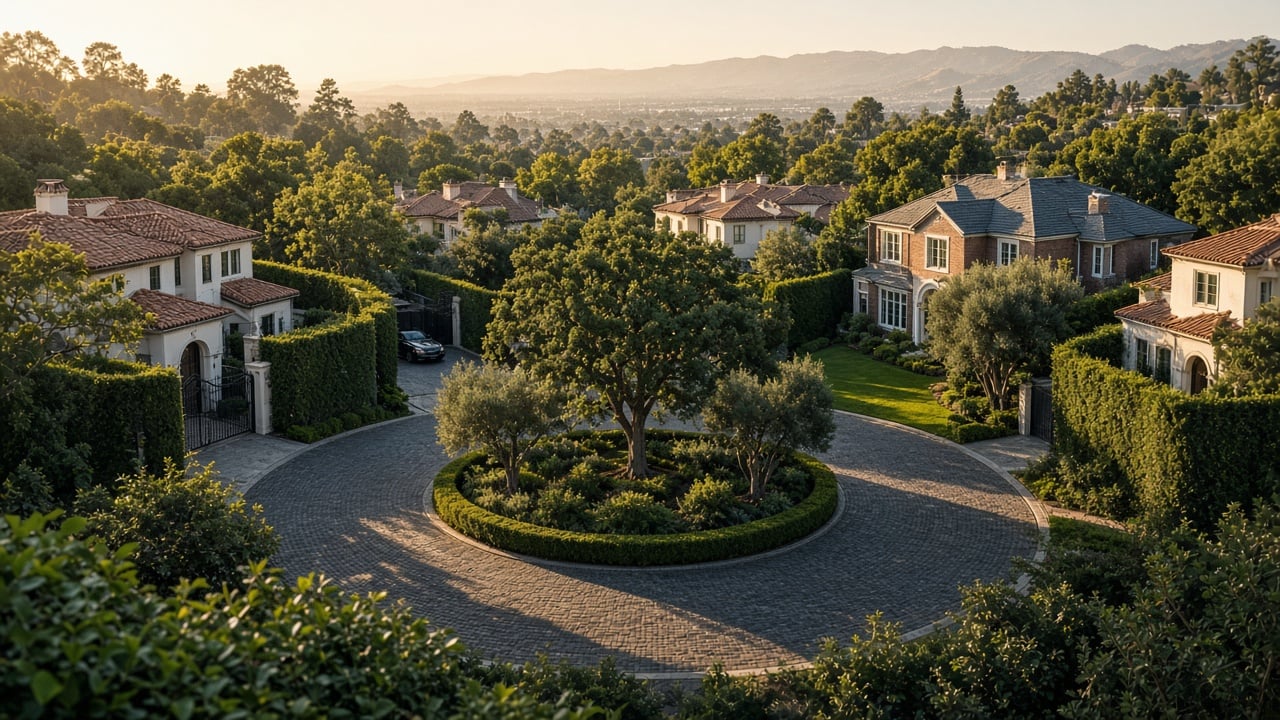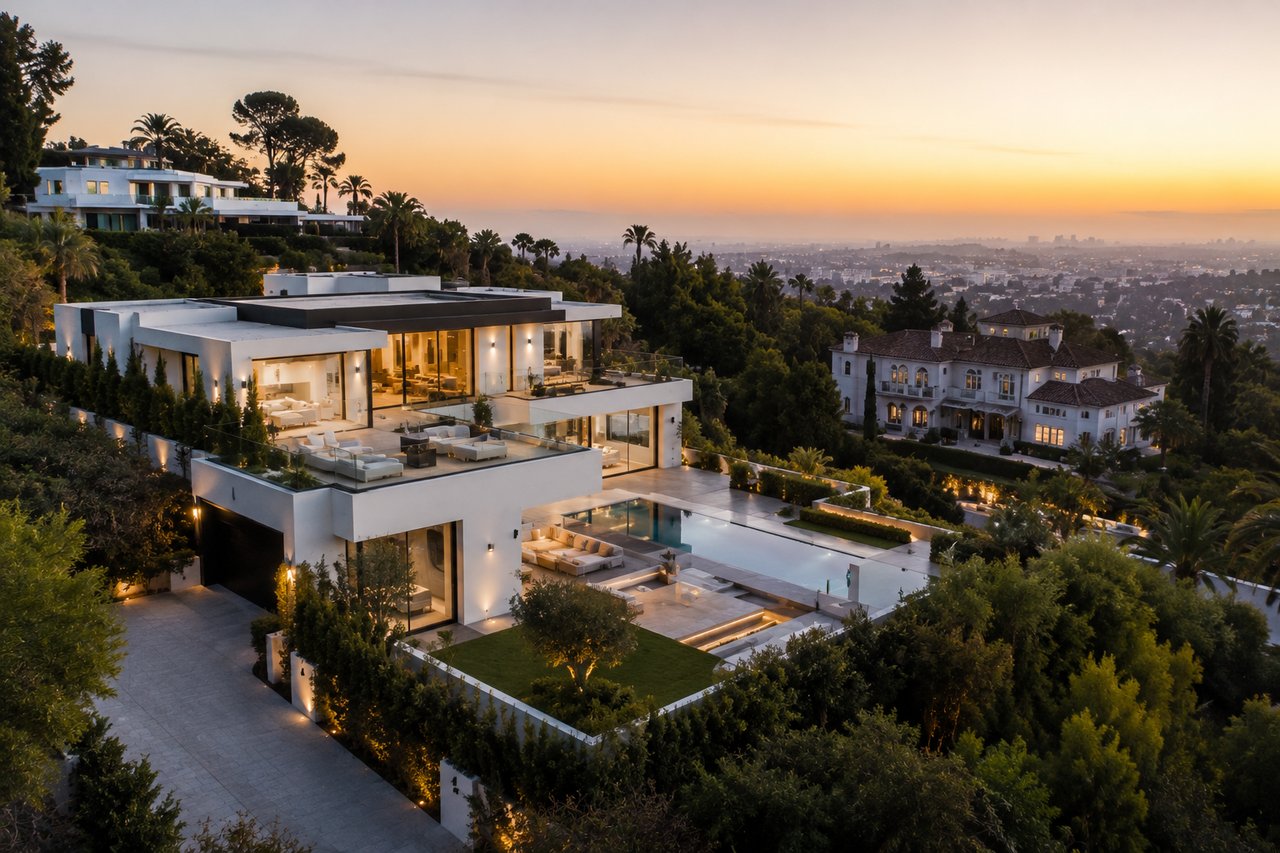
Bel Air has always sold a fantasy. In 2026, that fantasy increasingly comes with a certificate of occupancy dated within the last three years. Buyers who once competed for a piece of old-money provenance the mid-century ranch behind the hedge, the 1960s domed estate with a famous former owner are now gravitating toward the freshly poured foundation instead. Spec-built mansions are landing headline sales while comparable legacy properties sit, get chopped in price, or quietly go to auction as an assemblage of parcels rather than a single trophy listing.
The reasons aren't just taste. A transfer tax that punishes big sales, a construction pipeline that never really slowed down, and buyers who increasingly want a house engineered for their life rather than adapted to it are all pulling in the same direction. Here's what's actually happening in the hills, and what it means if you're deciding between a shovel-ready new build and a storied original.
The Numbers Behind the Surge
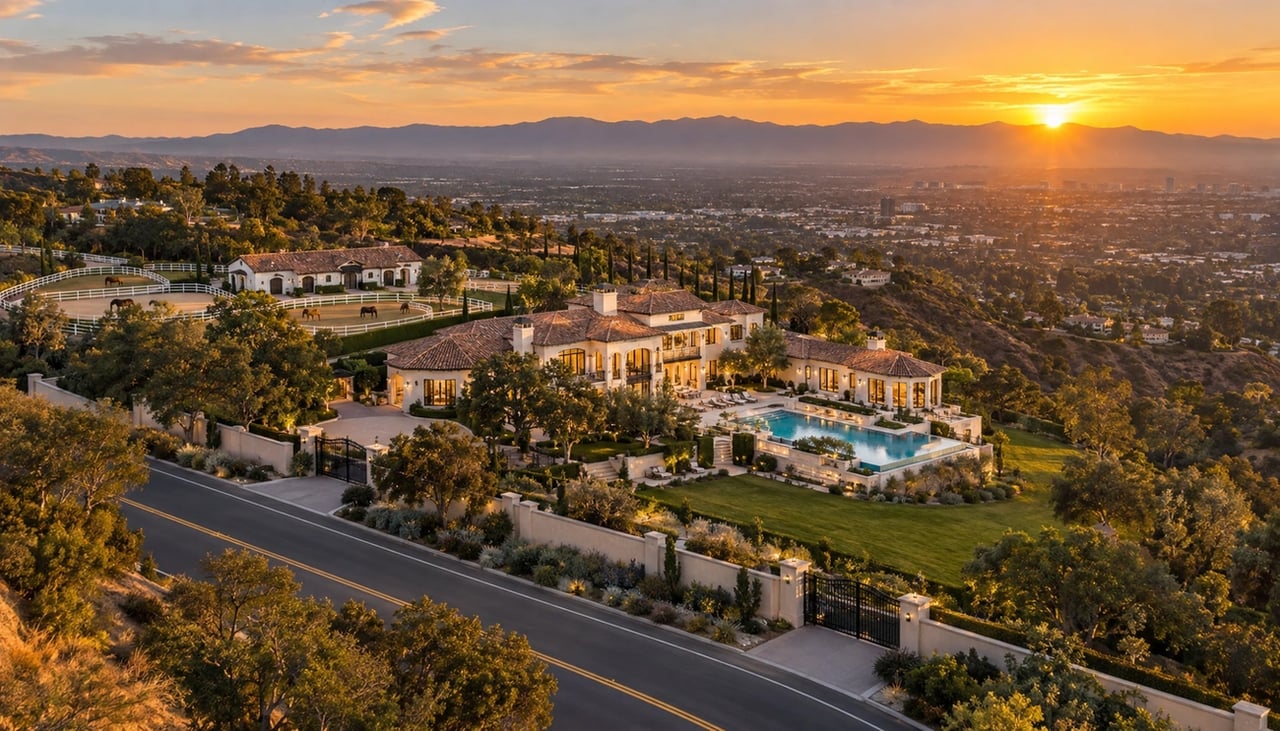
Bel Air's headline listings tell the story before the data does. A roughly 18,000-square-foot contemporary spec estate on Chalon Road came to market this year at $65 million, built by its owner-turned-seller on a site purchased for $3.4 million back in 2012. The seller originally intended the home as a personal residence rather than a speculative flip, despite the project checking every box of a classic spec build. Not far away, a more-than-18,000-square-foot new-construction home on Bellagio Place hit the market for nearly $90 million, three years after its completion the latest project from a developer whose firm previously built a similarly ambitious spec estate in Beverly Hills.
The Bellagio Place estate sits at the higher end of the current Bel Air market, competing alongside a spec mansion known as La Fin priced just under $100 million and the former home of a well-known tech founder listed at $50 million. Meanwhile, the developer behind Bellagio Place made the case for why buyers keep paying up for dirt and design rather than for history: billionaires are increasingly willing to pay a premium for the right development site, treating construction cost as secondary to building something personal and legendary.
Against that backdrop, the neighborhood's broader numbers show a market that's expensive but uneven. Zillow pegs the average Bel Air home value at roughly $4.13 million, up modestly year over year, while Redfin's spring data put the median sale price closer to $3.1 million with homes typically sitting for around four months before closing. Realtor.com's snapshot shows median price-per-square-foot hovering around $1,270 to $1,300 across active listings. Those figures cover the full range of Bel Air product from original 1970s-era homes that haven't been touched, to fully reimagined new construction which is exactly why the spread between "old" and "new" pricing has become the more interesting story than the median itself.
Why Spec Builders Keep Winning
Turnkey Beats Potential
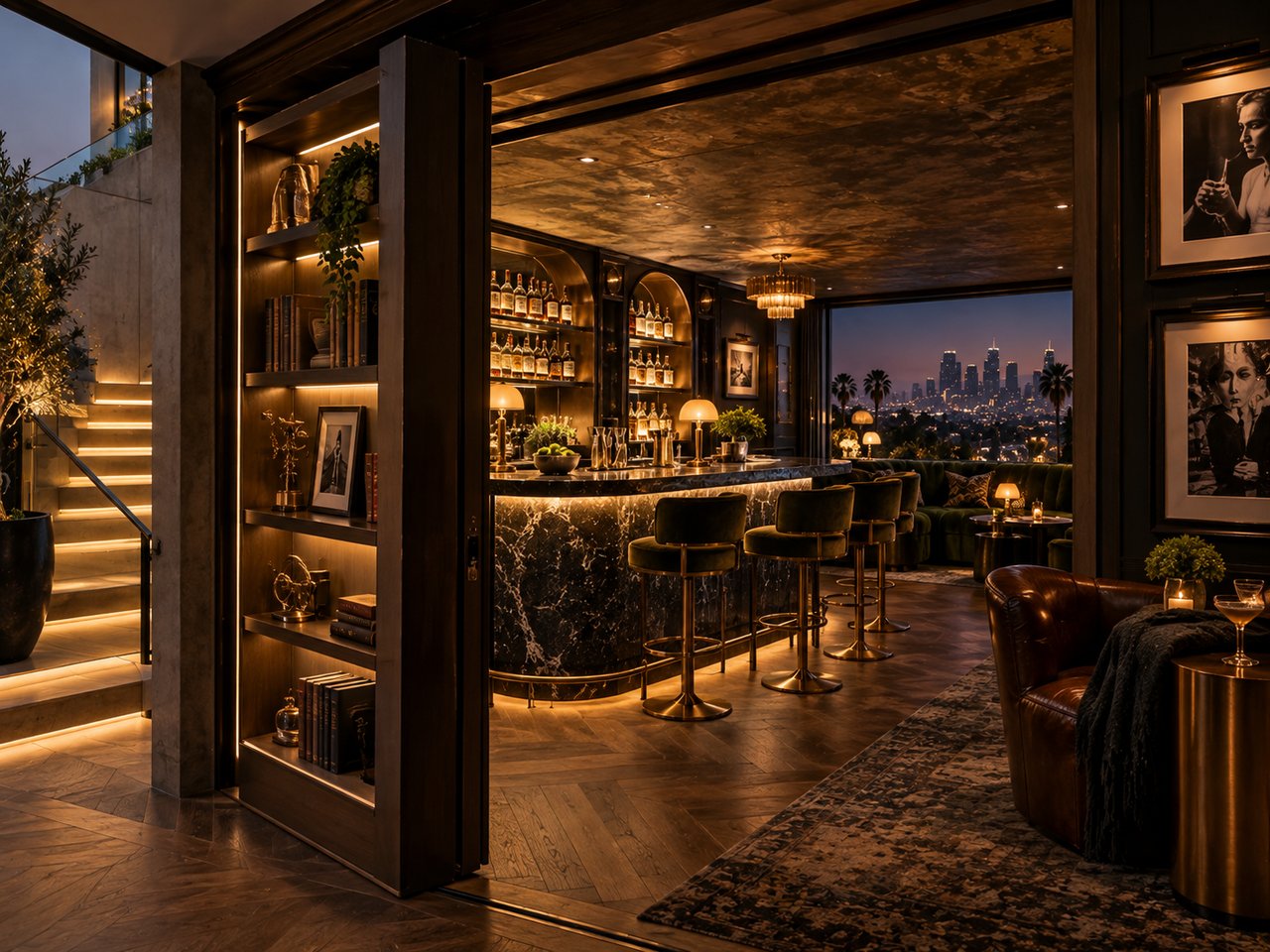
At the ultra-luxury level, time is the least renewable resource a buyer has. A newly built mansion arrives with permitted square footage, modern mechanical systems, smart-home infrastructure, and finishes chosen for how people actually entertain today home theaters, wellness wings, motor courts built for a serious car collection. A legacy estate offers the same ambitions only on paper: the buyer has to imagine the renovation, then live through it. For a certain type of buyer with more capital than patience, that math settles the decision before a single offer is written.
The Land Premium Buyers Will Pay For
Buildable, view-worthy dirt in Bel Air is genuinely scarce, and developers have learned that buyers will pay handsomely for a site where someone else already absorbed the entitlement risk, the grading, and the multi-year construction timeline. That's the case Chen made directly, framing the willingness to pay top dollar for a finished, personal, one-of-a-kind estate as a rational response to how little of this land remains undeveloped.
Spec Product Is Simply More Plentiful Right Now
New construction hasn't slowed the way some expected. Beyond the marquee sales, ongoing projects continue to funnel through the pipeline from smaller custom rebuilds to compound-scale developments with tens of thousands of square feet of amenity space. That steady drip of inventory gives buyers more current, comparable options at the top of the market than legacy sellers can currently match.
The Measure ULA Effect: Why Legacy Owners Are Sitting Tight
What the Tax Actually Costs
Los Angeles' transfer tax, known as Measure ULA, applies a 4% tax on property sales above roughly $5.4 million and a higher tier around 5.5% on sales above approximately $10.6 million, with thresholds adjusted periodically for inflation. It applies inside the City of Los Angeles regardless of property type, and Bel Air sits squarely within that boundary. For a $20 million estate sale, that tax alone can mean well over $1 million handed to the city at closing money a seller never sees.
Remodel Instead of Resell
That math has changed seller behavior in a measurable way. Permit data reviewed by Attom found a 46% increase in remodel permits for high-end Los Angeles homes since the tax took effect, with no comparable shift among mid-priced properties. One luxury homebuilder described his own business flipping from roughly 80% new development and 20% remodeling before the tax to 60% remodeling and 40% new construction now, as clients choose to reinvest in the home they already own rather than absorb the tax on a sale.
What This Means for Bel Air Buyers
Fewer legacy owners listing means fewer legacy comps circulating at any given time which, somewhat counterintuitively, makes the new-construction segment look even more dominant by comparison. Spec developers, who typically price the tax into their proforma from day one, keep bringing product to market on schedule. Legacy owners, weighing an eight-figure tax bill against simply upgrading the kitchen and pool, increasingly choose to stay put.
When Legacy Estates Do Sell: Auctions and Assemblages
Legacy Bel Air hasn't disappeared from the market it's just showing up differently. A collection of seven Bel Air homes spanning nearly 16 acres across nine parcels, assembled by a single owner over decades, came to market this year through a no-reserve auction rather than a traditional listing, drawing interest from developers eyeing a compound build as much as from buyers wanting a single trophy home. And when legacy trophies do sit on traditional MLS listings, the price cuts can be steep: a domed estate with a famous, decades-long single owner has seen its asking price trimmed repeatedly since last year, a pattern read by market watchers as buyer hesitation toward one-of-a-kind custom homes that don't match current buyer expectations.
The pattern is consistent: when a legacy estate does trade, it increasingly does so either at auction, through an assemblage sale attractive to developers, or after multiple price reductions rarely at first list, and rarely without new construction somewhere in the buyer's future plans.
New Construction vs. Legacy Estate: Side-by-Side
Factor | New Spec Construction | Legacy Estate |
|---|---|---|
Move-in condition | Turnkey; modern systems, smart-home infrastructure, current finishes | Often requires renovation to match buyer expectations |
Typical seller motivation | Developer-driven; tax and timeline priced in from the start | Owner-driven; increasingly reluctant to sell due to Measure ULA exposure |
Recent list price range | $50M–$100M+ for marquee Bel Air spec estates | Wide range; steep cuts common on dated trophy listings |
Time on market | Faster absorption at the top of the market | Longer holds, repeated price reductions common |
Land/location value | Priced at a premium for scarce, view-oriented sites | Value tied to lot size, provenance, and mature grounds |
Path to sale | Traditional listing through developer/broker | Increasingly auction or multi-parcel assemblage sales |
Buyer profile | Buyers wanting immediate, personalized luxury living | Buyers seeking land, character, or redevelopment potential |
Tax exposure | Baked into developer pricing | Direct seller cost; a driver of the current "hold and remodel" trend |
Who Actually Thrives With Each Option
Buyers who want to move in and start living — with a home theater, wellness spa, and motor court already built — are better served by new spec construction. The premium buys certainty: known costs, known timelines, and design decisions already made by people who do this for a living.
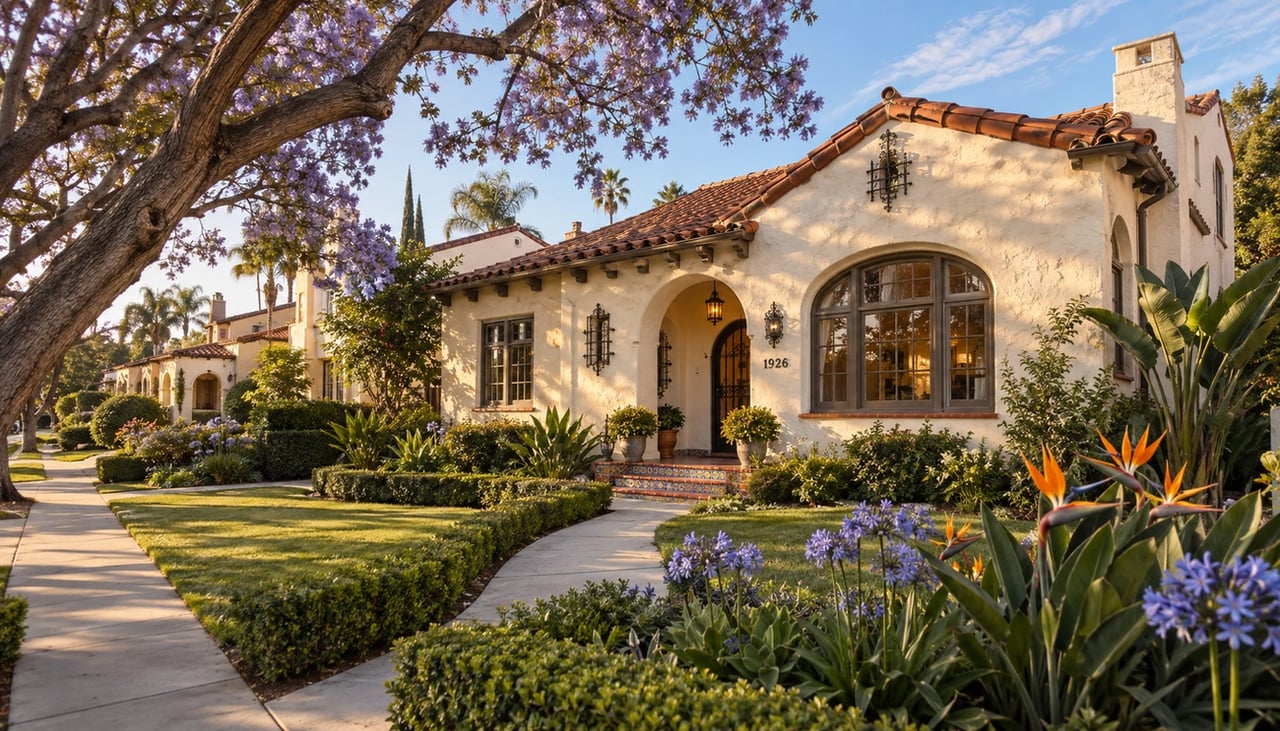
Buyers chasing irreplaceable land, mature landscaping, or a piece of Bel Air's architectural history should look at legacy estates, understanding upfront that a renovation budget and timeline need to be part of the offer, not an afterthought.
Investors and developers increasingly find opportunity in the assemblage and auction space, where large legacy holdings are changing hands in ways that traditional listings don't capture and where the next generation of spec mansions will eventually rise.
If you're weighing a move into new construction, a legacy estate ready for reinvention, or an off-market assemblage opportunity, Christina Pope can walk you through what's actually available in Bel Air right now including opportunities that never make it to a public listing. 📞 310-404-9931 ✉️ [email protected]
Key Takeaways
- Spec construction is commanding the headlines. Bel Air's most active listings in 2026 from an $88 million Bellagio Place estate to a $65 million Chalon Road build are new construction, not legacy resales.
- Measure ULA is quietly reshaping seller behavior. A 4% tax above roughly $5.4 million (and about 5.5% above $10.6 million) has pushed a documented 46% increase in high-end remodel permits, as owners choose to renovate rather than sell.
- Legacy estates increasingly trade differently. Rather than traditional listings, large legacy holdings are moving through no-reserve auctions and multi-parcel assemblage sales aimed at developers.
- Buyer psychology favors turnkey. Developers report that ultra-luxury buyers increasingly treat construction cost as secondary to owning something personal, current, and move-in ready.
- The market remains genuinely two-tiered. Broad medians (around $3.1M–$4.1M) mask a much wider spread between original-condition inventory and fully modern spec product at the top of the price ladder.
FAQs
Q1. Why are spec-built mansions outperforming legacy estates in Bel Air right now? New construction offers move-in-ready luxury with modern systems and current design, while legacy sellers face a steep transfer tax on high-value sales that's pushing many to renovate and hold rather than list. That combination has shifted momentum toward spec product.
Q2. How much does Measure ULA actually cost a Bel Air seller? The tax runs roughly 4% on sales above about $5.4 million and roughly 5.5% above about $10.6 million, with thresholds adjusted periodically. On a $20 million sale, that can mean well over $1 million in tax alone, which is why many owners are choosing to remodel instead.
Q3. Are legacy Bel Air estates still worth buying? Yes, particularly for buyers who value irreplaceable lot size, mature grounds, or architectural pedigree. The trade-off is a renovation budget and timeline that need to be built into the offer from the start, since fewer legacy sellers are willing to price in that discount themselves.
Q4. What's happening with large legacy estate sales that don't go the traditional listing route? Several sizable legacy holdings have moved to no-reserve auctions or multi-parcel assemblage sales this year, often drawing developer interest alongside traditional buyers — a sign that big legacy parcels are increasingly viewed as future development sites.
Q5. Is Bel Air still a good long-term investment given this shift? Bel Air's fundamentals — scarce land, view corridors, and gated privacy — remain intact regardless of which segment a buyer chooses. The right entry point depends on whether the priority is immediate turnkey living or long-term value tied to land and character.
Christina Pope — Sotheby's International Realty EliteResidenceInternational.com | 📞 310-404-9931 | ✉️ [email protected]
Market data referenced reflects figures reported by Redfin, Realtor.com, Zillow, and Attom as of mid-2026 and is provided as directional context. Confirm current pricing and comps for any specific property before making an offer.