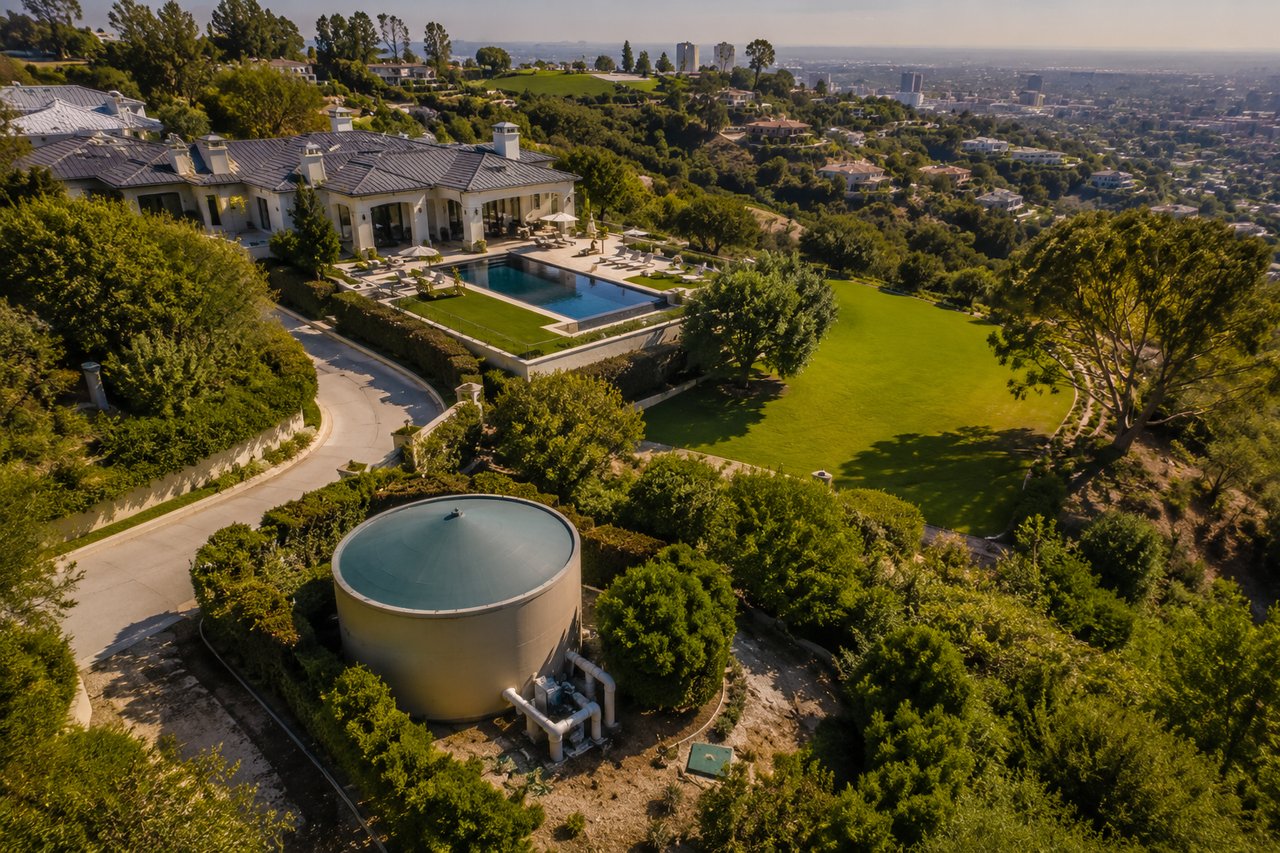
Why Water Rights Even Enter the Picture in a City Neighborhood
Bel Air's founder, Alphonzo Bell, installed piped water and sewage infrastructure as part of his original 1920s subdivision of the neighborhood's flatter, lower allotments. But Bel Air's later expansion pushed development further up steep, remote canyon terrain through the postwar decades, into terrain that wasn't always practical or immediate to connect to that same municipal system. Estates built on those higher, more isolated parcels sometimes relied on private wells, natural canyon springs, or small shared water systems serving a handful of adjoining lots before full municipal service arrived — and in some cases, agreements governing those arrangements were never fully unwound even after city water became available. Decades later, those agreements can still surface in a title search, whether or not anyone currently living on the property realizes they exist.
What a Water Easement Actually Is, and Why It's Different From a Standard Easement
Most buyers are at least somewhat familiar with the standard easements that show up in any Bel Air title report utility access, shared driveways, drainage rights. A water easement is a different animal. Rather than simply granting a right of passage or access, it can grant one parcel the legal right to draw water from a well or spring located on a neighboring parcel, or to convey water across another owner's land to reach its own property. Because water rights in California can, in certain circumstances, be treated and transferred somewhat independently of the land itself, verifying exactly who legally holds the water right tied to a given well is its own layer of due diligence separate from, and in addition to, a standard title search.
California's Groundwater Framework in Brief
California groundwater law generally operates under what's known as the correlative rights doctrine: landowners overlying a shared groundwater basin hold proportional, reasonable rights to draw from that shared resource, rather than an unlimited right tied strictly to whoever drilled first or drilled deepest. Since the 2014 Sustainable Groundwater Management Act, certain groundwater basins across California have also come under regional sustainability oversight, which can affect how existing wells are monitored and how new wells are permitted going forward. Whether a specific hillside aquifer beneath a particular Bel Air parcel falls under this kind of oversight is a question worth confirming directly with a water rights attorney rather than assuming one way or the other the framework varies by basin, and hillside canyon geology doesn't always map neatly onto the larger adjudicated groundwater basins most public discussion of California water law focuses on.
The Post-2025 Wake-Up Call: Why This Matters More Now Than It Did a Decade Ago
For most of Bel Air's history, a legacy well or water easement was treated as a historical footnote, not a selling point. That changed after the January 2025 Palisades Fire, when LADWP's own chief engineer confirmed that demand on the water system ran roughly four times normal levels for fifteen straight hours, dropping pressure and slowing the refill rate for hillside storage tanks specifically at higher elevations. Governor Newsom ordered an independent investigation into the resulting hydrant failures, and state legislators have since moved on measures requiring backup power for water pumps serving high fire-risk zones. Bel Air shares the same fundamental vulnerability that made those failures possible elsewhere on the Westside: hillside terrain, higher elevations, and a water delivery system that depends on tanks refilling fast enough to keep pressure up during exactly the kind of sustained, extreme demand a major wildfire creates.
Against that backdrop, a functioning private well, an on-site water storage tank, or a documented water right that doesn't depend entirely on municipal delivery has started to look less like a rural throwback and more like genuine resilience infrastructure — the kind of feature increasingly relevant to how sophisticated buyers and their insurers evaluate a hillside property's actual risk profile.
How This Shows Up in an Actual Bel Air Transaction
A handful of practical issues tend to surface once a water right or well enters the picture:
- Title complexity. A recorded water easement or shared well agreement needs to be specifically identified and understood, not just noted in passing, since it can create ongoing obligations — shared maintenance costs, access rights for a neighboring parcel — that outlast the original owners who negotiated them.
- Verifying legal well status. A well's age doesn't determine whether it's properly permitted. Confirming permit status and current water quality testing with the relevant county authority is a necessary step regardless of how long the well has been in use.
- Appraisal difficulty. A functioning private well or documented water right is a genuinely hard amenity to comp, since comparable sales in the same canyon rarely disclose this level of detail clearly, if a buyer's agent even knows to look for it.
- Shared infrastructure risk. Wells and water systems serving multiple historic parcels mean a problem with the shared infrastructure, or a dispute between neighboring owners, can affect a property that had nothing to do with creating the issue.
Water Source Types at a Glance
Water Source | Typical Documentation | Valuation Consideration | Diligence Needed |
|---|---|---|---|
Full municipal (LADWP) connection only | Standard utility hookup, no special easements | Baseline; subject to hillside pressure/tank-refill vulnerability during extreme demand | Confirm no undisclosed legacy easements remain on title |
Private well, sole use | Well permit, water quality test records | Increasingly viewed as a resilience asset post-2025 | Confirm current permit status and flow/quality testing |
Private well, shared with adjoining parcel(s) | Recorded water easement or shared-use agreement | Value depends heavily on agreement terms and neighbor relations | Obtain and review the full governing agreement before closing |
Municipal connection plus private well/storage as backup | Utility hookup plus well permit or storage tank documentation | Often the most valued configuration for fire-resilience-focused buyers | Verify both systems independently; confirm backup power for any well pump |
What Buyers and Sellers Should Actually Do
Buyers evaluating a Bel Air property, particularly on higher or more remote canyon lots, should request complete water rights and well documentation as a distinct item during due diligence, rather than assuming a standard title report captures everything relevant. If a private well exists, commissioning a current flow test and water quality test is worth the modest cost relative to the size of the purchase.
Sellers holding a documented water right or a functioning private well shouldn't treat it as a footnote in the disclosure packet. With clean, organized documentation, it can genuinely support a stronger valuation narrative with today's fire-resilience-conscious buyer pool but only if it's presented clearly rather than surfacing as a surprise during a buyer's own diligence.
Key Takeaways
- Bel Air's hillside expansion history means some estates carry legacy water rights, shared well agreements, or water easements that predate full municipal water service and can still appear in title records today.
- A water easement is legally distinct from a standard utility or access easement, since water rights in California can, in some circumstances, be held or transferred somewhat independently of the land itself.
- California groundwater law generally follows the correlative rights doctrine, and certain basins fall under additional oversight from the 2014 Sustainable Groundwater Management Act — worth confirming with a water rights attorney for any specific parcel.
- The January 2025 Palisades Fire exposed a real vulnerability in hillside water delivery during extreme demand, prompting a state investigation and new legislative attention to backup water infrastructure in fire-risk zones.
- A documented private well or water right is increasingly viewed as a resilience asset by sophisticated buyers, but only when it's cleanly documented — an undocumented or disputed water arrangement can complicate a transaction rather than add value to it.
FAQs
Q1. Does every Bel Air estate have some kind of water rights or well history to worry about? No. Many Bel Air properties, particularly in the neighborhood's original lower allotments, have always been on standard municipal water with no special easements. The issue is more relevant to higher, more remote hillside and canyon parcels developed later, where private wells or shared water systems were more common before full municipal connection.
Q2. What's the difference between a water easement and a regular utility easement? A standard utility easement typically grants access or passage rights. A water easement can grant one property the actual legal right to draw water from a well or spring on another parcel, or to convey water across someone else's land — a more substantive right that requires its own layer of due diligence beyond a standard title review.
Q3. Why did the Palisades Fire change how buyers think about private wells in hillside neighborhoods? LADWP confirmed that extreme demand during the fire caused water pressure to drop and hillside storage tanks to refill too slowly at higher elevations, contributing to hydrant failures. That exposed a real vulnerability shared by other hillside neighborhoods, including Bel Air, making independent water sources more relevant to how buyers assess fire resilience.
Q4. If a Bel Air property has a private well, is it automatically legal to use? Not automatically. A well's age doesn't establish its legal status. Confirming current permit status and water quality testing with the relevant county authority is a necessary step regardless of how long the well has reportedly been in use.
Q5. Can a documented water right actually increase a property's value? It can, particularly with buyers focused on fire resilience and water independence, but only when the right is clearly documented and free of unresolved disputes. An undocumented or contested water arrangement is more likely to complicate a sale than support a higher valuation.
Conclusion
Bel Air's appeal has always rested on the hills themselves — the privacy, the topography, the sense of separation from the rest of the city. That same topography created a genuine, if quiet, layer of water history that most buyers never think to ask about until it surfaces in a title report or, increasingly, until they start thinking seriously about what happens to a hillside home's water supply during the next major wildfire. Understanding that history before it becomes a surprise is a small piece of due diligence with an outsized payoff at this price point.
If you're evaluating a Bel Air property and want a clear-eyed read on its water rights, well history, or overall resilience profile, Christina Pope can help you understand exactly what you're buying before you're under contract.  310-404-9931
  [email protected]
Christina Pope — Sotheby's International Realty EliteResidenceInternational.com | 310-404-9931 | [email protected]
This article is for informational purposes only and does not constitute legal advice regarding water rights, easements, or well permitting. Consult a qualified California water rights attorney and the appropriate county authority regarding any specific property.