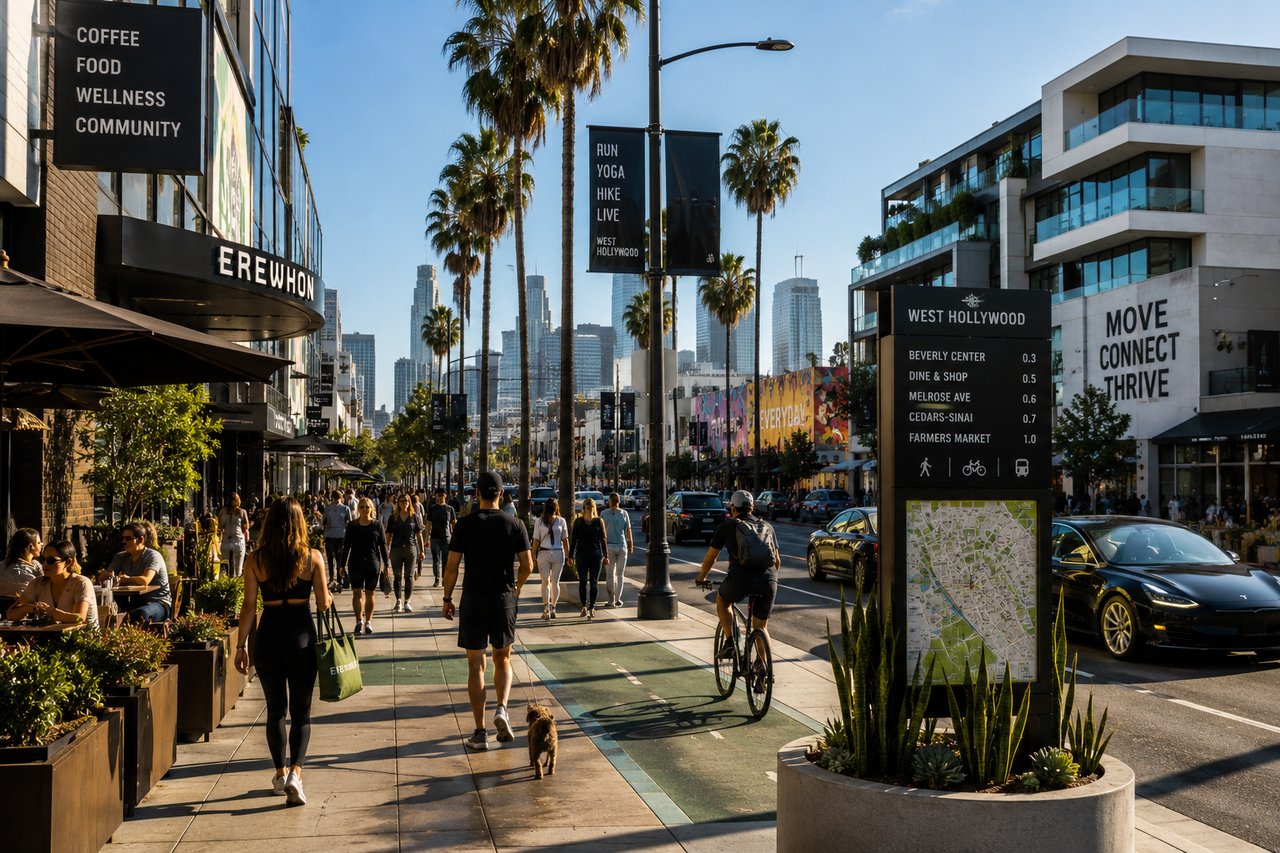
Is Los Angeles Walkable: The Reality Behind LA's Walkability Movement
LA's Historic Car Culture
California earned its reputation as the world's first 'auto-civilization' starting in the early 20th century. Los Angeles developed a sprawling layout centered around automobile use. This created a landscape defined by freeways, parking lots and single-use developments. The Pacific Electric Railway shut down its last line in 1961. It was once one of the largest electric railway systems globally. Freeway expansion during the 1950s and 1960s prioritized roads over rails. Urban planning favored automotive infrastructure at the expense of public transportation. The city was already issuing smog alerts due to auto pollution by the 1940s. This car-centric development divided neighborhoods and created environmental issues. It promoted unsustainable sprawl patterns that persist across 21,800 miles of maintained roadways in LA County.
Emerging Walkable Pockets in South LA and Beyond
MacArthur Park ranks among the most walkable neighborhoods in Los Angeles. Extreme residential density and the intersection of Metro B and D Lines drive this. Koreatown provides a complete walkable environment along Wilshire, 6th Street and Western Avenue. Dense residential towers sit among 24-hour dining, medical offices and grocery stores. Downtown Los Angeles offers walkability comparable to MacArthur Park south of 6th Street and west of the 110 Freeway. South LA is attracting investors who recognize its potential. Proximity to public transportation, affordable housing stock and ongoing revitalization create walkable pockets. Highland Park's resurgence ties to the Metro A Line and a revitalized Figueroa Street corridor.
Public Transit and Infrastructure Investments
The Twenty-Eight by '28 Initiative addresses regional transit needs before the 2028 Games. It reduces single occupancy vehicle reliance and household transportation costs. Federal funding gave $893.30 million for a 6.7-mile light rail line along Van Nuys Boulevard. This includes 11 stations and 33 light rail vehicles. The D Line Extension opened Section 1 with new stations at La Brea, Fairfax and La Cienega. The K Line northern extension could add nine stations and increase ridership up to 100,000 daily. The $166 million Rail to Rail Active Transportation Corridor opened 5.5 miles that connect Inglewood and South Los Angeles. Voters approved Measure HLA in March 2024. It mandates implementation of Mobility Plan 2035. Traffic fatalities reached 336 people in 2023, with more than half being pedestrians.
The Complete Health Case for Walkable Cities
Physical Activity and Disease Prevention
Regular walking transforms health outcomes in measurable ways. Adults who live in highly walkable neighborhoods are 1.5 times more likely to participate in adequate physical activity compared to those in car-dependent areas. Each 1% increase in walkability results in a 0.42% increase in neighborhood walking. A 55% increase in walkability translates to 19 additional minutes of walking per week when scaled up. So these changes deliver the most important disease prevention benefits.
Walkable neighborhoods reduce cardiovascular disease burden by about 0.1% for each one-point increase in walkability score. People with existing cardiovascular disease who live in highly walkable areas had 58% higher odds of having an optimal cardiovascular risk profile. More, higher walkability is associated with lower risk of obesity-related cancers like postmenopausal breast cancer and endometrial cancer.
Mental Wellness and Social Engagement
Social isolation carries severe health risks. Loneliness increases heart disease risk by 29% and stroke risk by 32%. Dementia risk among older adults increases by 50%. Walkable neighborhoods counter these effects by promoting neighbor interactions. Adults in walkable areas report stronger sense of community and increased social health compared to car-dependent communities.
Weight Management Without Effort
A mile of walking burns about 107 calories. Adults in highly walkable neighborhoods are 0.76 times less likely to have obesity compared to those in low-walkability areas. Physical activity intervenes in the association between walkability and BMI. Residents walk 123 minutes weekly after moving to walkable communities.
Longevity and Quality of Life
Thirty minutes of daily walking, five days weekly, adds 1.3 to 1.5 years to life expectancy. People who live in highly walkable neighborhoods have an increased likelihood of living to 100 years. Environmental factors, especially walkability, may be more important contributors to longevity than genetics alone.
Real Estate and Financial Benefits of Los Angeles Walkable Neighborhoods
Premium Pricing in Walkable Areas
Luxury real estate in Los Angeles operates differently than conventional markets. The most meaningful transactions often unfold in quiet ways, within trusted circles, where discretion carries as much weight as value. Walkability commands measurable premiums across the city. Each additional Walk Score point adds $3,948, or a 0.83% increase, to sale prices. Home workers pay $3,260 more for increased walkability compared to similar homes in car-dependent areas. A 1999 study documented buyers paying $20,000 premiums for homes in pedestrian-friendly communities.
If you're thinking about a purchase soon or beginning your search, Christina Pope at Sotheby's International Realty (310-404-9931) specializes in finding spaces designed for high-end living in Los Angeles walkable neighborhoods.
Reduced Transportation Expenses
Car ownership costs $9,282 a year according to AAA data. Eliminating vehicle dependence through walkable neighborhoods frees substantial household income for other investments or savings.
Investment Opportunities for Buyers
Highland Park, Boyle Heights and Echo Park deliver excellent walkability scores with growing rental demand and Metro line proximity. West Adams experienced 100% residential value increases over eight years and outpaced affluent regions. Properties near transit lines attract renters, so appreciation follows.
Income and Mobility Advantages for Future Generations
Children raised in walkable cities climb economic ladders more often and earn more than their parents without car dependency. Walkability explains an additional 10% of variation in intergenerational mobility rates. Reduced transportation costs and proximity to employment opportunities create measurable advantages for future generations.
Building Sustainable Communities Through Walkability
How to Build Sustainable Communities Through Walkability
Environmental Effect and Cleaner Air
Walkable environments reduce greenhouse gas emissions by 4 tons each year compared to automobile-dependent suburbs. Paris showed immediate effect during a single car-free day in 2015 and cut smog by 40 percent in parts of the city. Along pedestrian corridors, trees absorb enough CO2 each year to offset 26,000 miles of driving per 17 trees. The Cultural Trail in Indianapolis diverts nearly 5 million gallons of stormwater runoff each year through green infrastructure.
Economic Growth Through Local Commerce
Walkable urban areas occupy just 1.2% of land mass in the top 35 metropolitan areas yet generate 20% of US GDP. Tax revenue from these areas comes at rates 5-20 times higher per acre than car-oriented developments. Downtown Lodi's pedestrian improvements contributed to 60 new businesses and a 30% increase in sales tax revenues. West Palm Beach's walkable street redesign doubled property values.
Safety Improvements and Community Trust
Chicago upgrades 400 intersections each year and directs resources toward schools and crash hot spots. Pedestrian countdown signals, protected left turn phases and traffic-calming treatments improve intersection safety. More than one person per day was injured or killed while walking in Chicago during 2022.
Infrastructure Changes Shaping LA's Future
LA's Complete Streets Design Guide establishes safety and accessibility standards for new projects. The Urban Design Studio completed concept plans for South LA and San Fernando Valley corridors. These plans include sidewalk upgrades, safer crosswalks and additional street trees. The Crenshaw Boulevard Streetscape Plan improves configuration for pedestrians, bicyclists and transit users.
Conclusion
Walkable neighborhoods deliver measurable returns across health and quality of life. Los Angeles proves that even sprawling cities can raise pedestrians through infrastructure investments and community planning. Transit expansion continues and safety improvements roll out, so walkability premiums will likely increase further. Those who want to move to movement-based neighborhoods can contact Christina Pope at Sotheby's International Realty (310-404-9931). She specializes in finding spaces designed for better living within these emerging areas.
Key Takeaways
Los Angeles is transforming from a car-centric city into a walkable metropolis, delivering significant benefits for residents who embrace movement-based neighborhoods.
• Health Benefits Are Immediate: Residents in walkable neighborhoods are 1.5 times more likely to get adequate exercise, reducing cardiovascular disease risk and adding 1.3-1.5 years to life expectancy.
• Financial Returns Are Substantial: Each Walk Score point adds $500-$3,000 to home values, while residents save 9-16% of income by eliminating car dependency costs of $9,500+ annually.
• Economic Impact Scales Citywide: Walkable areas generate 20% of US GDP despite occupying just 1.2% of land, producing tax revenue 5-20 times higher per acre than car-oriented developments.
• Infrastructure Investment Creates Opportunity: LA's $893 million transit investments and Measure HLA approval are creating emerging walkable pockets in South LA, Highland Park, and Koreatown with strong appreciation potential.
The shift toward walkability represents more than urban planning—it's a fundamental reimagining of how cities can support healthier, wealthier, and more connected communities while addressing environmental challenges.
FAQs
Q1. How does living in a walkable neighborhood improve your health? Living in a walkable neighborhood significantly boosts physical activity levels. Residents are 1.5 times more likely to get adequate exercise compared to those in car-dependent areas. This increased activity reduces cardiovascular disease risk, lowers obesity rates, and can add 1.3 to 1.5 years to life expectancy. The health benefits happen naturally through daily activities like walking to stores or transit stops, rather than requiring dedicated gym time.
Q2. Do walkable cities actually make financial sense for homeowners? Yes, walkable neighborhoods offer substantial financial advantages. Each additional Walk Score point can add between $500 and $3,000 to home values. Residents also save 9-16% of their income by reducing or eliminating car dependency, which typically costs over $9,500 annually. These savings come from reduced transportation expenses while property values in walkable areas continue to appreciate at premium rates.
Q3. Which Los Angeles neighborhoods are becoming more walkable? Several LA neighborhoods have emerged as walkable destinations. MacArthur Park and Koreatown lead with high residential density and Metro line access. Downtown LA offers strong walkability south of 6th Street, while Highland Park has revitalized around the Metro A Line. South LA is attracting investment due to its proximity to public transportation and ongoing revitalization efforts, creating new walkable pockets throughout the city.
Q4. Can moving to a walkable city really change your daily activity levels? Research shows that moving from a less walkable city to a more walkable one adds approximately 1,100 steps per day on average. Each 1% increase in walkability results in a 0.42% increase in neighborhood walking. These changes happen organically as daily errands and activities naturally incorporate more movement, making it easier to stay active without setting aside dedicated exercise time.
Q5. What environmental benefits do walkable neighborhoods provide? Walkable neighborhoods reduce greenhouse gas emissions by approximately 4 tons annually per household compared to car-dependent suburbs. They also improve air quality—Paris reduced smog by 40% during a single car-free day. Additionally, trees along pedestrian corridors absorb significant CO2, and green infrastructure in walkable areas can divert millions of gallons of stormwater runoff annually.