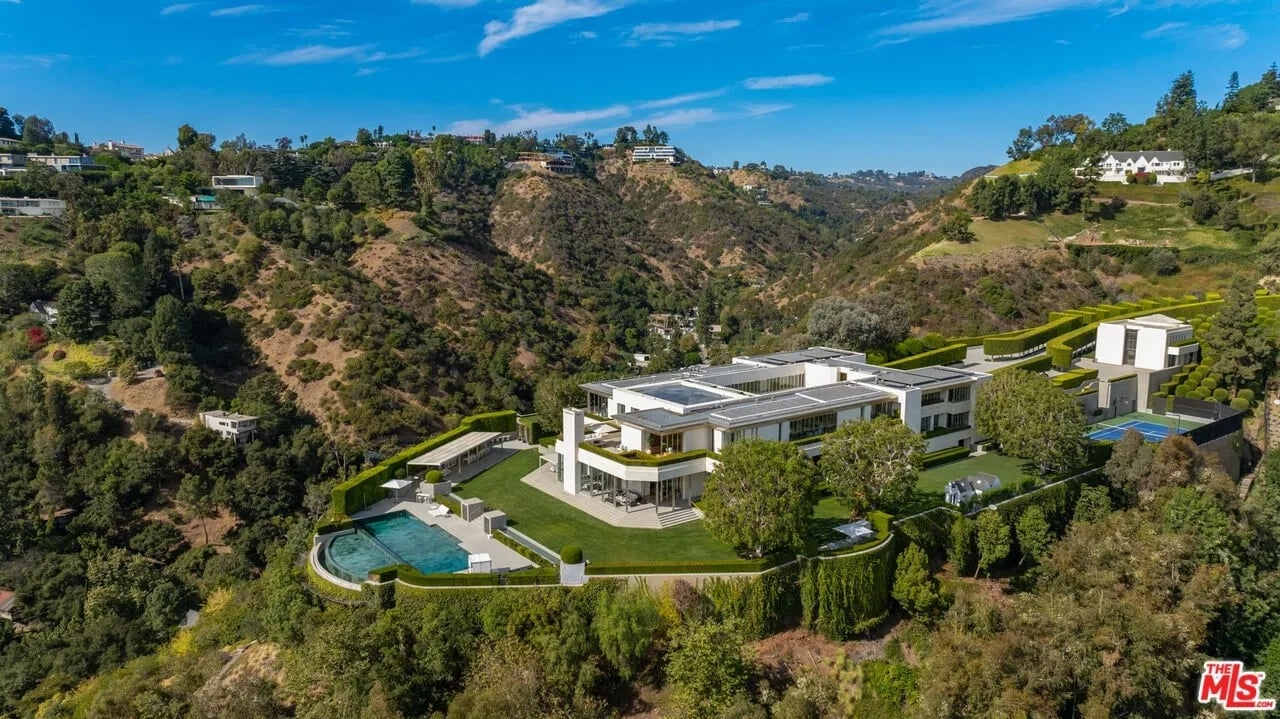
California's combined federal and state capital gains rates can exceed 37% for high earners a figure that makes wealth preservation a real priority for serious investors. For those holding appreciated assets, 1031 exchange California strategies offer a well-established path to deferring that tax burden entirely. Many LA neighborhoods have seen 300–500% appreciation over the past two decades, and the most significant acquisitions happen quietly, within trusted circles where timing and precision carry far more weight than public visibility.
At its core, a 1031 exchange allows investors to defer capital gains by exchanging business or investment properties for like-kind assets rolling equity forward rather than surrendering it to taxes. The pages ahead examine how experienced investors are using 1031 exchange rules, California 1031 exchange out-of-state advantages, and 1031 qualified intermediary partnerships to close eight-figure deals across LA's ultra-premium real estate market.
Out-of-State Money Reshapes LA's Ultra-Premium Real Estate Landscape
Luxury real estate in Los Angeles does not move through public announcements. The most consequential transactions happen through relationships, access, and well-placed timing a world where knowing the right people matters far more than browsing a listing.
Transaction Volume Surge in Beverly Hills and Bel Air
Beverly Hills recorded a median sales price increase of 21.1% to USD 8.40 million, with transaction volume jumping 70% to 46 properties. The combined Bel-Air and Holmby Hills area posted a 33% median price increase to USD 5.00 million, with sales surging 65% to 21 transactions. These numbers tell a story of strong recovery the 2023 mansion tax had initially pulled high-end transactions above USD 5.00 million down by nearly 70%, but by early 2025, that same category returned with a 13% year-over-year sales increase.
The top 10% of the market saw single-family home prices rise 5.1% to a median of USD 12.00 million. For properties priced at USD 25.00 million and above, broader market pressures simply did not apply. High-net-worth buyers at this level make decisions around asset preservation and scarcity financing costs rarely factor in.
Why External Capital Targets California's Luxury Properties
Out-of-state buyers are drawn to Los Angeles for lifestyle, climate, and the kind of long-term value appreciation that few markets can match. Foreign buyers account for roughly 18% of all luxury deals in prime neighborhoods. On a global scale, the pricing holds up well a USD 60.00 million property here might command USD 100.00 million or more in New York or London.
Buyers from Asia, the Middle East, and Europe are acquiring both second homes and investment properties, attracted by top-tier schools, cultural richness, and year-round sun. The city's luxury entry point sits at USD 4.25 million more than three times the national median.
The Discretion Factor: High-Value Deals Below Market Radar
Nearly one in four luxury deals never reaches the Multiple Listing Service, with approximately 20% of US luxury homes selling privately off-MLS in 2023. Across Beverly Hills, Bel Air, Malibu, and Brentwood, buyers of this caliber executives, public figures, prominent families often prefer that a transaction remain unseen, particularly during personal transitions or ahead of major announcements.
Publicly listed properties do tend to command 13% more than private sales, yet many buyers willingly accept that gap for the confidentiality it costs them. Trophy estates at the top of the market trade through exclusive networks, far from public channels.
What a 1031 Exchange Is and How California's Rules Support Cross-Border Investment
"In effect, you can change the form of your investment without (as the IRS sees it) cashing out or recognizing a capital gain. That allows your investment to continue to grow tax-deferred. There’s no limit on how frequently you can do a 1031 exchange. You can roll over the gain from one piece of investment real estate to another and another and another." — Investopedia, Financial education website
1031 Exchange Real Estate Fundamentals for Luxury Transactions
Section 1031 of the Internal Revenue Code permits investors to defer capital gains taxes when exchanging property held for business or investment purposes for like-kind real estate. The key distinction: the gain is deferred, not forgiven. The tax basis from the relinquished property carries forward to the replacement asset, and the obligation travels with it. Properties qualify as like-kind regardless of type apartment buildings, commercial properties, or vacant land all qualify, provided both sides of the exchange serve business or investment purposes. Any real property within the United States qualifies; property outside US borders does not.
California 1031 Exchange Out-of-State Advantages Over Other Markets
California conforms to federal IRC Section 1031, allowing state income tax deferral whether the replacement property sits inside or outside California. That said, California enforces a clawback provision investors who exchange California property for out-of-state assets must file Form FTB 3840 annually. That obligation continues until the deferred California gain is recognized through a taxable sale. On the sale of California real property, the state withholds 3.33% of the gross sales price unless Form 593-C confirms the transaction qualifies for 1031 treatment[64].
The 45-Day and 180-Day Timeline Strategy for Premium Acquisitions
Replacement property identification must occur within 45 calendar days of closing the relinquished property sale a tight window that demands preparation well in advance. Investors may identify up to three properties of any value, or more if the aggregate fair market value stays below 200% of the relinquished property value. The 95% rule adds another layer of flexibility, permitting unlimited property identification provided investors ultimately acquire at least 95% of the identified aggregate value[73]. Full acquisition must close within 180 days of the relinquished property transfer, with no extensions available under any circumstance.
1031 Qualified Intermediary Selection for Eight-Figure Deals
A qualified intermediary holds sale proceeds in segregated accounts, keeping funds out of the taxpayer's direct receipt a requirement that, if missed, disqualifies the exchange entirely. Standard exchange costs range from USD 800 to USD 1,500, though multi-property transactions at the eight-figure level carry higher fees. The intermediary also prepares exchange documents, coordinates property transfers, and executes California Form 593-C to confirm the exchange structure on record.
How Experienced Investors Use California's Tax Structure to Build Their Portfolios
Deferring Capital Gains on Multi-Million Dollar Appreciation
California's top marginal capital gains rate sits at 13.3% the highest of any state in the country. Stacked against federal rates, the combined liability on a appreciated sale is substantial. A USD 500,000 gain alone triggers roughly USD 119,000 in federal taxes at 20%, plus the 3.8% net investment income tax. Deferring a USD 300,000 gain at that same rate keeps USD 60,000 working in the portfolio rather than remitted to the government. That preserved capital is what makes the next acquisition possible.
Trading Up: From Regional Holdings to LA Trophy Properties
Full reinvestment of proceeds opens the door to properties that would otherwise sit out of reach. The replacement property must equal or exceed the relinquished property value to maintain complete tax deferral a straightforward requirement that rewards decisive action. Investors who understand this well have used appreciated regional holdings as the foundation for some of LA's most notable luxury acquisitions, moving equity forward rather than surrendering it.
Geographic Diversification While Maintaining Tax-Deferred Status
Section 1031 permits exchanges across state lines, giving investors the ability to reposition portfolios out of concentrated markets and into multiple regions. The long-term upside is equally compelling upon death, heirs receive a stepped-up cost basis to current market value, which effectively wipes out the deferred gains built across years of successive exchanges. Few wealth preservation tools offer that combination of flexibility and generational benefit.
The Mechanics Behind Recent High-Profile LA Luxury Acquisitions
"People with the means to buy high-end homes are jumping in now because they feel confident prices will continue to rise." — David Palmer, Redfin agent in Seattle
The way external investors structure 1031 exchange california transactions follows a precise sequence one where proper setup before closing is not optional, and where the numbers involved reward those who get it right.
Case Profile: East Coast Investor Exchanges for $12M Holmby Hills Estate
Consider an investor selling a retail center for USD 1.25 million. Engaging a 1031 qualified intermediary before closing allows that investor to defer USD 271,600 in combined federal, state, depreciation recapture, and net investment income taxes. Rather than walking away with USD 942,400 after taxes, the full proceeds stay available for reinvestment opening the door to a class of replacement property that would otherwise be out of reach. Holmby Hills illustrates this at its most pronounced, with recent sales recorded at USD 88 million, USD 119.75 million, and USD 100 million.
Mansion Tax Considerations for Properties Above $5.3 Million
For properties conveyed above USD 5.4 million but below USD 10.9 million, a 4% transfer tax applies. At USD 10.9 million or more, that rate climbs to 5.5%, with both figures effective for transactions closing after June 30, 2026. These rates sit on top of the existing 0.45% city transfer tax, and collectively the tax has generated over USD 1.24 billion across three years a cost that factors into every acquisition at this level.
Delaware Statutory Trusts Enable Passive Luxury Market Entry
A Delaware Statutory Trust offers fractional ownership in institutional-grade real estate while qualifying as like-kind replacement property under Section 1031. For investors who want access to premium assets without the responsibilities of direct ownership and management, a DST provides a sound, structured alternative.
Whether you are exploring this market for the first time or ready to move on a specific acquisition, Christina Pope brings the expertise and trusted relationships to help you find the right property with the discretion this market demands. 📞 310-404-9931 ✉️ [email protected]
Common Pitfalls External Investors Encounter in LA Market
The structure with a qualified intermediary must be in place before the relinquished property closes there is no remedy available after the fact. The replacement property must also equal or exceed the relinquished property value for complete tax deferral to hold. And the 45-day identification window is absolute; missing it removes those properties from 1031 consideration entirely, with no extensions on offer.
Conclusion
Serious investors have long known that where capital goes, opportunity follows. Los Angeles luxury properties continue to attract out-of-state and international buyers precisely because the math holds tax deferral through 1031 exchange california structures keeps equity intact and purchasing power strong. The deals that matter most in this market rarely make headlines. They close through trusted relationships, careful timing, and the kind of precision that only comes from knowing the market well. For those positioned to act, LA's ultra-premium segment remains one of the most compelling places to put long-term capital to work.
Key Takeaways
Out-of-state investors are strategically using 1031 exchanges to acquire Los Angeles luxury properties while deferring substantial capital gains taxes that can exceed 37% when combining federal and California state rates.
• Beverly Hills luxury sales surged 70% to 46 transactions with median prices jumping 21.1% to $8.4M, demonstrating strong recovery after the 2023 mansion tax implementation initially reduced high-end sales by 70%.
• 1031 exchanges allow investors to defer all capital gains taxes by reinvesting full proceeds into like-kind properties, enabling trades from regional holdings into LA trophy estates worth $12M+ without immediate tax liability.
• Nearly 25% of luxury deals occur off-market through private networks, with buyers accepting 13% price premiums for discretion, particularly in Beverly Hills, Bel Air, and Holmby Hills neighborhoods.
• Strict 45-day identification and 180-day closing deadlines require precision timing, with qualified intermediaries essential for managing eight-figure transactions and preventing disqualification from tax-deferred status.
• California's clawback provision requires annual Form FTB 3840 filing when exchanging California property for out-of-state assets, with 3.33% withholding on sales unless Form 593-C proves 1031 qualification.
The convergence of tax strategy, geographic diversification, and access to appreciating luxury assets makes LA's premium market particularly attractive for sophisticated investors seeking wealth preservation through real estate.
FAQs
Q1. Can investors exchange California property for real estate in other states using a 1031 exchange? Yes, investors can exchange California property for out-of-state real estate while deferring both federal and California state taxes. However, California requires annual filing of Form FTB 3840 to track the deferred gain until the replacement property is eventually sold in a taxable transaction.
Q2. What is the 95% rule in 1031 exchanges? The 95% rule allows investors to identify an unlimited number of replacement properties during the 45-day identification period, provided they acquire at least 95% of the total aggregate fair market value of all identified properties. This offers flexibility beyond the standard three-property limit.
Q3. What are the typical costs for completing a 1031 exchange in California? Standard 1031 exchange costs typically range from $800 to $1,500 for straightforward transactions. However, complex multi-property exchanges or eight-figure luxury deals may incur higher fees depending on the qualified intermediary's services and transaction complexity.
Q4. What are the critical deadlines investors must meet in a 1031 exchange? Investors must identify replacement properties within 45 calendar days of closing the sale of their relinquished property and complete the acquisition within 180 days. These deadlines are strict with no extensions permitted, making timing precision essential for successful exchanges.
Q5. How does the LA mansion tax affect luxury property acquisitions above $5 million? Properties selling between $5.4 million and $10.9 million face a 4% transfer tax, while properties at $10.9 million or above incur a 5.5% tax. These rates apply in addition to the standard 0.45% city transfer tax and have generated over $1.24 billion since implementation.