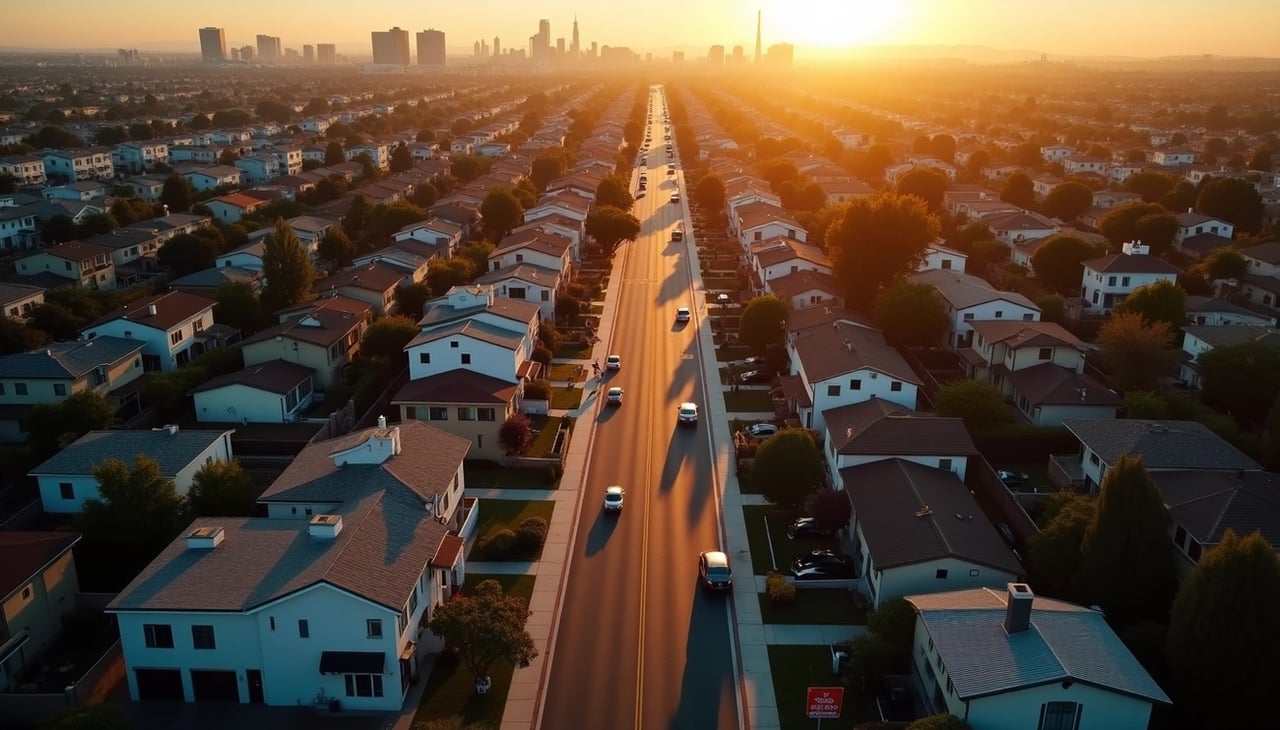
LA's home buyers face a hidden challenge that substantially affects their options and property values. About 75% of residential land in Los Angeles can only have single-family homes. This reality surprises many potential buyers who often learn about these restrictions late in their search.
A 2022 UC Berkeley's Othering and Belonging Institute study showed an even higher number. The research found that 78% of land in the Greater Los Angeles Region allows only single-family structures. These strict rules have created a bottleneck in LA's real estate market. California's zoning laws managed to keep these restrictions and changed what could have been homes for 10 million residents to space for just 4.5 million by 1990.
Residential zoning rules shape LA's housing market at its core. These classifications alter property values dramatically. Parcels with different zoning can have vastly different prices, even when they sit next to each other. Buyers planning their 2026 purchases need to understand these hidden limits. These restrictions will determine their buying options and their investment's future value.
The Invisible Hand of Zoning in LA Real Estate
Most potential buyers in Los Angeles never deal with property regulations—until they fall in love with a specific home. The glossy photos of LA homes show stunning views and renovated interiors but hide something crucial: zoning laws.
The Invisible Hand of Zoning in LA Real Estate
LA's property development follows a complex genetic code that decides what can be built and where. Think of cities as living organisms—zoning would be their DNA, the basic blueprint that shapes every neighborhood's form, function, and future. This system shapes the LA housing market in ways that even seasoned buyers often miss.
Why most buyers never hear about zoning until it's too late
Here's a little-known fact about LA's land use planning: exceptions to rules, not the rules themselves, often determine what gets built. Buyers rarely know how these exceptions shape property development across the city. A white paper given to the City Council shows over 60% of the city's area has special overlays and site-specific designations. These overlays create rules that can change a property's worth and use dramatically.
Buyers often learn about zoning limits when they're already committed to buying—usually after they've fallen for a property. They might then find out that:
- Their renovation plans break height limits
- They can't build that backyard ADU
- Their home business won't be legal in that zone
- Development limits cap the property's value
The rules might seem boring to most people. Yet these dry-looking regulations shape community life, from housing options to school access.
This lack of knowledge puts buyers at a disadvantage. Zoning affects property values, development options, and future sales, but most buyers can't assess these factors before making their biggest investment. Even real estate pros sometimes find it hard to work through LA's complex zoning code, where about 66.24% of lots have one or more zoning overlays.
If you love to entertain, the right home makes all the difference. Looking to buy soon or starting your search? I'd love to help you find spaces perfect for upscale living and easy hosting. Christina Pope  310-404-9931
  [email protected]
How zoning laws quietly shape what homes are available
Zoning's biggest impact on LA real estate comes from deciding what can be built. Single-family houses take up more than 70% of Los Angeles. This simple rule creates huge effects on housing availability, costs, and neighborhood character.
The city's zoning code works as a hidden gatekeeper that:
- Sets rules for buildings' size, shape, style, and location
- Limits building height, density, and allowed activities
- Changes property values through use limits and development potential
- Cuts available land for new housing through strict single-family zoning
Urban experts say LA can't grow outward anymore—it must grow upward. But current zoning makes this vertical growth impossible in most areas. Lines drawn on old planning maps now limit housing supply permanently.
LA's complex zoning system matches its diverse needs for land use and community. Years of changes and new rules have built up on old ones to meet goals that previous zoning couldn't handle. This creates a complex system that controls what properties buyers can find.
LA's proposed new zoning DNA has five parts that shape the built environment:
- Form Districts: Control building size with caps on size and shape
- Frontage Districts: Manage how buildings face streets, creating neighborhood feel
- Development Standards: Cover access, parking, landscaping, lighting, and signs
- Use Districts: List allowed activities on properties
- Density Districts: Control how many homes fit on a site
Each part affects what homes hit the market and their price. Zoning creates artificial shortages of some housing types while pushing oversupply in others, directly changing availability and costs across LA's housing market.
[Continued in next part due to length...]
A Brief History of Zoning in Los Angeles
Los Angeles's zoning story started with a subtle yet defining moment in American urban planning. The city implemented the nation's first land use restrictions in 1904. These rules mainly stopped industrial activities in residential areas. This technical regulation would shape LA's real estate market for generations.
A Brief History of Zoning in Los Angeles
The 1908 ordinance and its racial roots
Los Angeles made history by passing the first municipal zoning ordinance in the United States in 1908. The city established distinct residential and industrial districts. The surface showed progressive urban planning, but darker motivations lay beneath. The 1908 Los Angeles Residence District Ordinance targeted "wash houses"—laundry businesses owned mostly by Chinese immigrants and their families.
Modern zoning discussions hide behind technical language, but early zoning made its discriminatory goals clear. Baltimore created the first explicitly racial zoning ordinance in 1910. The law stopped Black residents from buying homes on majority white blocks and vice versa. Several Southern and border cities copied this model.
The real estate industry wielded significant influence in creating these early zoning policies. The Los Angeles Realty Board (LARB), founded in 1903, shaped the city's physical and social landscape through home building and marketing. They made segregation a standard practice. LARB used zoning laws, restrictive covenants, and strategic advertising to enforce class and racial segregation.
Local governments changed their approach after the Supreme Court banned race-based zoning in Buchanan v. Warley. They started using economic zoning ordinances that appeared neutral but achieved the same segregation goals. Herbert Hoover's Advisory Committee on Zoning supported this approach by creating a model zoning law that spread nationwide.
How single-family zoning became dominant
Los Angeles created its formal zoning framework through City Ordinance 42666 in October 1921. The Los Angeles City Planning Commission developed a five-zone system. Zone A focused exclusively on single-family homes. Urban planners call this period the "1st zoning regime," marked by real estate speculation and market-driven growth.
Property owners resisted these new rules at first. They had unlimited development rights before zoning, which made the restrictions unpopular with speculators. This led to frequent "over-zoning" or "spot zoning," where individual owners could get exceptions.
Single-family zoning gained strong institutional support by the 1930s. The Federal Housing Administration (FHA) promoted exclusionary zoning through its mortgage insurance policies. They described these policies as one of the "best artificial means of providing protection from adverse influences". This federal approach made diverse neighborhoods uninsurable while supporting white-only communities in areas like the San Fernando Valley.
The Supreme Court case Village of Euclid v. Ambler Realty Company in 1926 made single-family zoning legal nationwide. The ruling supported not just the separation of residential, business, and industrial buildings but also different housing types. Single-family zoning became a powerful tool to maintain racial and economic division across Los Angeles and other American cities.
Los Angeles County saw massive growth in single-family zoning after World War II. The city could house about 10 million people by 1960. A series of downzoning measures between 1960 and 1990 cut this capacity to 4.3 million. This 60% reduction in potential housing came from policy choices that favored wealthy, mostly white single-family neighborhoods.
Commercial versus residential land use reached 25 percent—triple the typical city's 9 percent. This reflected the growing car-focused development. Property owners along major streets successfully changed their residential parcels to more profitable commercial use.
The legacy of exclusionary zoning in 2026
These early zoning decisions continue to affect la homes for sale in 2026. New Deal public housing programs between 1933 and 1964 remained segregated. Redlining practices denied Black and Latino neighborhoods access to loans and insurance. Communities of color lost their chance to build wealth through homeownership America's traditional path to middle-class success.
California tries to address its housing crisis, but exclusionary zoning remains strong. SB 9 technically ended single-family zoning in 2021. Yet UC Berkeley's Terner Center for Housing Innovation found minimal new housing construction under this law across 13 surveyed cities, including Los Angeles.
The Los Angeles Department of City Planning now admits to "the historical impact of discriminatory land use practices and exclusionary zoning which resulted in segregation, underinvestment, and health disparities that persist today". Cities keep finding new ways to maintain neighborhood segregation, 108 years after the Supreme Court banned race-based zoning.
Exclusionary zoning's legacy shows up in LA's real estate market in 2026 through:
- Higher prices due to limited housing supply
- Ongoing economic and racial housing segregation
- Few housing type options for buyers
- Limited development opportunities in many areas
- Lasting wealth gaps between communities
This historical background helps buyers understand California zoning laws better. Property zoning designations reflect more than a century of policy decisions that determined who could live where and how.
Today's LA housing market rules come directly from this complex past. Smart buyers know these historical forces shaped neighborhoods. This knowledge offers valuable context when making such an important investment.
Key Takeaways
Understanding LA's hidden zoning rules is crucial for making informed real estate decisions in 2026, as these invisible regulations directly impact property values, development potential, and future investment returns.
• 75% of LA residential land is restricted to single-family homes only, severely limiting housing supply and buyer options while artificially inflating property values in these exclusive zones.
• Over 60% of LA properties have special zoning overlays that create complex, site-specific rules most buyers discover too late often after falling in love with a property.
• Zoning exceptions and backdoor designations favor political insiders, creating an opaque system where average buyers lack access to crucial information about development potential and restrictions.
• Historical exclusionary zoning from 1908 still shapes today's market, with discriminatory policies originally targeting minorities now manifesting as economic barriers that determine neighborhood access and wealth accumulation.
• California's 2021 single-family zoning ban (SB 9) shows minimal real-world impact, with new construction remaining "limited or nonexistent" due to persistent local resistance and complex approval processes.
The invisible hand of zoning continues to be the most powerful force shaping LA's real estate landscape. Buyers who understand these hidden rules gain a significant advantage in evaluating properties, predicting future value, and avoiding costly surprises during the purchasing process.
FAQs
Q1. What are the key zoning regulations affecting Los Angeles homes in 2026? The most significant zoning regulation is that approximately 75% of residential land in Los Angeles is exclusively zoned for single-family homes. This restriction limits housing supply and diversity, affecting property values and buyer options throughout the city.
Q2. How do zoning laws impact property values in Los Angeles? Zoning classifications directly influence property values by regulating property use and development potential. Differently zoned parcels can command vastly different prices even within the same neighborhood, making zoning a crucial factor in determining a property's current and future worth.
Q3. Why are most homebuyers unaware of zoning restrictions until late in the purchasing process? Zoning rules often appear arcane and complex to the average person. Additionally, over 60% of Los Angeles is covered by special overlays and site-specific designations, creating a patchwork of regulations that can be difficult for buyers to navigate without specialized knowledge.
Q4. How has the history of zoning in Los Angeles shaped the current real estate market? Los Angeles pioneered municipal zoning in the United States, with early ordinances often rooted in discriminatory practices. This history has led to a legacy of economic and racial segregation in housing access, reduced housing supply, and persistent wealth gaps between communities.
Q5. What should prospective buyers know about single-family zoning in Los Angeles? Single-family zoning dominates Los Angeles, covering about 75% of residential land. While recent state legislation technically ended exclusive single-family zoning, implementation has been limited. Buyers should be aware that this zoning type significantly impacts housing availability, neighborhood character, and property values.