Modern homes in LA Hollywood Hills achieve striking visual prominence through smart design choices that work with the area's unique terrain. California's signature modernist buildings use distinct materials and clean lines, creating sharp contrast against the dense, sloped landscapes. The most compelling properties in this area combine architectural clarity with thoughtful placement on challenging sites. This article examines how Hollywood Hills geography provides natural drama for modern architecture, the specific design elements that make these homes stand out, and the mid century LA legacy that continues to shape architectural contrast in the region. For those seeking Hollywood hills mid century modern properties, understanding these design principles explains why certain homes capture attention while others disappear into the hillside.
How Hollywood Hills geography creates natural drama for modern architecture
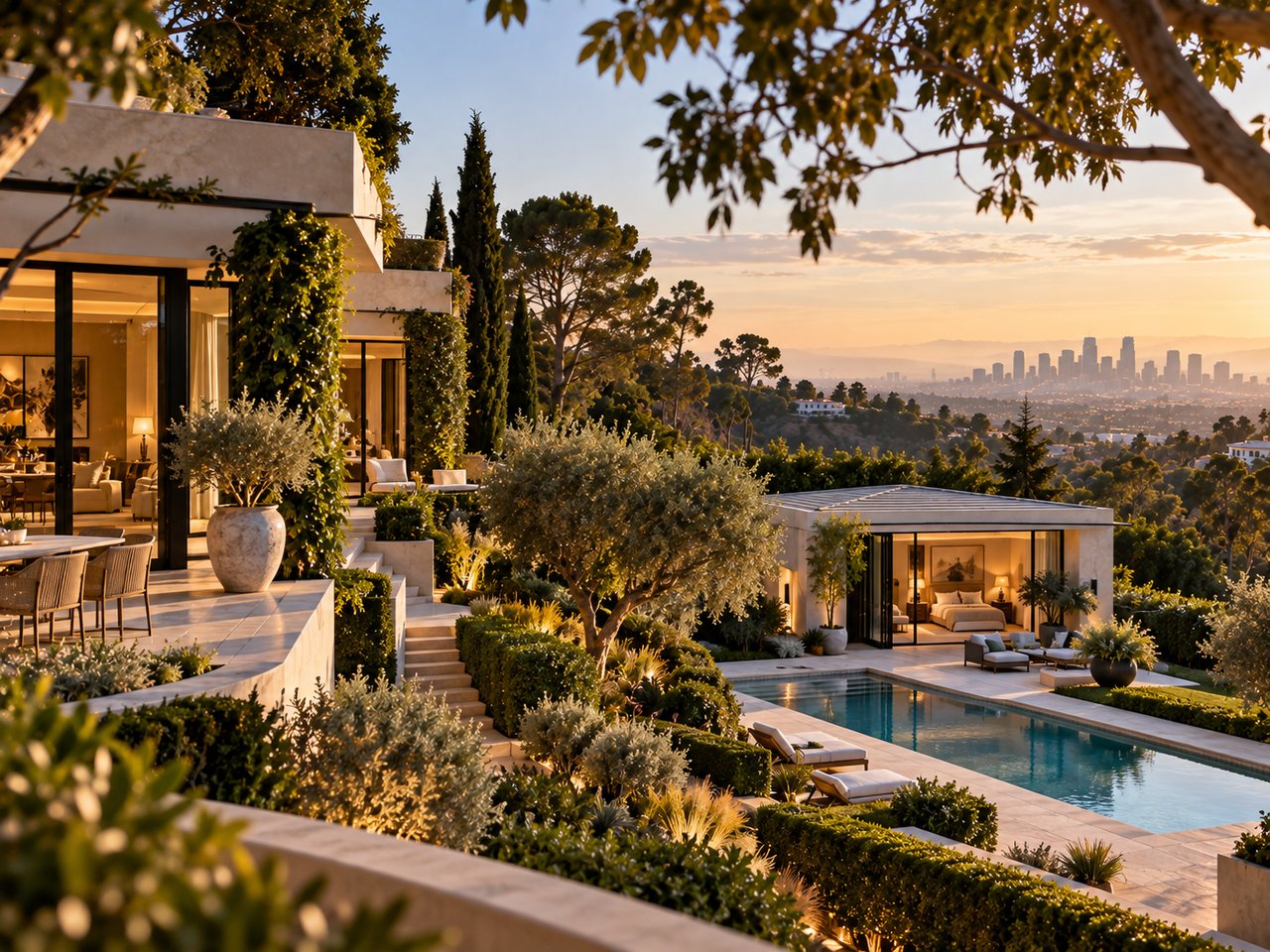
Steep slopes and dramatic overlooks define the Hollywood Hills terrain, where homes occupy ridgelines, canyon edges, and elevated positions that command uninterrupted sightlines across Los Angeles. This geography provides advantages flat lots cannot replicate: expansive views, increased privacy, and the capacity to create layered architectural forms that appear sculptural against the hillside.
Elevated positioning allows architects to design panoramic glass walls overlooking city lights or mountain ranges, multi-level living spaces that follow natural terrain, and cantilevered balconies extending outward from slopes. Traditional construction typically levels terrain to accommodate buildings, but hillside architecture in la hollywood hills responds directly to existing topography. Homes either sit atop slopes, embed into them, float above on supports, or cantilever outward—each strategy creating distinct visual drama.
Access determines how residents experience properties. Winding streets follow natural contours, and entry points influence whether main living spaces occupy upper or lower levels. Much of the Hollywood Hills sits within Very High Fire Hazard Severity Zones, adding regulatory complexity to foundation work, grading strategies, and drainage planning. These technical requirements shape how modern structures interact with slopes, where deep caissons, engineered retaining walls, and strategic water management become foundational to design.
Design elements that make modern homes stand out in dense landscapes
Smart architectural choices separate memorable structures from those that disappear into hillside vegetation. Cantilevered construction addresses steep angles by balancing living spaces on friction piles driven into slopes reaching 45 degrees. The Olancha Drive house in Mount Washington stacked its 1,000-square-foot program vertically rather than horizontally, inverting typical California residential experience. This approach creates floating boxes wrapped in white metal, connected to hillsides through concrete masses that appear sculptural from street level.
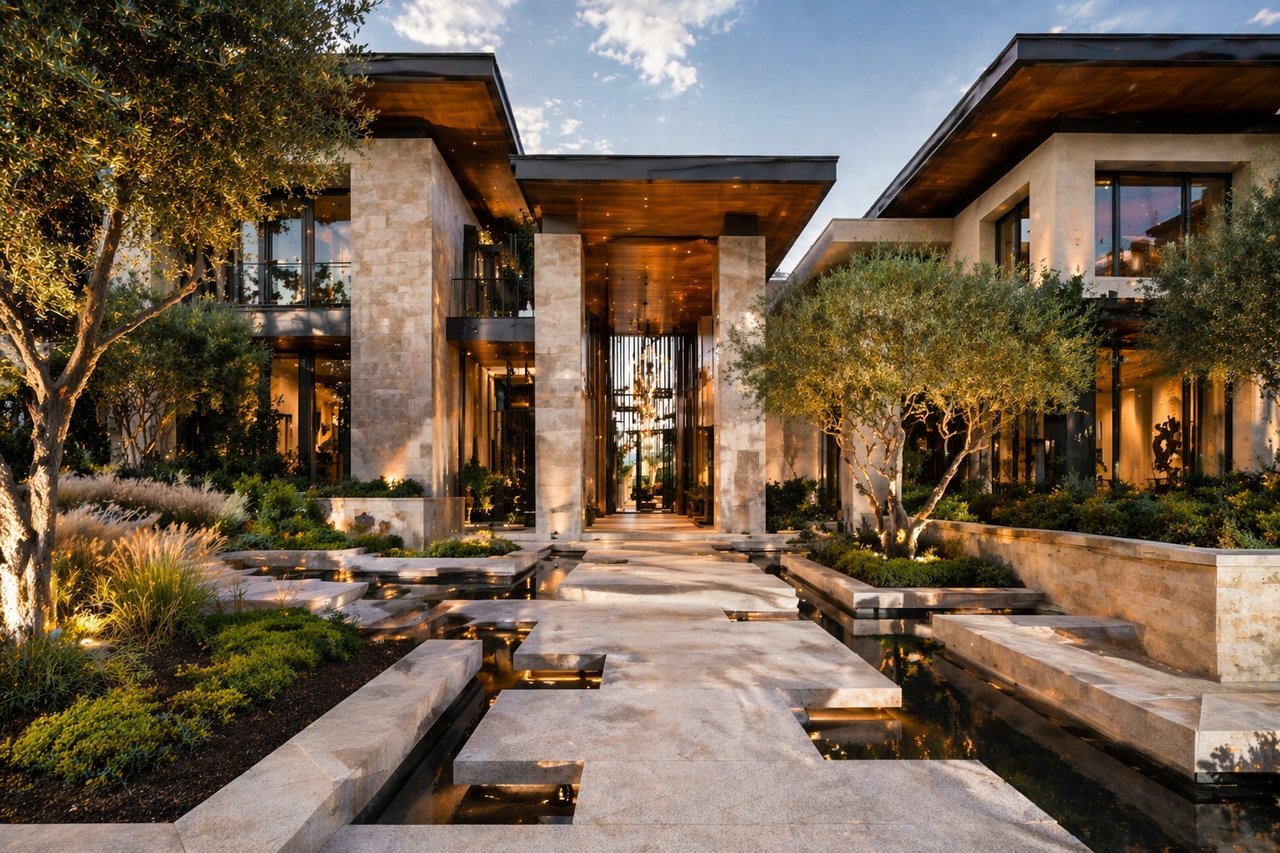
Material choices amplify visual separation. Steel and concrete construction methods relate more closely to commercial building than typical residential wood framing. Mixed materials create depth through intentional contrast: the 60-30-10 rule suggests using one material for 60% of exterior surfaces, a complementary option for 30%, and bold accents for the final 10%. Stone anchors structures with permanence, while metal brings modern edge and wood softens facades with warmth.
Floor-to-ceiling glass dissolves barriers between interior spaces and Los Angeles skylines. Expansive glazing frames high desert views while connecting residents directly to surrounding environments. Some installations feature 30-foot tall by 10-foot wide seamless panes linking multi-story stairwells to outdoor landscapes. Horizontal lines strengthen this connection to earth, conveying stability through widely spaced panels and board-formed concrete that wraps entire structures.
For those who love to entertain, the right home makes all the difference. If you're considering a purchase in the near future or beginning your search, I'd be delighted to help you discover spaces designed for elevated living and effortless hosting. Christina Pope  310-404-9931
  [email protected]
The mid century LA legacy that defined visual contrast
Luxury real estate in Los Angeles moves through private networks and careful timing rather than public exposure. The finest properties in la hollywood hills often change hands within established relationships where discretion and market knowledge determine success. Those who understand this approach recognize that architectural heritage directly impacts value and desirability.
Between 1945 and 1966, the Case Study House program commissioned architects to design affordable, innovative residences for postwar housing needs. These experimental buildings created visual principles that still define hollywood hills mid century modern architecture. Richard Neutra, Pierre Koenig, Charles and Ray Eames developed structures where clean lines, post-and-beam construction, and floor-to-ceiling glass became signature elements.
Intentional contrast became the defining approach. Architects deliberately combined solid and void, heavy and light, opaque and transparent materials to establish focal points and visual hierarchy. The Stahl House, completed in 1960 by Pierre Koenig, demonstrates this strategy with its steel frame and dramatic cantilever floating above Los Angeles. Lucille Raport, who trained under Neutra, used these same principles for her 1954 Franklin Hills residence, where wraparound balconies and floor-to-ceiling glass capture canyon views.
Christina Pope—Sotheby's International Realty
EliteResidenceInternational.com
Conclusion
Modern architecture in Hollywood Hills achieves visual impact through thoughtful response to terrain rather than scale alone. Cantilevered forms, mixed materials, and expansive glazing separate these homes from dense hillside vegetation, while mid-century design principles continue shaping contemporary contrast. For those who love to entertain, the right home makes all the difference, and Christina Pope helps discover spaces designed for elevated living and effortless hosting at 310-404-9931 or [email protected].
Key Takeaways
Modern homes in LA's Hollywood Hills achieve striking visual prominence through strategic architectural design that responds to the area's unique layered topography and builds on decades of mid-century modernist principles.
• Terrain drives drama: Steep slopes and elevated positions create natural advantages for panoramic views, privacy, and sculptural architectural forms that appear to float above the landscape.
• Material contrast creates separation: The 60-30-10 rule using steel, concrete, and wood with floor-to-ceiling glass helps modern homes stand out against dense hillside vegetation.
• Mid-century legacy defines modern appeal: Case Study House principles from 1945-1966 established clean lines, post-and-beam construction, and planned contrast that still influence today's most compelling Hollywood Hills properties.
• Cantilevers maximize impact: Suspended volumes and floating boxes connected by concrete masses create sculptural presence while addressing steep terrain challenges up to 45-degree slopes.
Understanding these design principles reveals why certain Hollywood Hills homes command attention and premium prices while others blend into the hillside, making architectural knowledge essential for both buyers and sellers in this prestigious market.
FAQs
Q1. What makes Hollywood Hills an attractive neighborhood for luxury homebuyers? Hollywood Hills is one of the most sought-after and affluent communities in Los Angeles, offering residents the natural beauty of Southern California combined with easy access to the Valley, West Side, and other major metropolitan areas. The neighborhood's elevated terrain provides privacy, panoramic views, and unique architectural opportunities that appeal to discerning buyers.
Q2. What architectural styles are most common in Los Angeles homes? Los Angeles features diverse architectural styles including Spanish Revival (1920s-1930s), Craftsman (1900s-1920s), Mid-Century Modern (1945-1975), Ranch Style (1950s-1970s), Victorian (1880s-1910s), Tudor Revival (1920s-1940s), Cape Cod & Coastal Cottage (1930s-1950s), and Contemporary/New Construction (1990s-Present). Each style reflects different eras of the city's development.
Q3. Why do modern homes in Hollywood Hills use mixed materials like steel, concrete, and wood? Mixed materials create visual depth and help modern homes stand out against dense hillside landscapes. Strategic material selection—using steel for modern edge, concrete for permanence, and wood for warmth—creates intentional contrast that separates memorable structures from those that blend into vegetation while responding to the area's steep terrain.
Q4. How do cantilevered designs work on steep Hollywood Hills slopes? Cantilevered construction balances living spaces on friction piles driven into slopes that can reach 45-degree angles. This approach creates floating boxes that appear sculptural from street level, connected to hillsides through concrete masses. The technique maximizes views and usable space while addressing the challenging vertical terrain.
Q5. What is the Case Study House program's influence on Hollywood Hills architecture? The Case Study House program (1945-1966) commissioned architects like Richard Neutra and Pierre Koenig to design innovative residences that established visual principles still defining Hollywood Hills modern architecture today. These experimental structures introduced clean lines, post-and-beam construction, floor-to-ceiling glass, and planned contrast between solid and void elements that continue influencing contemporary designs.