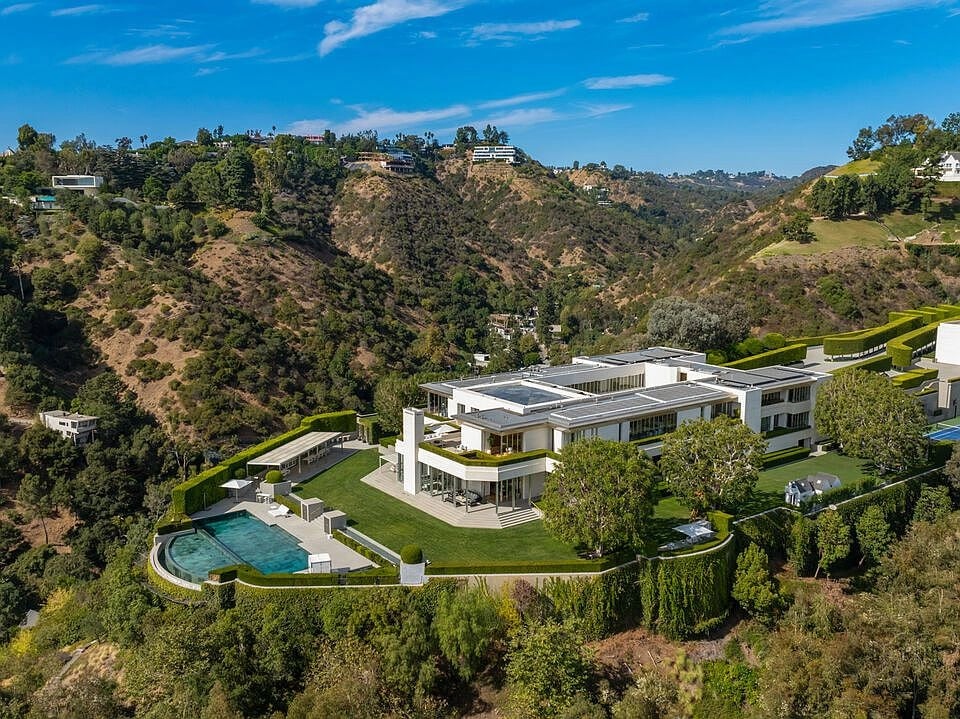
The Beverly Hills average home price sits at approximately $5 million as of mid-2025, yet this figure reveals little about what drives value in one of the world's most exclusive markets. Luxury real estate here doesn't follow conventional pricing models. In fact, Beverly Hills California mansions in areas like Trousdale Estates and Billionaire's Row command $50 million to $200 million regularly. Beverly Hills house prices fluctuate based on factors most buyers overlook. Street frontage, lot width, and block positioning create hidden premiums that separate informed buyers from those relying solely on median data. How location specifics influence the average cost of a house in Beverly hills and what discrete buyers should assess before positioning an offer is what we get into here.
Understanding Beverly Hills House Prices Today
Luxury real estate in Beverly Hills operates differently from conventional markets. The most significant transactions unfold quietly within trusted circles, where discretion carries as much weight as capital. So published medians reveal only part of the pricing landscape. Visibility is secondary to precision for those who understand this world.
Average cost of a house in Beverly Hills by neighborhood
Beverly Hills house prices vary by neighborhood positioning. Beverly Hills Gateway commands the highest premiums, with homes averaging $10.5 million. The area crossed the $12 million threshold for typical properties in recent months. The Flats maintain an average around $9.1 million, while Trousdale Estates sits at approximately $8.2 million.
Golden Triangle presents a different profile. Residential properties here average $1.55 million despite housing Rodeo Drive and the world's most exclusive retail corridor. This pricing reflects smaller condominiums and mixed-use buildings rather than sprawling estates. Roxbury Park averages $3.1 million, whereas La Cienega Park and Southwest Doheny both hover near $2 million.
ZIP code analysis reveals additional stratification. The 90210 designation carries a median around $7.95 million, well above 90212's $2.4 million median. The 90211 ZIP code shows the lowest median at $1.79 million. This reflects a higher concentration of condominiums and smaller residential units.
Single-family homes vs condos and townhomes
Single-family homes and condominiums occupy separate pricing tiers. The median listing price for single-family properties sits at $6.3 million, with a sold median of $5.9 million in recent quarters. These properties declined 32.9% year-over-year in Q4. This reflects market recalibration after unprecedented pandemic-era appreciation.
Condominiums present contrasting dynamics. The median condo price reached $1.6 million in Q4 and gained 7.6% year-over-year. This upward trajectory continues even as single-family properties adjust. Townhomes range between $1.295 million and $3.745 million, with a median sold price around $2.968 million. At the luxury end, a Maybourne penthouse closed near $27 million and carried monthly HOA fees of $11,008.
Recent sales data and pricing trends
Market velocity improved. Homes spent an average of 63 days on market, down from 95 days the previous year. The sales-to-list ratio holds at 97%. This indicates buyers offer close to asking prices in most transactions. Median price per square foot stands at $1,600 and rose 9.85% year-over-year.
April 2024 data showed home sales increased 16.67% to 28 transactions, while new listings jumped 40.32% to 87 properties. The median list price of sold listings surged 89.66%, from $1.997 million to $3.7875 million. Active inventory totaled 356 properties, with citywide median sale prices ranging from $2.98 million for all closings to $6.5 million for current listings. This dispersion reflects sample composition and luxury skew. The fundamental reality is that Beverly hills California mansions in premier blocks trade through private channels before public exposure occurs.
The Street Frontage Premium Explained
Street frontage operates as a multiplier in Beverly Hills property valuation, yet most buyers focus on square footage and interior finishes alone. The physical relationship between a property and its street determines accessibility, privacy potential, and future development options. These factors create measurable price differentials that separate comparable homes by hundreds of thousands or millions of dollars.
How lot width impacts valuation
Frontage length boosts home value in 1,246 of 1,581 counties analyzed nationwide. This measurement refers to the linear feet where a property meets the street, independent of total lot size. Two estates with identical 20,000 square foot lots can trade at different prices when one features 150 feet of street frontage versus another with 75 feet.
Lot width influences subdivision potential and future development rights. Properties with road frontage offer options to subdivide into smaller parcels and increase overall investment value. So buyers evaluating Beverly hills house prices should get into frontage measurements alongside lot dimensions to understand true development capacity.
Street visibility and property exposure
Road frontage creates visibility that affects both commercial and residential valuations. Properties with good frontage offer easier access for daily use and visitor convenience. This visibility contributes to curb appeal and makes properties easier for potential buyers to find.
Busy street locations carry measurable penalties, though. Appraisers report 3% to 5% discounts for interior busy roads and nearly 10% reductions for major arterial locations. The resistance percentage increases with property price range. Budget neighborhoods show 0-5% impact, whereas custom neighborhoods experience 10-15% or greater reductions. Homes on quiet streets command premiums, while cul-de-sac properties sell for around 20% more than those on regular streets.
Setback requirements and buildable space
Building setbacks dictate the required separation between lot lines and structures. These regulations vary by zoning district and structure type and affect usable building space. Setback compliance determines placement of main residences, detached garages, and accessory structures.
Front setback requirements exceed those for side and rear yards in most residential zones. This restriction limits how close to the street a home can sit and reduces buildable area on narrow lots. Properties must determine precise setback measurements early in any development or renovation project.
Front yard depth and landscaping potential
Setback distance matters for properties facing busy roads. A home positioned 100 feet from the street with deep front yard space experiences less traffic impact than one at the curb. Distance provides buffer space for noise mitigation and privacy screening.
Front yard improvements deliver measurable returns. Professional landscaping can increase home value up to 15% for front yard enhancements alone. The American Society of Landscape Architects reports homeowners can add up to 20% property value through strategic landscaping investments. Front yard projects cost less than backyard work while offering stronger returns, making them the quickest value additions for properties with generous street setbacks.
Beverly Hills California Mansions: Street-Specific Value Analysis
Individual streets within Beverly Hills carry distinct pricing dynamics that reflect their commercial positioning, historical character, and proximity to cultural landmarks. Street addresses here signal more than location—they communicate lifestyle alignment and investment thesis.
Rodeo Drive and commercial street premiums
Rodeo Drive represents the pinnacle of high-end retail real estate. A recent property sale leased to Tom Ford, Moncler, and Balenciaga fetched over $400 million and established a record at $14,228 per square foot. This transaction marked the second-highest single-property deal in Beverly Hills history.
Commercial rents on Rodeo Drive climbed to $1,100 per square foot in 2024, up 19% year-over-year. This rate trails only New York's Fifth Avenue and exceeds the global average rental growth of 4%. The street maintains full occupancy save for one LVMH-owned property.
Luxury conglomerate LVMH owns roughly half the block and acquires properties to control brand positioning. Notable transactions have LVMH's $245 million purchase of a 22,270-square-foot double lot at 468 North Rodeo Drive ($11,001 per square foot) and its $110 million acquisition of a 6,200-square-foot property at 456 North Rodeo Drive ($17,742 per square foot). Chanel combined two lots purchased for $252 million to build its 30,000-square-foot flagship at 400 North Rodeo Drive.
North Canon Drive and residential elegance
Canon Drive maintains residential character despite proximity to Rodeo Drive's commercial intensity. Properties here benefit from adjacency to the Los Angeles Country Club and Beverly Hills Hotel. Brokers call this "residential elegance with retail access."
The street represents Beverly Hills's knowing how to maintain distinct neighborhood characters within blocks of each other. Canon Drive homes avoid the commercial premiums and traffic patterns of Rodeo Drive while preserving walkability to luxury retail.
Sunset Boulevard: Entertainment district positioning
Sunset Boulevard properties command premiums for estate-scale lots bordering the Los Angeles Country Club. One listing features a 7,885-square-foot single-story home on a 42,550-square-foot lot with parking for over 20 cars and golf course views. Another estate spans one acre with tennis courts, pool house, and direct fifth fairway sightlines.
These properties deliver entertainment district positioning. They combine proximity to Hollywood's infrastructure with country club privacy. The boulevard attracts entertainment moguls and high-profile investors seeking both industry access and residential seclusion.
Maple Drive and quiet luxury streets
Maple Drive exemplifies quiet luxury through restored historic estates. A 9,000-square-foot 1930s Italian Villa showcases restoration that blends original elegance with contemporary amenities. The property has five bedrooms, eight bathrooms, a separate two-bedroom guest house, and five-car garage.
The street maintains residential tranquility while positioning owners within Beverly Hills's most iconic neighborhood. The right home makes all the difference for those who love to entertain. Christina Pope would be delighted to help you find spaces designed for lifted living and effortless hosting if you're beginning your search or thinking over a purchase in the near future.  310-404-9931
  [email protected]
Beverly Park Circle and Beverly Park Terrace represent the city's absolute peak, with median home values of $16,489,565 and $15,813,337 respectively. They rank as America's second and third most expensive streets.
Hidden Costs and Value Drivers Most Buyers Miss
Buyers evaluating Beverly Hills house prices often examine purchase figures while underestimating the recurring financial obligations tied to specific street locations. These hidden costs compound annually and alter the true cost of ownership by tens or hundreds of thousands of dollars over a typical holding period.
Assessment district fees by street location
Special fees get levied on properties within defined geographic boundaries to fund infrastructure improvements, street maintenance, or community enhancements. Assessment districts impose these charges. They appear separate from standard property taxes and vary by block positioning. Two properties with similar Beverly hills home price points can carry very different annual obligations based solely on which assessment district governs their location.
Street maintenance and HOA considerations
HOA fees nationwide average $200 to $300 monthly, though they range from $100 to $1,000 depending on amenities and services. Beverly Hills california mansions see these figures escalate. Coverage typically has common area maintenance, landscaping, insurance for shared structures, reserve fund contributions and administrative expenses.
Hidden costs of homeownership reached $15,979 annually nationwide as of late 2024. Insurance premiums jumped 72% between 2019 and 2024, hitting $201 monthly for typical single-family homes. Property taxes surged 31% during the same period. Nearly 39% of single-family homes now carry HOA obligations, up from 31% in 2019.
These secondary costs squeeze homeowners of all income levels. Among borrowers spending 13.3% or more of housing costs on insurance premiums, nearly 8% fell behind on mortgage payments by at least one month. Rising insurance, maintenance and tax obligations outpaced household income growth, climbing 4.7% versus 3.8%.
Future development rights on your block
Development rights determine what can be built on adjacent parcels. California's density bonus laws and recent legislative changes shift control from municipalities to state mandates, affecting neighborhood character and traffic patterns. Properties positioned on blocks with undeveloped lots face uncertainty regarding future construction scale and density.
Easements and shared access agreements
Easements grant legal rights to use another person's property for specific purposes. Utility easements allow companies to install and maintain infrastructure. Public easements provide street and sidewalk access. Private easements often involve shared driveways between neighbors.
These agreements transfer with property ownership and restrict development options. Property owners cannot erect structures that interfere with utility lines or block access routes required by easement terms. Shared driveway agreements specify maintenance responsibilities, snow removal obligations and usage restrictions. Easements appear in county property records and remain binding whatever ownership changes occur.
How to Position Your Offer in a Private Market
Most meaningful transactions in Beverly Hills unfold through private channels where strategic positioning matters more than published asking figures. Pricing psychology reveals seller's motivation, market positioning, and negotiation flexibility before conversations begin.
Reading between the lines on pricing
Price communicates market positioning, rarity, and confidence rather than mere valuation. Luxury buyers prioritize lifestyle alignment, privacy, and design pedigree over payment structures. Then, properties priced conservatively may signal distress or undermine perceived value. Strategic price anchoring introduces properties at levels that reflect their stature and attract qualified global buyers.
The role of discretion in luxury transactions
Many exceptional properties never reach public platforms. Off-market sales preserve privacy and create exclusivity that increases perceived value. Sellers choose this path to protect confidentiality and maintain transaction control. Buyers undergo screening, and properties are presented only to qualified clients through private listings. Access depends on relationships and requires demonstrated serious intent with financial readiness.
Building relationships before properties surface
Working with experienced agents provides access to curated listings unavailable publicly. These professionals maintain networks built through years of discrete transactions. Agent-to-agent referral networks alone generate up to $50,000 annually, which incentivizes relationship cultivation in markets.
Conclusion
The Beverly Hills average home price provides a starting point. Yet street frontage, setback depth and block positioning create value differentials that separate informed buyers from those relying on median data. Properties on the same street can trade millions apart based on lot width, assessment district obligations and future development rights. Buyers who assess these discrete factors among published figures position themselves better in negotiations. Agents who understand private market dynamics and maintain relationships before properties surface deliver access to opportunities that never reach public platforms. Value beyond square footage alone drives what matters most.
Key Takeaways
Understanding Beverly Hills real estate requires looking beyond the $5 million average home price to uncover the hidden factors that create dramatic value differences between seemingly comparable properties.
• Street frontage width acts as a value multiplier, with wider lots offering subdivision potential and commanding hundreds of thousands more than narrow properties
• Location-specific costs like assessment district fees, HOA obligations, and easement restrictions can add tens of thousands annually to ownership expenses
• Premium streets like Rodeo Drive command $14,228 per square foot, while quiet luxury streets like Maple Drive offer residential elegance without commercial premiums
• Most high-value transactions occur off-market through private channels, requiring established agent relationships to access exclusive inventory before public listing
• Properties with generous setbacks from busy streets avoid 10-15% value penalties while offering landscaping potential that can increase home value up to 20%
The key to success in Beverly Hills real estate lies in understanding these nuanced factors that separate trophy properties from standard luxury homes, enabling strategic positioning in a market where discretion and relationships often matter more than published asking prices.
FAQs
Q1. What income do you need to afford a home in Beverly Hills? To afford the median Beverly Hills home priced around $5 million, you'd need approximately $1.1 million in annual income, assuming a 20% down payment ($1.04 million) and current mortgage rates around 6.5%. This calculation factors in monthly mortgage payments of roughly $26,300 plus property taxes of about $4,800, totaling over $31,000 monthly. Properties in premium neighborhoods like Trousdale Estates or Billionaire's Row require substantially higher income levels.
Q2. How does street frontage affect property value in Beverly Hills? Street frontage acts as a significant value multiplier in Beverly Hills real estate. Properties with wider lot frontage—measured in linear feet where the property meets the street—command premiums of hundreds of thousands or even millions of dollars compared to narrower lots. Wider frontage offers subdivision potential, better visibility, and enhanced development rights. Conversely, homes on busy streets can see 10-15% value reductions, while properties on quiet cul-de-sacs typically sell for about 20% more than those on regular streets.
Q3. What are the hidden costs of owning a Beverly Hills home? Beyond the purchase price, Beverly Hills homeowners face substantial recurring costs including assessment district fees that vary by street location, HOA fees ranging from hundreds to over $11,000 monthly for luxury properties, property taxes around 1.1-1.4% of assessed value, and homeowners insurance that has increased 72% since 2019. These hidden costs can add tens of thousands annually to ownership expenses and vary significantly based on which specific street and assessment district your property falls within.
Q4. Why do some Beverly Hills properties sell off-market? Many high-value Beverly Hills properties never reach public listings because off-market sales preserve privacy, avoid unnecessary exposure, and create exclusivity that increases perceived value. Sellers choose this approach for confidentiality protection and transaction control, while buyers undergo rigorous screening and must demonstrate serious intent and financial readiness. Access to these exclusive properties depends entirely on established relationships with experienced agents who maintain networks built through years of discrete transactions.
Q5. How much does location on specific streets impact Beverly Hills home prices? Street-specific pricing varies dramatically in Beverly Hills. Commercial properties on Rodeo Drive command over $14,000 per square foot, while residential streets like Maple Drive offer quiet luxury at lower premiums. Beverly Park Circle and Beverly Park Terrace represent the absolute peak with median home values exceeding $16 million. Even within residential areas, properties on streets bordering the Los Angeles Country Club or with golf course views command significant premiums over comparable homes just blocks away.