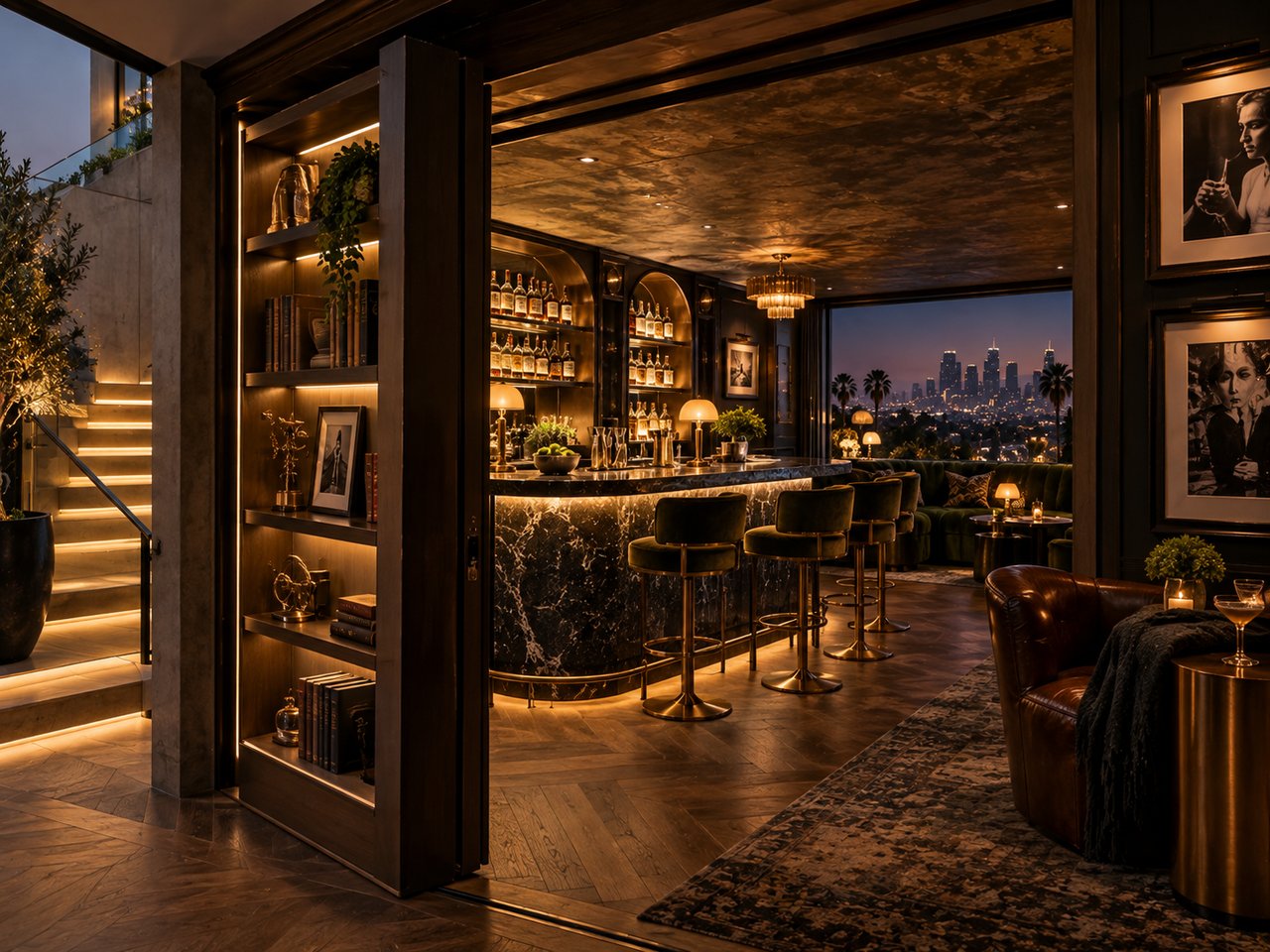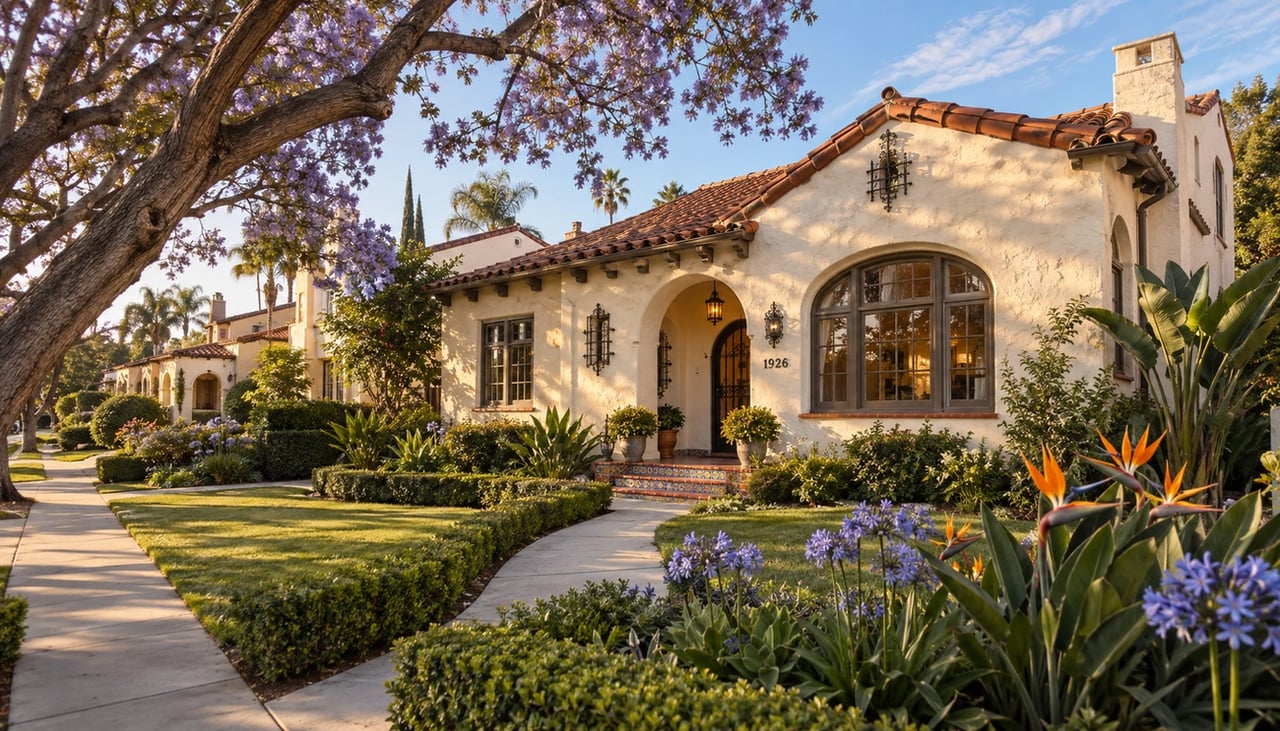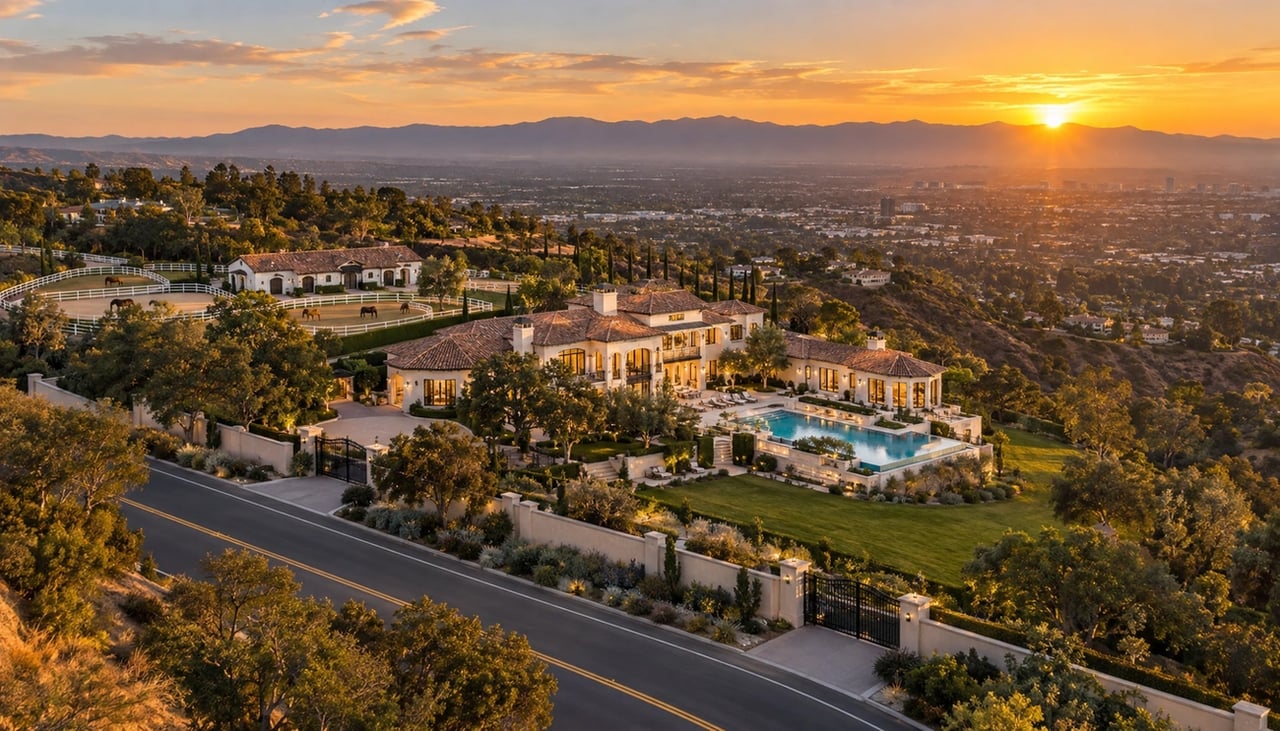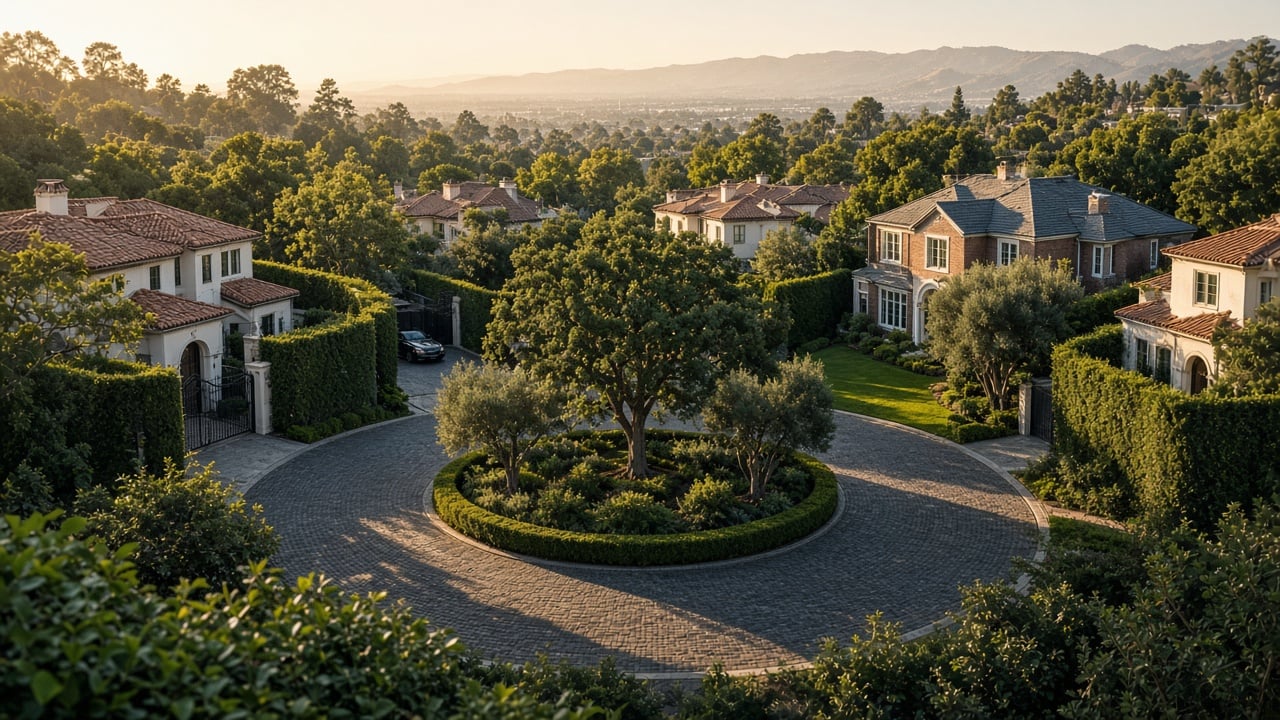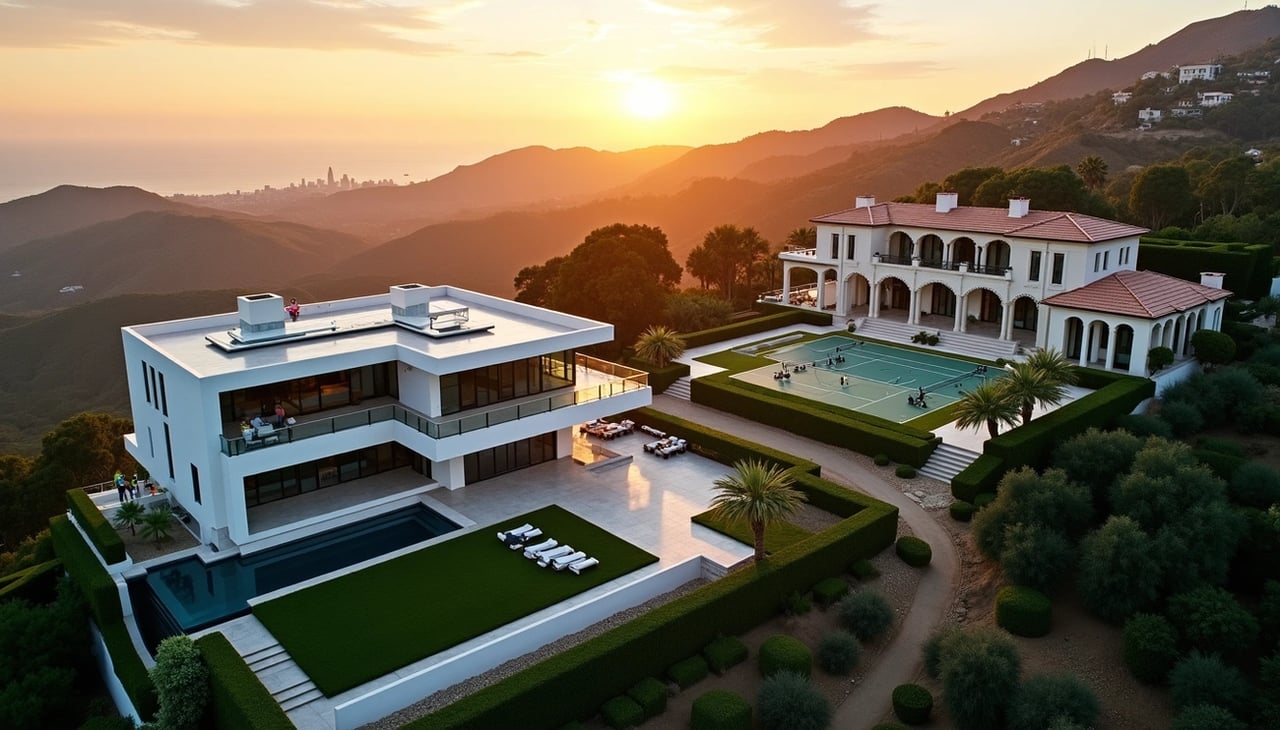
Luxury mansions in Los Angeles have crossed the $100 million mark, with record-breaking sales reaching $110,000,000 in Southern California. These transactions rarely make headlines. The most significant deals happen through private conversations within trusted circles, where discretion matters as much as value.
Ultra-wealthy buyers have changed how they approach luxury real estate acquisitions. Instead of purchasing one grand estate, they quietly combine adjacent properties to create expansive, customized compounds. This assemblage strategy marks a new chapter in how luxury homes in Los Angeles are acquired and developed.
The trend emerges from specific needs: privacy, security, and complete control over one's environment. Concentration areas include Beverly Park and Holmby Hills, where finite inventory makes assemblage the path to achieving true scale. Financial considerations involve complex timing, zoning regulations, and specialized expertise. Together, these factors reveal how the ultra-wealthy are redefining luxury property ownership in Los Angeles.
What Property Assemblage Means in Los Angeles Luxury Real Estate
Defining Property Assemblage in High-End Markets
Property assemblage refers to combining two or more adjacent parcels into a single, larger estate. The process proves time-consuming and complicated, with complexity increasing exponentially based on the number of parcels and owners involved. What drives this strategy is a phenomenon called plottage: the combined property typically sells for more than the sum of its individual parts.
Larger, unified parcels create development potential impossible on fragmented lots. Assemblage unlocks higher density options, more efficient layouts, and increased marketability. The financial mathematics work in favor of buyers. Four parcels worth $100,000 each can combine into one assemblage exceeding $500,000 in value.
How Ultra-Wealthy Buyers Combine Adjacent Estates
Substantial capital and patience define the acquisition process. Buyers often wait years to acquire surrounding parcels, monitoring listings or approaching property owners directly. Specialized agents don't rely on listings alone. They actively convert non-sellers with offers substantially above market value. One Malibu client paid nearly double for an adjacent lot valued at $6 million, creating a compound worth more than the separate properties.
Confidentiality remains critical throughout assemblage deals. Sellers who learn about larger development plans can escalate prices dramatically. Holdout owners gain tremendous leverage, knowing buyers need their property to complete the assemblage. High-profile examples demonstrate the scale: Jeff Bezos spent over $200 million on three properties on Indian Creek, while Eric Schmidt invested $114 million buying at least five adjacent homes on Sunset Islands since 2020.
The Shift from Single Mega Mansions to Multi-Parcel Ownership
Ten years ago, combining properties was extremely rare. The ultra high-end market has changed fundamentally. Bel Air contained perhaps two or three compounds a decade ago. Today, at least nine exist. Agents report unprecedented activity levels in compound acquisitions.
Privacy now outweighs singular architectural statements for discerning buyers. Some tear down well-known homes specifically for expanded boundaries and buffer zones. Celebrities including Brad Pitt, Angelina Jolie, and Ben Stiller have assembled multi-parcel compounds to escape paparazzi. The trend concentrates in Beverly Hills, Bel Air, Holmby Hills, Malibu, and Pacific Palisades, where finite coastline and limited inventory make assemblage the only path to achieving true scale.
Why Ultra-Wealthy Buyers Are Choosing Property Assemblage
Privacy and Security Through Expanded Boundaries
Research from Knight Frank shows that privacy is the number one concern for high-net-worth individuals when selecting a home, with security following closely behind. More than 55% of real estate agents surveyed said security is taking on heightened importance for their clients, with that number jumping to 67% among agents in the United States.
Expanded boundaries through property assemblage create physical distance from public roads, neighboring homes, and unwanted attention. High-net-worth individuals demand control over their environment. Owning and controlling every adjoining parcel removes unpredictable neighbors and enables full customization.
Creating Custom Amenity Compounds
The ultra-wealthy expect hotel-level amenities for their homes, and developers are working to meet these expectations. Luxury living now includes plunge pools, recovery stations, infrared therapy, salt rooms, libraries, cinemas, lounges, co-working spaces, and expansive outdoor areas.
Assemblage allows buyers to create entire property ecosystems rather than single homes. Owning the full contiguous footprint gives architects freedom to plan gardens, sightlines, circulation, and expansions impossible on a single lot. California clients are increasing their overall renovation and building budgets by 20% to 30% specifically for additional amenities.
Future-Proofing Estate Expansion
Super-compounds can be passed down through generations as an estate. Rather than a single home, buyers invest in a property ecosystem that can evolve over time. The focus has shifted to the most complete property with room, privacy, and flexibility.
Investment Strategy and Land Banking
Land banking represents a long-term strategy in real estate, encompassing the acquisition of undeveloped land with the primary expectation of future value appreciation. Cities expand, and undeveloped plots near metros and industrial zones gain massive value. Some cases show land values have increased by 10x to 100x over two decades.
Where Property Assemblage Is Happening in Los Angeles
Beverly Park and Holmby Hills Assemblages
Holmby Hills stands as one of the oldest assemblage markets within the Platinum Triangle. This 400-acre neighborhood, founded in 1919 and divided between North of Sunset and South of Sunset sections, has attracted estate buyers since its earliest days. The Playboy Mansion sale for $100 million in 2016 proved the market's appetite for large, storied properties. Holmby Hills' expansive lots and rolling topography create ideal conditions for combining adjacent parcels into super-estates.
Bel Air Estate Combinations
Bel Air continues to see steady assemblage activity among ultra-wealthy buyers who value privacy within established neighborhoods. The area's proximity to Beverly Hills and Holmby Hills concentrates high-value parcels suitable for combination strategies.
Malibu Beachfront Property Mergers
Post-wildfire Malibu has emerged as a focal point for property assemblage. New Zealand billionaire brothers Nick and Mat Mowbray purchased 16 beachfront lots for over $65 million, planning to rebuild on these combined parcels. A foreign investor similarly acquired nine fire-damaged beachfront lots along Pacific Coast Highway for over $65 million, targeting properties with at least 40 feet of frontage. The wildfires destroyed over 700 homes in Malibu, including 300 beachfront properties. Malibu City Councilman Steve Uhring has voiced concerns that wealthy developers will combine lots to build 20,000-square-foot homes serving as second or third residences rather than primary homes.
Pacific Palisades Multi-Lot Acquisitions
Pacific Palisades shows limited multi-lot assemblage activity compared to Malibu. Multi-lot sales from syndicates remain rare, with only one entity acquiring three lots. Palisades lots averaging 8,255 square feet sell for approximately $2.3 million, trading 9% below list price. Various buyers have invested over $84 million across Altadena, Malibu, and the Palisades.
The Financial and Legal Considerations of Combining Luxury Mansions in Los Angeles
Luxury real estate in Los Angeles operates through private networks where timing and legal precision determine success far more than public listings.
Acquisition Timing and Market Conditions
Market timing in high-end real estate requires surgical precision. Luxury properties amplify economic conditions. Stock market surges can drive prices up 30-50% within months. Conversely, a $10 million estate might lose 40% of its value during market corrections as qualified buyers disappear. Properties can sit unsold for years when timing fails, generating thousands in monthly maintenance costs without income or appreciation.
Zoning and Development Regulations
Los Angeles uses residential zoning classifications including R1, RA (residential agriculture), and RE (residential estate) for single-family properties. California merger procedures require formal ordinances protecting landowner due process rights, including notification and public hearings. Subdivided lands can be merged and resubdivided by complying with applicable subdivision requirements.
Property Tax Implications
Combining parcels may trigger reassessment by county appraisers, potentially changing assessed values based on property characteristics and market conditions. High property taxes represent significant annual expenses affecting cash flow and investment returns.
Working with Specialized Luxury Real Estate Advisors
Tax professionals specializing in luxury real estate provide tailored advice for local tax laws and identify savings opportunities. For those considering luxury mansions in Los Angeles for sale or beginning searches for luxury homes in Los Angeles, working with experienced advisors proves essential. Christina Pope at Sotheby's International Realty offers expertise in these complex transactions. Contact Christina at 310-404-9931 or [email protected] to discover properties designed for elevated living.
Conclusion
Property assemblage represents the future of ultra-luxury ownership in Los Angeles. These multi-parcel estates deliver privacy, customization, and long-term value that single properties cannot match. The process requires patience, substantial capital, and specialized expertise.
Christina Pope at Sotheby's International Realty has guided clients through these intricate acquisitions, understanding that discretion and timing matter as much as financial capability. Her experience with high-net-worth individuals who value privacy and seek properties that reflect their lifestyle expectations makes her uniquely positioned to handle assemblage opportunities.
For those ready to explore compound possibilities, Christina can be reached at 310-404-9931 or [email protected]. Visit EliteResidenceInternational.com to connect with opportunities where precision and trusted relationships create exceptional outcomes.
Key Takeaways
Ultra-wealthy buyers in Los Angeles are revolutionizing luxury real estate by combining adjacent properties into expansive compounds, prioritizing privacy and customization over single mega-mansions.
• Property assemblage creates exponential value: Combined parcels typically sell for more than the sum of individual parts, with some buyers paying double market value to complete assemblages.
• Privacy drives the trend: Over 55% of luxury agents report security as a top concern, making expanded boundaries and buffer zones essential for high-net-worth buyers.
• Strategic locations dominate activity: Beverly Park, Holmby Hills, Bel Air, and post-wildfire Malibu lead assemblage deals, with some buyers acquiring 9-16 adjacent lots.
• Complex timing and expertise required: Market timing can affect luxury values by 30-50%, while zoning regulations and tax implications demand specialized legal and financial advisors.
• Investment strategy beyond homes: Assemblage serves as land banking for generational wealth, creating property ecosystems that can evolve and appreciate over decades.
This trend represents a fundamental shift from acquiring singular architectural statements to building private compounds that offer complete environmental control and long-term investment potential.
FAQs
Q1. What exactly is property assemblage in luxury real estate? Property assemblage is the strategic process of combining two or more adjacent parcels into a single, larger estate. This approach creates what's known as "plottage value," where the combined property is worth more than the sum of its individual parts. The unified parcel allows for development potential, more efficient layouts, and customization options that would be impossible on fragmented lots.
Q2. Why are ultra-wealthy buyers choosing to combine properties instead of buying single mega-mansions? Privacy and security are the primary drivers, with over 55% of luxury real estate agents reporting these as top concerns for high-net-worth clients. Combining adjacent properties creates physical distance from public roads and neighbors, provides complete environmental control, and allows buyers to design custom amenity compounds with hotel-level features. It also serves as a long-term investment strategy that can be passed down through generations.
Q3. Which Los Angeles neighborhoods are seeing the most property assemblage activity? The trend is concentrated in Beverly Park, Holmby Hills, Bel Air, Malibu, and Pacific Palisades. Holmby Hills has been an assemblage market since its founding in 1919, while post-wildfire Malibu has seen particularly aggressive activity with buyers acquiring 9-16 beachfront lots. These areas offer finite coastline, limited inventory, and large parcels suitable for combination strategies.
Q4. What are the main financial challenges of combining luxury properties? Buyers face several hurdles including acquisition timing (luxury values can swing 30-50% based on market conditions), significantly higher purchase prices (some pay double market value for adjacent lots), property tax reassessments, and complex zoning regulations. The process requires substantial capital, patience spanning years, and specialized legal and financial advisors to navigate California's merger procedures and tax implications.
Q5. How much are buyers typically spending on property assemblages in Los Angeles? Investment levels vary dramatically based on location and scale. High-profile examples include buyers spending over $200 million on three properties, $114 million on five adjacent homes, and over $65 million on 16 beachfront lots in Malibu. Individual adjacent parcels can command premiums of nearly double their market value, with one buyer paying close to $12 million for a lot valued at $6 million to complete their compound.