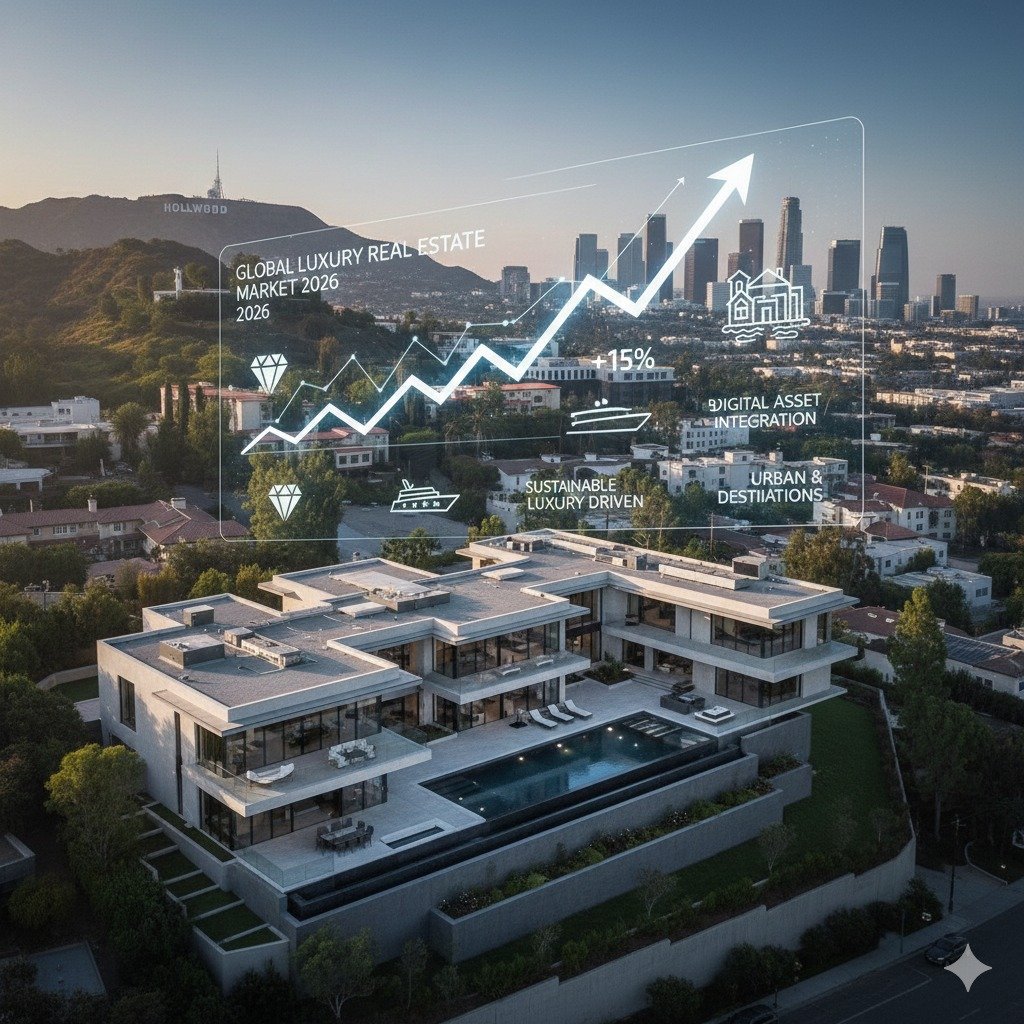
Housing Market Trends 2026: What Luxury Buyers Won't Tell You
The luxury housing market presents a stark financial reality for 2026. High-end buyers—those representing the top 5% of the market—face minimum expenditures of $2 million, a significant jump from $1.3 million in 2025. Ultra-luxury territory demands even more: entering the top 1% now requires just under $5.5 million, an amount 12.6 times the median list price.
General real estate expects modest appreciation of one to two percent nationally, yet luxury property follows its own trajectory. The ultra-wealthy market shows remarkable expansion, with approximately 510,810 ultra-high-net-worth individuals worldwide commanding nearly $60 trillion in wealth. These buyers view property beyond mere shelter—each acquisition represents legacy building, wealth preservation, and strategic positioning across multiple markets.
The 2026 market holds particular fascination not for what luxury buyers announce publicly, but for the priorities that actually drive their decisions. These sophisticated purchasers increasingly demand fully renovated and fully furnished properties, frequently engaging in competitive bidding for turnkey residences. Many of the most coveted transactions never appear on public listings, occurring instead through private networks, strategic timing, and carefully guarded access.
What luxury buyers won't say—but always do
Luxury real estate reveals buyer psychology that rarely appears in market reports. Ultra-wealthy purchasers operate with consistent preferences that drive their decisions, regardless of public statements or conventional wisdom.
They value privacy over publicity
Discretion ranks as the affluent buyer's primary requirement. These purchasers avoid properties with extensive marketing or publication features. Private networks and exclusive listings capture their attention instead. Luxury transactions frequently happen through trusted advisor conversations rather than open bidding processes. When everyone knows a property exists, its appeal often diminishes—exclusivity and privacy matter more than any other consideration.
They shop emotionally, not just logically
Shrewd business reputations aside, luxury buyers make surprisingly emotional property decisions. Investment analysis may be thorough, but final choices depend on intangible responses. Light filtering through trees or the feeling of a space at sunset often determines the winner over superior specifications on paper. This emotional connection explains premium pricing for certain properties while similar nearby options cost substantially less.
They want homes that reflect their identity
High-net-worth individuals see residences as extensions of personal brand. Architecture and location matter, but these buyers seek properties that tell their story. Tech entrepreneurs gravitate toward cutting-edge smart homes with sustainable features. Traditional business leaders prefer historic estates with impeccable provenance. Luxury buyers want homes that communicate values, achievements, and aspirations without explanation. The residence serves as both sanctuary and statement—personal identity displayed for select audiences.
Successful luxury agents recognize these unspoken priorities and respond accordingly, knowing when to emphasize privacy features versus statement potential—insights that prove valuable for predicting market directions.
The hidden preferences shaping 2026 real estate trends
"Sustainability is no longer optional—it's expected in luxury real estate." — Roh Habibi, Luxury real estate expert and blogger at Roh Habibi
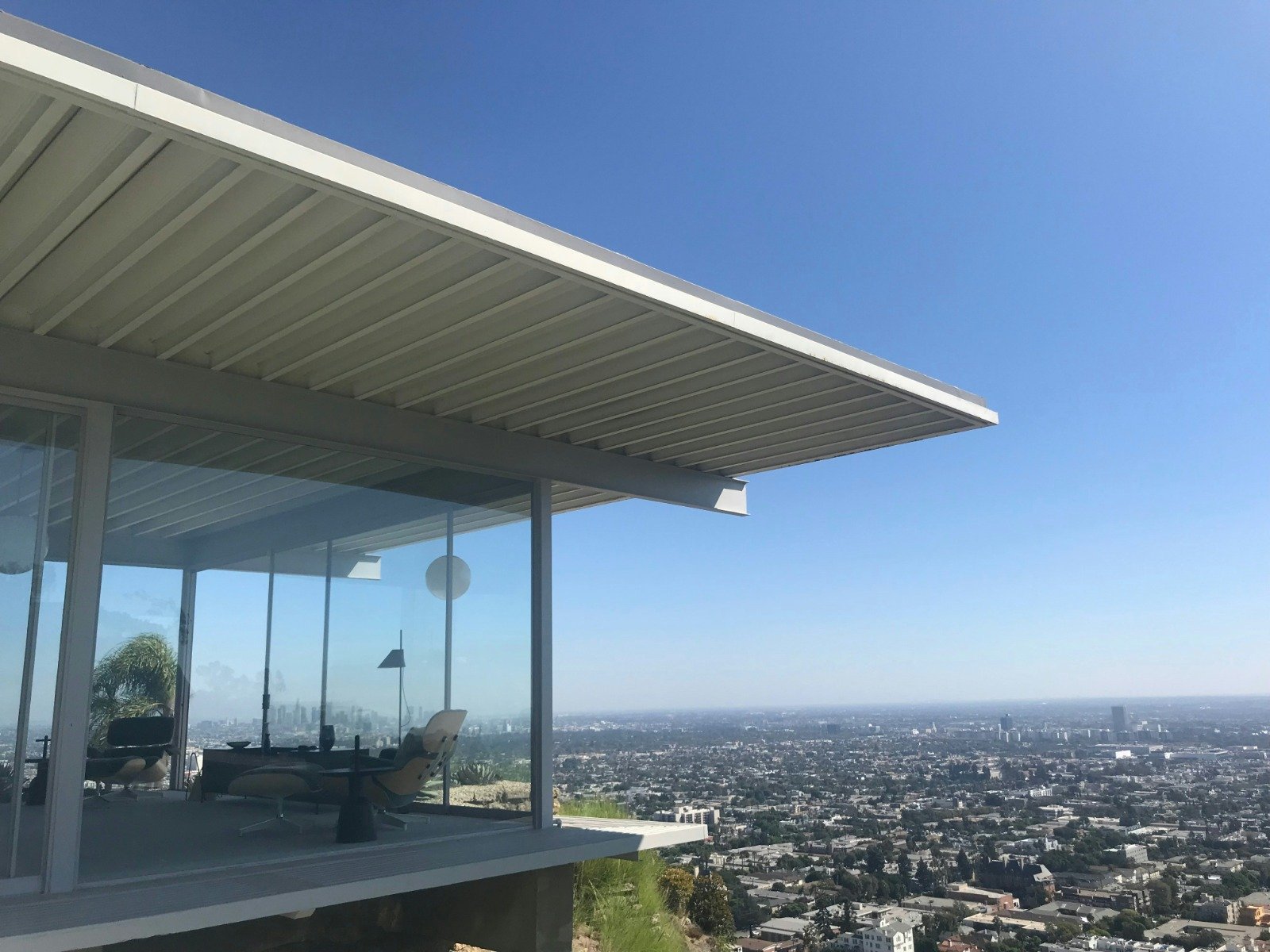
"Sustainability is no longer optional—it's expected in luxury real estate." — Roh Habibi, Luxury real estate expert and blogger at Roh Habibi
Luxury homebuyers continue to refine their expectations for 2026, creating market shifts that extend far beyond published reports. Their evolving preferences now define what constitutes truly desirable real estate at the highest levels.
1. Unique design over generic luxury
Mass-produced luxury has lost its appeal. Today's buyers actively pursue homes with distinctive character rather than predictable modern aesthetics. Top brokers observe that "Design has always mattered, but its importance is accelerating. Years of new development have delivered interiors that look increasingly identical... What once felt modern and clean now feels predictable". Properties featuring thoughtful, experiential design and authentic materials secure stronger pricing as buyers reject standard luxury for homes with genuine personality.
2. Seamless smart home integration
The 2026 luxury residence showcases technology that enhances life without dominating space. Professional integrators install systems like Lutron, Crestron or Josh.ai where homeowners manage everything from a single hub—eliminating banks of switches or visible panels. Hidden speakers, in-wall controls, and designer faceplates maintain aesthetic integrity. Luxury buyers also expect comprehensive pre-wiring during construction, establishing infrastructure that accommodates future technology without major renovations.
3. Wellness spaces as essentials
Former amenities have become requirements. The wellness real estate market reached USD 584 billion in 2024 and projects growth to USD 1.1 trillion by 2029. High-end properties now include dedicated recovery suites with cold plunges, infrared saunas, meditation rooms, and circadian lighting systems. These spaces serve as central value propositions rather than simple add-ons, reflecting buyers' commitment to physical and mental well-being.
4. Sustainability as a status symbol
Environmental consciousness has evolved from nice-to-have into luxury necessity. Green-certified premium properties command 10–15% higher sale prices than standard buildings. These homes also deliver 20–30% savings in energy use with comparable reductions in water and maintenance costs. Affluent buyers now view sustainable features as both status indicators and smart investments, aligning values with financial prudence.
5. Local character blended with modernity
Buyers increasingly prefer properties that respect local heritage and environment. Mountain resort communities feature rustic timber homes that complement alpine settings. Historic regions attract attention through Victorian and traditional architecture valued for character and craftsmanship. New construction often reflects established regional styles while incorporating contemporary amenities—creating residences that feel authentic to their location while providing modern convenience.
6. Move-in readiness over renovation potential
"Move-in ready" now typically means fully renovated and completely furnished. The global ready-to-move-in luxury homes market stands at USD 425.30 billion in 2025 and expects to reach USD 733.60 billion by 2032, growing at 8.1% annually. Luxury single-family homes sell at 98.6% of list price, demonstrating sustained demand despite premium pricing. Rising construction costs reinforce this preference as buyers avoid renovation complications.
7. Off-market deals for exclusivity
Approximately 15% of transactions in upscale markets like Marin County complete without public exposure. The National Association of Realtors estimates roughly 1 in 5 U.S. luxury homes sold privately in 2023. These off-market transactions attract privacy-focused sellers while allowing buyers to sidestep bidding wars. Off-market properties maintain special appeal—they offer exclusivity, confidential processes, and access to real estate few people know exists.
8. AI tools for faster, smarter decisions
Artificial intelligence reshapes luxury real estate decision-making. Advanced AI models examine ownership patterns, equity positions, and behavioral signals to predict properties likely entering the market within 12 months. International buyers, who represent billions in annual U.S. real estate purchases, rely on AI-powered immersive digital environments as essential screening tools before personal visits. These technologies reduce decision timelines and build confidence in high-value transactions.
Why the luxury market isn't following the rest
The exclusive nature of high-end real estate establishes market dynamics that function independently from conventional housing patterns. Wealthy purchasers approach property markets with priorities that shield them from factors impacting mainstream buyers.
Luxury buyers are less rate-sensitive
High-net-worth individuals rarely require traditional financing, remaining largely unaffected when interest rates fluctuate. Luxury market sales volumes typically decline by only 5-10% during rate increases, compared to 15-25% drops in the general market. Nearly 40% of luxury transactions are all-cash purchases, significantly higher than the 25% cash-purchase rate in the overall housing market. Affluent purchasers prioritize securing the right property over marginal financing costs.
They're investing for legacy, not just ROI
Luxury real estate decisions often extend beyond financial calculations toward generational planning. Ultra-high-net-worth individuals treat properties as wealth preservation vehicles first and investment opportunities second. These buyers focus on acquiring assets that will maintain value over decades, even centuries. Approximately 72% of luxury buyers consider a property's long-term inheritance potential when making purchasing decisions, versus just 31% of general market buyers.
They're driving demand in micro-markets
Wealthy buyers create concentrated pockets of demand in specific neighborhoods or even individual streets. Contrary to broader market trends, these micro-markets can see 12-15% price increases annually regardless of regional economic conditions. One notable phenomenon: when a celebrity or prominent business figure purchases in an area, similar high-end buyers often follow, creating exclusive enclaves with sustained demand. This pattern explains why certain neighborhoods maintain extraordinary pricing power regardless of broader housing market trends.
How to decode luxury buyer behavior in 2026
Understanding affluent buyer behavior requires observation beyond traditional market metrics. Those working with high-end housing clients in 2026 will find psychological patterns as revealing as price movements.
Look at what they avoid, not just what they buy
Experienced market analysts watch closely what luxury buyers reject. These particular purchasers walk away without hesitation when properties fail to meet their standards, regardless of price. They examine builder reputations thoroughly, research previous lawsuits, and investigate details down to waterproofing contractors. Thirty percent of luxury property specialists identify a "no-compromise" mindset as the dominant trend among wealthy buyers.
Understand their lifestyle priorities
Lifestyle improvement drives most cross-border home purchases by ultra-high-net-worth individuals. Privacy, exceptional views, and adequate garage space rank as their three most desired amenities. Location takes priority for 45% of these buyers, with price considerations following at 39%. Wealth tiers show distinct behavioral patterns—buyers with $1-5 million net worth exercise more caution than those exceeding $30 million.
Track design and tech adoption patterns
Technology preferences follow clear generational lines. Buyers over 45 want convenience-oriented systems, while those aged 18-34 prioritize privacy and security features. Middle-aged luxury buyers (35-44) seek health-focused technology like air quality control and water analysis sensors. High-tech security systems, smart lighting, and energy-saving solutions consistently emerge as the three most requested technologies.
Conclusion
The luxury housing market operates with its own distinct rules. High-end buyers approach property acquisition with priorities that differ markedly from mainstream purchasers. Their focus on privacy, emotional connection, and personal identity shapes million-dollar transactions—many conducted through private networks rather than public listings.
Affluent buyers' unspoken preferences reveal far more about market direction than their public statements. Understanding these hidden priorities—unique design, seamless technology integration, wellness spaces, sustainability, local character, move-in readiness, off-market exclusivity, and AI-powered decision-making—provides valuable insight into future trends.
The luxury segment remains insulated from factors affecting general housing markets. These buyers show minimal sensitivity to interest rates, with many choosing all-cash transactions. They view properties as legacy investments rather than short-term gains, creating sustained demand in specific micro-markets regardless of broader economic conditions.
Success in the high-end real estate landscape requires reading between the lines. Analyzing what luxury buyers reject, understanding their lifestyle priorities, and tracking design and technology preferences proves far more valuable than following conventional market metrics. While general housing expects modest appreciation, the luxury market continues its own trajectory, driven by the distinct psychology of those with means to prioritize desires over necessity.
The growing number of ultra-wealthy individuals worldwide ensures continued strength in this exclusive market segment. Whether acquiring or selling premium properties, recognizing these unspoken rules provides the key to successfully handling luxury real estate's complex and fascinating world.
Key Takeaways
The luxury housing market operates by entirely different rules than mainstream real estate, driven by unspoken buyer preferences that reveal more about 2026 trends than public statements ever could.
• Luxury buyers prioritize privacy and exclusivity over publicity - 15-20% of high-end transactions occur off-market, with buyers avoiding extensively marketed properties in favor of private networks and whispered conversations.
• Emotional connection trumps financial logic in luxury purchases - Despite business acumen, affluent buyers make surprisingly emotional decisions, choosing properties that evoke the right feeling over those with better on-paper specifications.
• Move-in ready properties with unique design command premium prices - The ready-to-move luxury market will reach $733.60 billion by 2032, as buyers reject cookie-cutter esthetics for homes with distinct character and full furnishing.
• Sustainability and wellness spaces have become non-negotiable status symbols - Green-certified luxury properties command 10-15% higher prices, while wellness real estate is projected to double to $1.1 trillion by 2029.
• The luxury market remains insulated from traditional economic factors - With 40% all-cash purchases versus 25% in general market, wealthy buyers show minimal interest rate sensitivity and focus on legacy investments over short-term ROI.
Understanding what luxury buyers avoid, their lifestyle priorities, and technology adoption patterns provides far more valuable insight than conventional market metrics for navigating the high-end real estate landscape in 2026.
FAQs
Q1. What are the key factors driving luxury real estate trends in 2026? Unique design, seamless smart home integration, wellness spaces, sustainability features, and local character blended with modernity are the primary factors shaping luxury real estate trends in 2026.
Q2. How are luxury buyers' preferences different from mainstream buyers? Luxury buyers prioritize privacy, emotional connection to properties, and homes that reflect their personal identity. They are less sensitive to interest rates and often make all-cash purchases, focusing on long-term value and legacy rather than short-term ROI.
Q3. What role does technology play in luxury home purchases? Technology is crucial in luxury homes, with buyers expecting seamless smart home integration, AI-powered decision-making tools, and advanced security systems. Different age groups prioritize various tech features, from convenience-oriented systems to health-focused technologies.
Q4. Why is sustainability important in the luxury housing market? Sustainability has become a status symbol in luxury real estate. Green-certified premium properties command 10-15% higher sale prices and offer significant energy and maintenance cost savings, appealing to environmentally conscious wealthy buyers.
Q5. How prevalent are off-market deals in luxury real estate? Off-market deals are increasingly common in luxury real estate, with approximately 15-20% of high-end transactions occurring privately. These deals appeal to privacy-conscious buyers and sellers, offering exclusivity and confidentiality in the transaction process.