Somewhere in Beverly Hills right now, a fully furnished, perfectly livable mansion is being measured for demolition. Not because anything is wrong with it. Because the buyer who just paid eight figures for it never intended to spend a single night there. This isn't a fringe transaction type anymore it's become one of the most consistent patterns in the city's ultra-luxury market, and it's producing some of the strangest math in American real estate: buyers paying $25 million, $30 million, even $60 million-plus for a house, with the house itself worth essentially nothing to the deal.
The land is the asset. The house is overhead.
The Teardown Trade, By the Numbers
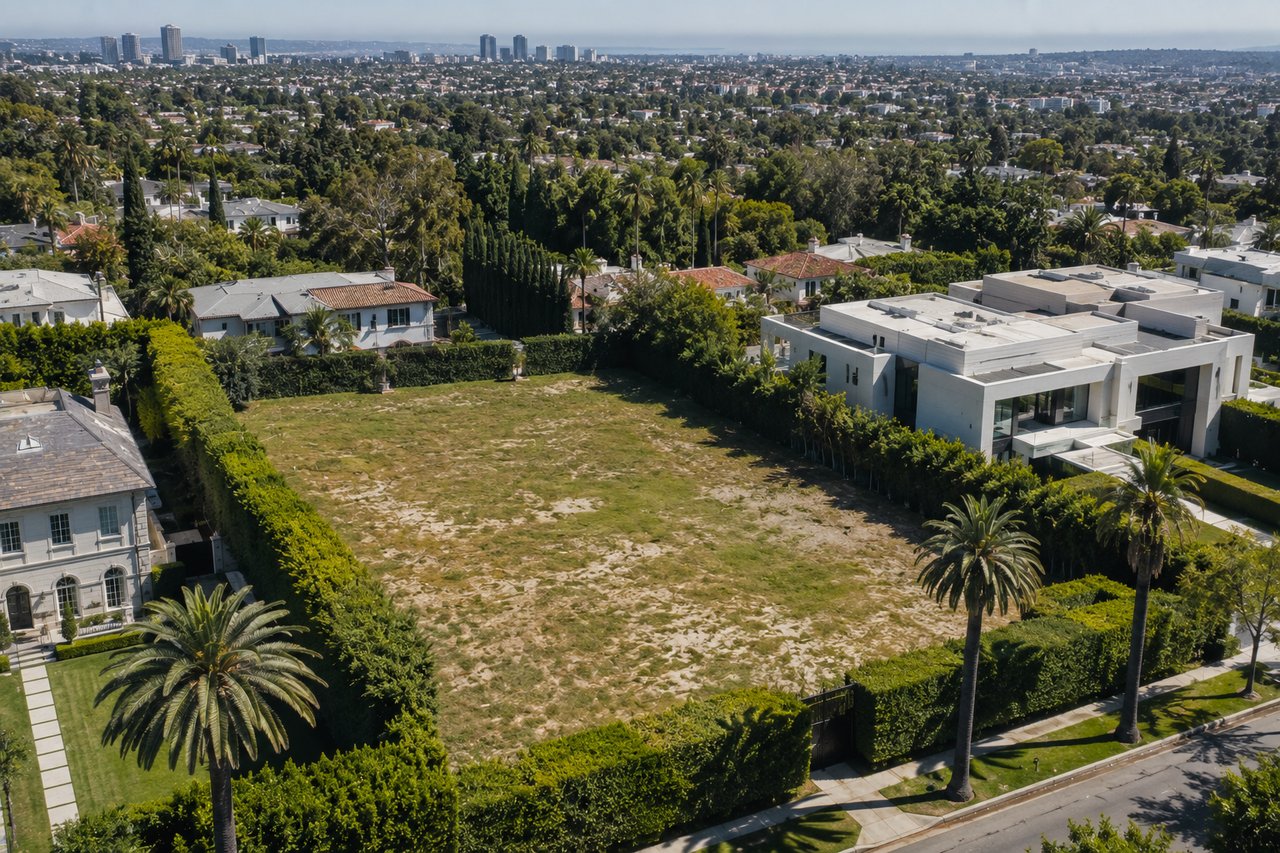
The pattern shows up across price points and buyer profiles, but a few recent transactions capture it clearly. A more than 10,000-square-foot Mediterranean-style estate on North Arden Drive sold for $24 million in a matter of weeks this year a fully finished five-bedroom, twelve-bathroom home with a chef's kitchen, screening room, and guest house, on a roughly 23,000-square-foot lot. The price works out to a little over $2,300 per square foot of existing structure, which sounds reasonable until you consider what buyers are really pricing: a rebuildable lot in one of the most land-constrained ZIP codes in the country.
At the extreme end, one hillside acre in Beverly Hills traded for $9.1 million in 2014, sat through years of grading and permitting with no completed house, and came back on the market recently for $32 million the entire value increase attributed to graded, retaining-wall-stabilized land plus an approved 13,600-square-foot building permit. There was no house to speak of. Just dirt, engineering, and paperwork.
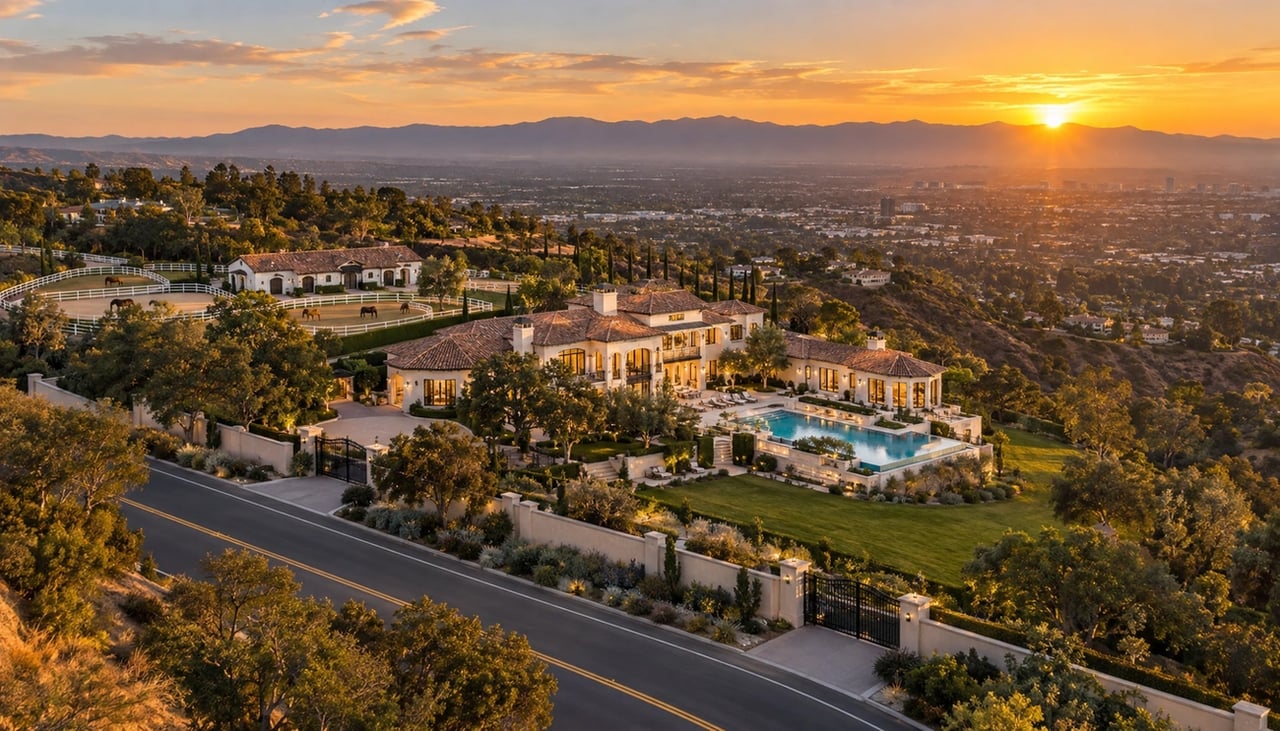
And in one of the more visible examples anywhere in the city, LeBron James purchased a 2.5-acre hilltop property in 2020 for roughly $37 million a historic 1930s, four-bedroom mansion with ties to Katharine Hepburn and Howard Hughes and demolished it almost immediately. Construction on a new two-structure, nearly 16,000-square-foot compound broke ground in 2023 and continues today. The house wasn't a fixer. It was simply worth less to the buyer than the land it occupied.
Why Beverly Hills Specifically? The Tax Angle Nobody Talks About
Topography, zoning, and street prestige explain a lot of what drives Beverly Hills land values but there's a quieter, purely financial reason the teardown trade concentrates here rather than in neighboring hillside markets. Beverly Hills is its own incorporated city, entirely separate from the City of Los Angeles. That matters because Los Angeles' Measure ULA transfer tax a 4% tax on sales starting around $5.3 million, rising to 5.5% on sales above roughly $10.6 million applies only within LA city limits. Bel Air, Brentwood, and the Hollywood Hills sit inside that boundary. Beverly Hills does not.
On the $24 million Arden Drive sale, that distinction alone was worth roughly $1.2 million in avoided transfer tax money that, in a neighboring LA-city teardown deal, would have gone straight to the city rather than into the buyer's construction budget. For developers and end-users running the numbers on a full-scale rebuild, that gap can be the difference between a project penciling out and one that doesn't.
Who's Actually Buying to Bulldoze
The End-User Building a Forever Home
Some buyers in this category are simply wealthy enough that the existing house, however nice, isn't the house they actually want. They're not flipping anything they're clearing a canvas. LeBron James's approach fits this profile: buy the best available lot, regardless of what's currently sitting on it, then build to a highly specific, long-term family vision.
The Spec Developer Land-Banking a Site
A second buyer type isn't interested in living anywhere near the property they're securing a site before someone else does, sometimes years before a shovel breaks ground. This is the logic behind developers like Bruce Makowsky and Michael Chen, who've built reputations on buying underbuilt lots, clearing them, and delivering spec mansions engineered specifically for what today's ultra-luxury buyer wants: motor courts, wellness wings, and screening rooms that a decades-old floor plan simply can't accommodate.
The Entitlement Buyer
A third, more specialized buyer isn't purchasing a house or even fully finished land they're purchasing paperwork. The $32 million basement-and-retaining-walls listing is the clearest example: a buyer willing to pay a premium for a fully graded lot with construction plans already approved by the city, skipping years of entitlement risk that would otherwise sit between purchase and completion.
The Economics: Why the Old House Barely Matters
Construction costs in Beverly Hills run roughly $500 to $800 per square foot for ground-up builds, before land acquisition, with site prep on hillside lots adding another $75,000 to $150,000 for grading and soil work alone. Against that backdrop, an existing house that doesn't match a buyer's vision isn't really an asset it's a demolition line item. Whatever value it holds gets treated as a rounding error next to the land, the view corridor, and the buildable envelope beneath it.
That's a meaningful shift in how to read a Beverly Hills listing price. A $24 million or $30 million ask on an existing home isn't necessarily a statement about that home's condition or finishes it's a statement about the dirt beneath it, and increasingly, about what current zoning will and won't allow a new owner to build there.
What This Means for Sellers Sitting on a Teardown-Worthy Lot
If your Beverly Hills property sits on a large, well-positioned lot, over-investing in cosmetic renovation ahead of a sale can be money poorly spent buyers pricing the deal as a teardown won't pay a premium for a kitchen remodel they're about to demolish. What does move the number: documentation. A recent survey, any existing grading or engineering reports, and clarity on current zoning and buildable square footage let a serious buyer underwrite the deal faster and with more confidence, often translating directly into a stronger offer.
What Buyers Need to Know Before Bidding on a Teardown
Buying to demolish carries its own due-diligence checklist, separate from a standard purchase:
- Confirm actual buildable square footage, not just lot size Beverly Hills' zoning and height restrictions shape what can realistically replace the existing structure.
- Budget for the full holding period, not just construction. Entitlement and permitting alone can take a year or more before a shovel touches the ground, during which carrying costs continue.
- Verify any existing approvals transfer with the sale. Pre-approved plans, as with the basement-lot listing, can save meaningful time but only if the entitlements are confirmed to run with the land.
- Expect competition. Prime teardown lots routinely draw multiple offers from developers and end-users pursuing the same site, and bidding can move quickly once a listing signals genuine rebuild potential.
Buyer Profiles at a Glance
Buyer Type | Primary Goal | Typical Approach | Example |
|---|---|---|---|
End-user / forever-home buyer | A highly personalized long-term residence | Buys best available lot regardless of existing structure; demolishes and rebuilds to spec | LeBron James's 2.5-acre hilltop compound |
Spec developer | Resale profit on a finished luxury build | Land-banks underbuilt lots; times the market for construction and resale | Developers like Bruce Makowsky and Michael Chen |
Entitlement buyer | Reduced construction risk and timeline | Purchases graded land with approved plans already in place | The $32M basement-and-permits listing |
Key Takeaways
- The house often isn't the asset the land and its entitlements are. Recent Beverly Hills sales show buyers paying full market price for structures they plan to demolish almost immediately.
- Beverly Hills' status as its own city, outside LA's Measure ULA transfer tax, meaningfully changes teardown economics compared to neighboring LA-city hillside markets like Bel Air and Brentwood.
- Three distinct buyer types drive this trade: end-users building a forever home, spec developers land-banking sites, and entitlement buyers purchasing pre-approved construction plans.
- Construction costs of $500-$800 per square foot, before land, mean an outdated existing home rarely factors meaningfully into a serious buyer's offer.
- Sellers benefit more from documentation than renovation when a property is likely to be read as a teardown surveys, engineering reports, and zoning clarity move the needle more than cosmetic upgrades.
FAQs
Q1. Why would someone pay $25-30 million for a house they plan to demolish? In land-constrained markets like Beverly Hills, the lot itself its size, location, view corridor, and zoning entitlements is the actual asset. The structure on top is often incidental, and buyers price the deal based on what they can build, not what currently exists.
Q2. Is Beverly Hills subject to LA's mansion tax on these sales? No. Beverly Hills is an independently incorporated city, separate from the City of Los Angeles, so Measure ULA's transfer tax does not apply to sales there unlike neighboring LA-city neighborhoods such as Bel Air and Brentwood, where the tax applies to sales above roughly $5.3 million.
Q3. How long does it take to go from teardown purchase to finished home? Entitlement and permitting alone can take a year or more on complex hillside lots, with total construction timelines commonly running two to three years depending on scope, before a rebuilt home is move-in ready.
Q4. Should sellers renovate before listing a property likely to be bought as a teardown? Generally not extensively. Buyers pricing a deal as a teardown won't pay a premium for finishes they intend to demolish. Investment in documentation surveys, grading reports, zoning verification tends to add more value than cosmetic updates.
Q5. Who competes for these teardown-worthy lots? Primarily three buyer types: wealthy end-users building a highly personalized forever home, spec developers land-banking sites for future resale, and entitlement buyers seeking pre-approved plans that reduce construction risk and timeline.
Conclusion
The Beverly Hills teardown trade isn't a market inefficiency it's the market working exactly as land-constrained luxury markets do. When there's essentially no more land to create, and zoning caps what can be built on what remains, the existing structure becomes the least important part of the transaction. For buyers, that means underwriting the lot, not the listing photos. For sellers, it means understanding that your home's real value may have very little to do with the home itself.
If you're evaluating a Beverly Hills property with genuine rebuild potential whether you're selling a teardown-worthy lot or searching for one to build on Christina Pope can help you understand what a site is actually worth before you price it, or bid on it. 📞 310-404-9931 ✉️ [email protected]
Christina Pope — Sotheby's International Realty EliteResidenceInternational.com | 📞 310-404-9931 | ✉️ [email protected]
Transaction details referenced reflect public reporting from The Real Deal, Robb Report, and other real estate press as of mid-2026, provided as directional market context. Confirm current zoning, entitlements, and comparable sales for any specific property before making an offer.