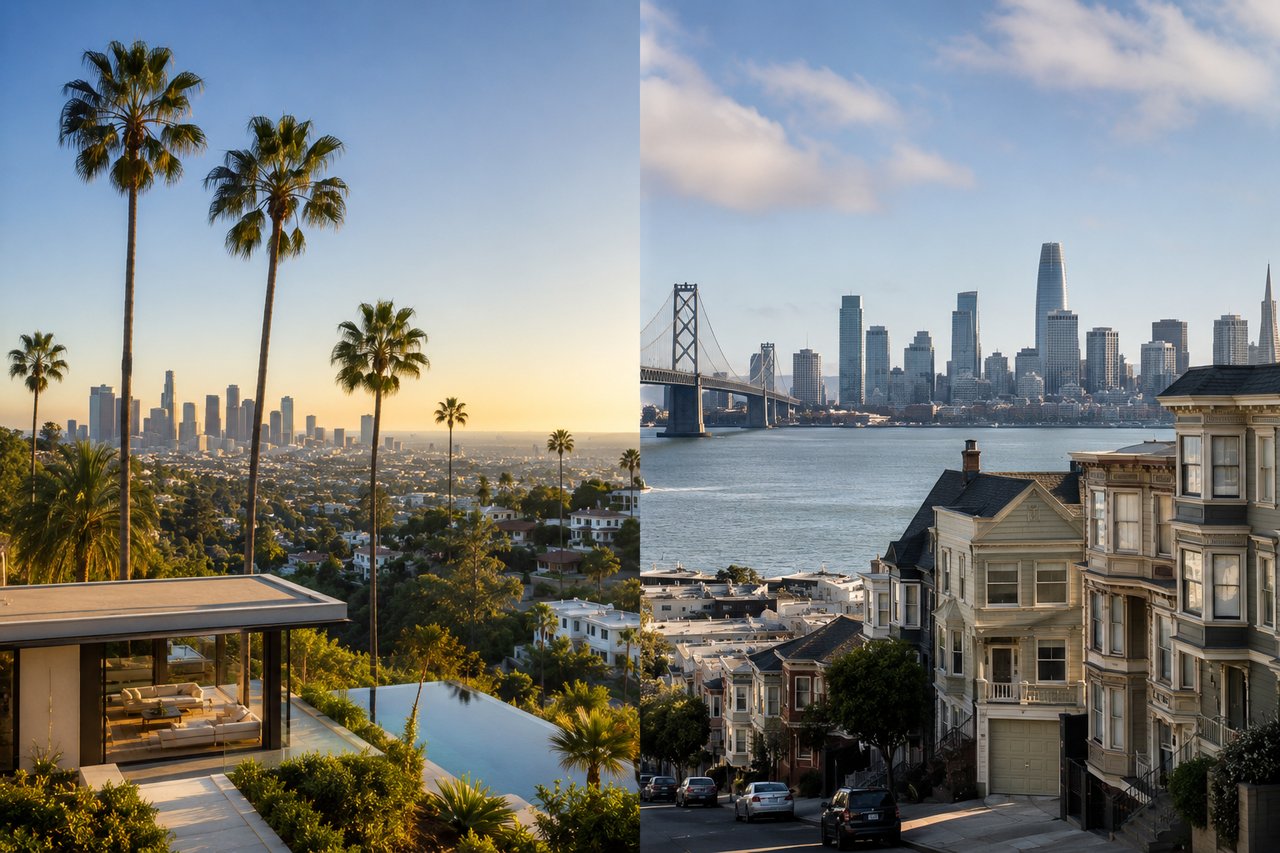
The LA vs San Francisco cost of living comparison reveals a major gap: San Francisco's cost of living sits 14% to 35% higher than Los Angeles. Someone spending $10,000 monthly in San Francisco would need only $8,455 to maintain the same quality of life in Los Angeles. The Los Angeles vs San Francisco cost of living difference becomes clearer when you look at rent. Two-bedroom apartments average $4,582 in San Francisco versus $3,346 in LA. The numbers tell a clear story for anyone questioning whether San Francisco or Los Angeles costs more. This piece breaks down the costs across housing, transportation and employment opportunities to help readers understand what the LA vs SF cost of living gap means for their budget and lifestyle.
San Francisco vs Los Angeles: Breaking Down the Real Numbers
Housing prices and home values
Home values in both cities hover around similar territory. San Francisco averages $1,385,518 and Los Angeles sits at $1,346,487, making San Francisco homes 2.9% more expensive. The San Francisco Bay Area commands a median listing price of $1.30 million and matches Los Angeles at the same price point. San Francisco's market shows an 11.6% increase in the last year, with homes going pending in about 14 days. Neighborhoods within each city create wide variation. Pacific Heights properties in San Francisco often top $2.50 million, while more affordable San Francisco neighborhoods range from $800,000 to $1.00 million.
Monthly rent comparisons
Rental costs reveal a sharper divide between the two cities. San Francisco apartment rent averages $3,592 monthly compared to Los Angeles at $2,198 and represents a 63% premium for San Francisco renters. One-bedroom apartments in San Francisco run $3,591 versus $2,535 in Los Angeles. Two-bedroom units cost $4,744 in San Francisco against $3,345 in LA. Condos show an even steeper gap, with San Francisco averaging $5,417 monthly while Los Angeles sits at $2,869. Houses for rent follow a similar pattern at $2,951 in San Francisco and $2,499 in Los Angeles.
Utilities and simple expenses
Energy bills in San Francisco reach $384.99 monthly and run much higher than Los Angeles's $262.42. Phone services show a smaller differential, with San Francisco at $207.37 and Los Angeles at $196.76. San Francisco utilities run 36.2% higher than Los Angeles in all categories.
Groceries and everyday costs
Grocery expenses in San Francisco top Los Angeles prices by 6.3%. Whole milk costs $5.20 in San Francisco versus $5.08 in LA. Bread runs $4.67 in San Francisco compared to $4.37 in Los Angeles. Eggs show an unusual reversal and cost $2.98 in San Francisco but $3.50 in LA. Ground beef and lettuce all carry higher price tags in San Francisco.
State taxes and additional fees
Both cities operate under California's tax structure, which has a base sales tax of 7.25% that can climb to 10.75% with local additions. Property taxes average 0.71% of actual home value statewide. Both cities share the same state tax framework, so this category produces no cost advantage for either location.
What the Cost Difference Actually Means for Your Lifestyle
"First we shape the cities – then they shape us." — Jan Gehl, Urban quality consultant and researcher
Weather and climate trade-offs
The LA vs San Francisco cost of living gap translates into different daily experiences that go beyond cost savings. Los Angeles delivers 284 sunny days annually compared to San Francisco's 259. Temperatures reach over 90°F on 37.3 days versus just 1.9 days in San Francisco. San Francisco averages 69°F in summer and 51°F in winter, while Los Angeles offers warmer Mediterranean conditions. Rainfall patterns diverge: Los Angeles receives 15.5 inches annually against San Francisco's 24.6 inches, spread across 33.7 rainy days versus 72.3.
Transportation and commuting realities
Transportation modes reveal fundamental lifestyle differences in the Los Angeles vs San Francisco cost of living equation. San Francisco residents take 52% of trips by non-car modes, with 33.1% using transit, 9.8% walking, and 3.8% biking. 93% of Los Angeles passenger travel occurs by car, with only 10.9% using transit and 3.6% walking. Average commute times hit 30.9 minutes in San Francisco.
Entertainment and dining scenes
Restaurant costs run 15.7% higher in San Francisco. Simple meals average $25 in Los Angeles versus $30 in San Francisco, while fast food combos cost $13 and $14.50 respectively. Gym memberships show a steeper gap at $47.45 monthly in Los Angeles against $109.64 in San Francisco. The right home makes all the difference if you love to entertain. I'd be delighted to help you find spaces designed for effortless hosting if you're considering a purchase in the near future or beginning your search. Christina Pope 📞 310-404-9931 ✉️ [email protected]
Safety and crime rates
Crime statistics favor Los Angeles, with a Crime Index of 53.83 versus San Francisco's 60.50. San Francisco's property crime rate reaches 5,200 per 100,000 people, nearly double that of Los Angeles. Violent crime decreased 13% in Los Angeles and 20% in San Francisco between 2023 and 2024.
Quality of life factors
The Quality of Life Index rates San Francisco at 171.54 compared to Los Angeles' 134.42, driven by San Francisco's purchasing power advantage of 165.19 versus 114.14. Healthcare costs remain 23.2% lower in Los Angeles.
Income and Employment: LA vs SF Cost of Living Reality Check
Average salaries in both cities
San Francisco's median household income reaches $146,872 and outpaces Los Angeles at $81,924. Employers in San Francisco offer salaries about 12.9% higher than Los Angeles counterparts. But a comparable standard of living requires $79,565 in San Francisco for every $60,000 earned in Los Angeles. The salary premium fails to offset the 32.6% higher cost of living.
Job market opportunities
San Francisco's unemployment rates stand at 2.8% to 3.3% compared to Los Angeles' 5%. Los Angeles posted 13,437 tech job openings versus San Francisco's 12,147. Combined Bay Area numbers exceed 20,000 when you include San Jose. San Francisco's tech sector maintains fierce competition, with backend developer positions averaging 123 applicants per opening.
Industry differences
San Francisco dominates in technology and finance. Companies like Google, Facebook, Twitter, and Apple anchor the city. Los Angeles centers on entertainment and healthcare, with Warner Bros. Studios and Universal Studios serving as major employers. The entertainment industry supports over 200,000 local jobs.
Making your dollar stretch further
Los Angeles offers advantages despite lower nominal salaries. A $100,000 income provides about $45,000 in purchasing power in Los Angeles compared to $35,000 in San Francisco. Luxury real estate operates through private channels where timing and discretion matter most for those navigating these markets. Christina Pope at Sotheby's International Realty specializes in connecting clients with luxury homes. 📞 310-404-9931 ✉️ [email protected]
The True Cost of Moving from San Francisco to Los Angeles
"Choosing a licensed moving company with transparent pricing helps you avoid hidden fees and reduces the risk of damage to your belongings during transit." — Got2Move, California Long-Distance Moving Company
Luxury real estate in Los Angeles operates through private channels where timing and discretion carry more weight than visibility. The most important transactions unfold in trusted circles where positioning matters. Access determines your chance for those who value precision over publicity.
Professional moving services expenses
A move between these California metros costs $398 to $7,522 depending on service level and home size. Full-service movers range from $1,179 to $7,522, while moving containers run $1,042 to $3,221. Studio apartments fall between $1,179 and $3,985 for full-service. Homes with 4+ bedrooms reach $3,338 to $7,522.
DIY vs full-service options
Rental trucks deliver the lowest upfront cost at $398 to $1,028, about 30% cheaper than full-service. But renters drive 382 miles and handle all labor themselves. Moving containers split the difference, with companies transporting while clients pack and unload.
Hidden relocation costs
Professional packing adds $0.15 to $0.21 per pound. Access fees for stairs and elevators run $75 to $500+. Fuel surcharges and storage-in-transit increase bills by 10% to 25% above base quotes.
Strategic move timing
Peak season between May and September commands 25% to 40% higher rates. October through April offers standard pricing with better availability. Book two months ahead for off-peak moves, three months for summer relocations.
Christina Pope—Sotheby's International Realty EliteResidenceInternational.com 📞 310-404-9931
Conclusion
The LA vs San Francisco cost of living gap creates real financial breathing room. Los Angeles runs 14% to 35% lower across housing and daily expenses. Higher San Francisco salaries fail to bridge the purchasing power divide, no doubt about it. Those considering the move should research neighborhoods really well and calculate actual take-home value beyond nominal income. Strategic real estate decisions in Los Angeles unfold through private channels where timing and discretion matter most. Christina Pope at Sotheby's International Realty provides access to opportunities that rarely reach public listings.
Key Takeaways
Moving from San Francisco to Los Angeles can significantly improve your financial position while maintaining quality of life. Here's what the numbers reveal about this southward migration:
• San Francisco costs 14-35% more than LA overall – You'd need only $8,455 in LA to match a $10,000 lifestyle in San Francisco, creating substantial monthly savings.
• Rent shows the starkest difference – Two-bedroom apartments average $4,744 in SF versus $3,345 in LA, a 42% premium for Bay Area living.
• Higher SF salaries don't offset living costs – Despite earning $146,872 median income in SF versus $81,924 in LA, purchasing power favors Los Angeles by roughly 30%.
• LA offers better weather and lower crime – With 284 sunny days annually and a Crime Index of 53.83 versus SF's 60.50, LA delivers lifestyle advantages beyond cost.
• Moving costs range from $398 to $7,522 – Budget $1,179-$7,522 for full-service moves depending on home size, with off-peak timing (October-April) saving 25-40%.
The bottom line: Los Angeles provides comparable career opportunities in entertainment and tech while stretching your dollar significantly further, making it an increasingly attractive alternative to San Francisco's premium pricing.
FAQs
Q1. Which city is more affordable to live in: San Francisco or Los Angeles? Los Angeles is significantly more affordable than San Francisco, with overall living costs running 14-35% lower. You would need approximately $8,455 in LA to maintain the same lifestyle that costs $10,000 in San Francisco. Rent, utilities, and everyday expenses are all notably cheaper in Los Angeles.
Q2. Do higher salaries in San Francisco make up for the increased cost of living? No, higher San Francisco salaries don't fully offset the cost difference. While San Francisco's median household income is $146,872 compared to LA's $81,924, purchasing power actually favors Los Angeles by roughly 30%. A $100,000 income provides about $45,000 in purchasing power in LA versus approximately $35,000 in San Francisco.
Q3. How much does it cost to move from San Francisco to Los Angeles? Moving costs range from $398 to $7,522 depending on your approach and home size. DIY rental trucks are the cheapest option at $398-$1,028, while full-service movers cost $1,179-$7,522. Moving during off-peak season (October through April) can save you 25-40% compared to summer moves.
Q4. Is owning a car necessary in both cities? No, car ownership differs significantly between the cities. San Francisco residents take 52% of trips by non-car modes thanks to robust public transit, while 93% of Los Angeles travel occurs by car. However, the money saved on rent in LA can offset the additional transportation costs of car ownership.
Q5. How do crime rates compare between Los Angeles and San Francisco? Los Angeles has lower crime rates overall, with a Crime Index of 53.83 compared to San Francisco's 60.50. San Francisco's property crime rate reaches 5,200 per 100,000 people, nearly double that of Los Angeles. Both cities saw decreases in violent crime between 2023 and 2024.