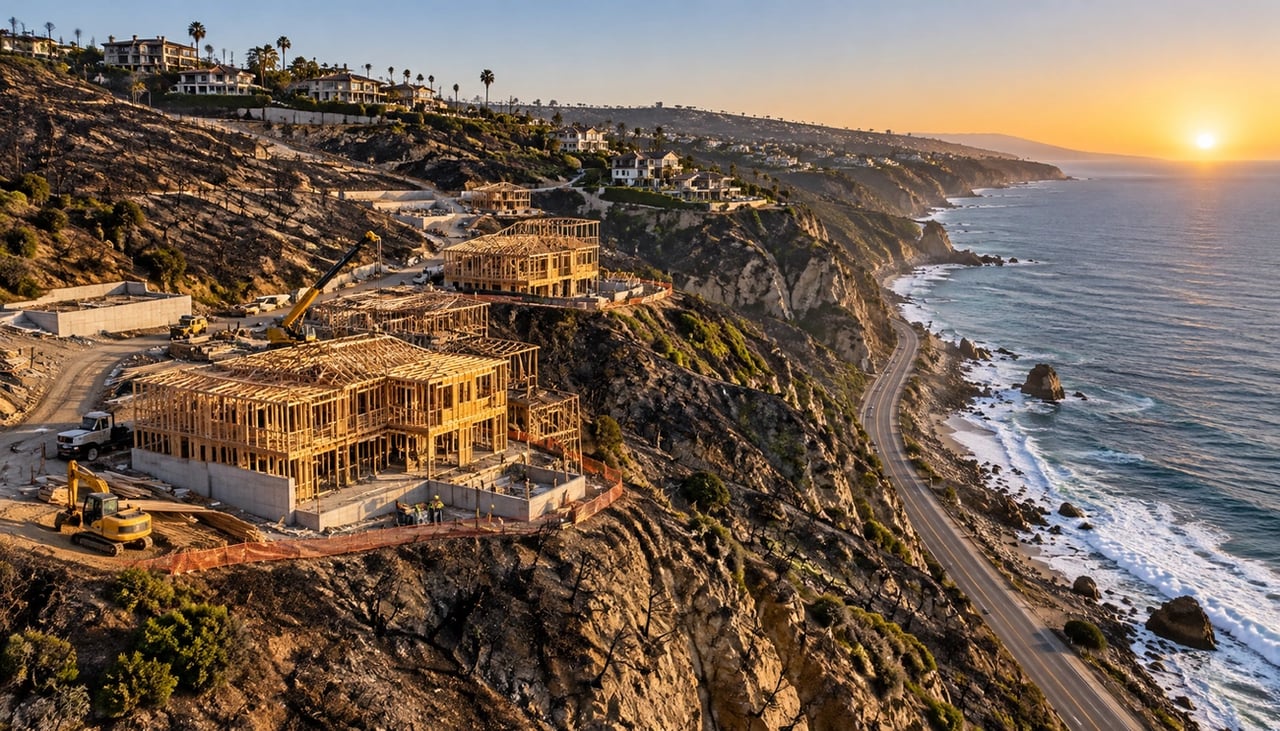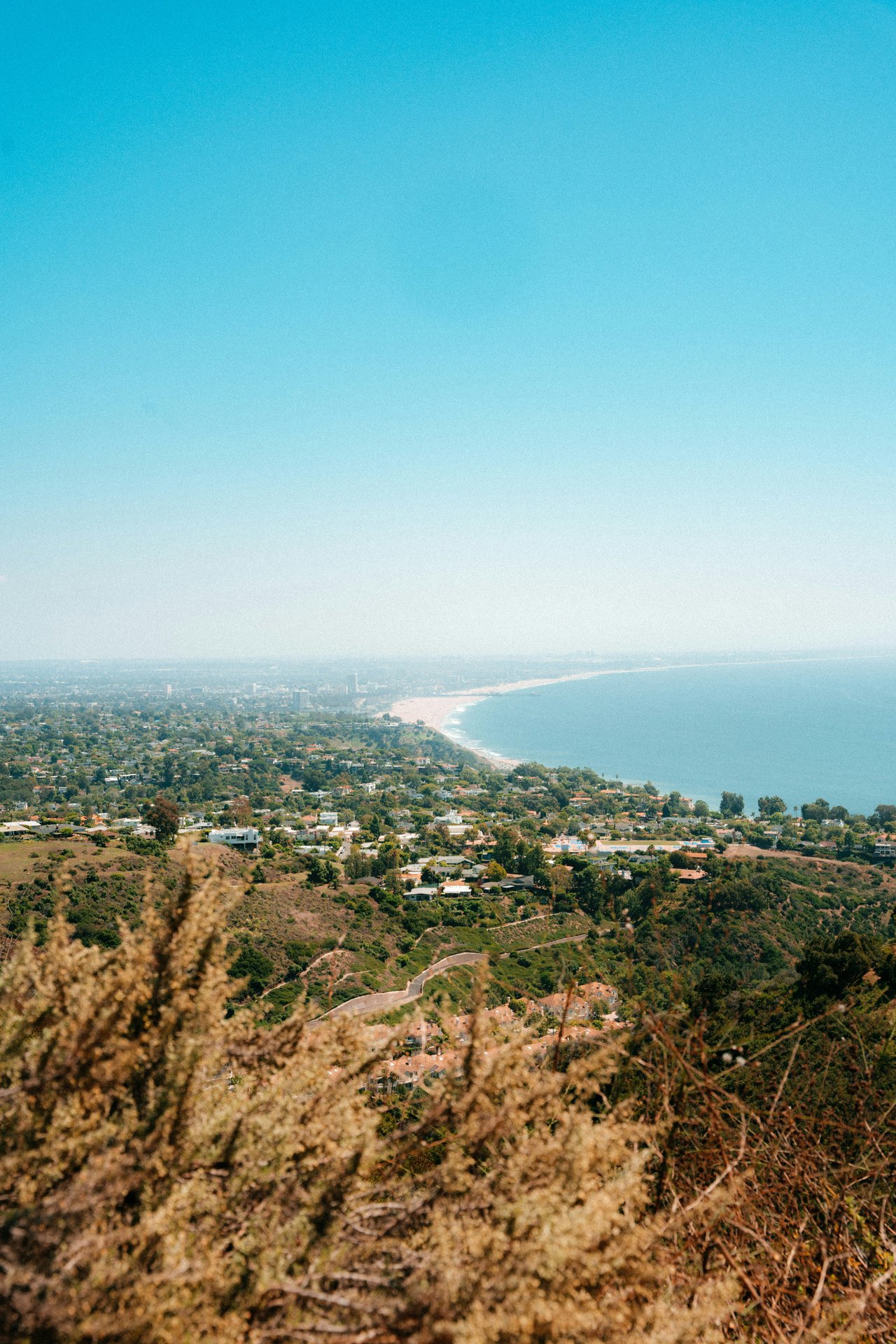
Pacific Palisades real estate looks completely different now after devastating wildfires swept through Los Angeles County. The market has changed dramatically as investors bought at least 40% of lot sales in fire-damaged areas during the third quarter of 2025. This big shift has changed how this prestigious coastal community looks and feels.
The Palisades and Eaton fires destroyed more than 11,000 homes, yet the market stays strong. The median home sale price stands at $2,372,500, and houses typically sell within 84 days. These numbers don't tell the whole story though. Some neighborhoods saw their median prices drop from $3.7 million to $1.9 million, while other areas kept their premium values.
The luxury real estate market in Pacific Palisades doesn't follow typical patterns. Private deals, perfect timing, and exclusive access drive the market more than public listings. The 47% difference in performance between neighborhoods comes from many factors. Investor activities, rebuilding priorities, and off-market deals play a big role in this gap.
Some Pacific Palisades neighborhoods perform much better than others. This comes down to several factors - investor purchases hitting 40% in certain areas, environmental conditions, price trends, and unique neighborhood features. These elements create distinct real estate zones within this sought-after Los Angeles community.
What’s driving the 47% performance gap in Pacific Palisades?
The remarkable 47% performance gap between Pacific Palisades neighborhoods comes from several connected factors that emerged after the devastating wildfires. This gap shows how local markets react differently to catastrophic events. These reactions create both opportunities and challenges throughout this prestigious coastal community.
Investor activity post-wildfire
Professional investors have targeted fire-damaged properties in specific Pacific Palisades neighborhoods. Institutional buyers and private equity firms bought nearly 40% of all lot sales in burn zones during Q3 2025. Their purchases have changed ownership patterns completely. These investors usually choose neighborhoods with fewer environmental restrictions and faster permits.
Marquez Knolls saw the highest number of investor purchases, as investment groups bought 17 fire-damaged lots in just one month. The Riviera, however, had very few investor purchases because homeowners quickly bought back their properties using insurance money.
Owner-occupier vs. developer motivations
Different goals between Pacific Palisades homeowners and developers create market tensions. Homeowners want to rebuild their main homes quickly and often pay more to accelerate construction. They pay an average of 12% more for faster building services.
Developers see rebuilds as investment chances with strict profit calculations. They often wait to build until material costs drop or permit issues resolve. This patient approach explains why developer-owned lots stay empty almost 3 times longer than owner-occupied properties.
The role of land banking in slowing rebuilds
Land banking has become common in certain Pacific Palisades neighborhoods. Investment groups buy multiple connected lots without plans to build right away. They focus on areas with difficult terrain or strict building rules.
Three major development companies have bought large land portfolios in Pacific Palisades just to hold long-term. These firms usually plan to wait 5-8 years. They think over their timing carefully and slow down neighborhood recovery while waiting for the best market conditions.
This calculated land banking creates an artificial lack in housing supply. It keeps prices high in 5-year old neighborhoods while holding back recovery in areas where investors own most properties.
Neighborhoods that outperform: A closer look

Image Source: James Respondek
Some neighborhoods in Pacific Palisades consistently perform better than the broader market. These premium areas stay strong even when times get tough. Let's look at what makes these neighborhoods so special and resilient.
The Riviera: Luxury appeal and limited inventory
The Riviera ranks among Pacific Palisades' most prestigious neighborhoods. It has about 600 homes that average 5,273 square feet. You'll find sprawling estates, celebrity residents, and the Riviera Country Club right nearby. Property values here have shown amazing stability with 10-15% appreciation despite recent market challenges. The median price sits at $9.70 million (roughly $1,700 per square foot), making it one of greater Los Angeles's priciest neighborhoods.
Huntington Palisades: High demand, low turnover
Buyers can't get enough of Huntington Palisades. This family-friendly area boasts wide streets, stunning landscaping, and easy access to Palisades Village. A home at 611 Ocampo Drive got multiple offers and went into escrow at $4.25 million recently - just 10% below its pre-fire value. The median listing price of $7.60 million reflects its enduring appeal, supported by scarce inventory and strong buyer interest.
Marquez Knolls: Value per square foot advantage
Marquez Knolls gives you something special with its hillside setting and sweeping ocean views. The area features mid-century modern homes that showcase large windows and open floor plans. The median home here sells for $1,895,000, with a price per square foot of $1,550. While prices have dipped slightly (-2.35%) in recent months, homes are selling 157% faster compared to last year.
The Alphabet Streets: Walkability and charm
The Alphabet Streets (North Village) is one of the most walkable spots in Pacific Palisades. Nearly 900 properties sit on smaller lots between 5,200-7,500 square feet. Young families love this area for its "starter" homes around $1 million, though new builds can reach $3 million. The neighborhood's charm comes from being steps away from Palisades Village's 40+ boutiques and restaurants.
Your perfect entertaining space is waiting. I'd love to help you find a home that matches your lifestyle and hosting dreams. Christina Pope 📞 310-404-9931 ✉️ [email protected]
Why some areas lag behind
The Pacific Palisades real estate recovery shows uneven progress below the surface. Some areas still struggle to bounce back. The gap between successful and struggling neighborhoods comes from several significant factors that affect property values and rebuilding schedules.
Permitting delays and insurance bottlenecks
Permit approvals have slowed down significantly despite faster processes. The timeline has grown from 60 days to 90 days. Only 13% of heavily impacted single-family homeowners have started construction. Insurance companies make things harder by using a "delay and deny" strategy. State Farm and the FAIR Plan receive the most criticism since 90% of Pacific Palisades residents can't return home. HOAs face major coverage cuts - one group's protection dropped from $48 million to $20 million.
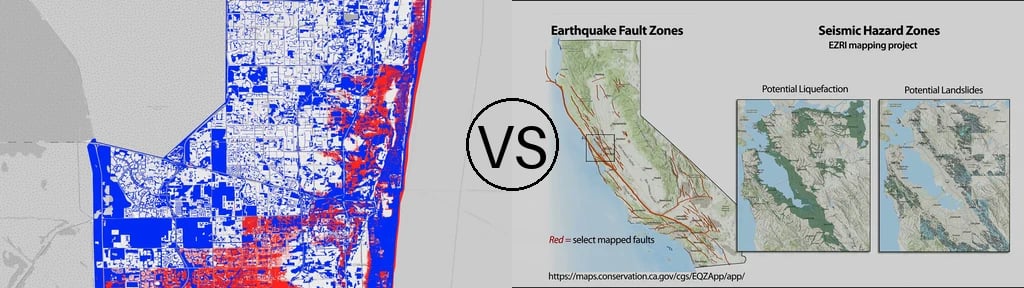
Environmental risk zones: fire and flood exposure
Risk assessment data shows 82% of Palisades buildings face at least 5% wildfire risk in the next 30 years. Building in these zones requires strict Wildland-Urban Interface codes that need fire-resistant materials like metal roofs, stucco siding, and tempered glass. Properties in coastal zones need extra approval from the California Coastal Commission. These environmental rules plus rebuilding costs of $500 per square foot create major obstacles.
Lower-rated schools and their impact on demand
School quality changes property values significantly because buyers care about educational opportunities. Neighborhoods with lower-rated schools or damaged educational facilities see less interest from buyers. Areas with slow infrastructure repairs also attract fewer buyers. People expect utilities, sewage, telecommunications, and public spaces to work properly within six months to two years.
How pricing trends reflect neighborhood strength
Real estate market indicators show us how Pacific Palisades neighborhoods hold their value. These pricing metrics help us learn about which areas stay strong even when markets change.
Pacific Palisades median home price vs. average
The story of market distribution becomes clear when we look at median and average home prices. Right now, the median sale price ranges from $2.37 million to $3.30 million. This sits well below the average price of $4.20 million. The big gap shows that some extraordinary high-end properties pull the average up. Yes, it is crucial that buyers understand this difference to evaluate true market conditions. Median prices give a more accurate picture of where the market really stands.
Price per square foot by neighborhood
We can best compare Pacific Palisades neighborhoods by looking at price per square foot. This number ranges from $1,215 to $1,672 based on source and timing. The figure tells us about a neighborhood's premium status whatever the home size. The Riviera tops the list at about $1,700 per square foot. Areas affected by wildfires show lower values, which creates opportunities in recovering zones.
Days on market and sale-to-list ratios
Homes now take 52-62 days to sell, which shows a 35% slowdown from past quarters. The sale-to-list price ratio has dropped to 94.8%, and buyers now have more room to negotiate. Each neighborhood tells its own story. Prime spots like Huntington Palisades keep stronger ratios near 98%, while other areas see prices drop by up to 6%.
Recent sales data and what it reveals
The fourth quarter brought 45 closed sales, down 32% from last year. Recent numbers show homes under $3 million make up almost half (42.2%) of all sales. Luxury properties over $5 million account for 17.8%. Fire-damaged lots entering the market caused this change in numbers.
Looking for the perfect home to entertain? I can help you find spaces that match your lifestyle and hosting needs. Christina Pope 📞 310-404-9931 ✉️ [email protected]
Conclusion
The real estate market in Pacific Palisades stands out from the rest of Los Angeles County. A striking 47% performance gap between neighborhoods shows how local factors create different outcomes in this prestigious coastal community. Professional investors, not owner-occupiers, bought 40% of fire-damaged lots. These buying patterns reshape how neighborhoods recover and develop over time.
The gap between thriving areas like The Riviera and Huntington Palisades and other recovering neighborhoods tells an interesting story. Property values and rebuilding options depend on environmental risk zones, permit delays, and insurance issues. Some neighborhoods keep their premium status because they have limited homes for sale, great amenities, and fewer fire-damaged properties.
You can't look at Pacific Palisades as one single market. Each neighborhood works like its own ecosystem with unique pricing trends, time-on-market numbers, and sale-to-list ratios. These local indicators help more with investment choices than general community averages.
Smart buyers and sellers know that public numbers don't show everything. Many big deals in Pacific Palisades happen privately, especially in high-end neighborhoods where privacy matters. The best opportunities often come through private networks and good timing rather than public listings.
Pacific Palisades will keep growing unevenly across its neighborhoods. Areas with strong basics - prime locations, architectural value, and few available homes - will stay expensive. Places with many investor-owned properties might see slower rebuilding and changing prices. Buyers need to understand each neighborhood's unique features in this sought-after coastal area rather than relying on community-wide data.
Key Takeaways
Understanding Pacific Palisades' post-wildfire real estate landscape reveals critical insights for investors and homebuyers navigating this transformed luxury market.
• Investor dominance reshapes neighborhoods: Professional investors purchased 40% of fire-damaged lots, creating a 47% performance gap between areas with high investor activity versus owner-occupied rebuilds.
• Premium neighborhoods maintain resilience: The Riviera ($1,700/sq ft) and Huntington Palisades ($7.6M median) outperform due to limited inventory, celebrity appeal, and minimal fire damage.
• Environmental risks create buying opportunities: Properties in wildfire zones face 82% risk exposure over 30 years, but offer value plays for strategic investors willing to navigate permitting delays and insurance challenges.
• Market metrics reveal hidden dynamics: Median prices ($2.37M) versus averages ($4.2M) show extreme high-end skew, while 52-62 days on market and 94.8% sale-to-list ratios indicate buyer leverage.
• Neighborhood-specific analysis trumps community averages: Each Pacific Palisades area operates as its own micromarket, making localized data more valuable than broad community statistics for investment decisions.
The most lucrative opportunities in Pacific Palisades often occur through private networks and off-market transactions, particularly in prestigious neighborhoods where exclusivity drives premium pricing beyond public listings.
FAQs
Q1. What factors contribute to the 47% performance gap between Pacific Palisades neighborhoods? The performance gap is primarily driven by investor activity in fire-damaged areas, differences in rebuilding priorities between owner-occupiers and developers, and the practice of land banking. Some neighborhoods, like The Riviera and Huntington Palisades, maintain their premium status due to limited inventory and high demand.
Q2. How has the wildfire impact affected real estate in Pacific Palisades? The wildfires have reshaped the real estate landscape in Pacific Palisades. Investor purchases of fire-damaged lots have reached 40% in some areas, creating disparities in neighborhood recovery. Environmental risks, permitting delays, and insurance challenges have also slowed rebuilding efforts in certain zones.
Q3. Which Pacific Palisades neighborhoods are currently outperforming others? The Riviera, Huntington Palisades, Marquez Knolls, and the Alphabet Streets are among the top-performing neighborhoods. These areas benefit from factors such as luxury appeal, limited inventory, panoramic views, and walkability, which help maintain their desirability and property values.
Q4. What are the current real estate pricing trends in Pacific Palisades? The median home sale price in Pacific Palisades ranges from $2.37 million to $3.30 million, with an average price of $4.20 million. Price per square foot varies by neighborhood, with premium areas like The Riviera commanding around $1,700 per square foot. Days on market have increased to 52-62 days, and the sale-to-list price ratio has fallen to 94.8%.
Q5. How should potential buyers approach the Pacific Palisades real estate market? Potential buyers should focus on neighborhood-specific analysis rather than community-wide averages. It's important to consider factors such as environmental risks, school ratings, and rebuilding timelines. Additionally, many significant transactions occur through private networks, so working with a well-connected local agent can provide access to exclusive opportunities not available on the open market.