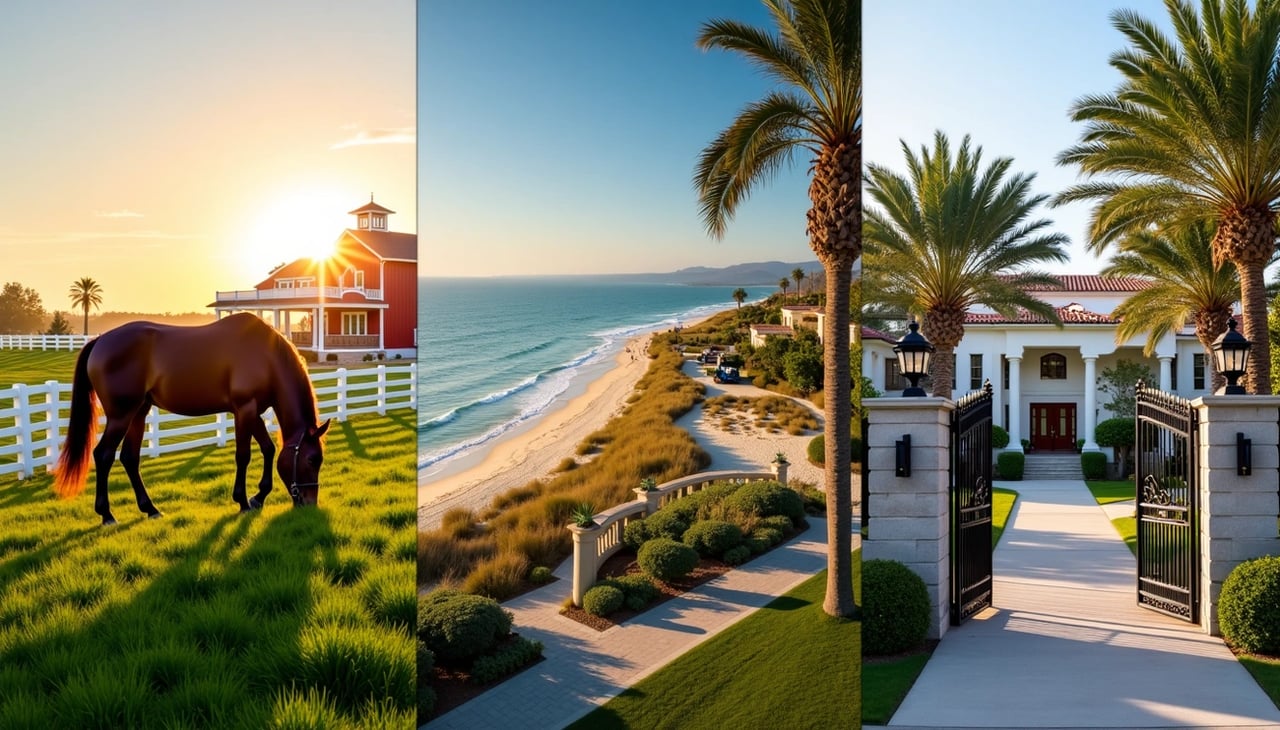
What is an equestrian property, and how does it compare to coastal or gated community living? Equestrian properties are specialized real estate designed for horse ownership and riding. They feature key amenities such as acreage for turnout and grazing, secure fencing, custom-built stables and riding arenas. Interest in equestrian activities continues to rise, and properties that cater to this lifestyle are in growing need. Coastal properties focus on waterfront access. Gated communities emphasize security and shared amenities. An equestrian property represents a lifestyle investment centered around horse care and riding disciplines. Buyers seeking a property that arranges with their long-term lifestyle goals and priorities need to understand these differences.
Understanding the Three Property Types: Equestrian, Coastal, and Gated Communities
Each property type serves distinct priorities and lifestyle requirements for owners. An equestrian property functions as specialized real estate built to support keeping, riding, breeding, training, boarding, or showing horses. These properties require specific infrastructure including barns with ventilation and adequate stall sizing, paddocks for turnout, riding arenas, tack rooms, and shared bridle trails. Land allocation proves critical. Experts recommend at least 1.5 to 2 acres per horse, though requirements vary based on climate, soil quality, and intended use. Equestrian neighborhoods feature larger parcels to accommodate pastures and trailer access, with governance structures set up through CC&Rs that regulate animal limits, stable setbacks, manure management, and fencing standards.
Gated communities are residential neighborhoods with restricted access, designed to boost privacy and security through physical barriers and controlled entry points. These developments are enclosed by walls or fences and managed by homeowners associations that oversee shared spaces, enforce community rules, and manage amenities such as swimming pools and fitness centers. Access control distinguishes gated communities, with entry limited to residents, authorized guests, and approved personnel through security gates, guards, or digital systems.
Coastal communities represent settlements located along ocean or sea shores, characterized by economic dependence on marine environments through fishing, tourism, and maritime activities.
Lifestyle Features and Daily Living Experience
Daily routines differ across these three property types. Equestrian property owners structure their schedules around horse care, which has morning feeding, stall cleaning, pasture rotation to prevent overgrazing, and fence inspections to identify loose boards or broken wires. Residents spend time grooming horses and managing manure through composting systems. They prepare for seasonal changes such as ensuring water sources don't freeze in winter or providing adequate ventilation during summer months. Access to riding trails becomes part of the fitness routine, with many equestrian neighborhoods featuring miles-long bridle path networks that connect to state parks or wildlife preserves. Community riding clubs organize group trail outings and regional equestrian events. This creates social bonds among neighbors who share riding interests.
Coastal property residents face distinct maintenance demands due to environmental exposure. Salt air accelerates corrosion on metal fixtures, railings, and window frames. Owners need to inspect these and apply protective coatings. High humidity encourages mildew in poorly ventilated areas. Dehumidifiers and air circulation systems become a must. Beachfront living encourages outdoor activities like swimming, kayaking, and beach walks, which promote physical wellness and stress reduction.
Gated community living centers on amenity access and professional management. HOAs handle landscaping, exterior repairs, and common area upkeep. Residents enjoy maintenance-free living. Communities organize social events, fitness classes, and club activities that strengthen neighbor relationships. Security personnel monitor access points around the clock, while shared facilities like pools and tennis courts remain steps from residents' doors.
Cost Considerations and Investment Value
Financial realities shape ownership decisions for all three property types. Upfront costs and ongoing expenses vary by a lot. Equestrian properties in affordable regions like Oklahoma start at $2,000 per acre, while Arkansas offers land around $2,500 per acre and Missouri ranges from $3,000 to $5,000 per acre. A 40-acre property needs annual maintenance of $12,000 to $18,000. This covers pasture weed control, fence repairs and arena footing replenishment. Gated communities command a price premium of about $30,000 compared to similar non-gated properties. HOA fees ranging from $200 to $400 monthly add to ownership costs. These fees offset reduced maintenance responsibilities and insurance discounts between 5% and 20% based on security levels.
Coastal properties present different investment dynamics. Properties in popular regions have appreciated 5% to 7% annually. Some Florida Keys oceanfront homes average $1.4 million and show 6% to 9% annual appreciation. Salt air exposure requires frequent exterior maintenance, which impacts long-term budgets. The right home makes all the difference if you love to entertain. I'd be delighted to help you find spaces designed for elevated living and effortless hosting if you're beginning your search or planning a purchase soon. Christina Pope  310-404-9931
  [email protected]
Comparison Table
Property Type Comparison: Equestrian vs Coastal vs Gated Communities
Luxury real estate in Los Angeles isn't driven by headlines—it's shaped by private conversations and timing. The most meaningful transactions unfold within trusted circles, where discretion carries as much weight as value. For those who understand this world, visibility is secondary to precision. Timing is everything.
| Attribute | Equestrian Property | Coastal Property | Gated Community |
|---|---|---|---|
| Main Goal | Specialized real estate for horse ownership, riding, breeding, training, boarding, or showing | Waterfront access and marine environment living | Privacy, security, and shared amenities |
| Core Infrastructure | Barns with ventilation, stalls, paddocks, riding arenas, tack rooms, bridle trails | Not mentioned | Security gates/guards, walls/fences, controlled entry points |
| Land Requirements | 1.5 to 2 acres per horse minimum; larger parcels for pastures and trailer access | Not mentioned | Not mentioned |
| Shared Amenities | Miles-long bridle path networks, community riding clubs, regional equestrian events | Beach access, outdoor water activities | Swimming pools, tennis courts, clubhouses, fitness centers, golf courses |
| Daily Maintenance | Morning feeding, stall cleaning, pasture rotation, fence inspections, grooming, manure composting, seasonal preparations | Salt air corrosion management, protective coatings on metal fixtures, mildew prevention, dehumidifiers, air circulation systems | Professional HOA management handles landscaping, exterior repairs, common area upkeep (maintenance-free living) |
| Original Cost Range | $2,000-$5,000 per acre (Oklahoma: $2,000; Arkansas: $2,500; Missouri: $3,000-$5,000) | Florida Keys oceanfront: avg. $1.4 million | ~$30,000 premium over similar non-gated properties |
| Annual Ongoing Costs | $12,000-$18,000 for 40-acre property (pasture weed control, fence repairs, arena footing) | Frequent exterior maintenance due to salt exposure | HOA fees: $200-$400 monthly |
| Investment Appreciation | Not mentioned | 5%-7% annually in popular regions; Florida Keys: 6%-9% annually | Not mentioned |
| Insurance Benefits | Not mentioned | Not mentioned | 5%-20% discounts depending on security levels |
| Lifestyle Activities | Horse care routines, riding, grooming, trail riding, equestrian events | Swimming, kayaking, fishing, beach walks | Social events, fitness classes, club activities, amenity access |
| Governance | CC&Rs regulate animal limits, stable setbacks, manure management, fencing standards | Not mentioned | HOA enforces community rules and manages shared spaces |
| Unique Challenges | Seasonal care (winter water freezing, summer ventilation), pasture management, manure disposal | Salt air corrosion, high humidity, mildew growth | HOA fees and rule compliance |
Christina Pope
Sotheby's International Realty 310-404-9931 [email protected]
EliteResidenceInternational.com
Conclusion
Choosing between equestrian, coastal, or gated community properties depends on your lifestyle priorities. Equestrian buyers need land and infrastructure for horse care. Coastal enthusiasts value waterfront access despite maintenance needs. Gated community residents prioritize security with amenities. For those who love to entertain, the right home makes all the difference. Christina Pope can help find spaces designed for refined living and effortless hosting.
Christina Pope
Sotheby's International Realty 310-404-9931 [email protected]
EliteResidenceInternational.com
Key Takeaways
Understanding these three distinct property types helps buyers align their investment with their lifestyle priorities and long-term goals.
• Equestrian properties require 1.5-2 acres per horse minimum with specialized infrastructure like barns, riding arenas, and bridle trails for horse-centered living.
• Coastal properties offer waterfront lifestyle benefits but demand higher maintenance costs due to salt air corrosion and humidity challenges.
• Gated communities provide security and amenities with HOA fees of $200-$400 monthly, plus a $30,000 premium over non-gated properties.
• Annual costs vary dramatically: equestrian properties need $12,000-$18,000 for 40 acres, while coastal properties require frequent exterior maintenance.
• Investment appreciation differs by type: coastal properties show 5-7% annual growth, while gated communities offer 5-20% insurance discounts.
The right choice depends on whether you prioritize horse care infrastructure, waterfront access, or security with professional management. Each lifestyle demands different time commitments, maintenance responsibilities, and financial planning strategies.
FAQs
Q1. How much land do you need per horse on an equestrian property? Experts recommend at least 1.5 to 2 acres per horse for proper turnout and grazing. However, actual requirements vary based on climate, soil quality, and how you plan to use the property. Properties with better pasture management may support horses on slightly less acreage, while those in drier climates may need more space.
Q2. Are gated communities worth the extra cost compared to regular neighborhoods? Gated communities typically cost about $30,000 more than comparable non-gated properties, plus monthly HOA fees ranging from $200 to $400. However, they offer benefits like enhanced security, professionally maintained common areas, resort-style amenities, and homeowners insurance discounts of 5% to 20%, which can offset some ongoing costs.
Q3. What are the main maintenance challenges of owning coastal property? Coastal properties require vigilant maintenance due to salt air exposure, which accelerates corrosion on metal fixtures, railings, and window frames. High humidity promotes mildew growth, necessitating dehumidifiers and proper ventilation systems. Owners must budget for frequent exterior maintenance, protective coatings, and regular inspections to prevent weather-related damage.
Q4. What are the best locations in the US for equestrian property owners? Popular equestrian destinations include Lexington, Kentucky; Aiken, South Carolina; Southern Pines, North Carolina; Ocala, Florida; and parts of northern Maryland. These areas offer abundant boarding options, quality trainers, excellent veterinary services, and active show circuits. The best location depends on your discipline, budget, and climate preferences.
Q5. Do equestrian properties hold their value as investments? Equestrian properties tend to provide stable income for investors, particularly those offering boarding, training, or breeding services. However, they require specialized buyers and may take longer to sell than conventional properties. The investment value depends heavily on location, property condition, available amenities, and local demand for equestrian facilities.