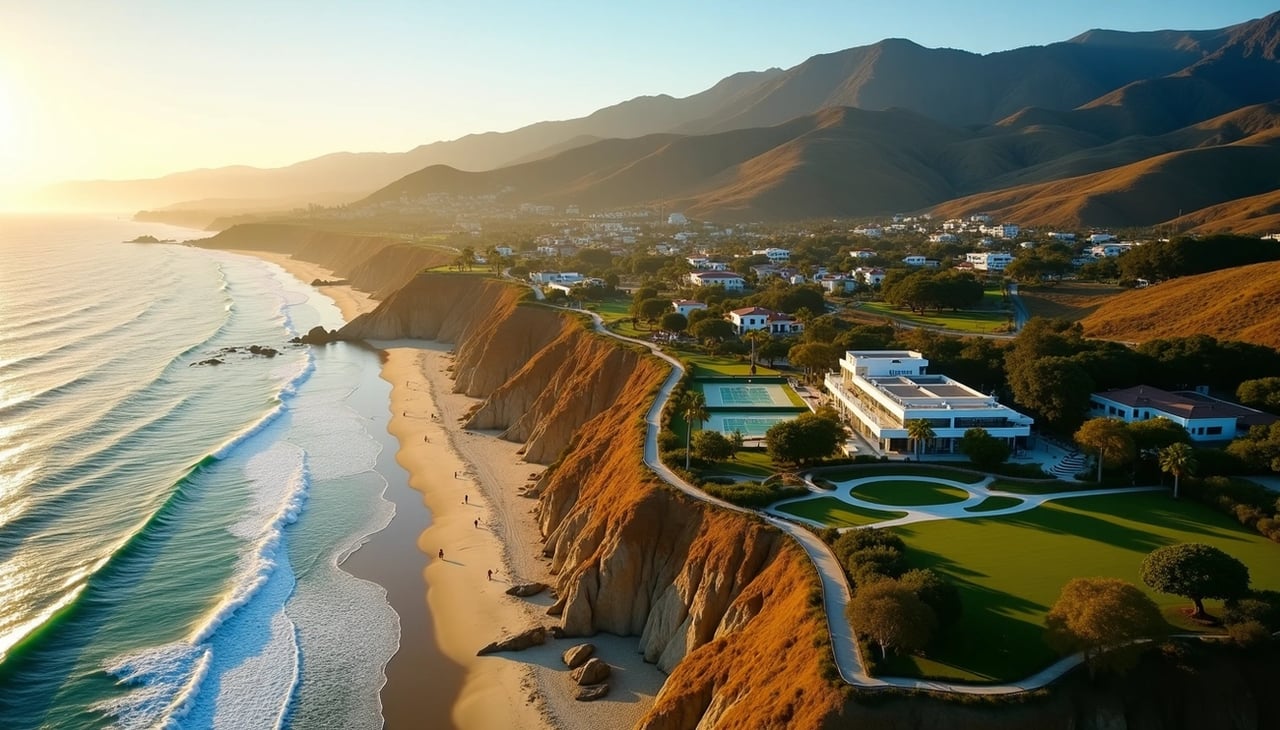
LA rich neighborhoods offer different recreational lifestyles despite comparable price tags. Beverly Hills' average home price exceeds $4M, whereas Pacific Palisades luxury real estate commands lower values. Calabasas stands among the country's wealthiest cities, yet Hidden Hills la residents access different amenities than those in coastal Malibu or hillside Pacific Palisades. These rich areas in la each provide distinct outdoor experiences shaped by geography and community planning. Pacific Palisades sits between the Santa Monica Mountains and Pacific Ocean and creates unique recreational opportunities. This comparison gets into how the richest part of la neighborhoods differ in beach access, mountain trails and community centers across these expensive neighborhoods in la.
Understanding Recreational Spaces in LA's Wealthy Neighborhoods
Recreational Spaces in LA's Wealthy Neighborhoods
Why recreation matters in high-end communities
Luxury real estate transactions in Los Angeles unfold through private networks. Amenity access shapes property values as much as square footage. Buyers in these markets understand that recreational infrastructure drives lifestyle quality and investment returns. Properties near beaches, hiking trails, or landscaped parks draw stronger offers and competitive pricing consistently. Premium community amenities allow buyers to pay substantial premiums. These facilities boost the living experience beyond the home's walls.
High-end communities offer recreational facilities that cater to interests of all types. Golf courses, tennis courts, swimming pools, and walking trails appear alongside fitness centers with state-of-the-art equipment and qualified trainers. Some communities provide private marinas or equestrian facilities. These amenities extend living space beyond property boundaries and create daily value that buyers experience right away. Security measures accompany these recreational offerings. 24/7 manned gates, surveillance systems, and private patrols ensure peace of mind.
How Pacific Palisades, Malibu, and Hidden Hills differ
Geographic positioning creates distinct recreational identities across these rich areas in la. Pacific Palisades sits between ocean and mountains. It offers breathtaking ocean views with lush, green surroundings. Homes range from Mediterranean-style villas to modern estates. Many have spacious yards and panoramic coastline views. Residents access beautiful beaches, hiking trails, and scenic parks within a peaceful, suburban atmosphere. The neighborhood features state-of-the-art amenities including parks, hiking trails, and recreational facilities.
Malibu presents unmatched coastal living with stunning scenery and relaxed atmosphere. Oceanfront estates, modern architectural homes, and beach cottages provide breathtaking Pacific Ocean views. Direct beach access and abundant outdoor activities define the lifestyle. The coastal setting shapes every recreational choice.
Hidden Hills operates differently as an entirely gated community governed by association rules. This richest part of la contains only around 700 homes with a population under 2,000 residents. Wide, oak-lined streets lack sidewalks or streetlights. They create serene countryside ambiance just minutes from Calabasas. Equestrian zoning permits horse trails and private stables, a rare feature in Southern California luxury markets. The community hosts seasonal events, horse shows, and concerts while offering a community center, private gym, and equestrian arenas. This intentional limitation on overdevelopment preserves exclusivity for decades.
What this comparison covers
This analysis gets into specific recreational infrastructure across three expensive neighborhoods in la. Beach access patterns, mountain trail networks, and equestrian facilities receive a closer look. Community center availability, natural outdoor spaces, and privacy levels shape daily life differently in each location. Distance to major recreation hubs and cost to access amenities factor into residential decisions. The comparison addresses how gated versus open communities affect recreational experiences. It also looks at how proximity to Calabasas facilities influences Hidden Hills residents versus coastal access for Pacific Palisades and Malibu homeowners.
Pacific Palisades: Coastal Recreation and Community Centers
Beach access and coastal parks
Will Rogers State Beach extends 1.75 miles along the Pacific Palisades shoreline. Los Angeles County has operated this beach since 1975. Volleyball courts, playground equipment and gymnastic facilities sit along a continuous bike path and walkway. The beach accommodates swimming and skin diving, with filming locations that hosted many movies and television productions.
The Santa Monica Mountains Conservancy manages 27,000 acres of open space in the Coastal Zone. This area stretches from Point Mugu to Pacific Palisades and inland to King Gillette Ranch. Twenty-nine creeks flow from the Santa Monica Mountains coastal canyons into the Pacific Ocean. Decades of conservation efforts and most important public investment have protected key portions of these canyons and beaches.
Mountain trails and hiking options
Temescal Canyon gives direct mountain access from Pacific Palisades. The Temescal Canyon trail covers 3.56 miles with 745 feet of elevation gain. Hikers encounter 13 stairways totaling 991 steps along the route. Temescal Ridge Trail begins at Temescal Gateway Park and winds up the canyon before leveling at the ridge. This steep route offers views of the San Gabriel Mountains, Santa Monica Bay and Los Angeles basin, leading to Skull Rock.
The Marvin Braude Trail represents the longest walking route in Pacific Palisades at 19.3 miles. Trail access from Temescal Gateway Park requires heading inland on Temescal Canyon Road for one mile past Sunset Boulevard.
Palisades Village amenities
No specific amenity data was provided for Palisades Village recreational facilities.
Community sports facilities
Palisades Recreation Center operates at 851 Alma Real Drive and spans 11 acres. The facility features lighted and unlighted baseball diamonds, indoor and outdoor basketball courts, lighted tennis courts, a lighted football field, children's play area and picnic tables. Hours run Monday through Friday from 9:00 am to 9:00 pm, with weekend hours from 9:00 am to 5:00 pm.
A renovation partnership between the City of Los Angeles, developer Rick Caruso, Steadfast LA and LA Strong Sports foundation plans to rebuild the center with a $25-30 million budget. The project has demolishing the 78-year-old Small Gym and constructing a larger gymnasium with indoor pickleball courts and resurfaced tennis courts. The new facility will house an additional full-size basketball court, multipurpose rooms, staff offices and expanded restrooms.
Tennis and swim centers
Tennis courts at the Recreation Center operate from 8:00 am to 8:00 pm, with weekend reservations available from 9:00 am to 5:00 pm. The Palisades Tennis Center at 851 Alma Real Drive maintains hours from 8:00 am to 8:30 pm on weekdays and 7:30 am to 7:30 pm on weekends.
The Palisades Swimming Pool Association has served families since 1969 on an eight-acre wooded site. The facility has three swimming pools, separate changing facilities, lighted tennis courts, a picnic area, SportsCourt, volleyball area and playground. Activities include swim and dive teams, early bird swim, water aerobics, tennis and yoga.
Malibu: Ocean-Focused Outdoor Living
Beachfront recreation opportunities
Malibu's 21-mile coastline provides public beach access along Pacific Coast Highway. State Parks and Los Angeles County Department of Beaches and Harbors operate several beaches. These include Topanga State Beach, Malibu Lagoon State Beach, Surfrider Beach, Dan Blocker Beach, Point Dume State Beach, Zuma Beach, and the Robert H. Meyer State Beaches (La Piedra, El Pescador, and El Matador). Zuma Beach is the largest beach in Malibu with ample fee-based parking.
Malibu Lagoon State Beach has the historic Adamson House and nature trails for bird-watching. Lagoon and beach access are also available. Parking fees range from $3.00 for one hour to $12.00 for all-day access. Visitors can fish, scuba dive, swim, windsurf, and surf. Point Dume State Beach has cliffside overlooks and hiking trails. Access is from Westward Beach Road with fee-based parking.
Surf spots and water activities
Surfrider Beach became the first World Surfing Reserve in 2010. This legendary surf spot has almost a mile of ocean frontage across 0.7 acres. The beach provides 90 parking spaces, restrooms, and picnic facilities. Surfing movies in the 1950s and 1960s made the beach famous and established Malibu's surfing reputation.
County Line sits on the Malibu-Ventura County border. It has two surfable areas: The Point with right-breaking waves and a beachbreak popular with shortboarders. Zuma Beach provides another surf location less than five minutes from central Malibu. Free parking is available alongside PCH.
Water sports rentals run from the Malibu Surf Shack near the pier. Kayak rentals allow exploration beyond the break zone, where water remains smoother. Stand-up paddleboard lessons cost $100.00 for one hour and include board and paddle. Surf lessons run $100.00 for 1.5 hours with wetsuit and board included. Guided kayak groups meet Saturday mornings for $35.00. Guided stand-up paddle groups gather Sunday mornings for $45.00.
Limited community centers and current developments
Malibu struggles to provide community recreation spaces due to location and strict development regulations. Recent wildfires created setbacks in planning processes. These include the 2018 Woolsey Fire, December 2024 Franklin Fire, and January 2025 Palisades Fire. The city completed a community land survey to identify current resident needs for recreation facilities.
The Malibu Community Lands Project covers five city-owned parcels totaling about 61 acres. Development efforts focus on recovery from recent fires. Plans for the Ioki Lot and Heathercliff Lot remain paused for now. These lots include sports fields and a multigenerational community center with pool, gymnasium, and senior center. They currently serve fire recovery services, including U.S. Army Corps of Engineers operations for debris removal.
Santa Monica Mountains access
The Santa Monica Mountains National Recreation Area has more than 500 miles of trails for hiking, biking, and horseback riding. The Backbone Trail runs 67 miles along the mountain spine from Point Mugu to Pacific Palisades. Corral Canyon has a 2.5-mile loop with 520 feet of elevation gain. You can find it off PCH near the Sara Wan Trailhead. Point Dume trail extends about one mile with ocean and cliff views.
Malibu Bluffs Park and planned improvements
The Malibu Bluffs Parkland project spans 83 acres of undeveloped open space and 10 acres of developed park space. City Council approved design priorities in October 2015. These include trails, athletic fields, playgrounds, aquatic facility, community center, skatepark, parking, amphitheater, and dog park. The property sits next to Pacific Coast Highway, south of Pepperdine University.
Malibu broke ground on a permanent skate park in April 2025 at Malibu Bluffs Park. The 12,500-square-foot facility will have street and transition elements. These include stairs, rails, ledges, banks, flow bowl, quarter pipes, spine, extensions, and waterfalls. City Council approved a $4.10 million construction contract with C.S. Legacy Construction. Completion is projected for fall 2025. Phase 3 of the Community Lands Project advances plans for a Performing Arts Center on Parcel C at Cross Creek Ranch property.
Hidden Hills: Gated Community Recreation
Equestrian facilities and horseback riding
The Hidden Hills Community Association maintains 25 miles of bridle trails throughout the gated community. Residents who keep horses on their properties have access to three community riding arenas. Equestrian zoning permits horse trails and private stables, a distinctive feature among rich parts of LA.
Hidden Hills boundaries contain private training facilities. One facility offers 20 stalls with automatic waterers and full bale hay nets. Twelve turnout fields range from 0.25 to 3 acres. All have automatic waterers. A 130x210-foot all-weather arena and half-mile grass gallop track support training programs.
Riding lessons accommodate various skill levels and disciplines. Private one-hour sessions cost $85.00, and group lessons run $50.00 per horse and rider. Training packages include four weekly lessons for $160.00 or eight twice-weekly lessons for $280.00. Disciplines taught cover Western Pleasure, Hunt Seat, Dressage and Show Hack.
Private community amenities
The community operates four tennis courts, a competition-size pool and a recreation center. A 99-seat performing arts and movie theater provides entertainment behind the gates. Residents who prefer on-site fitness options have access to private gym facilities. The association hosts seasonal events, horse shows and concerts throughout the year.
Parks and green spaces within the gates
Private parks function as tranquil retreats for family gatherings and outdoor activities. These landscaped spaces offer modern conveniences balanced with natural surroundings. Trails wind through the community for walking and jogging.
Proximity to Calabasas facilities
Hidden Hills residents access Calabasas Country Club and Sherwood Country Club for championship golf. The Santa Monica Mountains National Recreation Area and Malibu Creek State Park sit nearby for hiking. Calabasas provides additional public tennis courts and pickleball options.
Comparing Access, Facilities, and Lifestyle Trade-Offs
Community center availability across neighborhoods
Palisades Recreation Center functions as a community hub with multiple sports facilities and planned expansions. Malibu doesn't deal very well with limited recreational infrastructure. The area relies on state beaches and parks while fire recovery efforts delay community center development. Hidden Hills maintains private amenities for residents behind gates only.
Natural outdoor spaces: beaches vs mountains vs valleys
The Santa Monica Mountains provide over 500 miles of trails available from all three neighborhoods. Pacific Palisades delivers immediate ocean and mountain access at once. Malibu residents prioritize coastal recreation with 21 miles of beachfront. Hidden Hills sits in valley terrain with equestrian trails but requires driving to beaches or mountain parks. Each neighborhood's geography shapes daily outdoor routines in different ways.
Privacy levels and gated access
Hidden Hills operates through single-entry gate control with 24/7 security. This creates a self-contained environment for approximately 700 homes. Pacific Palisades and Malibu function as open-access communities where privacy comes from property design rather than perimeter security. Beverly Hills neighborhoods demonstrate how gated streets command premiums over comparable non-gated properties.
Distance to major recreation hubs
Pacific Palisades sits 17.2 miles from Hidden Hills, a 29-minute drive. Hidden Hills to Malibu Beach measures 15.4 miles, about 23 minutes. These distances affect spontaneous beach visits versus planned excursions.
The right home makes all the difference for those who love to entertain. If you're thinking about a purchase in the near future or beginning your search, Christina Pope would be delighted to help find spaces designed for raised living and effortless hosting. Call 310-404-9931.
Cost considerations for recreational amenities
Living expenses in these rich LA areas run by a lot higher than California averages. Housing costs run three to five times higher than state norms. Gated communities like Hidden Hills add association fees covering private amenities. Pacific Palisades and Malibu residents access public facilities without monthly community dues but face premium property taxes.
Conclusion
Geographic positioning shapes recreational lifestyles in these communities far more than price alone. Pacific Palisades delivers immediate ocean and mountain access with strong public infrastructure. Malibu prioritizes beachfront living with minimal community centers and relies on natural coastal amenities. Hidden Hills operates differently. It offers private equestrian facilities and gated exclusivity within valley terrain.
Each neighborhood serves distinct priorities. Buyers seeking beach access and hiking variety gravitate toward Pacific Palisades. Surfers and ocean enthusiasts choose Malibu despite limited community infrastructure. Families valuing privacy and equestrian culture select Hidden Hills.
These differences extend beyond amenities to daily routines and privacy expectations. They affect long-term lifestyle satisfaction. Choose the geography that lines up with how you spend time outdoors.
Key Takeaways
These three elite LA neighborhoods offer distinctly different recreational lifestyles shaped by geography rather than just price points:
• Pacific Palisades provides dual access to both ocean beaches and mountain trails, plus established community centers with planned $25-30M renovations
• Malibu prioritizes coastal living with 21 miles of beachfront and world-class surf spots, but lacks community infrastructure due to fire recovery delays
• Hidden Hills offers gated exclusivity with 25 miles of private bridle trails, equestrian facilities, and controlled access for just 700 homes
• Geographic positioning drives daily routines - spontaneous beach access in Palisades, surf-focused lifestyle in Malibu, or private valley recreation in Hidden Hills
• Privacy levels vary dramatically from open-access coastal communities to single-gate controlled environments with 24/7 security
The choice between these neighborhoods ultimately depends on whether you prioritize ocean access, mountain proximity, or private equestrian culture in your daily outdoor activities.
FAQs
Q1. How wealthy is Hidden Hills compared to other LA neighborhoods? Hidden Hills ranks among the most exclusive communities in Southern California, with median home prices around $8 million as of mid-2025. Ultra-luxury estates frequently sell for over $15 million. The gated community contains only approximately 700 homes, making it one of the most private and affluent areas in the region.
Q2. Does Pacific Palisades offer more affordable luxury than Beverly Hills? Pacific Palisades luxury real estate typically has slightly lower average home prices compared to Beverly Hills, where homes exceed $4 million on average. However, Pacific Palisades median home values often surpass $3 million, and luxury properties sell for tens of millions, making it still a highly affluent coastal neighborhood.
Q3. What makes Hidden Hills and Calabasas different from beach communities like Santa Monica? Hidden Hills and Calabasas are quiet, suburban, family-oriented communities focused on privacy and residential living. Unlike Santa Monica, Beverly Hills, or Venice Beach, they lack walkable urban energy, nightlife, and tourist attractions. Instead, they offer gated security, excellent schools, equestrian facilities, and a calm lifestyle centered around private homes rather than public scenes.
Q4. Are Hidden Hills and Calabasas considered boring neighborhoods? Whether these communities feel boring depends on personal preferences. For those seeking privacy, family-friendly environments, equestrian activities, and peaceful suburban living, they're highly desirable. However, people who prefer nightlife, walkable streets, beach access, and urban energy may find them quiet. Both areas are short drives from more active hubs like Malibu and shopping centers.
Q5. What recreational advantages does Pacific Palisades have over other wealthy LA areas? Pacific Palisades uniquely offers immediate access to both ocean beaches and mountain hiking trails. Residents can enjoy Will Rogers State Beach, extensive coastal parks, and trails like Temescal Canyon with ocean and mountain views—all within the same neighborhood. This dual access to diverse outdoor recreation sets it apart from purely coastal or inland communities.