Luxury kitchens that prioritize esthetics over functionality miss the mark. The most sophisticated cooking spaces achieve something more valuable: effortless flow that makes every movement feel intentional. Kitchen layouts focus on maximizing efficiency and flow in remodeling or new kitchen designs, a principle that separates exceptional spaces from expensive ones. Modern luxury kitchens merge the kitchen work triangle, which refers to the optimal positioning of the stove, sink, and refrigerator. This foundation will give a luxury kitchen design both visual effect and uninterrupted functionality. Homeowners planning a luxury kitchen remodel can transform ambitious visions into practical masterpieces by understanding how Brentwood's elite designers balance beauty with precision.
The Foundation: Understanding Flow in Luxury Kitchen Design
The Kitchen Work Triangle in High-End Spaces
The kitchen work triangle emerged in the 1940s under principles developed by mechanical engineer Frederick Winslow Taylor. This design concept connects the sink, stove, and refrigerator in a triangular formation. The total perimeter of these three working areas should measure between 13 and 26 feet, with distances between each point ranging from 4 to 9 feet. These measurements create efficiency and reduce unnecessary movement during meal preparation.
The traditional triangle serves as a baseline rather than an absolute rule in reality. Designer Rebekah Zaveloff describes the concept as "almost like breathing" because it minimizes hard turns and reduces steps between work areas. The layout prevents wasted time and energy, especially when you have elaborate meals that just need frequent movement between refrigeration, preparation, and cooking zones.
Why Flow Matters More in Luxury Kitchens
Luxury kitchen design demands more than adherence to simple spatial formulas. Work zones have replaced the rigid triangle in modern high-end spaces. These zones include dedicated areas for food preparation and cooking, with cleaning and storage integrated throughout. Each zone operates semi-independently while maintaining connections to adjacent areas, creating what designers call "overlapping stations for different tasks".
This change reflects how kitchens function beyond utilitarian cooking spaces. They serve as social hubs and family gathering spots. Parents can cook while children access snacks without disrupting the workflow when zones are positioned strategically.
Spatial Planning for Multiple Cooks
Designing for multiple cooks just needs specific spatial allocations. Experts recommend aisle widths between 42 and 48 inches to accommodate comfortable passing and movement. Each cook needs a minimum of 36 inches of dedicated counter space for meal preparation activities. Dual prep sinks positioned near the fridge and cooktop prevent standoffs during simultaneous food preparation.
Professional-grade kitchens incorporate multiple heat sources to distribute cooking activities. A cooktop combined with secondary options like built-in steamers or induction hobs spreads activity across different zones. Appliances positioned along perimeter walls create clear circulation paths between workstations.
Balancing Esthetics with Functionality
Material selection plays a dual role in luxury bespoke kitchens. Quartz countertops deliver visual appeal while resisting stains and maintaining durability under heavy use. Flooring choices must withstand extended standing periods while providing slip resistance.
Ergonomic considerations determine cabinet heights and appliance placement, along with counter elevations. Storage solutions just need strategic positioning for quick access without disrupting visual continuity. The goal involves creating smooth circulation through the kitchen, where esthetics and functionality merge without compromise.
Layout Strategies That Define Modern Luxury Kitchens
Open-Plan Layouts with Defined Zones
Open-concept luxury kitchens work as visual anchors that connect multiple living zones. These layouts prioritize clear sightlines between kitchen, dining and living areas. They maintain consistent material palettes across connected spaces. Islands become transitional design elements rather than standalone features. They separate working areas from social ones without complete visual division. Cabinet heights, island dimensions and appliance placement receive careful calibration. This maintains openness while preserving functional efficiency.
U-Shaped and G-Shaped Configurations
U-shaped kitchens use three connected walls of cabinetry. This provides extensive storage and countertop space. The three-sided design creates an efficient work triangle that keeps essentials within easy reach. G-shaped configurations add a fourth wall via an extended peninsula. This offers additional countertop space, storage or seating. The peninsula serves multiple purposes: breakfast bar, food preparation area or casual dining zone.
Island and Peninsula Placement for Social Flow
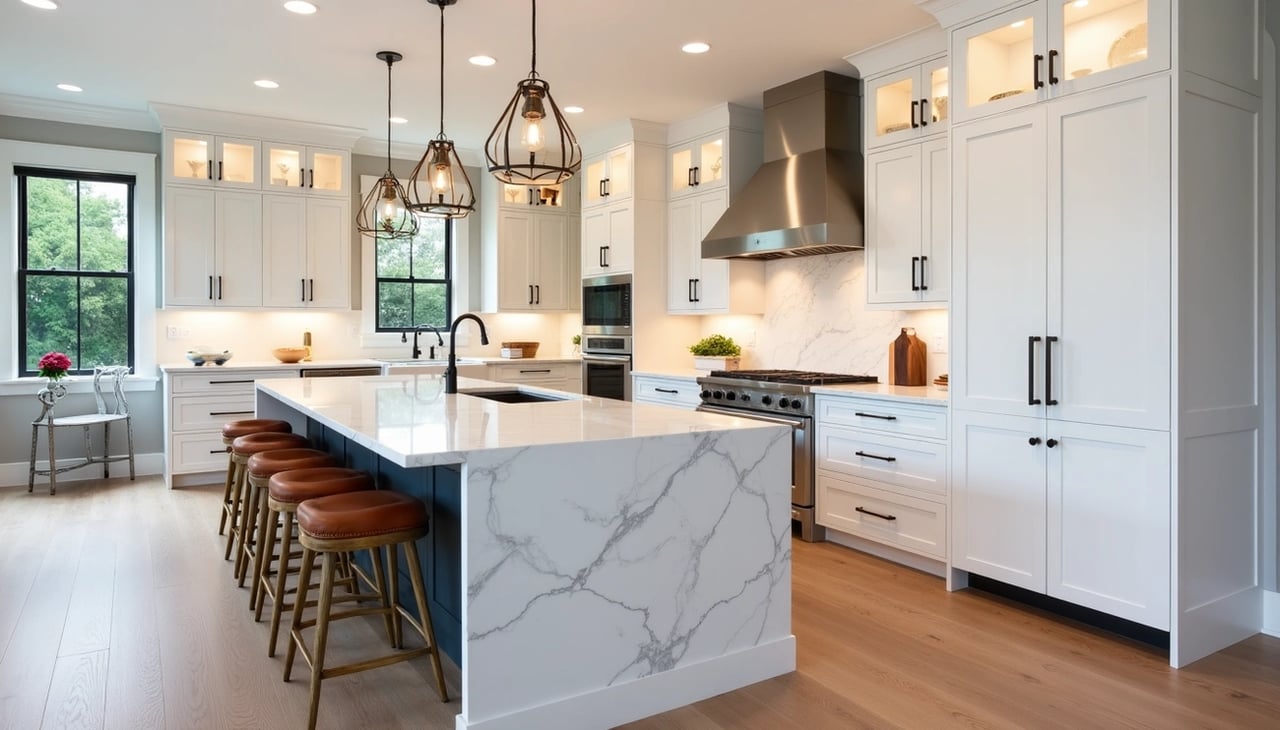
Kitchen islands require minimum clearances of 42 to 48 inches around all sides. This keeps traffic flow intact. Peninsula layouts provide three sides of workspace with one end attached to a wall. This forms an L-shape alternative for kitchens that lack island space. Peninsulas direct flow away from busy work zones in high-traffic kitchens. Islands positioned with sinks that face living spaces avoid visual clutter in sightlines.
L-Shaped Designs with Statement Islands
L-shaped kitchens with islands represent the most popular layout in custom floor plans. Wall cabinets house ovens, cooktops, sinks and refrigerators. Islands provide additional storage and prep space. This configuration maximizes available wall space and offers extra surface area that you would find in U-shaped designs.
Galley Layouts in Luxury Contexts
Galley kitchens feature parallel counters with functional layouts. These places sink and cooktop on opposite sides. Aisle widths require at least 42 inches but no more than 48 inches. This maintains efficiency and aesthetics. Refrigerator placement tucks into corners and bookends cabinetry runs.
High-End Features That Enhance Kitchen Functionality
Butler's Pantries and Appliance Garages
Functional features distinguish best luxury kitchens from ordinary cooking spaces. Butler's pantries serve as supplemental storage rooms that gain popularity as prep spaces for entertainers. They provide discreet areas to prepare food, wash dishes and store small appliances. These dedicated zones often connect kitchens to dining rooms and maintain clean sightlines in main cooking areas.
Appliance garages keep coffee makers, toasters, blenders and mixers available yet concealed behind retractable doors. Built-in outlets allow appliances to remain plugged in and ready. Counters stay minimalistic. Tambour doors slide up and down tracks. Pullout trays extend appliances forward for easier use.
Professional-Grade Work Stations
Commercial-grade work tables bring restaurant-level functionality into luxury bespoke kitchens. Stainless steel surfaces in varying gages provide durable prep zones. We recommend 14-gage steel for heavy equipment and constant use. These stations support serious cooking activities and maintain the refined aesthetic expected in modern luxury kitchens.
Integrated Seating and Dining Zones
Banquette seating integrated into kitchen islands creates conversational dining areas without separate furniture. Built-in benches maximize space efficiency and promote togetherness in multi-generational homes. Storage drawers beneath seating provide additional functionality.
The right home makes all the difference to those who love to entertain. If you're thinking about a purchase in the near future or beginning your search, I'd be delighted to help you find spaces designed to lift your living and make hosting effortless. Christina Pope  310-404-9931
  [email protected]
Custom Storage Solutions for Continuous Flow
Concealed pantries integrate into cabinetry with floor-to-ceiling pull-out systems or pocket doors that slide away. Rotating cabinet systems transform corner spaces into available storage. Integrated waste and recycling drawer systems feature soft-close mechanisms with odor-control features. Easy sorting happens without visible bins.
Brentwood Design Secrets: Creating Functional Elegance
Why Brentwood Luxury Kitchens Stand Apart
Luxury real estate in Los Angeles operates through private conversations rather than public listings. The most important transactions unfold quietly. Discretion carries equal weight to value here. Brentwood kitchens reflect this philosophy through handcrafted elements produced by artisans with three decades of expertise. Each kitchen combines thoughtful design with individual lifestyle understanding and creates spaces that feel purposeful and personal.
Material Selection for Lasting Quality
Premium materials define longevity in luxury kitchen remodel projects. Marble countertops range from $80 to $250 per square foot. Quartz falls between $80 and $180 per square foot. Hardwood flooring starts at $7 per square foot and reaches $15 for high-end options. Plywood construction offers superior load-bearing capacity and humidity resistance for cabinet boxes. Matte lacquer finishes provide anti-fingerprint properties with a smooth appearance, suited for handleless cabinet designs.
Lighting Design That Guides Movement
Strategic lighting incorporates ambient, task and accent types. Under-cabinet strips eliminate shadows in work areas. Pendant fixtures over islands provide concentrated illumination. Dimmable systems allow mood adjustment from morning preparation to evening entertaining.
Privacy and Discretion in High-End Kitchen Spaces
Panel-ready appliances match cabinetry and create concealed kitchens where functionality remains hidden. Movable cabinet doors on tracks reveal kitchen areas while keeping others closed. Spaces serve different purposes during different times.
Working with Elite Design Teams
Professional designers have managed projects from concept through final details since 1993. They coordinate cabinets, countertops, appliances and flooring. Showroom visits allow material evaluation before home measurements capture specifications. Design presentations detail costs and timelines. Commissioning deposits initiate custom fabrication.
For those who love to entertain, the right home makes all the difference. If you're thinking about a purchase in the near future or beginning your search, I'd be delighted to help you find spaces designed for refined living and easy hosting. Christina Pope 310-404-9931 [email protected]
Conclusion
Perfect flow separates exceptional luxury kitchens from expensive ones. Functionality and elegance merge through layout planning and zone design, and cooking spaces become effortless extensions of lifestyle. Experienced design teams make every element serve purpose and beauty, creating kitchens where movement feels intentional and every detail reflects quality that lasts.
Key Takeaways
Discover how Brentwood's elite designers create luxury kitchens where perfect flow transforms cooking spaces into functional masterpieces that seamlessly blend beauty with efficiency.
• Replace the rigid work triangle with flexible zones - Modern luxury kitchens use overlapping work stations for prep, cooking, cleaning, and storage instead of traditional triangle layouts.
• Plan for 42-48 inch aisles and multiple cooks - Proper spacing allows comfortable movement while dedicated counter space (36+ inches per cook) prevents workflow conflicts.
• Integrate butler's pantries and appliance garages - These concealed storage solutions maintain clean sightlines while keeping small appliances accessible yet hidden behind retractable doors.
• Choose materials for both beauty and durability - Premium options like quartz countertops ($80-180/sq ft) and plywood cabinet construction provide lasting quality that withstands heavy use.
• Layer ambient, task, and accent lighting strategically - Under-cabinet strips eliminate shadows, pendant fixtures provide focused illumination, and dimmable systems adapt from cooking to entertaining.
When executed properly, these design principles create kitchens that function as social hubs and entertainment venues while maintaining the sophisticated esthetic expected in luxury homes. The key lies in balancing visual impact with seamless functionality through expert planning and premium materials.
FAQs
Q1. What is the kitchen work triangle and why does it matter in luxury kitchens? The kitchen work triangle is a design concept that connects the sink, stove, and refrigerator in a triangular formation. The total perimeter should measure between 13 and 26 feet, with 4 to 9 feet between each point. This layout minimizes unnecessary movement during meal preparation, creating efficiency by reducing steps between primary work areas. While it serves as a useful baseline, modern luxury kitchens often use flexible work zones instead of rigid triangular layouts.
Q2. How much space do you need between kitchen counters for multiple cooks? For kitchens designed for multiple cooks, aisle widths should be between 42 and 48 inches to accommodate comfortable passing and movement. Each cook also needs a minimum of 36 inches of dedicated counter space for meal preparation activities. This spacing prevents workflow conflicts and allows people to work simultaneously without disrupting each other's tasks.
Q3. What are butler's pantries and how do they improve kitchen functionality? Butler's pantries are supplemental storage rooms that serve as entertainers' prep spaces, providing discreet areas to prepare food, wash dishes, and store small appliances. These dedicated zones often connect kitchens to dining rooms, maintaining clean sightlines in main cooking areas. They keep clutter out of sight while keeping everything accessible and ready for use.
Q4. What materials are recommended for high-end kitchen countertops? Premium countertop materials include marble, which ranges from $80 to $250 per square foot, and quartz, which falls between $80 and $180 per square foot. Quartz delivers visual appeal while resisting stains and maintaining durability under heavy use, making it particularly practical for luxury kitchens that see frequent cooking activity.
Q5. What types of lighting should be included in a luxury kitchen design? A well-designed luxury kitchen incorporates three essential types of lighting: ambient, task, and accent. Under-cabinet strips eliminate shadows in work areas, pendant fixtures over islands provide concentrated illumination, and dimmable systems allow mood adjustment from morning preparation to evening entertaining. This layered approach ensures both functionality and atmosphere.