Multi-generational living is reshaping how Brentwood's luxury estates are designed, as buyers seek homes that adapt to changing family needs more and more. Buyers in Brentwood look for homes with guest suites and in-law quarters that accommodate multiple generations under one roof, especially when they have extended families. This change reflects a broader transformation in high-end residential markets. Multigenerational family living has become a practical response to modern economic and social pressures. Families prioritize connection and financial flexibility when they design for multi-generational living. This piece is about how multi generational living communities influence new construction in Brentwood and gets into the best layout ideas for multi-generational living. We also weigh the pros and cons of multi generational living in luxury estates.
The Quiet Transformation of Brentwood Estate Living
"The silver tsunami is here. All you have to do is look at active adult. Now it's time for the assisted living and memory care segment to benefit from that same silver tsunami and the front edge of the wave is next year as baby boomers turn 80." — Nick Stengle, CEO of Brookdale Senior Living, leading provider of senior living communities relevant to multigenerational and aging-in-place trends
Brentwood's transformation isn't announced through public listings or market headlines. Average annual household incomes exceed $213,000 in the area. This attracts buyers who value discretion as much as design. These transactions unfold through private networks. Trusted advisors aid conversations about family needs and legacy planning there. They discuss architectural flexibility long before properties ever reach broader visibility.
The move toward multigenerational family living reflects practical decision-making rather than trend-following. 17% of homes purchased in 2024 accommodated multiple generations nationally. This pattern has intensified within Brentwood's estate market. Buyers seek properties that support aging parents and young children. They create spaces where autonomy and connection coexist without compromise.
Privacy remains central to how affluent families approach designing for multi-generational living. Ultra-wealthy buyers structure ownership through LLCs and trusts. This separates identity from public records while securing tax advantages. Properties are assessed not just for square footage but for circulation design and spatial separation. Buyers look for homes knowing how to accommodate evolving family dynamics over decades.
This approach just needs architecture that performs quietly. Homes incorporate multiple primary suites and separate entrances. Interior layouts prevent accidental encounters between household zones. The focus remains on creating environments where privacy improves daily life rather than limiting it.
Christina Pope—Sotheby's International Realty
EliteResidenceInternational.com
How Multigenerational Living Communities Are Influencing New Construction
Construction responses to multigenerational family living emerge from conversations architects have with clients before permits are filed. These discussions shape floor plans that accommodate three generations while maintaining the visual language of single-family estates. More than 26% of Americans now live in households spanning three or more generations, which drives builders to rethink how space functions for age groups of all types.
Dual primary suites have moved from specialty requests to baseline expectations in 2025. Both suites feature full bathrooms, spacious closets and semi-private access. This eliminates hierarchy between generations. Clients in their 40s and 50s plan for aging parents or future mobility needs when designing for multi-generational living.
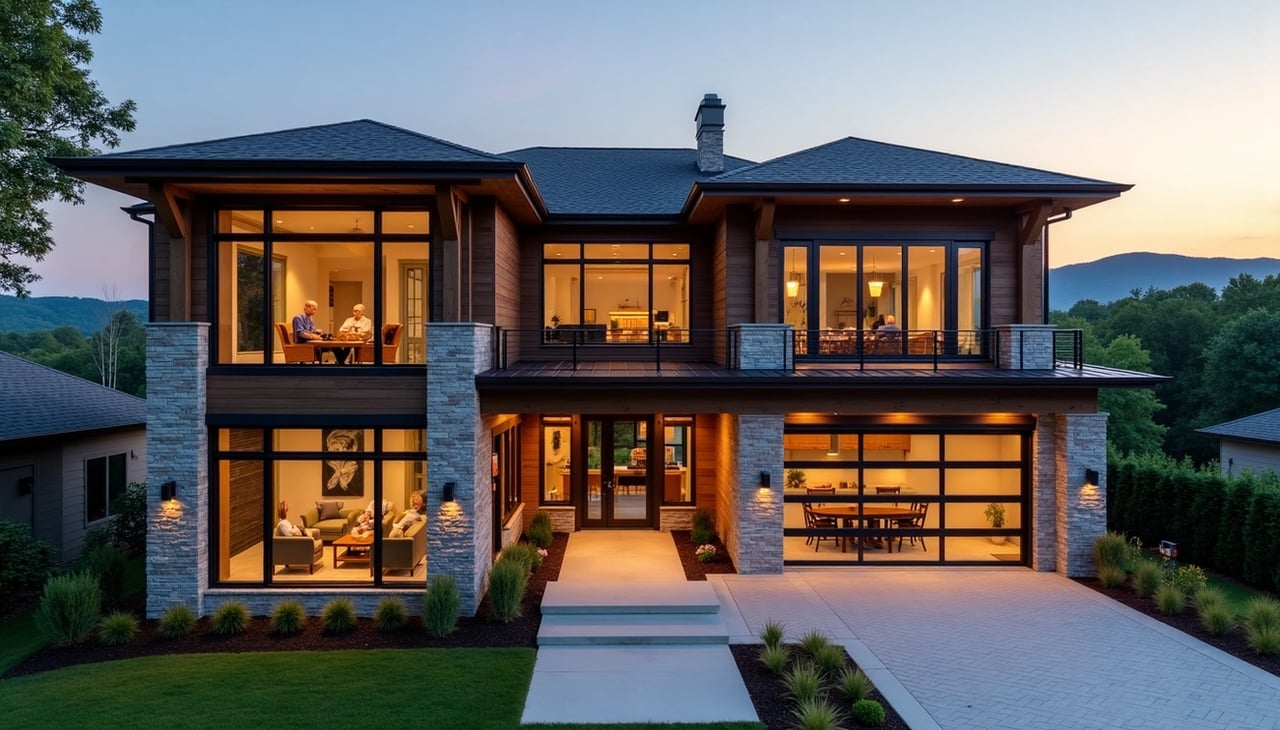
Multigenerational wings function as semi-independent units within the main structure. Professionals call them pods or in-law quarters. These spaces include separate entrances, dedicated living areas, optional kitchenettes and sound-buffering walls. The design offers cost advantages over detached accessory dwelling units while satisfying restrictive zoning requirements.
Buyers now demand main-level living. They request primary and secondary suites on the first floor, minimal interior steps, wider hallways for mobility aids and zero-step garage entries. Designers integrate these accessibility features naturally and avoid institutional esthetics through what professionals term "invisible accessibility".
Christina Pope—Sotheby's International Realty
EliteResidenceInternational.com
Pros and Cons of Multi-Generational Living in Brentwood Estates
"If we can't streamline this and make it easier and smoother for our residents, they'll find someone who can, and they just won't come to us." — Erin Shadbolt, CEO of Ascension Living, emphasizing resident experience in multigenerational care settings
Weighing the pros and cons of multi generational living requires a full picture of both financial realities and family dynamics. Shared expenses represent relief right away to Brentwood families. Households pool resources for mortgages and utilities while reducing individual financial burdens. This cost-sharing extends beyond monthly bills. Childcare expenses disappear when grandparents live on-site, and these expenses exceed $1,000 monthly per child often.
The benefits extend to health outcomes and family cohesion. Research confirms that multigenerational family living associates with decreased loneliness among older adults and better educational outcomes for children. It also lowers poverty levels. Children in these households develop stronger cognitive abilities and increased compassion through daily interactions with grandparents.
Privacy remains the biggest problem. Household activity reduces personal space continuously, while differing schedules between early risers and night owls create friction. Unclear divisions of responsibility breed resentment. Caregiving duties concentrate on one person despite multiple adults in residence.
The right home makes all the difference to those who love entertaining. If you're thinking over a purchase in the near future or beginning your search, I'd be delighted to help you find spaces designed for sophisticated living and effortless hosting. Christina Pope 📞 310-404-9931 ✉️ [email protected]
Christina Pope—Sotheby's International Realty
EliteResidenceInternational.com
Conclusion
Multi-generational estate design represents more than architectural adaptation. Brentwood families are reshaping luxury living through practical decisions that balance financial wisdom with privacy requirements. Success depends on honest assessment of family dynamics before committing to shared space. Buyers who approach these layouts with strategy, especially those working with experienced advisors, position themselves for homes that adapt over decades rather than require replacement when circumstances change.
Key Takeaways
Multi-generational living is quietly transforming Brentwood's luxury estate market as families prioritize connection, financial flexibility, and long-term adaptability in their home designs.
• 17% of homes purchased in 2024 accommodate multiple generations, with Brentwood buyers specifically seeking properties with guest suites and in-law quarters for extended family living.
• Dual primary suites and multigenerational wings have become baseline expectations in new construction, featuring separate entrances, dedicated living areas, and sound-buffering walls for privacy.
• Main-level living with accessibility features is now non-negotiable, including first-floor primary suites, wider hallways, and zero-step entries designed with "invisible accessibility" principles.
• Financial benefits include shared mortgage, utility, and childcare costs, with families pooling resources while grandparents provide on-site childcare that typically exceeds $1,000 monthly per child.
• Privacy challenges remain the central concern, requiring careful design to manage continuous household activity, differing schedules, and unclear responsibility divisions that can create family friction.
The key to successful multi-generational estate living lies in honest assessment of family dynamics before committing to shared space, ensuring homes adapt across decades rather than requiring replacement when circumstances change.
FAQs
Q1. What are the best layout features for a multigenerational home? Effective multigenerational layouts include dual primary suites with full bathrooms, separate bedroom wings or pods with independent entrances, main-level living spaces to accommodate all ages, wider hallways and doorways for accessibility, and sound-buffering walls between living zones. These features balance togetherness with privacy while ensuring the home remains functional as family needs evolve.
Q2. What financial advantages does multigenerational living offer? Families sharing a home can pool resources for mortgage payments, utilities, and property taxes, significantly reducing individual financial burdens. Additionally, on-site grandparents can provide childcare, eliminating expenses that typically exceed $1,000 monthly per child. This cost-sharing arrangement creates immediate financial relief while strengthening family bonds.
Q3. How do designers address privacy concerns in multigenerational estates? Architects incorporate separate entrances for different household zones, multiple primary suites to eliminate generational hierarchy, strategic circulation design that prevents accidental encounters, and dedicated living areas with sound insulation. These "invisible accessibility" features maintain the esthetic of luxury estates while ensuring each generation maintains autonomy within the shared space.
Q4. What accessibility features are now standard in multigenerational homes? Modern multigenerational estates include first-floor primary and secondary suites, zero-step garage entries, wider hallways designed for mobility aids, minimal interior steps throughout the home, and seamlessly integrated accessibility elements that avoid institutional appearances. These features ensure the home remains functional for aging family members without compromising design esthetics.
Q5. What are the main challenges of multigenerational living in luxury estates? The primary challenges include managing continuous household activity that reduces personal space, coordinating differing schedules between early risers and night owls, establishing clear divisions of household responsibilities, and preventing caregiving duties from concentrating on one person. Successful multigenerational living requires honest assessment of family dynamics and thoughtful design solutions before committing to shared living arrangements.