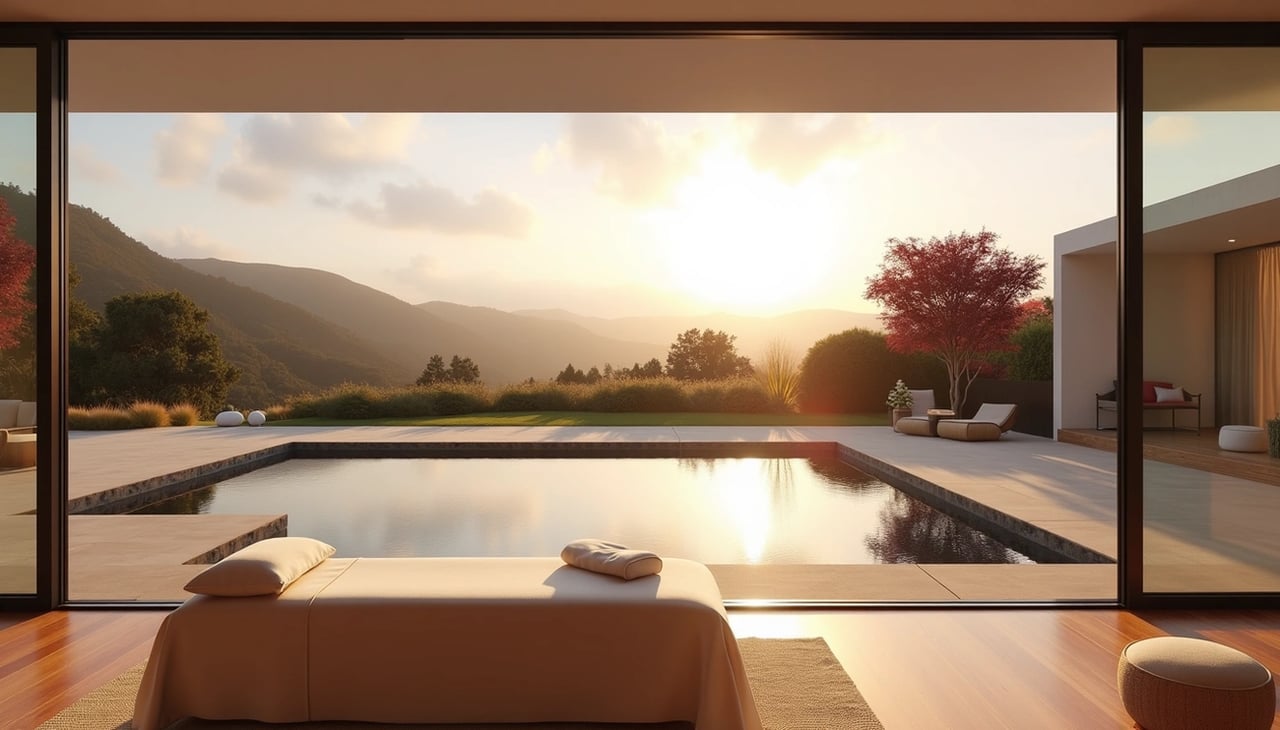
Ultra-luxury estates revolutionize how affluent individuals think about health and wellness retreats. They move away from destination spas toward private sanctuaries within their homes that are equipped. Wellness real estate has become a $134 billion market and represents 1.5 percent of total annual global construction, with projected growth at 8 percent annually. Given these figures, the wellness industry overall is expected to reach nearly $10 trillion in just a few years. High-net-worth buyers now prioritize features once thought luxuries, redefining luxury wellness retreats as integral components of their properties. This change reflects the growing need for privacy and immediate access. It also reflects the need for individual-specific health protocols that traditional health and wellness spa retreats cannot provide. These private luxury health and wellness retreats offer complete control over therapeutic environments and advanced diagnostics. Wellness programming is tailored to individual-specific needs.
The Shift from Public Wellness Destinations to Private Retreats
Rising just need for privacy and exclusivity
Shared wellness spaces at public health resorts and health and spa resorts create compromises that affluent individuals reject more and more. Guests who book a traditional wellness and hotel property share facilities with business travelers, families and casual vacationers. This dilutes the focused environment that meaningful health transformation needs. Private luxury health and wellness retreats eliminate this scattered energy and host select individuals with aligned wellness objectives on exclusive properties.
The wellness business now exceeds pharmaceutical industry revenues by three times. This reflects fundamental shifts in how people pursue health optimization. High-net-worth individuals recognize that uninterrupted serenity makes deep meditative and emotional work possible. Bustling health and wellness spa retreats cannot provide this. Every element supports transformation at private estates without the intrusions common at commercial facilities.
Convenience and time savings
Time ranks as the most valuable commodity for successful individuals. They refuse vague results from wellness programs. Travel to distant health and wellness resort destinations consumes days that private home facilities eliminate. Immediate access to therapeutic equipment, diagnostic tools and recovery amenities removes scheduling constraints. Luxury wellness center bookings and availability windows impose these constraints.
Residential wellness integration has surged 35 percent over five years. Buyers arrange properties to offer amenities that were once exclusive to luxury wellness retreats. This growth pattern reveals priorities for on-demand wellness access over coordinated resort visits that require advance planning and travel logistics.
Control over personal health protocols
Consumer scrutiny of wellness spending has intensified. 84 percent of individuals think about wellness as a top priority while demanding measurable effect at the same time. Private retreats deliver this accountability through personalized programming that standardized health resorts cannot provide. Hand-picked practitioners focus on individual goals rather than managing diverse guest populations with conflicting needs.
The high staff-to-guest ratios at exclusive luxury health and wellness retreats cannot match what private estates achieve. Dedicated wellness teams make this possible. Property owners design protocols around specific health markers, dietary requirements and therapeutic priorities without compromise. This customization extends beyond treatment selection to cover environmental controls, scheduling flexibility and long-term protocol adjustments based on continuous health monitoring.
What Modern Private Health and Wellness Retreats Include
Advanced medical and diagnostic equipment
Residential wellness installations now incorporate hospital-grade diagnostic capabilities that extend way beyond simple fitness tracking. Health monitoring systems within these estates track air quality, sleep patterns and stress levels. They give immediate feedback to residents. Digital health monitoring platforms connect with in-house medical staff and create permanent clinical presence within the building structure. This medical infrastructure supports continuous health optimization rather than reactive treatment approaches common at traditional health and wellness resort facilities.
Spa-level therapeutic amenities
Private estates feature therapeutic equipment previously exclusive to elite athletic facilities and luxury wellness retreats. Hyperbaric oxygen chambers deliver pressurized oxygen to increase bloodstream oxygen levels and tissue saturation. Cryotherapy chambers and infrared saunas provide temperature-based therapies. Infrared technology offers deeper tissue penetration at lower heat intensity compared to traditional steam systems. Cold plunge pools, salt therapy rooms using pharmaceutical-grade halotherapy and red light therapy units stimulate cellular mitochondria. This accelerates healing and reduces inflammation. Hydrotherapy installations include massage jets and customizable steam showers with essential oil infusions.
Fitness and movement studios
Movement spaces in private health and wellness retreats emphasize recovery among performance. State-of-the-art equipment pairs with dedicated recovery rooms housing AI-powered recovery pods, PEMF therapy mats generating pulsed electromagnetic fields and compression therapy systems that increase blood flow through air-powered sleeves [83]. Proper lighting design proves critical for safety and motivation. It enhances visual appeal while boosting confidence during training sessions.
All-encompassing wellness integrations
Environmental control systems distinguish private wellness environments from commercial health and spa resorts. Air microfiltration maintains constant indoor quality monitoring, while water microfiltration gives purity throughout the property. DMX lighting systems program circadian-friendly scenarios that regulate sleep-wake cycles and support mental clarity with restorative sleep patterns [83]. Immersive Dolby Atmos audio systems and aromatherapy diffusion create multi-sensory experiences targeting emotional and physical states.
Why High-Net-Worth Individuals Are Investing in At-Home Wellness
Immediate access to health optimization
High-net-worth individuals have moved from conspicuous consumption toward longevity and preventive health management. 87% of affluent individuals pursue longevity strategies in North America, while this figure reaches 100% in Asia Pacific. These strategies cover customized diagnostics, preventive therapies and functional medicine protocols that require consistent access rather than sporadic resort visits.
Formal long-term care planning has become standard practice. 68% of Asia Pacific high-net-worth individuals maintain well-laid-out health plans—nearly double the global average. Private wellness installations support these protocols through immediate equipment access and continuous health monitoring that traditional health and wellness spa retreats cannot provide.
Customization to personal health goals
Family offices that manage ultra-high-net-worth affairs establish relationships with leading specialists. These specialists develop expert treatment protocols for complex conditions. Tailored healthcare strategies think about specific medical conditions, lifestyle priorities, cultural requirements and personal routines. Customized care plans arrange themselves with individual expectations and boost overall well-being through adaptable protocols.
Long-term cost considerations
Financial returns from wellness investments prove substantial. Integrated care programs demonstrate that every dollar spent yields six dollars in medical cost savings. Home-based care averages $30 per hour, substantially lower than institutional facilities. Families preserve assets while they maintain quality care.
Property value enhancement
Wellness-focused properties command measurable premiums in luxury real estate markets. Homes featuring wellness amenities sell for 10-25% more than comparable properties that lack these features. The wellness lifestyle real estate sector was valued at $275 billion in 2020 and projects growth to $913 billion by 2028. Biohacking amenities function as value-adds and increase marketability beyond financial returns. Properties that incorporate wellness facilities separate themselves in crowded markets. They support faster sales cycles and premium pricing.
Building Wellness into Ultra-Luxury Estates from the Ground Up
Dedicated wellness wings and floors
Properties above $4 million lacking private gyms of at least 40 square meters, steam rooms or saunas, cold plunge facilities, and treatment rooms face competitive disadvantages in luxury markets. Updating these baseline features costs $165,000 to $315,000 before mechanical upgrades. Ground-up construction integrates wellness infrastructure into structural planning and utility systems naturally.
Integration with home architecture
Primary suites have evolved into wellness sanctuaries where architecture, light, materials, and spatial flow promote recovery and longevity. Spatial proportion, texture layering, and restrained tonality work together to create environments that lower stress and support deep rest. Well-balanced room proportions and clear sightlines reduce cognitive load. Muted, cohesive material palettes help the nervous system change toward parasympathetic calm.
Air quality, lighting, and environmental controls
Sleep optimization rooms engineer quality through temperature kept at 65 to 68 degrees Fahrenheit, circadian-spectrum lighting that changes from blue-spectrum mornings to amber-spectrum evenings, acoustic isolation to 45 dB or better, and HEPA filtration with CO2 monitoring and humidity control at 45 to 55%. Advanced air purification systems with MERV13 filters and proper air exchange rates prevent VOC off-gassing from finishes and fixtures.
Outdoor wellness spaces and nature connection
Climate conditions allow wellness features to flow from interior to exterior spaces. Primary suites open onto private gardens with outdoor showers, soaking tubs, and lounges. Pools function as recovery zones with sun shelves, shaded cabanas, and ambient lighting. Biophilic design incorporates expansive glass walls, natural wood and stone finishes, and designed landscaping that maximizes nature views and provides continuous outdoor access.
The right home makes all the difference for those who love to entertain. If you're thinking about a purchase in the near future or beginning your search, I'd be delighted to help you find spaces designed for elevated living and effortless hosting. Christina Pope  310-404-9931
  [email protected]
Conclusion
Private wellness retreats represent a fundamental transformation in luxury real estate. High-net-worth buyers just need privacy and customization with access to therapeutic amenities. When you integrate wellness infrastructure from the ground, you get superior functionality compared to updating existing structures. These properties command measurable premiums in competitive markets. Buyers view these facilities not as optional luxuries but as everything in their longevity strategies and preventive health protocols that traditional destination spas cannot provide.
Key Takeaways
Ultra-luxury estates are revolutionizing wellness by bringing spa-level amenities home, creating private sanctuaries that offer unprecedented control over health optimization and therapeutic environments.
• Privacy drives premium wellness: High-net-worth individuals are abandoning shared spa facilities for exclusive private retreats that eliminate distractions and enable focused health transformation.
• Immediate access maximizes results: Home-based wellness eliminates travel time and scheduling constraints, providing on-demand access to advanced diagnostics and therapeutic equipment.
• Customization delivers measurable outcomes: Private retreats offer personalized health protocols impossible at standardized resorts, with dedicated teams focusing exclusively on individual goals.
• Financial returns justify investment: Wellness-integrated properties sell for 10-25% premiums while delivering $6 in medical savings for every $1 invested in care programs.
• Ground-up integration outperforms retrofitting: Building wellness infrastructure from the start costs less and delivers superior functionality compared to adding amenities to existing properties.
This shift reflects a broader transformation where wellness moves from luxury amenity to essential infrastructure, supporting long-term health strategies that traditional destination spas simply cannot match in terms of privacy, customization, and continuous access.
FAQs
Q1. Why are wealthy homeowners choosing private wellness retreats over destination spas? High-net-worth individuals prefer private wellness retreats because they offer complete privacy, eliminate travel time, and provide immediate access to therapeutic amenities. Unlike shared spa facilities where guests must coordinate schedules and share spaces with diverse populations, private retreats deliver uninterrupted environments focused solely on individual health goals with dedicated wellness teams and personalized protocols.
Q2. What kind of medical and wellness equipment do modern luxury estates include? Modern private wellness retreats feature hospital-grade diagnostic systems, hyperbaric oxygen chambers, cryotherapy units, infrared saunas, cold plunge pools, salt therapy rooms, and red light therapy equipment. These estates also incorporate advanced air and water filtration systems, circadian lighting controls, AI-powered recovery pods, PEMF therapy mats, and compression therapy systems alongside traditional spa amenities.
Q3. How much value do wellness amenities add to luxury properties? Wellness-focused properties command 10-25% higher prices than comparable homes without these features. The wellness lifestyle real estate sector was valued at $275 billion in 2020 and is projected to reach $913 billion by 2028. Properties above $4 million without basic wellness amenities like private gyms, saunas, and treatment rooms face competitive disadvantages in luxury markets.
Q4. Is it more cost-effective to build wellness features into a new home or add them later? Building wellness infrastructure from the ground up is significantly more cost-effective than retrofitting. Adding baseline wellness features to existing properties costs $165,000 to $315,000 before mechanical upgrades, whereas ground-up construction integrates these systems seamlessly into structural planning and utilities, delivering superior functionality at lower overall cost.
Q5. What environmental controls are essential for optimal home wellness spaces? Essential environmental controls include air purification with MERV13 filters and proper ventilation, temperature regulation (65-68°F for sleep spaces), circadian-spectrum lighting that shifts throughout the day, humidity control at 45-55%, acoustic isolation to 45 dB or better, and CO2 monitoring. These systems work together to support recovery, reduce stress, and optimize sleep quality.