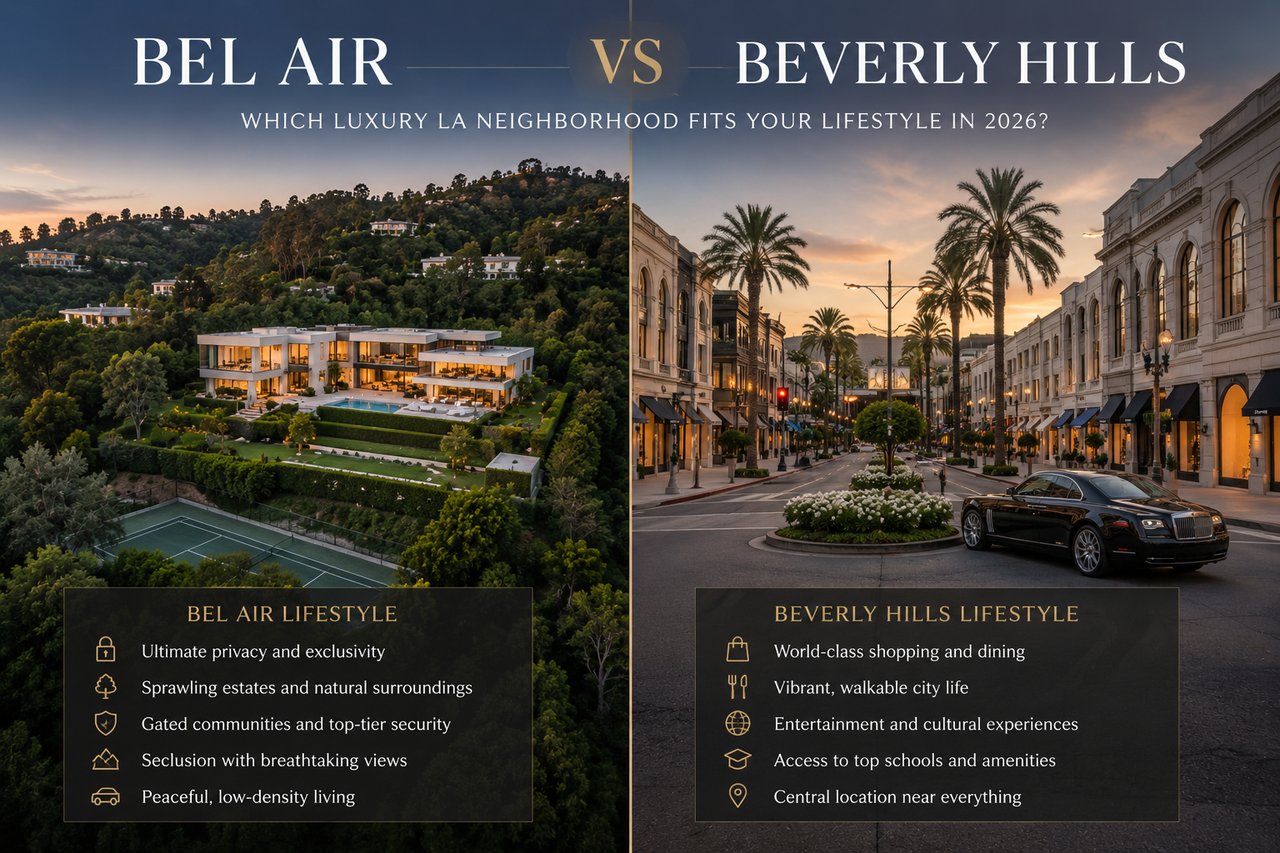
Luxury real estate decisions happen behind closed doors. The Bel Air vs Beverly Hills choice unfolds through trusted relationships and quiet conversations, where discretion carries more weight than market visibility. Beverly Hills median prices typically range from $3M to $5M, while Bel Air properties generally fall between $4M to $8M. Both neighborhoods attract discerning buyers, yet questions persist: is Bel Air in Beverly Hills, how far is Bel Air from Beverly Hills, and is Bel Air more expensive than Beverly Hills?
Each enclave offers distinct advantages for those who understand what truly matters—location, privacy levels, pricing dynamics, and long-term value. The right choice depends on your specific priorities and lifestyle expectations.
Location and Geography: How Far is Bel Air from Beverly Hills
Beverly Hills and Bel Air sit 5 to 6 miles apart, yet the mountainous terrain between them stretches travel time to approximately 20 minutes. This geographic relationship shapes the fundamental choice between convenience and seclusion.
Beverly Hills: Central Westside Position
Beverly Hills sits six miles northeast of Santa Monica and nine miles west of Downtown Los Angeles. The city operates as an independent municipality with its own governance, police department, and municipal codes. Rodeo Drive anchors the commercial heart, offering walkable access to high-end retail, dining, and entertainment. Major arterial roads provide direct connections to downtown and coastal areas. Residents enjoy immediate access to West Hollywood eastward and the Pacific Ocean westward.
Beverly Hills forms part of the Platinum Triangle alongside Bel Air and Holmby Hills. This designation reflects the concentrated wealth across these three neighborhoods. The city also belongs to the "three Bs" with Brentwood and Bel Air, representing the Westside's most prestigious residential areas.
Bel Air: Hillside Elevation and Winding Roads
Bel Air occupies the Santa Monica Mountains, positioned approximately 12 miles west of Downtown Los Angeles. The neighborhood sits northwest of Beverly Hills as part of Los Angeles proper rather than an independent city. Sunset Boulevard creates a natural boundary, with Bel Air positioned directly across from UCLA's campus.
Rolling hills, winding canyon roads, and elevated homesites define the terrain. Properties rest on larger parcels with extended setbacks, separated by natural topography rather than urban grids. This layout requires vehicles for all daily activities.
Daily Access and Mobility
The 5 to 6 miles between neighborhoods translates to 20 minutes of drive time through Bel Air's mountainous roads. Beverly Hills offers immediate city access, while Bel Air provides separation through elevation and winding routes.
Bel Air living means car dependency for every errand, dining reservation, and social engagement. Beverly Hills residents can walk to restaurants, boutiques, and services within the commercial core without needing transportation.
Real Estate Market: Is Bel Air More Expensive Than Beverly Hills
Market expertise matters when significant transactions happen away from public view. The most valuable sales occur through established networks where relationships and timing create opportunities that never reach traditional listings. For buyers weighing the Bel Air vs Beverly Hills decision, understanding true pricing dynamics requires access to actual market mechanics rather than surface-level data.
Median Home Prices and Property Values
Bel Air typically commands higher entry points. Current median prices range from $4.80M to $6.20M, with median asking prices reaching $8M. Beverly Hills shows a broader range spanning $3M to $5M, while median asking prices settle at $5.55M. Trophy properties in both neighborhoods regularly exceed $20M, with the highest tier establishing new benchmarks across Los Angeles.
Beverly Hills offers more diverse options. Properties range from $2M condos to $50M estates, with significant variation between ZIP codes. The prestigious 90210 carries a median list price of $8.75M, compared to $2.46M in 90212 and $1.70M in 90211. Bel Air concentrates on ultra-luxury, with most offerings beginning above $5M.
Market timing reveals important differences. Beverly Hills properties average 51 days on market with a 97% sale-to-list ratio. Bel Air shows 97 median days on market with a 93% sale-to-list ratio, indicating more deliberate buyer consideration. Well-positioned Beverly Hills homes close at approximately 96.8% of list price, while Bel Air's extended timelines reflect a more selective buyer pool.
Cash dominates premium transactions. Approximately 60.9% of properties over $10M close without financing, reducing interest rate sensitivity and allowing both parties to move with precision rather than urgency.
Lot Sizes and Estate Features
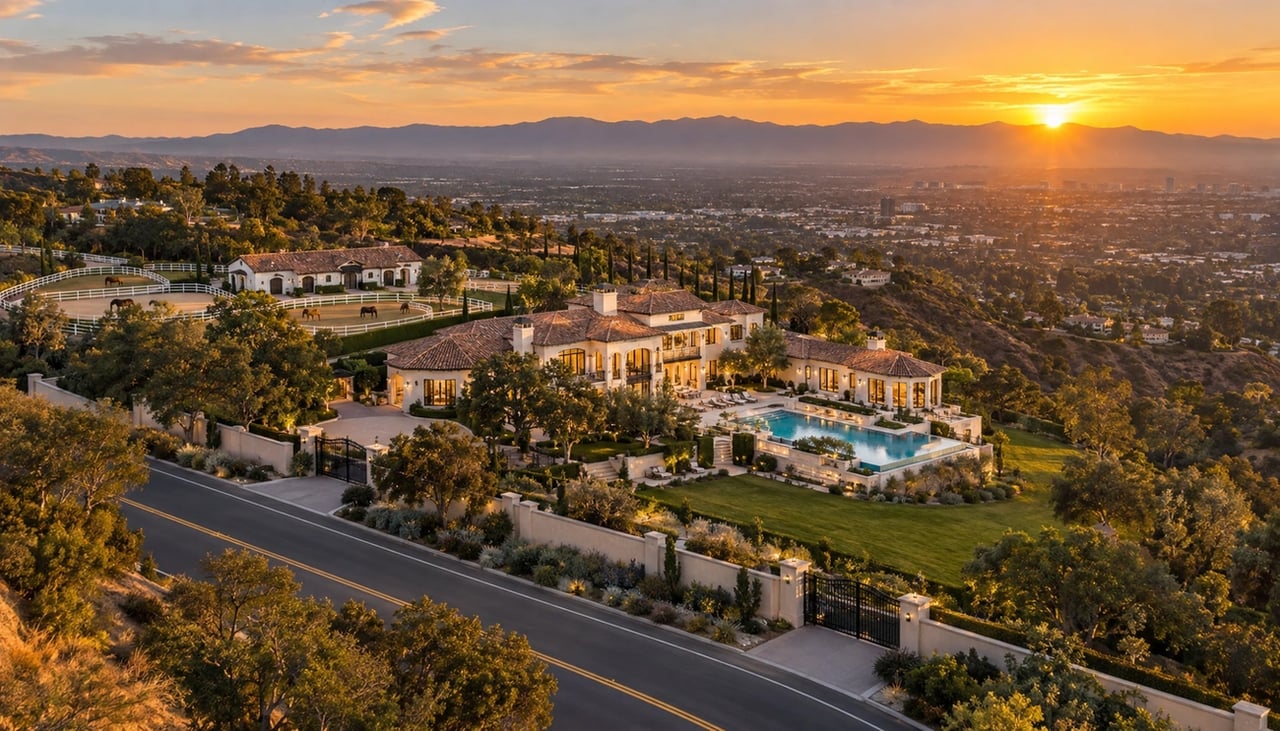
Bel Air parcels commonly span 1 to 5+ acres, exceptional for Los Angeles real estate. Current inventory research shows lots reaching 1 to 2.5 acres, substantially exceeding typical Beverly Hills parcels. Properties feature tennis courts, guest houses, and panoramic city and ocean views.
Beverly Hills presents varied configurations. The Flats offer smaller parcels within walkable districts, while properties north of Sunset Boulevard provide larger grounds. This range accommodates buyers seeking both estate-scale privacy and refined homes in pedestrian-accessible settings.
Architectural Styles: Historic vs Contemporary
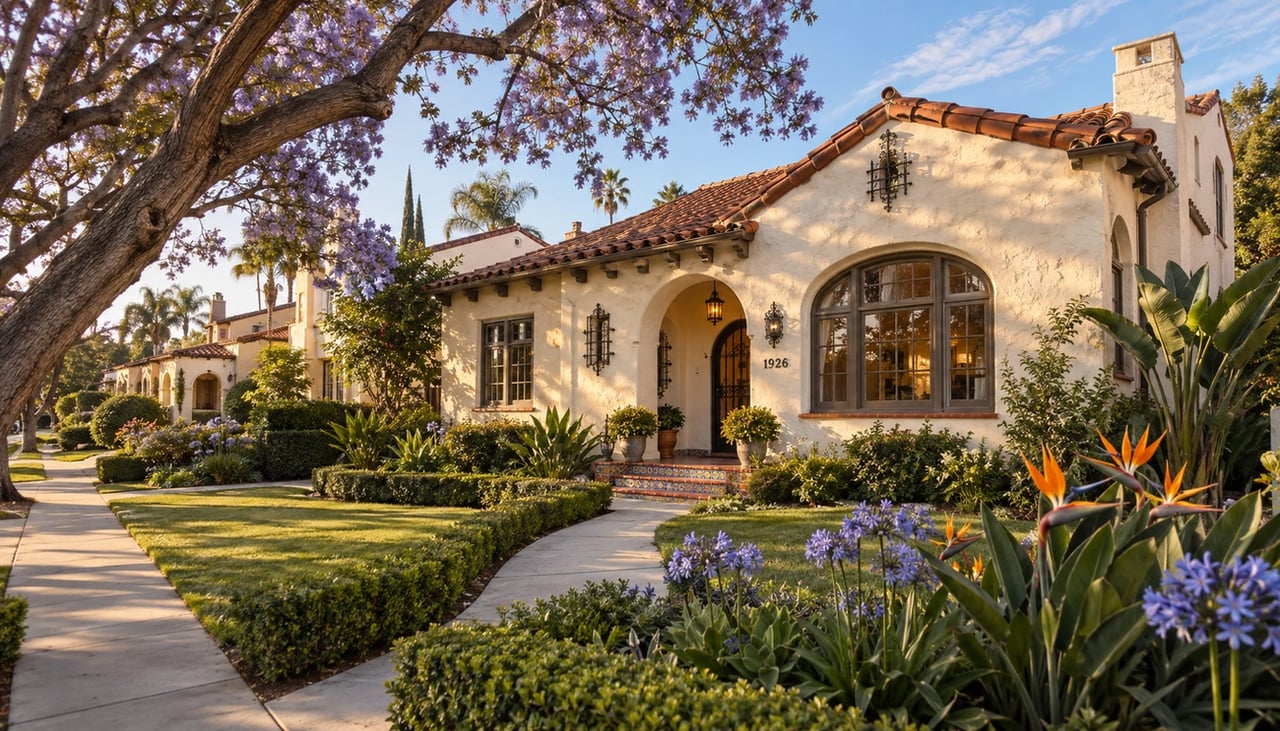
Beverly Hills possesses one of America's most significant residential architectural collections. The Flats preserve 1920s Spanish, Tudor, Mediterranean, and Georgian Revival estates by distinguished architects including Paul Williams, Roland Coate, and Wallace Neff. Trousdale features mid-century modern masterpieces by John Lautner, A. Quincy Jones, and Hal Levitt, with contemporary glass-walled reconstructions becoming increasingly prevalent.
Bel Air's architectural inventory centers on trophy properties. Original 1920s estates inspired by Italian and French countryside villas occupy multi-acre sites. Mid-century modern works by Richard Neutra and Pierre Koenig claim elevated positions above Bel Air Road. Contemporary mega-estates spanning 20,000 to 50,000 square feet represent current development trends, showcasing glass, steel, and concrete construction.
Property Tax Rates and Ownership Costs
True ownership costs extend well beyond purchase price. Bel Air properties typically require substantial maintenance budgets for estate-scale grounds and facilities. Beverly Hills residents face similar property tax rates but often allocate more toward lifestyle expenses including dining, shopping, and entertainment. Beverly Hills maintains exemption from Measure ULA, the mansion tax affecting high-value Los Angeles transactions, creating sustained pricing advantages for properties within city boundaries.
Lifestyle and Daily Experience
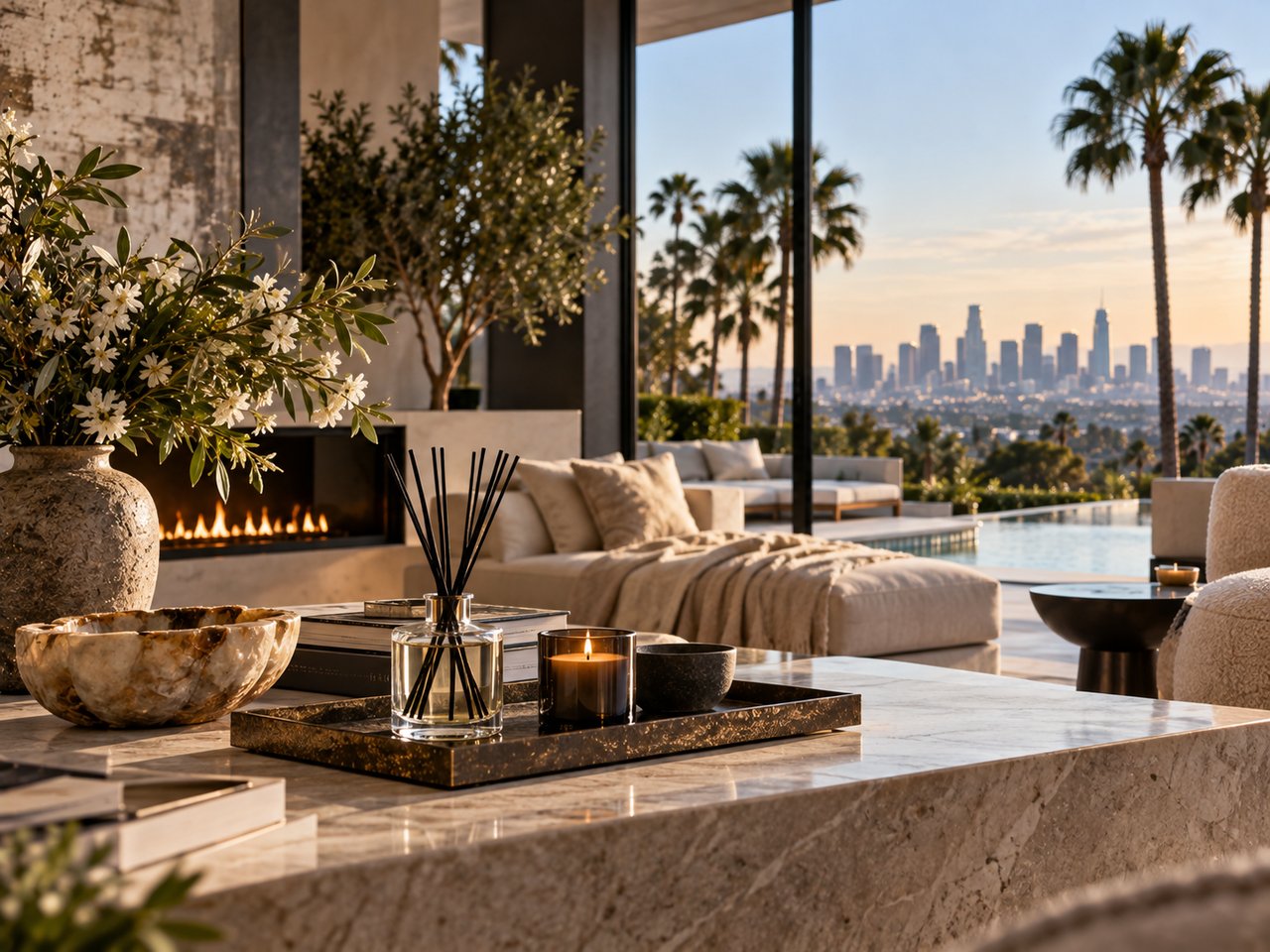
The choice between these neighborhoods becomes clear through daily living patterns. Beverly Hills residents step outside to world-class shopping, walk to acclaimed restaurants, and handle daily needs within blocks of home. Community life flows naturally through shared spaces and social venues where connections happen effortlessly. Bel Air residents treasure expansive privacy, with estates designed for those who value seclusion and extensive personal grounds.
Beverly Hills: Walkable Village Living
Beverly Hills delivers everything within reach. Tree-lined streets lead directly to luxury boutiques, five-star hotels, wellness centers, and Michelin-starred dining. The Flats stand out for walkability, cultural proximity, and residents who appreciate immediate access to sophisticated amenities. A typical day might include wellness appointments, business meetings, shopping, and dinner—all accomplished on foot. Evening entertainment transitions seamlessly from neighborhood restaurants to cultural events. The city's complimentary weekend trolley connects Civic Center to Rodeo Drive, while Will Rogers Memorial Park and Greystone Mansion & Gardens offer peaceful retreats.
Bel Air: Private Estate Lifestyle
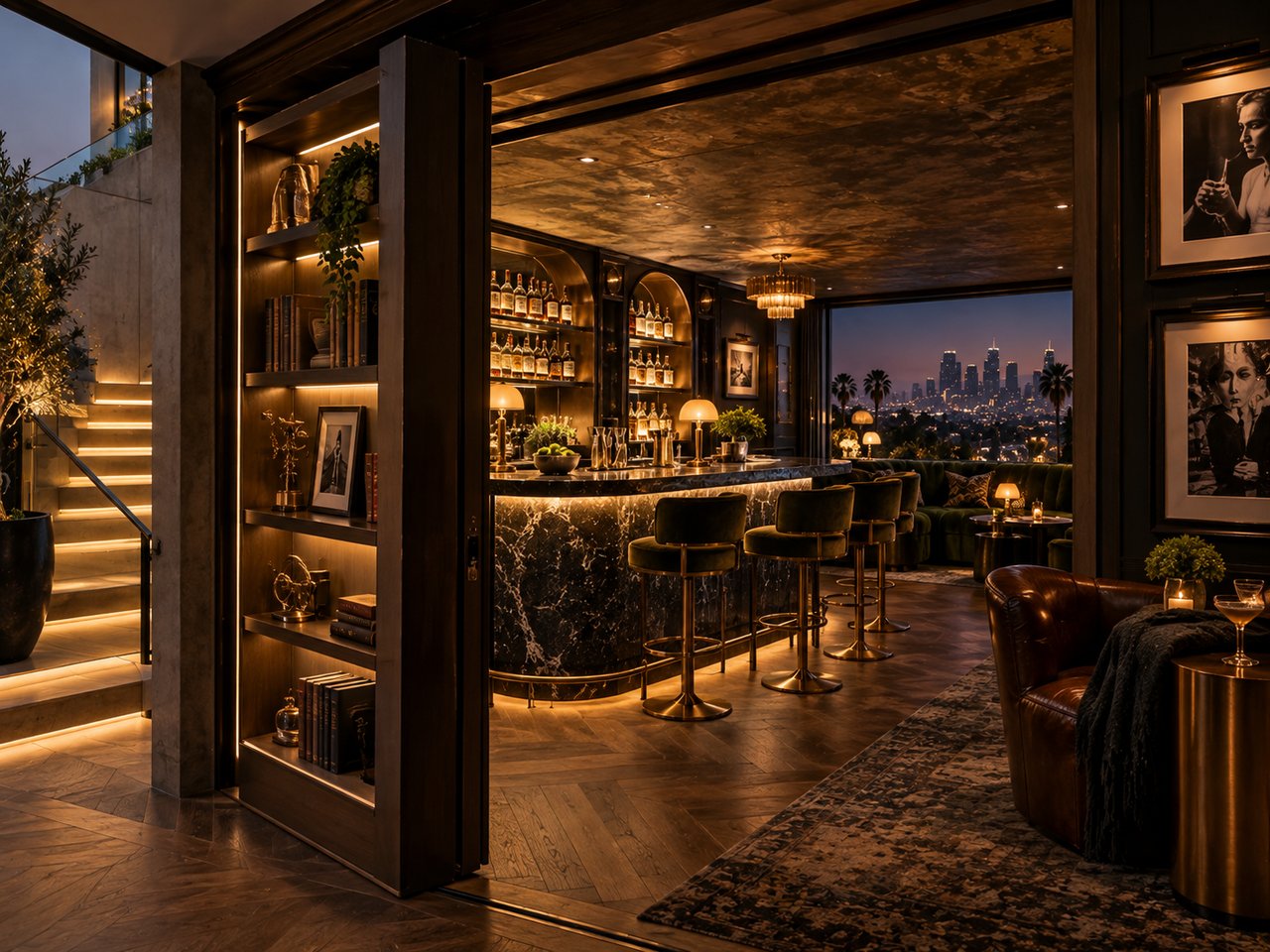
Bel Air offers something rare: true seclusion. Properties sit behind private gates, surrounded by mature landscaping and natural terrain that creates genuine separation from city life. Estate features regularly include guest accommodations, pool houses, tennis courts, and professionally designed grounds that support both intimate gatherings and large-scale entertaining. Social connections happen through private events rather than public venues. The Bel Air Country Club and Hotel Bel Air serve as refined meeting points for residents. Daily life centers around scenic drives, outdoor spaces, and views that stretch across the city to the ocean. For those who appreciate entertaining at the highest level, the right property creates endless possibilities. If you're exploring options or ready to begin your search, I would welcome the opportunity to show you homes designed for sophisticated living and memorable hosting. Christina Pope  310-404-9931
  [email protected]
Shopping and Dining Access
Beverly Hills places world-class retail at your doorstep. Rodeo Drive delivers luxury shopping complemented by hundreds of dining establishments within easy walking distance. Bel Air maintains its residential character through the absence of commercial development. Residents drive to nearby Brentwood or Beverly Hills for shopping and dining experiences. This separation preserves the quiet, estate-like atmosphere while requiring advance planning for commercial activities.
Social Scene and Community Atmosphere
Beverly Hills balances daytime sophistication with evening entertainment, from premium retail and cultural attractions to acclaimed restaurants and Sunset Strip venues. Bel Air remains elegantly residential, with social life centered around private properties rather than commercial districts. This positioning appeals to those who prefer separation from busy commercial areas and tourist activity.
Privacy Levels and Security
Privacy represents real value in luxury real estate markets. High-net-worth buyers know that true seclusion requires proper infrastructure, not just good intentions. The Bel Air vs Beverly Hills comparison centers on delivery methods: Bel Air achieves privacy through physical separation, while Beverly Hills relies on municipal control and rapid response systems.
Gated Properties and Access Control in Bel Air
Bel Air delivers structural privacy through three gated entry points and lots spanning 1 to 5+ acres. Canyon roads and hillside topography prevent casual observation. The Bel-Air Association operates camera installations at entrances and high-traffic points, while LAPD West Los Angeles provides area coverage through Neighborhood Watch coordination.
Estate properties typically feature main gates, side access, service entrances, and extended driveways. Multiple access points offer convenience but require monitoring across terrain with blind curves and elevation changes. Private security providers carry minimum USD 1M in general liability insurance, addressing specific vulnerabilities including canyon access points and proximity to public hiking trails.
Beverly Hills Police Department vs Private Security
Beverly Hills maintains its own police department with response times under three minutes. Municipal officers provide consistent visibility throughout residential areas. Bel Air depends on Los Angeles County Sheriff services combined with private security teams, with many estates employing dedicated staff. Both neighborhoods show extremely low crime rates.
Street Activity and Public Visibility
Beverly Hills experiences regular street activity from pedestrians, shoppers, and tourists. Daily foot traffic moves through commercial districts, creating an urban residential environment. Bel Air remains purely residential with few outside visitors. The neighborhood's location within Santa Monica Mountain foothills provides minimal commercial activity, ensuring low visibility and separation from city traffic patterns.
Investment Potential and Long-Term Value
High-net-worth individuals view property acquisition through a legacy lens rather than seeking immediate returns. Both neighborhoods serve as capital preservation vehicles with appreciation in the 5 to 7% historical band, where wealth preservation takes precedence over aggressive growth. Market analysis requires examining liquidity patterns, appreciation trends, and buyer motivations that drive long-term value.
Market Liquidity and Resale Speed
Beverly Hills averages 18 days on market, supported by concentrated global buyer demand drawn to the iconic address. Bel Air shows 22 days on market, reflecting a more selective buyer pool. Trophy tier properties move differently: Beverly Hills 90210 properties average 238 days, while Bel Air 90077 extends to 273 days. Off-market transactions control the $10M+ segment, with Bel Air's trophy market operating almost exclusively through private broker networks. Approximately 20% of all luxury transactions occur off-market, enabling sellers to test pricing without visible market exposure.
Property Appreciation Trends
Bel Air's 5.8% year-over-year appreciation demonstrates capital preservation focus rather than aggressive growth. Both neighborhoods outperform broader Los Angeles trends over 10+ years, with individual property selection carrying more weight than neighborhood prestige at the upper tier.
Rental Income Opportunities
Median rental pricing reaches $18K per month in Bel Air compared to $10.75K in Beverly Hills, though performance varies significantly by property type and condition.
Target Buyer Profiles
Beverly Hills attracts global recognition buyers seeking prestige combined with liquidity. Bel Air appeals to discretion-focused buyers prioritizing land, privacy, and generational asset ownership. Christina Pope at Sotheby's International Realty tracks these patterns through EliteResidenceInternational.com, where understanding client relationships determines acquisition strategy for buyers focused on long-term privacy and resale positioning. For those considering a purchase, discovering properties designed for elevated living makes all the difference. Christina Pope 310-404-9931 [email protected]
Comparison Table
Bel Air vs Beverly Hills: Side-by-Side Analysis
Real estate at this level requires precision. The most significant decisions happen through direct relationships and trusted expertise, where market knowledge matters more than marketing noise. For discerning buyers, the details make the difference.
Christina Pope—Sotheby's International Realty, EliteResidenceInternational.com
| Feature | Bel Air | Beverly Hills |
|---|---|---|
| Distance Between | 5-6 miles apart (20 minutes drive time due to mountainous terrain) | 5-6 miles apart (20 minutes drive time due to mountainous terrain) |
| Location Type | Hillside elevation in Santa Monica Mountains, 12 miles west of Downtown LA | Central Westside position, 6 miles northeast of Santa Monica, 9 miles west of Downtown LA |
| Municipal Status | Part of Los Angeles (not independent city) | Independent municipality with own governance and police department |
| Median Home Prices | $4.80M - $6.20M (median asking: $8M) | $3M - $5M (median asking: $5.55M) |
| Price Range | Most properties start above $5M, concentrated ultra-luxury | $2M condos to $50M estates (wider variety) |
| Lot Sizes | 1 to 5+ acres (frequently 1-2.5 acres) | Mixed: smaller parcels in the Flats, larger lots north of Sunset Boulevard |
| Days on Market | 97 median days (22 days average) | 51 median days (18 days average) |
| Sale-to-List Ratio | 93% | 97% (96.8% for well-priced homes) |
| Architectural Style | 1920s Italian/French villas, mid-century modern (Neutra, Koenig), contemporary mega-estates (20,000-50,000 sq ft) | 1920s Spanish/Tudor/Mediterranean (the Flats), mid-century modern (Trousdale), contemporary glass-walled rebuilds |
| Walkability | No walkability; car-dependent for all errands | Highly walkable in commercial core and the Flats |
| Shopping & Dining | No commercial districts within neighborhood; must drive to Brentwood or Beverly Hills | Rodeo Drive, hundreds of restaurants and cafes within walking distance |
| Lifestyle Character | Private estate lifestyle; quiet, secluded, hidden retreat atmosphere | Walkable village living; active social scene with community events |
| Privacy Level | Three gated entry points, 1-5+ acre lots, canyon roads, minimal street visibility | Steady street activity from pedestrians, shoppers, and tourists |
| Security | LAPD West Los Angeles + private security teams; Bel-Air Association cameras at entrances | Beverly Hills Police Department with under 3-minute response times |
| Social Venues | Bel Air Country Club, Hotel Bel Air; private parties at estates | Rodeo Drive boutiques, Michelin-star restaurants, Sunset Strip nightclubs |
| Property Appreciation | 5.8% year-over-year | 5-7% historical band |
| Median Rental Price | $18K per month | $10.75K per month |
| Trophy Tier Days on Market | 273 days (90077 ZIP) | 238 days (90210 ZIP) |
| Target Buyer Profile | Discretion-focused buyers prioritizing land, privacy, and generational asset ownership | Global recognition buyers seeking prestige paired with liquidity |
| Measure ULA (Mansion Tax) | Subject to LA mansion tax | Exempt from mansion tax |
For clients seeking properties that deliver both exceptional living experiences and solid investment potential, understanding these distinctions guides the right choice.
Christina Pope 310-404-9931 [email protected]
Conclusion
Your lifestyle priorities determine the right choice between these two exceptional neighborhoods. Beverly Hills suits buyers who value immediate access to city amenities, walkable convenience, and faster market liquidity with properties averaging 18 days on market. Bel Air appeals to those seeking maximum privacy, expansive estate living, and long-term generational ownership.
Both neighborhoods serve as proven wealth preservation vehicles with consistent appreciation patterns. Personal preference matters more than prestige when selecting between urban sophistication and secluded estate life.
Christina Pope possesses the market knowledge and client relationships essential for making informed decisions in these exclusive enclaves. Her experience with discerning international clientele ensures you receive guidance tailored to your specific requirements and investment objectives.
Key Takeaways
Choosing between Bel Air and Beverly Hills depends on your lifestyle priorities, privacy needs, and investment goals. Here are the essential insights to guide your decision:
• Bel Air offers superior privacy with 1-5 acre estates and gated access, while Beverly Hills provides walkable convenience with immediate access to Rodeo Drive shopping and dining
• Beverly Hills properties sell faster (18 days on market) with better liquidity, compared to Bel Air's 22 days, making it ideal for buyers seeking prestige with resale flexibility
• Bel Air commands higher prices ($4.8M-$6.2M median) and rental income ($18K/month) versus Beverly Hills ($3M-$5M median, $10.75K/month rentals)
• Beverly Hills operates as an independent municipality with its own police force and 3-minute response times, while Bel Air relies on LAPD and private security
• Both neighborhoods deliver 5-7% annual appreciation as capital preservation vehicles, with trophy properties over $10M operating primarily through off-market transactions
The fundamental trade-off is clear: Beverly Hills delivers urban sophistication with walkable amenities, while Bel Air provides secluded estate living with maximum privacy. Your choice should align with whether you prioritize convenience and social connectivity or seclusion and expansive private grounds.
FAQs
Q1. Which neighborhood is more expensive, Bel Air or Beverly Hills? Bel Air generally commands higher prices, with median home values ranging from $4.8M to $6.2M compared to Beverly Hills' $3M to $5M range. However, both neighborhoods feature trophy properties exceeding $20M, and Beverly Hills offers a wider variety of price points, from $2M condos to $50M estates.
Q2. How far apart are Bel Air and Beverly Hills? The two neighborhoods are only 5 to 6 miles apart, but the mountainous terrain between them extends drive time to approximately 20 minutes. This geographic separation reflects the core trade-off: Beverly Hills offers immediate city access while Bel Air provides seclusion through elevation and winding canyon roads.
Q3. Which neighborhood is better for investment and resale? Beverly Hills typically offers better liquidity with properties averaging 18 days on market compared to Bel Air's 22 days. Beverly Hills attracts a broader pool of global buyers seeking prestige and faster resale, while Bel Air appeals to discretion-focused buyers prioritizing long-term generational ownership. Both neighborhoods deliver 5-7% annual appreciation as capital preservation vehicles.
Q4. What are the main lifestyle differences between the two neighborhoods? Beverly Hills provides walkable village living with immediate access to Rodeo Drive shopping, restaurants, and entertainment within neighborhood boundaries. Bel Air offers a private estate lifestyle centered on seclusion, with properties featuring 1-5 acre lots, gated access, and minimal commercial activity. Beverly Hills suits those wanting urban convenience, while Bel Air appeals to buyers prioritizing privacy and expansive grounds.
Q5. How do security and privacy compare between Bel Air and Beverly Hills? Bel Air delivers structural privacy through three gated entry points, large lots spanning 1-5 acres, and canyon topography that eliminates casual visibility. Beverly Hills operates its own police department with under 3-minute response times but experiences steady street activity from pedestrians and tourists. Bel Air relies on LAPD services supplemented by private security, offering maximum seclusion for those who prioritize discretion.