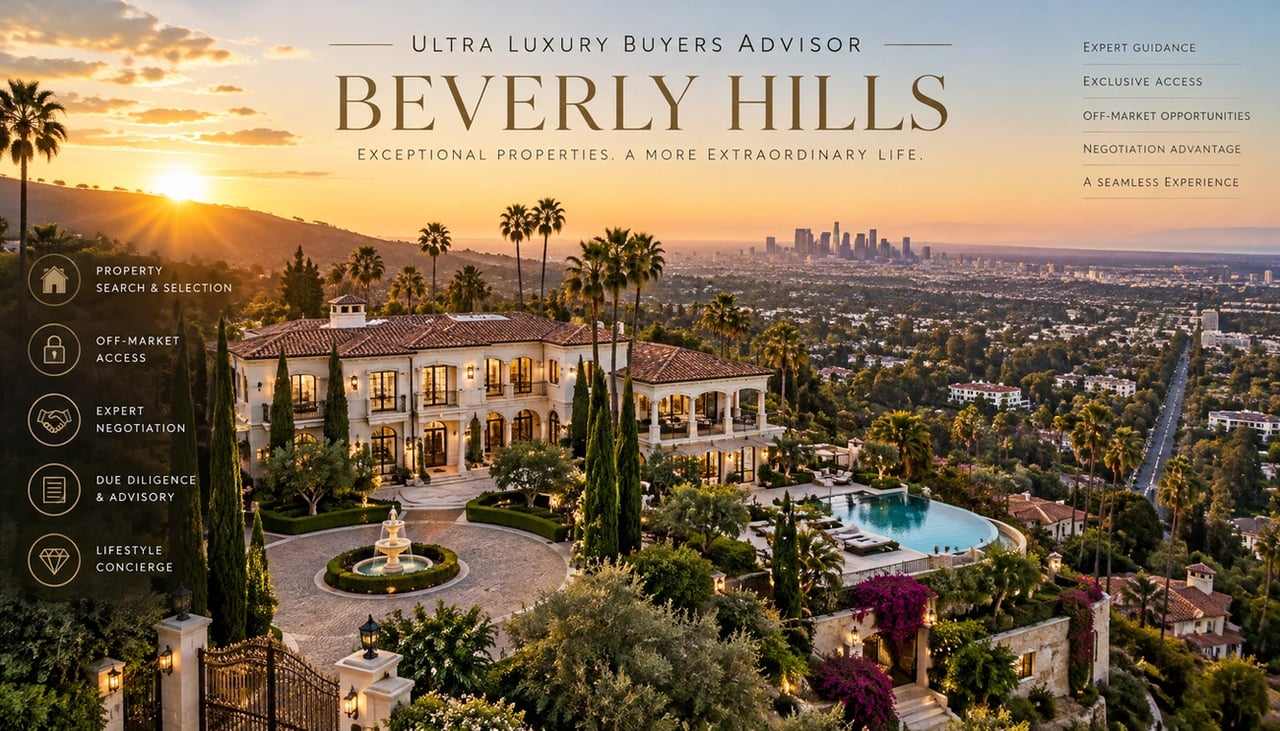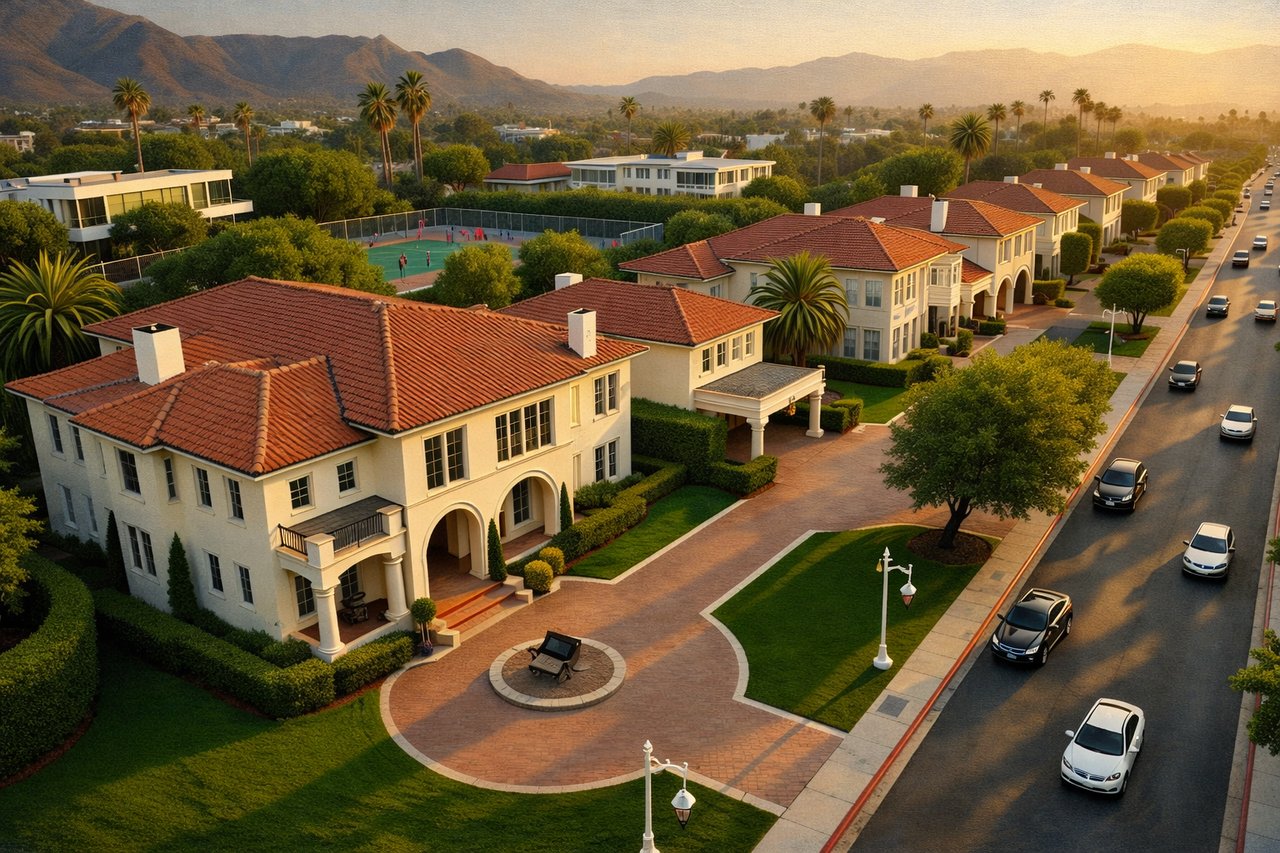
Beverly Hills neighborhoods operate through private channels where elite education commands extraordinary premiums. Luxury real estate transactions here unfold in silence and are shaped by school district boundaries and access to institutions like Beverly Hills Unified School District, which serves 31,955 residents. The connection between top-rated schools and property values extends beyond Beverly Hills to neighboring enclaves like Brentwood, where single-family homes reached a median value of $1.4 million by 2004. Understanding the map of Beverly Hills neighborhoods, their school catchment areas and timing separates informed buyers from those chasing headlines in LA's most exclusive markets.
The Connection Between Elite Education and Beverly Hills Real Estate Values
Luxury real estate in Los Angeles operates through mechanisms most buyers find sort of hard to get one's arms around. The biggest price differentials emerge not from architectural features or lot size, but from invisible boundary lines that determine school access. School district maps become more valuable than property surveys for those who understand this dynamic.
Why School Quality Commands Premium Pricing
School quality's financial effect on property values follows measurable patterns. Properties near schools with a GreatSchools rating of 9 or 10 cost over 78% more than properties in surrounding counties. This premium exists independently of home features and reflects pure demand for educational access.
The correlation extends beyond ratings to funding mechanisms. Research shows that an increase in school spending of just $1.00 per student increases home values by $20.00. This multiplier effect explains why districts with reliable budgets sustain higher property values across decades, whatever broader market fluctuations may occur.
Test scores create their own pricing pressure. A 5% increase in test scores raises home prices by 2.5% in suburban communities. Families decode these metrics as proxies for educational outcomes and competitive positioning. The willingness to pay premiums for marginal score improvements drives competition in already expensive markets.
Speed to sale represents another quantifiable advantage. Homes near highly ranked schools sold eight days faster on average than homes in below-average school districts. This velocity matters in luxury markets where carrying costs accumulate quickly and timing determines negotiating position.
The premium range varies by market conditions and specific district reputations. Homes in top-rated school zones sell for 10% to 20% more than similar homes in average-performing areas. Some markets push premiums higher based on exclusivity and limited inventory within district boundaries.
Beverly Hills Unified vs Other LA School Districts
Beverly Hills Unified School District serves approximately 3,300 students across two elementary schools, one middle school and one high school. The district's national recognition stems from academic performance. Students score well above average on standardized tests.
Alumni credentials reinforce the district's positioning. Beverly Hills High School graduates include Angelina Jolie, Nicolas Cage, Lenny Kravitz and Rob Reiner. This roster signals not just educational quality but network access and cultural capital that extends beyond classroom metrics.
Homes in high-performing suburban school districts command prices 49% higher than the national median. These same properties sell for 77% more than those in lower-ranked districts. Beverly Hills Unified operates at the upper end of this spectrum, where academic performance and social positioning join.
The district prioritizes infrastructure modernization while preserving historic campus character. Many buildings exceed a hundred years in age and create unique environments that blend tradition with state-of-the-art facilities. This commitment to physical plant quality extends the perceived value beyond test scores alone.
Historical Price Trends in Top School Zones
Properties in highly rated school districts show superior appreciation patterns across market cycles. Homes in districts rated 8 or higher appreciate 15% to 25% faster than properties in average-performing districts over five-year periods. This differential compounds over ownership tenure and creates substantial wealth effects for positioned buyers.
Market research confirms that 30% of buyers aged 33-42 think about the quality of the school district as a top factor when selecting neighborhoods. This demographic represents peak household formation and purchasing power. It sustains demand pressure in top districts even during economic uncertainty.
Stability during downturns separates elite school districts from average performers. Properties in top-tier school zones depreciate less compared to lower-rated districts during recessions. Families prioritize educational continuity during financial stress and maintain baseline demand that supports valuations.
Properties in excellent school zones (rated 8-10) generate high buyer interest and price increases. Districts rated 5-7 see moderate interest with stable to modest price effect, while those rated 1-4 experience low interest and depressed or stagnant prices. This stratification creates distinct market segments within the same metropolitan area.
The resale advantage persists whatever buyer demographics may be. Even purchasers without children recognize that homes in desirable school districts sell more easily and profitably. This expectation becomes self-fulfilling, as the perception of future liquidity supports current pricing.
Map of Beverly Hills Neighborhoods: School Districts and Boundaries
Understanding district boundaries requires more than studying maps. Properties separated by a single street can exist in different educational universes and create value gaps that persist across market cycles. Beverly Hills neighborhoods operate within defined attendance zones that determine school access, resale potential and long-term appreciation trajectories.
Elementary School Attendance Zones
Beverly Hills Unified School District operates three elementary schools serving distinct geographic areas within the city. Horace Mann Elementary School enrolls 612 students, while Hawthorne Elementary School serves 552 students. El Rodeo Elementary School maintains its own attendance zone, though current enrollment data remains unavailable.
The northwest region of the district's boundaries houses Hawthorne Elementary School, which functions as a neighborhood school. This positioning places it closer to the boundary lines with adjacent cities and creates specific concerns for properties near district edges. The school's location at 624 North Rexford Drive serves as a reference point for buyers evaluating walking distance and daily commute patterns.
Each elementary school draws from defined residential zones, though these boundaries shift based on enrollment pressures and capacity constraints. The district maintains an address verification tool that determines assigned schools for specific properties. Buyers find whether their prospective address falls within BHUSD boundaries and identifies their designated elementary school through this system. Properties outside district lines receive "no results found" notifications that clarify their educational access limitations right away.
Elementary school assignments carry weight for families planning extended residence periods. Children remain in their assigned elementary school for six years, which makes the placement decision consequential for daily logistics and social integration.
Middle and High School Catchment Areas
Beverly Vista Middle School serves grades 6-8 for all students within Beverly Hills Unified School District. The single middle school structure eliminates the attendance zone complexity present at elementary level. All district elementary schools feed into Beverly Vista, located at 200 South Elm Drive.
Beverly Hills High School operates as the complete high school for grades 9-12, enrolling 1,248 students at 241 Moreno Drive. The school draws from the entire district and creates a unified high school experience whatever elementary or middle school students attended. Student demographics reflect 70% white enrollment, with Asian students comprising 11.54%, Hispanic students 9.46% and other groups representing smaller percentages.
Moreno High (Continuation) provides alternative educational pathways for students requiring non-traditional scheduling or academic support. This option operates at 255 South Lasky Drive and offers flexibility within the district structure.
The consolidated middle and high school model simplifies property evaluation for buyers focused on older children. Geographic location within Beverly Hills matters less for secondary education access than confirmation of district residency itself.
Overlapping Boundaries with Adjacent Cities
Beverly Hills Unified School District occupies the western portion of Los Angeles, positioned below the Santa Monica Mountains and adjacent to West Hollywood. This geographic placement creates boundary interactions with multiple municipalities and school districts.
District boundaries follow municipal lines in some areas while creating irregular patterns in others. Properties along the northern edge border Los Angeles Unified School District territory, while western boundaries interface with areas served by different educational jurisdictions. Southern boundaries near West Hollywood create additional complexity for properties in transitional zones.
The district serves a total of 3,079 students across six schools despite the compact geographic footprint. This concentration reflects both the city's limited land area and the demographic composition favoring smaller household sizes and lower child-per-household ratios compared to suburban districts.
Buyers who think over properties near boundary lines face heightened due diligence requirements. Street-by-street verification determines actual district inclusion, as proximity alone provides no guarantee of educational access. Some properties marketed as "near Beverly Hills schools" exist outside official boundaries and require private school enrollment or interdistrict transfers that lack guaranteed approval.
Beverly Hills Rich Neighborhoods: Where Education Meets Luxury
High-end real estate in Los Angeles unfolds through channels invisible to most market observers. The transactions that shape Beverly Hills neighborhoods surface in public listings rarely. They move through private networks instead where discretion carries equal weight to price and timing determines advantage. These markets reward precision over visibility for buyers who value strategic positioning.
The Platinum Triangle
Elite neighborhoods within Beverly Hills command price points that separate them from surrounding luxury markets. Geographic positioning within the city creates distinct value tiers. Certain areas maintain pricing power whatever the broader economic conditions. School access functions as the primary driver, though few buyers state this during negotiations.
Summit Drive and Alpine Drive Estates
Properties along these corridors benefit from proximity to top-rated educational institutions. El Rodeo Elementary School holds a 10/10 rating on GreatSchools. Cathedral Chapel Elementary School earned an A+ on Niche. Academic performance metrics reinforce these ratings. Top performers reach 88% math proficiency and 95% reading proficiency. Families purchasing in these zones secure access to measurable educational outcomes that justify premium positioning.
Benedict Canyon and Hillside Properties
Hillside locations offer dual advantages: privacy and school district inclusion. Properties at elevation maintain distance from street-level activity while preserving access to Beverly Hills Unified facilities. The combination creates a lack of inventory within an already limited market. Buyers seeking both seclusion and educational infrastructure find this particularly valuable.
Roxbury Park Area
Central locations near park amenities balance walkability with residential character. Families prioritizing daily logistics favor these neighborhoods for elementary school proximity and community integration. The area's positioning within district boundaries ensures consistent demand from buyers planning extended residence periods.
Lower and Upper Beverly Hills Distinctions
Price stratification within Beverly Hills neighborhoods follows clear patterns. Beverly Hills Flats ranks as the most expensive neighborhood in Los Angeles County. The median home price hit $7.425 million in Quarter 3. Trousdale follows at $6.3 million median and claims the #2 position countywide. Beverly Hills Gateway rounds out the top three at $5.7 million median.
These three neighborhoods alone surpass every other luxury enclave in Los Angeles County. Manhattan Beach Hill Section sits at $3.95 million and Santa Monica's North of Montana at $3.94 million. They exceed Bel Air's $3.255 million median and Pacific Palisades' $2.55 million.
The premium reflects united advantages: school access, municipal services, social positioning and resale liquidity. Buyers in Beverly Hills Flats pay nearly $1.1 million more than Trousdale purchasers for marginal location differences within the same school district. This willingness to pay for micro-positioning signals how deeply families value educational and social capital.
Properties in these neighborhoods exist within Beverly Hills Unified boundaries and guarantee access to the district's academic performance and alumni networks. The educational infrastructure justifies pricing that might otherwise appear disconnected from comparable square footage or lot dimensions in adjacent markets.
How Top-Rated Schools Influence Home Prices in LA's Elite Areas
School district boundaries shape transactions in ways most brokers never discuss openly. The conversations that matter happen privately, where families weigh educational access against financial positioning. Those who understand comparative dynamics across LA's elite areas make decisions that compound value over decades, not quarters.
Comparing Beverly Hills to Brentwood and Pacific Palisades
Geographic proximity masks substantial valuation differences between LA's top neighborhoods. Paul Revere Middle School, positioned at the intersection of Brentwood, Pacific Palisades, and Riviera, anchors one of the most expensive secondary school areas in the nation. Homes around this institution sold for a median price of $4.90 million recently.
This concentration of wealth and educational excellence demonstrates the circular relationship between affluence and school quality. Elite districts attract wealthy buyers who then contribute time and resources to their children's schools. This reinforces the system that justified their original premium. The pattern becomes self-sustaining across generations.
Properties throughout Beverly Hills neighborhoods operate within similar pricing frameworks but offer distinct advantages through unified district access. Brentwood and Pacific Palisades buyers must verify specific attendance zones, while Beverly Hills provides more predictable educational pathways through its united structure.
The Role of Private School Proximity
Families purchasing in elite school districts execute sophisticated financial calculations. Private school tuition runs $30,000 to $50,000 annually per child. A K-12 education span totals $390,000 to $650,000 per child before accounting for inflation or multiple children.
Home purchase decisions capitalize these costs. Buyers accept higher mortgage payments in exchange for eliminating annual tuition expenses, prepaying education through real estate. A family with two children saves $780,000 to $1.3 million over 13 years by securing district access rather than paying private school fees.
La Cañada comparisons measure this premium structure. The district's #1 LA County ranking adds 20% to 30% to home values, typically $500,000 to $700,000 on a $2.50 million property. Families view this surcharge as purchasing educational opportunities comparable to $30,000 to $50,000 per year private institutions.
The calculation makes financial sense when extended across multiple children and years. Private school proximity matters less when public district quality eliminates the need for alternative enrollment.
Charter Schools and Real Estate Impact
School choice mechanisms alter traditional premium structures. Charter schools and open enrollment policies reduce the exclusivity once tied to specific district boundaries. When families can access quality education without geographic restriction, the effect on nearby home values becomes less pronounced.
Districts that restrict access to residents create sharper price increases. This exclusivity gets more prestige for certain neighborhoods and further boosts property values. Beverly Hills operates within this restricted access model, where residency verification determines educational eligibility.
High-performing charter options in surrounding areas create competitive pressure on traditional district premiums. Families gain flexibility to prioritize home features or location while maintaining educational quality through school choice rather than district boundaries alone.
Districts with strong ratings see increased competition for properties as buyers prioritize educational quality over home features like square footage or updated appliances. This trend sustains demand even when charter alternatives exist, particularly in markets where parents value the social positioning and network access that comes with established district enrollment.
Best Beverly Hills Neighborhoods for Educational Investment
Investment decisions in Beverly Hills neighborhoods rest on detailed knowledge most buyers never acquire. Quiet conversations between informed families reveal patterns that public data obscures. Those who position themselves within specific attendance zones gain advantages that compound across decades, especially when educational access arranges with resale fundamentals.
Properties Within Walking Distance to Top Schools
El Rodeo Elementary School stands apart with a 10/10 GreatSchools rating, located at 605 Whittier Drive. A perfect 10 for both student progress and test scores earned the school recognition for supporting strong academic outcomes for all students. Properties within walking distance to this institution occupy premium territory within Beverly Hills neighborhoods, given that this represents the highest-rated elementary option in the district.
Hawthorne Elementary School, positioned at 624 North Rexford Drive, serves 588 students with a 15:1 student-teacher ratio. Horace Mann Elementary School operates at 8701 Charleville Boulevard and enrolls 553 students with a 14:1 ratio. Both schools maintain rankings within California's top elementary institutions. Hawthorne ranked #643 statewide and Horace Mann at #1044.
Beverly Hills High School holds a 9/10 GreatSchools rating, coupled with a 9 for both test scores and college readiness. Located at 241 Moreno Drive, the school serves as the anchor for the entire district's secondary education. Families purchasing within any Beverly Hills neighborhood gain access to this institution, provided that residency verification confirms district boundaries.
Access to Both Public and Private Education
Private institutions create layered educational options beyond district schools through their concentration. John Thomas Dye School offers co-educational college preparatory programs that emphasize liberal arts and sciences. Buckley School provides K-12 education with traditional academic rigor focused on character development and leadership. Lycée Français de Los Angeles delivers French immersion programming within a multicultural environment.
Westside Waldorf School follows alternative educational philosophy that emphasizes creativity and hands-on learning. Families seeking specific pedagogical approaches while maintaining residence in top public school zones find these options appealing. Dual access creates flexibility for households with multiple children who may thrive in different educational environments.
Neighborhoods with Proven Resale Value
Trousdale Estates ranks among the best Beverly Hills neighborhoods for school access. Attendance to Beverly Hills Unified schools comes with distinct architectural character at this location. Beverly Hills Flats secures proximity to Horace Mann Elementary School and Beverly Hills High School. Beverly Hills Post Office and City Center areas maintain central positioning within district boundaries.
These neighborhoods demonstrate consistent demand from school-focused buyers. Enrollment procedures just need advance research, especially for specific grade levels where waiting lists may develop. Properties in these zones benefit from both educational infrastructure and the resale advantages that accompany top-rated district access.
Strategic Considerations for School-Focused Luxury Home Buyers
Private transactions in Beverly Hills neighborhoods often close months before properties surface publicly. Families who understand timing, verification protocols and specialist networks position themselves ahead of competitive bidding situations. Buyers recognize that educational real estate requires different expertise than traditional luxury purchases.
Timing Your Purchase: School Calendar and Market Cycles
National data reveals that 25% of buyers list school quality as their deciding factor, while 20% prioritize proximity to schools. These priorities intensify during specific windows. Families finalize enrollment decisions between January and April. This concentrates demand for properties within top districts. Summer months see reduced competition as families avoid mid-year school transitions. Properties listed between May and July often attract fewer school-focused buyers and potentially create negotiating opportunities for those comfortable with off-cycle timing.
Evaluating Future School Performance and District Changes
Sustained district quality requires monitoring beyond current rankings. Rapid teacher turnover signals instability that affects educational continuity. Declining enrollment across grade levels indicates demographic shifts that may affect future funding and program offerings. Recent district mergers driven by budget cuts threaten the autonomy that maintains performance standards. Frequent redistricting proposals create uncertainty around long-term attendance zone stability. Each factor influences both educational outcomes and resale positioning.
Off-Market Opportunities in Well-Known School Zones
Lenders view neighborhoods near top schools as low-risk investments and potentially offer lower mortgage rates. This financial advantage extends beyond the original purchase. Families positioned within well-known school zones access opportunities through direct seller relationships before public marketing begins.
Working with Specialists Who Understand Educational Real Estate
Christina Pope—Sotheby's International Realty, EliteResidenceInternational.com operates within networks where school-focused transactions unfold privately. Specialists maintain relationships with families planning moves years ahead. This creates advance notice of inventory before market exposure. This access separates informed positioning from reactive bidding in Beverly Hills neighborhoods where educational infrastructure drives sustained value.
Conclusion
Luxury real estate in Beverly Hills operates through private channels where educational access commands premiums most buyers never grasp. School district boundaries create invisible value lines that separate informed positioning from reactive purchasing. Families who understand attendance zones, timing cycles, and resale patterns secure advantages that compound across decades. Strategic transactions unfold quietly. Discretion and specialist networks shape them rather than public listings. Christina Pope at Sotheby's International Realty, EliteResidenceInternational.com, connects qualified buyers with opportunities in well-known school zones before market exposure, where precision and access determine outcomes in LA's most exclusive neighborhoods.
Key Takeaways
Beverly Hills luxury real estate operates through private channels where school district boundaries create invisible value lines that separate strategic buyers from reactive purchasers.
• School quality drives 78% price premiums - Properties near top-rated schools (9-10 ratings) cost significantly more than surrounding areas, with Beverly Hills Flats commanding $7.425 million median prices.
• Beverly Hills Unified provides guaranteed access - Unlike neighboring areas requiring attendance zone verification, all Beverly Hills residents access the same high-performing schools through unified district structure.
• Educational investment replaces private tuition - Families save $780,000-$1.3 million over K-12 years by purchasing in top districts versus paying $30,000-$50,000 annual private school fees.
• Timing and specialist networks matter most - 25% of buyers prioritize school quality, creating concentrated demand January-April; off-market opportunities require connections with educational real estate specialists.
• Resale advantages compound over time - Homes in excellent school zones appreciate 15-25% faster and sell 8 days quicker than average districts, maintaining value during market downturns.
Strategic positioning in Beverly Hills neighborhoods requires understanding that educational infrastructure justifies pricing premiums and creates long-term wealth advantages for families who secure access to top-rated district boundaries.
FAQs
Q1. Which Beverly Hills neighborhood commands the highest property prices? Beverly Hills Flats holds the distinction as the most expensive neighborhood in Los Angeles County, with a median home price of $7.425 million. Trousdale Estates follows at $6.3 million median, while Beverly Hills Gateway ranks third at $5.7 million. These neighborhoods surpass all other luxury enclaves in LA County due to their combination of school access, municipal services, and social positioning.
Q2. How much more do homes cost near top-rated schools in Beverly Hills? Properties near schools with GreatSchools ratings of 9 or 10 cost over 78% more than properties in surrounding counties. In Beverly Hills specifically, homes in top-rated school zones typically sell for 10% to 20% more than similar homes in average-performing areas, with some markets pushing premiums even higher based on exclusivity and limited inventory within district boundaries.
Q3. What are the main advantages of Beverly Hills Unified School District compared to other LA districts? Beverly Hills Unified serves approximately 3,300 students across highly-rated schools, with El Rodeo Elementary earning a perfect 10/10 GreatSchools rating and Beverly Hills High School receiving a 9/10 rating. The district offers a consolidated structure where all residents access the same high-performing schools regardless of specific neighborhood location, eliminating the attendance zone complexity present in other LA areas.
Q4. Can buying in a top school district replace private school expenses? Yes, families can save $780,000 to $1.3 million over K-12 years by purchasing in top districts instead of paying private school tuition. With private school costs ranging from $30,000 to $50,000 annually per child, many buyers accept higher mortgage payments in exchange for eliminating these ongoing educational expenses, essentially prepaying education through real estate.
Q5. When is the best time to purchase a home in Beverly Hills for school access? Summer months (May-July) often present strategic opportunities as fewer school-focused buyers compete during this period, since families typically avoid mid-year school transitions. However, demand intensifies between January and April when families finalize enrollment decisions. Properties listed during off-peak periods may offer better negotiating positions for buyers comfortable with non-traditional timing.