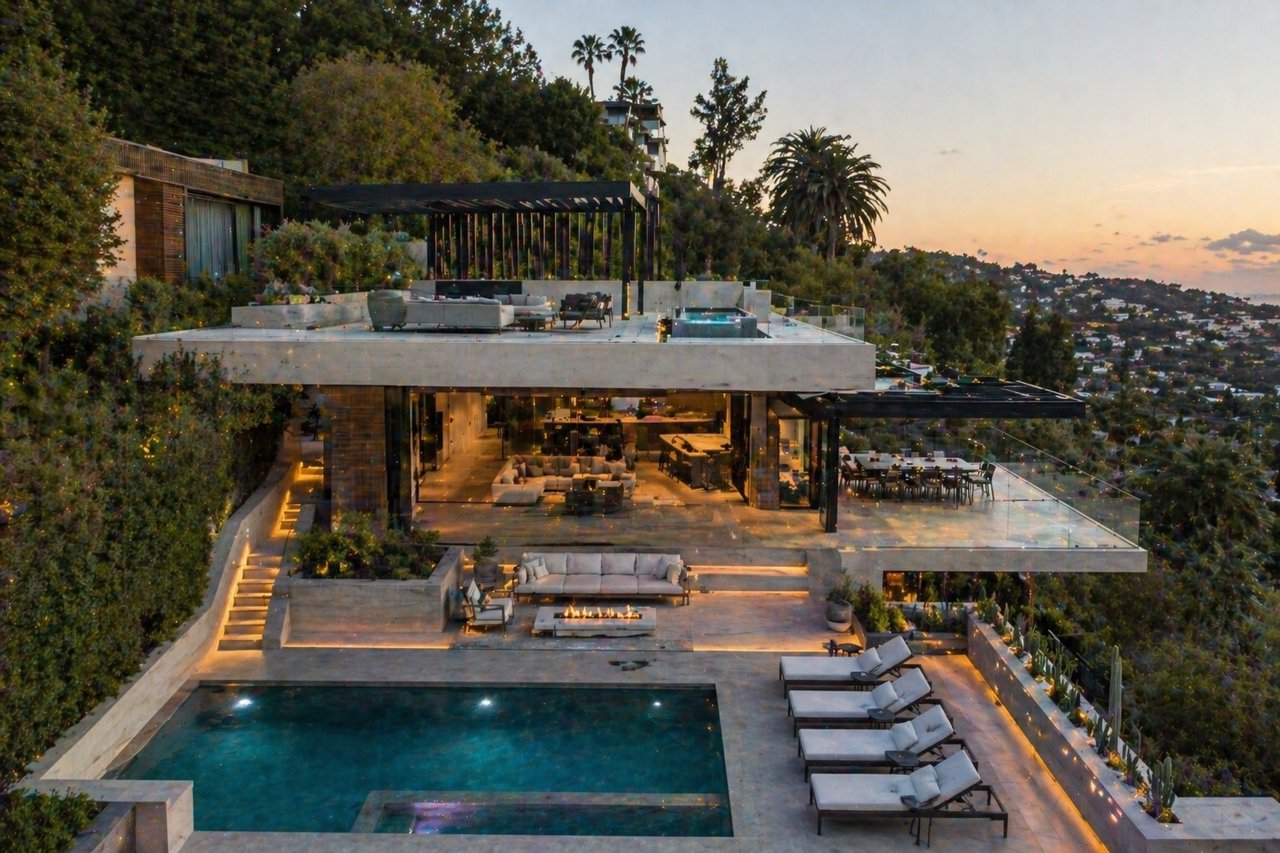
Luxury real estate in Hollywood Hills is being redefined by rooftop living, which has emerged not as a trend but as a measure for properties designed for modern lifestyles. Buyers seek properties that offer expansive outdoor spaces for relaxation and entertainment, especially rooftop terraces equipped with professional-grade amenities. Outdoor spaces feature resort-level installations. These include outdoor kitchens with professional-grade appliances and private spas with steam rooms, while landscaped gardens showcase native plants. These elevated outdoor areas have become vital in wellness-centered design and signal a residence built for genuine living rather than resale value alone. This move reflects changing expectations among those seeking Hollywood Hills luxury real estate, where rooftop amenities carry as much weight as interior finishes.
The Evolution of Outdoor Living in Luxury Hollywood Hills Homes for Sale
From simple patios to resort-level rooftop retreats
Outdoor living in Hollywood Hills luxury real estate has changed completely. Properties once featured simple patios with standard furniture and minimal infrastructure. Today's luxury homes for sale in Hollywood Hills CA showcase rooftop spaces that function as complete living environments. Modern properties feature amenities that rival five-star resorts. Outdoor kitchens with professional-grade appliances and weather-resistant materials are now standard. Fire features create gathering spaces that extend usable seasons for outdoor entertaining. The move reflects a broader redefinition of residential space. Rooftops have emerged as defining features that improve the overall living experience.
Climate control systems represent one of the most important advances in rooftop design. Breakthroughs such as climate-controlled spaces, retractable roofs and integrated heating elements allow homeowners to employ rooftop amenities year-round. Covered outdoor rooms, pergolas with adjustable louvers and retractable awnings enable residents to control sun and shade throughout the year. Motorized screens address insect concerns. Ceiling fans provide relief during summer afternoons. Infrared or gas heaters maintain comfort levels for cooler evenings. These technical upgrades reshape rooftops from seasonal spaces into functional extensions of interior living areas.
Developer response to changing buyer expectations
Developers have adjusted their approach to meet what buyers want for outdoor spaces. Roof terraces now maximize real estate usage in urban areas where ground space carries premium pricing. This vertical expansion adds value without requiring additional land. It addresses space constraints while delivering amenities that modern buyers expect. The market has responded. The green roof market projected to reach USD 40.20 billion by 2032 shows this trend. Developers recognize that rooftop amenities often determine competitive positioning and influence both leasing rates and purchase decisions.
How architecture is adapting to maximize rooftop potential
Architectural design has evolved to prioritize rooftop integration from the original planning stages. Floating glass walls eliminate the divide between indoors and outdoors and bring exterior views into interior spaces. These structural elements support the smooth flow that characterizes Hollywood Hills mid century modern and contemporary designs. Rooftop gardens deliver measurable performance benefits and reduce building energy consumption for cooling by up to 75% in summer months. Hillside terrain requires terraces, split levels and cantilevered elements that capture views while managing grade changes. The result is architecture that treats rooftops as primary design features rather than afterthoughts.
Key Features Driving Rooftop Demand
Amenities define value in luxury Hollywood Hills homes for sale, with rooftop installations setting properties apart in competitive markets. Buyers assess homes based on feature sets that enable year-round outdoor living and high-level entertaining.
Professional-grade outdoor cooking and bar setups
Rooftop kitchens feature dual Alfresco gas ranges, finished refrigeration units, pizza ovens, and wet bars with seating for 16 guests. Smart grills with built-in temperature controls, touch-screen refrigerators, and voice-controlled appliances lift outdoor culinary experiences. Stainless steel cabinetry withstands weather exposure and requires only monthly soap and water maintenance on powder-coated surfaces. These installations transform rooftops into entertainment hubs where hosts prepare full meals without returning indoors.
The right home makes all the difference if you love to entertain. I'd be delighted to help you find spaces designed for elevated living and effortless hosting if you're thinking about a purchase in the near future or beginning your search. Christina Pope  310-404-9931
  [email protected]
Climate control: automated shades, heating, and cooling
Louvered roof systems adjust with button controls to manage sunlight and shade exposure. Automated pergolas feature weather sensors that respond in real time and open for sunshine while sealing against rain. Remote-controlled heating and cooling systems, including outdoor heaters and fans, maintain comfort whatever the conditions.
Smart technology integration for lighting and sound
Weatherproof speakers hidden among plantings deliver audio without visual disruption. Smart lighting systems combine task illumination with ambient fixtures and are controlled via smartphones or voice assistants. Programmable settings adjust ambiance, temperature, and audio based on time of day and individual priorities.
Water features and spa installations
Stainless steel spas offer corrosion resistance and lightweight construction ideal for rooftop weight restrictions. Custom configurations include contrast therapy setups pairing warm soaking tubs with cool plunge pools. Infinity-edge pools create uninterrupted horizon views extending to surrounding landscapes.
360-degree views of city and canyon
Elevated positions provide unobstructed sightlines of major landmarks and natural terrain. Glass safety walls accent cityscape views while maintaining protective barriers. These panoramic points of view transform rooftops into observation points that showcase both urban skyline and canyon topography.
Who Is Buying Rooftop-Centric Properties
Luxury real estate in Hollywood Hills operates through private conversations rather than public listings. The most important transactions unfold within trusted circles, where discretion matters as much as price. Buyers who value timing and strategic positioning understand this reality. Three distinct groups now just need rooftop-centric properties, each with specific motivations that line up with elevated outdoor living.
Entertainment industry professionals seeking proximity and privacy
Professionals working in film, television and music production prioritize locations near studios and production facilities. Rooftop spaces provide private retreats where industry figures entertain colleagues without public exposure. Centrally located properties position residents within minutes of Hollywood Boulevard, Melrose and Sunset Boulevard. This reduces commute times and maintains residential privacy. The combination of proximity and seclusion appeals to those whose careers require both accessibility and discretion.
First-time luxury buyers choosing townhomes over single-family
Townhouses have emerged as entry points into Hollywood Hills luxury real estate. Buyers entering the market find these properties cost less than single-family homes while delivering comparable amenities. This makes them attractive options when you're buying luxury for the first time. Rooftop terraces compensate for smaller yard space and offer private outdoor areas that rival ground-level patios. Young professionals and couples value the lower maintenance requirements among the lifestyle benefits that rooftop entertaining provides.
Investors recognizing rooftop value in resale and rental markets
Property investors view rooftop amenities as differentiators in both resale and short-term rental scenarios. Homes with furnished rooftop spaces command premium rental rates from visitors seeking experiential stays. The installation of fire pits, outdoor seating and skyline views positions properties in vacation rental markets where unique features justify higher nightly rates.
Those who understand that meaningful real estate decisions unfold through insight rather than impulse can reach Christina Pope at Sotheby's International Realty. She provides access to opportunities before they reach broader markets. 310-404-9931 [email protected] | EliteResidenceInternational.com
Practical Considerations and Future Outlook
Maintenance requirements for rooftop systems
Flat roofs need seasonal inspections to preserve structural integrity. Spring evaluations identify winter damage, while fall assessments make sure drainage systems clear debris before wet weather arrives. Green roofs need annual weeding and occasional watering during dry periods. Intensive installations demand more frequent attention that includes pruning, fertilization and irrigation. Regular inspections verify waterproofing systems remain intact.
Permit and building considerations for rooftop additions
Most rooftop construction work requires building permits, including additions, renovations and structural repairs. Applications need property information, contractor details and plans drawn to scale. Plan review periods range from one to four weeks depending on project complexity. Plumbing, mechanical and electrical work each need separate permits. All permitted work must undergo mandatory inspections at multiple stages.
Sustainability trends shaping rooftop design
California regulations now mandate net-zero energy homes with water conservation measures. Passive ventilation through windows placed in strategic locations reduces air conditioning needs. Solar panels on flat roofs at 15-degree angles maximize energy generation. Native plants support local ecology and need minimal maintenance. These features match buyer priorities for environmental responsibility.
Long-term appreciation in Hollywood Hills luxury real estate
Properties in this area beat inflation and outpace broader market gains. Limited buildable land creates a lack of supply, while zoning restrictions prevent new development. Maintenance costs run 1% to 2% of property value annually. Property taxes average 1.1% of assessed value yearly.
Conclusion
Rooftop amenities have redefined Hollywood Hills luxury real estate and reshaped elevated outdoor spaces into must-have features rather than supplementary additions. Buyers now expect resort-level installations and smart technology that enable year-round entertainment. Properties with well-laid-out rooftop terraces command premium pricing in both sales and rental markets. Those who love entertaining and value homes designed for elevated living can work with Christina Pope at Sotheby's International Realty to access properties where outdoor spaces match interior sophistication. Contact 310-404-9931 or [email protected] to begin your search.
Key Takeaways
Hollywood Hills luxury real estate is being transformed by rooftop living, where elevated outdoor spaces have become essential features that define property value and modern lifestyle expectations.
• Rooftop spaces now feature resort-level amenities including professional-grade outdoor kitchens, climate control systems, and smart technology integration for year-round entertaining.
• Entertainment industry professionals, first-time luxury buyers choosing townhomes, and investors are driving demand for properties with sophisticated rooftop installations.
• Climate control innovations like automated pergolas, retractable roofs, and integrated heating systems transform seasonal spaces into functional living extensions.
• Properties with well-designed rooftop terraces command premium pricing in both sales and rental markets, with green roof installations reducing energy costs by up to 75%.
• Maintenance requirements include seasonal inspections and permit considerations, while sustainability trends emphasize solar panels, native plants, and water conservation features.
The shift from basic patios to resort-level rooftop retreats reflects changing buyer expectations where outdoor amenities carry equal weight to interior finishes. These elevated spaces provide privacy, proximity to entertainment industry hubs, and panoramic views that justify premium investments in Hollywood Hills' competitive luxury market.
FAQs
Q1. Is Hollywood Hills a desirable place to live? Hollywood Hills offers excellent amenities including convenient access to stores, tourist attractions, and parks. The neighborhood provides numerous job opportunities with relatively short commute times due to its central Los Angeles location. While property prices can be high, residents benefit from a safe, well-established community that combines urban convenience with residential privacy.
Q2. How does Hollywood Hills compare to Beverly Hills for luxury living? Hollywood Hills appeals to those seeking dramatic elevation, creative energy, and modern architectural design with panoramic views. Beverly Hills offers traditional prestige, structured luxury, and a more polished environment. The choice depends on lifestyle preferences—Hollywood Hills attracts entertainment professionals and those valuing privacy with proximity to studios, while Beverly Hills suits those preferring established luxury and formal elegance.
Q3. What makes rooftop spaces valuable in Hollywood Hills properties? Rooftop terraces have evolved from basic patios into resort-level living environments with professional-grade outdoor kitchens, climate control systems, and smart technology. These elevated spaces provide 360-degree views of city and canyon landscapes while offering privacy for entertaining. Properties with sophisticated rooftop amenities command premium pricing in both sales and rental markets, with installations that reduce energy costs and extend usable living space year-round.
Q4. What maintenance do rooftop installations require? Rooftop systems need seasonal inspections—spring evaluations identify winter damage while fall assessments ensure drainage systems are clear. Green roofs require annual weeding and occasional watering during dry periods. Regular inspections verify waterproofing integrity, and intensive installations demand pruning, fertilization, and irrigation maintenance to preserve functionality and appearance.
Q5. Do rooftop additions require building permits? Most rooftop construction work requires building permits, including additions, renovations, and structural repairs. Applications must include property information, contractor details, and scaled plans. Plan review typically takes one to four weeks depending on complexity. Separate permits apply to plumbing, mechanical, and electrical work, and all permitted work undergoes mandatory inspections at multiple stages.