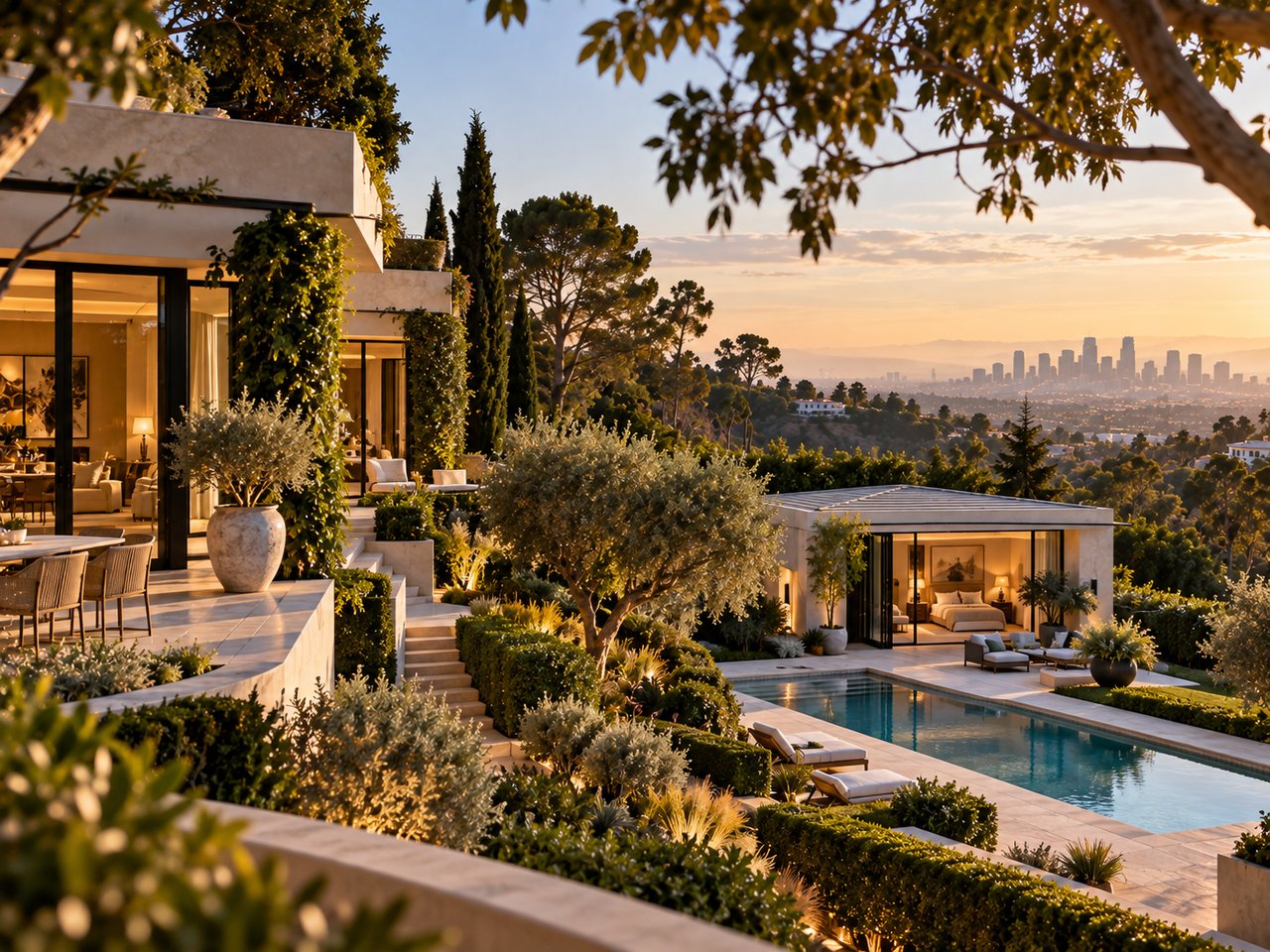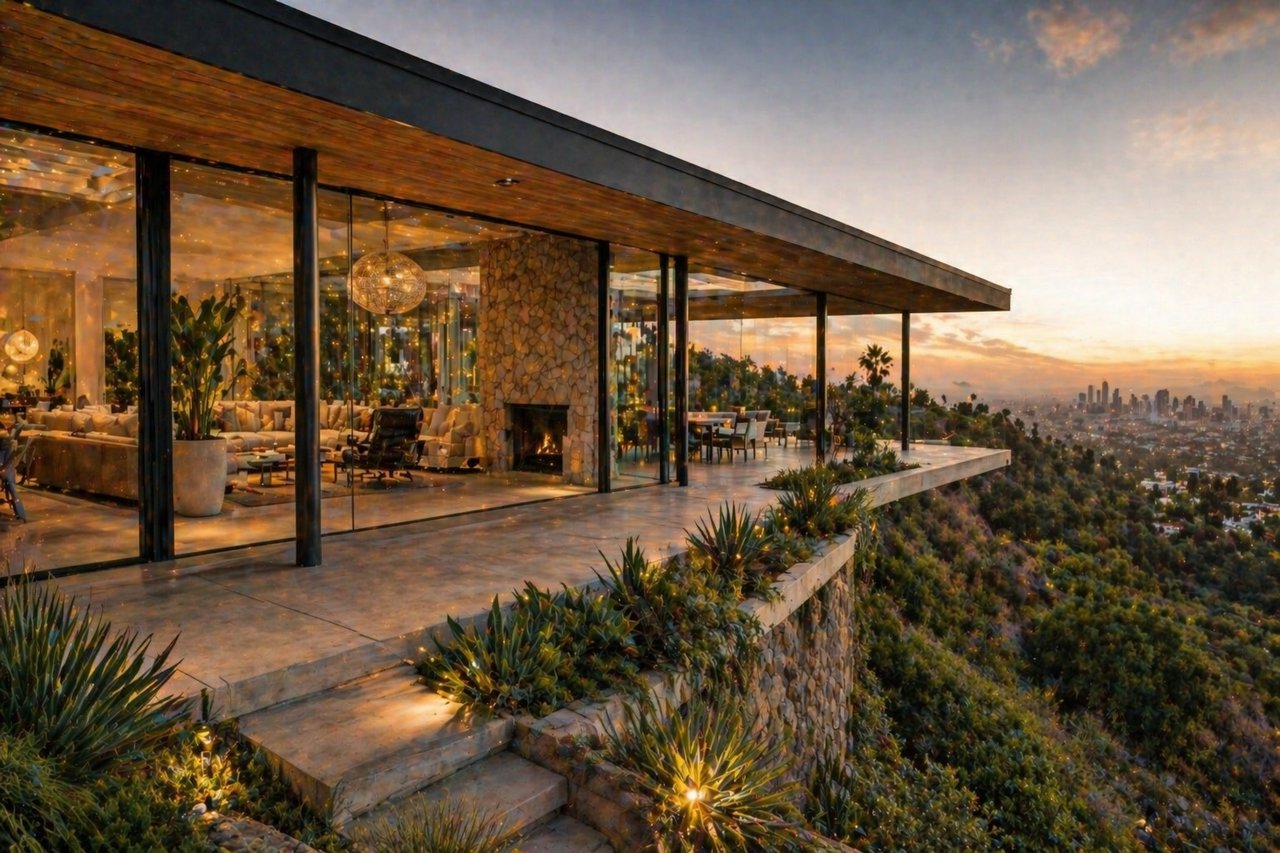
Mid century exteriors accomplish something remarkable in the Hollywood Hills: they turn challenging topography and unpredictable Mediterranean climate into architectural assets. Clear days reveal elevation above the basin creates long, layered vistas that define the living experience, while the seasonal marine layer requires thoughtful light management. Mid century modern house exterior designs in this exclusive enclave employ expansive glass walls and strategic mid century exterior windows that capture panoramic views while controlling natural light. Mid century exterior colors and materials, paired with sophisticated mid century exterior paint choices, complement the natural surroundings and reinforce the understated luxury these properties represent. This approach to mid century exterior design shows how architecture, light, and landscape converge in Hollywood Hills' most distinguished residences.
Mid-century modern house exterior design principles in Hollywood Hills
Architectural distinction in Hollywood Hills comes from principles that favor horizontal flow over vertical mass. Structures feature rectangular forms with low horizontal massing, flat roofs with broad overhangs, and strong horizontal planes that embrace generous suburban sites. The mid century modern house exterior abandons ornate styling through simplified rooflines and flat facades, creating visual impact through strategic material choices rather than decorative excess.
Post-and-beam construction drives the structural approach. Vertical posts support horizontal beams, moving load-bearing responsibilities away from walls and allowing flexible placement of mid century exterior windows. This technique enabled architects to incorporate walls of glass without compromising structural integrity, while exposed wooden beams on both interior and exterior surfaces created a handcrafted aesthetic.
Natural materials establish authenticity in mid century exterior design. Wood, stone, and brick were chosen for texture and aging properties, not merely appearance. Timber ceilings stayed exposed, stone walls celebrated rather than concealed. This raw honesty balanced modern materials such as concrete, steel, and glass, which provided clean frameworks softened by organic textures.
Clean lines and geometric shapes form asymmetric systems without elaborate trim. Ornamentation appears selectively, with materials meeting in simple, well-executed joints. Wood receives staining rather than paint to express natural character, while mid century exterior colors favor earth tones, rich browns, soft grays, and muted creams.
How glass walls and strategic windows manage Hollywood Hills light
Glass serves as both light conductor and climate moderator in mid century exterior design, where placement determines whether a home glows or overheats. Floor-to-ceiling expanses capture panoramic views while clerestory windows positioned high on walls solve a different problem: flooding interior spaces with natural light without sacrificing privacy. Light enters at steeper angles from these elevated openings, travels further across floors, and reflects off ceilings to brighten entire rooms rather than illuminating only the wall it faces.
Corner windows introduce a dimensional shift. Where two adjacent walls meet at angles, glass joins to pull natural light from multiple directions, creating panoramic sight lines that conventional single-plane windows cannot achieve. This multi-angle approach intensifies brightness while maintaining the clean geometric vocabulary mid century modern house exterior designs demand.
Orientation controls thermal performance. South-facing glass captures low winter sun for passive warmth, while calculated roof overhangs block higher summer angles to prevent overheating. North-facing openings deliver consistent, glare-free illumination, whereas west-facing glass requires deliberate shading strategies since low slanting sunset light adds unwanted heat and visual discomfort.
Ventilation works with light strategy. Glass walls slide open to establish cross-breezes through open floor plans, while operable clerestory units use natural convection as hot air rises and escapes near ceilings, drawing cooler air through lower openings. Mid century exterior windows function as climate instruments, not merely transparent barriers.
Mid-century exterior colors and materials that define luxury
Color selection for mid century exterior design operates on restraint rather than excess. Earthy browns, warm grays, and neutral tones form the foundation, integrating structures with surrounding landscapes while allowing architectural lines to command attention. These hues complement wood, stone, and brick surfaces without competing for visual dominance. Vibrant accent colors appear selectively on front doors, creating welcoming entry points without overwhelming the composition.
Specific palettes distinguish authentic mid century modern house exterior applications. Earthy greens such as Benjamin Moore's Aegean Olive and Black Forest Green deliver depth against clean architectural profiles. These saturated tones pair effectively with varied natural materials from wood and stone to brick and metal. Neutral standards including Sherwin-Williams' Accessible Beige and Benjamin Moore's Glacier White provide understated canvases that emphasize linear geometry. Greige blends like Agreeable Gray and Revere Pewter balance gray and beige undertones, adapting to wood, stone, and metal accents while maintaining modern sensibility.
Material authenticity reinforces mid century exterior colors. Structures combine concrete, steel, and wood in honest expressions. Vertical cypress siding in warm tones complements white stucco accents and natural surroundings. For those who love to entertain, the right home makes all the difference. If you're considering a purchase in the near future or beginning your search, I'd be delighted to help you discover spaces designed for elevated living and effortless hosting. Christina Pope  310-404-9931
  [email protected]
Conclusion
Mid century exterior design shows how glass, material honesty, and strategic color choices turn Hollywood Hills properties into architectural statements. These principles remain relevant because they address light, landscape, and luxury through timeless approaches rather than passing trends. Luxury real estate in Los Angeles operates through private conversations and trusted circles, where discretion matters as much as design. For those seeking properties that embody these principles, timing and access determine opportunities before they reach broader markets.
Christina Pope—Sotheby's International Realty, EliteResidenceInternational.com
Key Takeaways
Mid-century modern homes in Hollywood Hills demonstrate how thoughtful architectural design transforms challenging terrain into luxury living through strategic use of light, materials, and color.
• Post-and-beam construction enables expansive glass walls without compromising structural integrity, creating seamless indoor-outdoor living experiences.
• Strategic window placement controls natural light year-round - clerestory windows provide privacy while flooding interiors with brightness, corner windows capture multi-directional views.
• Earth-tone color palettes and natural materials define authentic luxury - warm grays, earthy browns, and honest wood/stone combinations integrate homes with landscape.
• Horizontal emphasis and clean lines create timeless architectural impact through simplified rooflines, flat facades, and geometric shapes without ornate decoration.
• Climate-responsive design manages Hollywood Hills' unique conditions - calculated overhangs block summer heat while capturing winter warmth, operable glass enables natural ventilation.
These design principles remain relevant because they solve fundamental challenges of light, landscape, and luxury through enduring architectural strategies rather than temporary trends.
FAQs
Q1. What makes post-and-beam construction ideal for glass-heavy mid-century homes? Post-and-beam construction uses vertical posts to support horizontal beams, shifting structural load away from walls. This allows architects to incorporate expansive glass walls without compromising the building's integrity, while exposed wooden beams add a handcrafted esthetic to both interior and exterior surfaces.
Q2. How do clerestory windows differ from standard windows in mid-century design? Clerestory windows are positioned high on walls to flood interior spaces with natural light while maintaining privacy. Light enters at steeper angles from these elevated openings, travels further across floors, and reflects off ceilings to brighten entire rooms more effectively than conventional wall-level windows.
Q3. What color palettes are most authentic for mid-century modern exteriors? Authentic mid-century exteriors feature earthy browns, warm grays, and neutral tones that integrate with surrounding landscapes. Popular choices include earthy greens like Aegean Olive and Black Forest Green, neutrals such as Accessible Beige and Glacier White, and greige blends like Agreeable Gray that balance gray and beige undertones.
Q4. How do roof overhangs help manage sunlight in mid-century glass homes? Calculated roof overhangs block high-angle summer sun to prevent overheating while allowing low-angle winter sun to enter for passive warmth. This strategic shading works in conjunction with south-facing glass placement to optimize thermal performance throughout the year.
Q5. Why do mid-century modern homes emphasize horizontal lines over vertical elements? Horizontal emphasis creates visual flow that hugs the landscape rather than competing with it. Rectangular forms with low horizontal massing, flat roofs with broad overhangs, and strong horizontal planes integrate structures with generous suburban sites while creating architectural impact through clean geometry rather than decorative excess.