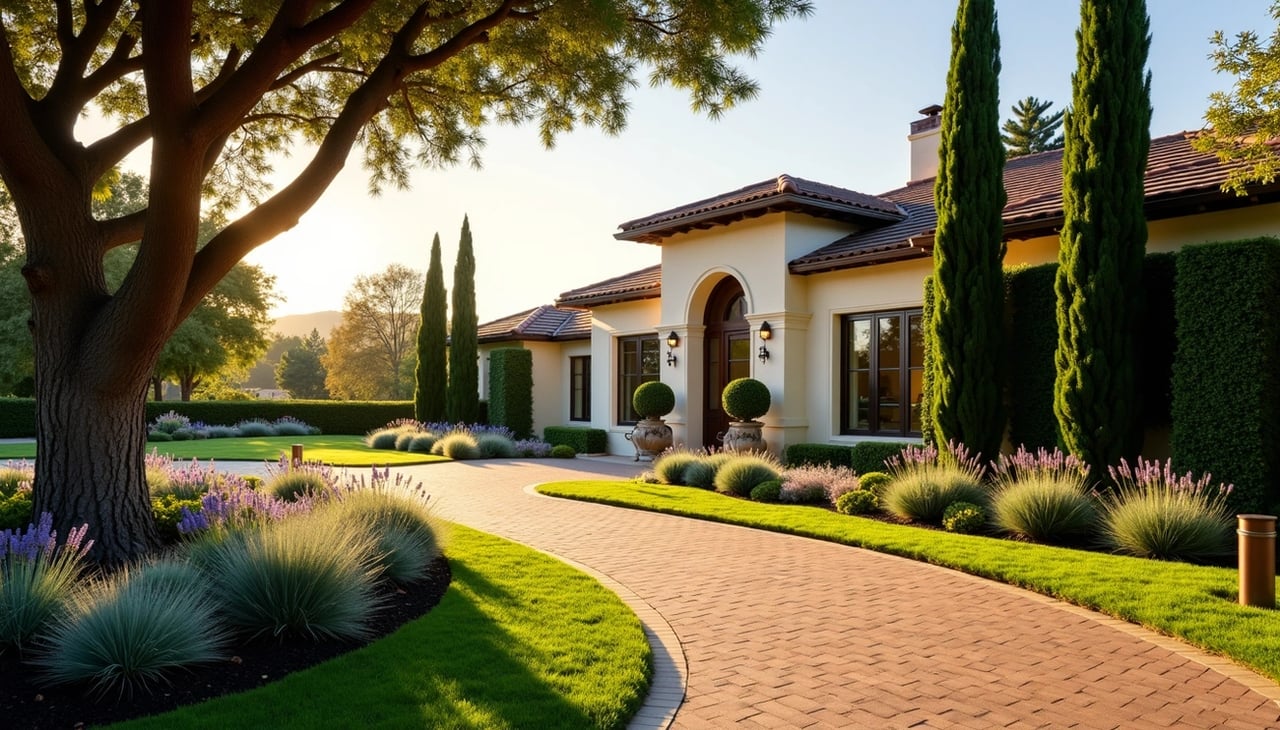
Residential landscaping decisions in Brentwood estates are about more than esthetics. Property landscaping serves as a strategic investment that influences market positioning and buyer perception. Research from the American Society of Landscape Architects shows that professional landscaping design can increase a home's value by 15% to 20%. But realizing this return requires understanding which landscaping ideas translate to lasting appeal. It also means knowing which residential landscaping services deliver measurable results for selective estate owners.
The Strategic Role of Landscaping in Brentwood Property Values
Estate-level property landscaping operates under different standards than typical residential yards. The difference lies not just in scale but in the sophistication of design execution and the strategic choices that separate properties commanding premium prices from those struggling to attract serious buyers.
What Sets Estate Landscaping Apart
Design sophistication ranks as the single most important factor influencing perceived home value, according to a seven-state consumer survey. Plant size follows as the second priority. Diversity of plant type matters least to prospective buyers. This hierarchy reveals something critical: buyers respond to cohesive, professionally executed vision rather than sheer variety or complexity.
A sophisticated landscape paired with large deciduous and evergreen plants, annual color and quality hardscape elements creates the strongest market effect. Minimal landscapes featuring simple designs with small plants detract from property value, in contrast. The threshold between adding and subtracting value proves surprisingly precise.
Native plant selections offer both esthetic appeal and financial prudence. Maintaining an acre of native plants costs approximately $3,000 over a 20-year period, compared to $20,000 for non-native species over the same timeframe. Native plants thrive in regional conditions and require less intervention while providing habitat for local wildlife, beyond cost savings.
How Property Landscaping Influences Market Positioning
First impressions form at the curb. Landscaping sends immediate signals about overall property care there. Buyers assume that meticulous exterior maintenance reflects attention to the home's interior that's just as careful. This perception influences their willingness to negotiate and their comfort with asking prices.
Residential landscaping design that's kept up well accelerates sale timelines. Properties presenting move-in-ready outdoor spaces attract more interest. Buyers see less immediate work required. Superior grounds create the differentiation that draws potential buyers inside in competitive markets where multiple estates share architectural styles that are alike.
The neighborhood effect compounds individual property benefits. Surrounding properties often experience value appreciation when one estate invests in professional residential landscaping services. This collective elevation of neighborhood esthetics benefits all homeowners within the area.
The Connection Between Grounds and Sale Price
The value increase from upgrading average landscaping to excellent quality ranges between 10% and 12%. To demonstrate this effect with concrete numbers: a home valued at $150,000 with lawn-only landscaping could command an additional $8,250 to $19,050 with sophisticated residential landscaping design featuring color and large, mature plants. For a $300,000 property, this translates to $16,500 to $38,100 in added value.
Regional variation exists within these ranges. A Virginia Tech analysis found that landscape-driven value increases spanned from 5.5% in Louisiana to 11.4% in South Carolina. The sophistication of design and size of plantings proved more influential than regional differences.
Strategic planting delivers benefits beyond visual appeal. Trees and shrubs positioned to provide shade reduce cooling costs during summer months, while windbreaks lower heating expenses in winter. These energy efficiency gains add tangible value. They reduce long-term operating costs for homeowners. Functional outdoor spaces such as patios and outdoor kitchens expand usable square footage and create additional living zones that buyers seek.
Properties featuring thoughtful landscaping ideas that incorporate proper drainage and sustainable irrigation practices maintain their value advantage year-round. The investment appreciates over time as trees mature and plantings establish themselves. Quality property landscaping stands as one of the few home improvements that gains value with age rather than depreciating.
Essential Residential Landscaping Design Elements for Estates
Design fundamentals separate estates that sell quickly from those that linger. The difference shows in specific elements that buyers notice right away and appreciate long-term, from the original approach to secluded outdoor retreats.
Entry Sequences That Create Presence
Driveways function as the opening statement. Stone materials paired with mature trees create presence right away. Symmetrical plantings flanking the entrance establish formality, while meandering paths through landscaged grounds build anticipation. Southern Live Oak trees stretching limbs over driveways convey permanence, as do stone surfaces accented with flagstone near entryways. The progression from street to front door tells a story through materials and scaled plantings chosen with care.
Backyard Retreats and Entertainment Areas
Fire pits anchor gathering spaces where guests congregate as evenings cool. Outdoor kitchens built from reclaimed wood with integrated grills and bar seating transform backyards into functional rooms. Flow matters when you design these zones. Paths connecting seating areas, dining spaces and lawns should feel intuitive rather than forced. Raised decks with pergolas provide defined spaces to dine while maintaining visual connection to surrounding grounds. Multiple seating zones allow guests to disperse during gatherings without feeling separated from the event.
Those who love to entertain find that the right home makes all the difference. If you're thinking over a purchase in the near future or beginning your search, I'd be delighted to help you find spaces designed for refined living and effortless hosting. Christina Pope  310-404-9931
  [email protected]
Pool Surroundings and Outdoor Kitchens
Placement determines functionality. Outdoor kitchens need to be close enough to pools to supervise but far enough to avoid constant splashing. This requires spatial precision. U-shaped layouts with bar seating allow guests to transition from pool to conversation naturally. Covered structures like pergolas provide shade relief between pool and kitchen zones. Moisture-resistant materials protect against saltwater and pool chemical exposure. Refrigeration, running water and adequate storage transform these spaces from occasional-use features to daily outdoor living extensions.
Drought-Tolerant Solutions to California Living
Residential water use dedicates 50% to outdoor irrigation. Native plantings then deliver substantial operating cost reductions. An acre of native plants costs approximately $3,000 to maintain over 20 years compared to $20,000 for non-native species. Muhlenbergia rigens and Artemisia californica survive on rainfall alone once established. Decomposed granite paired with succulents like Dudleya edulis creates fire-resistant, water-efficient designs. Rain gardens capture stormwater runoff and recharge groundwater while reducing irrigation dependency.
Perimeter Plantings to Gain Privacy
Emerald Green Arborvitae grows 15 feet tall and three to four feet wide with minimal pruning. Leyland Cypress provides faster screening and reaches 40 to 60 feet tall with growth rates of three to five feet each year. Bamboo delivers rapid coverage to gain privacy right away but requires containment in raised planters to prevent spreading. Formal hedges trimmed into uniform walls suit traditional estate esthetics, while naturalized plantings create softer boundaries. Plants spaced at their mature width yield gapless screens without overbuying. Cherry Laurel tolerates shade while providing dense coverage at growth rates of one to three feet yearly.
The Long-Term Investment Perspective
Mature landscaping compounds value over decades, not months. The timeline separates strategic estate planning from quick cosmetic updates.
Trees That Mature with Your Property
Nationwide surveys confirm that mature trees in well-landscaped yards increase home values by 7% to 19%. Properties featuring trees that have been growing for years sell faster than those with minimal plantings. A Clemson University study found homeowners achieve 100% or more return on landscaping investments. Single mature trees carry appraised values between $1,000 and $10,000.
Growth timelines need patience. Plants need five to seven years to reach maturity. Most trees need 15 years or more to gain height and cast shade. River birch, October Glory maple, and Autumn Blaze maple accelerate this process as faster-growing options. Eastern redbud brings spring color with heart-shaped foliage, while crape myrtle extends bloom periods. Cryptomeria japonica 'Radicans' provides evergreen texture without excessive maintenance.
Northern red oak tolerates almost any soil type and grows quickly while producing red fall color. Sugar maple needs ample space but rewards owners with brilliant autumn displays. These selections establish permanence while appreciating in both size and financial value at the same time.
Low-Maintenance Landscaping Ideas for Busy Owners
Native plants reduce ongoing care while cutting costs. Ground covers suppress weeds, retain moisture, and prevent soil erosion. Korean grass, ruschia nana, and kurapia replace high-maintenance turf without mowing. Perennials like catmint, coreopsis, Russian sage, and yarrow thrive with minimal water once they're grown.
Evergreen shrubs bring year-round visual interest. Boxwoods, laurels, yews, and holly species maintain appearance across seasons. Ornamental grasses adapt to tough landscapes, tolerate drought conditions, and resist deer damage. Mediterranean-adapted plants need minimal intervention while thriving in challenging conditions.
Hardscaping elements reduce maintenance demands for good. Expanded rock beds and mulched areas decrease turf coverage that needs weekly attention. Stone pathways last decades without replacement beyond the original installation. Wooden decks and composite materials create durable outdoor spaces that need only periodic cleaning.
Energy Efficiency Through Strategic Planting
Strategic tree placement cuts energy consumption in measurable ways. Three well-placed trees reduce air conditioning needs by 40% and heating costs by up to 10%. Trees positioned with care save up to 25% of typical household energy use. A well-designed landscape pays for itself through energy savings in less than eight years.
Deciduous trees planted on south and west-facing walls reduce summer heat gain while allowing winter sunlight penetration. Evergren trees and shrubs positioned north and northwest create windbreaks that deflect cold winter winds. Shrubs planted near foundations create insulating air layers that maintain interior temperatures. These placements reduce cooling costs by 15% to 50% each year.
Common Mistakes That Reduce Estate Appeal
Not all property landscaping additions enhance estate appeal. Certain features actively repel buyers and diminish market value, whatever the installation costs.
Overcomplicated Designs That Age Poorly
Excessive hardscaping transforms outdoor spaces into cold, uninviting environments. Patios and walkways add function, but paving over most yard areas eliminates greenery and reduces shade. Properties feel smaller. Concrete and stone trap heat in hot climates. Outdoor areas become uncomfortable during peak seasons. Buyers want balanced designs that mix usable hard surfaces with soft landscaping elements.
Niche decorative elements present similar problems. Garden gnomes, excessive fountains and individual-specific sculptures create clutter that distracts potential buyers. Overly customized residential landscaping design appeals to narrow audiences. This limits buyer pools and reduces market competitiveness. Landscaping ideas that work best avoid overly personal touches that future owners must remove or tolerate.
High-Maintenance Features Buyers Avoid
Artificial grass carries hidden drawbacks despite low upkeep promises. Installation costs range from $15.00 to $19.00 per square foot, compared to $0.86 to $1.75 for natural sod. A 1,000-square-foot installation runs $15,000 to $19,000 versus $860 to $1,750 for real grass. Artificial surfaces become hot in summer beyond cost. They harbor bacteria and damage soil.
Water features deter buyers who see them as maintenance burdens that require regular cleaning, winterizing and repairs. Pond installations cost $3,680 to $14,500 without guaranteed return on investment. Swimming pools prove equally divisive. Average in-ground pool installation reaches $45,583 and ranges from $32,408 to $60,873. Ongoing maintenance, elevated insurance premiums and safety concerns offset appeal for many estate buyers.
Sports courts occupy significant yard space while attracting niche markets only. Concrete removal costs $2.00 to $7.00 per square foot plus disposal fees from $51.00 to $100.00 per ton. Fruit trees require constant care, create mess from fallen fruit and attract pests.
Ignoring Local Climate and Water Regulations
California outdoor irrigation consumes 40% of residential water use. Therefore, properties that ignore water efficiency face regulatory scrutiny and elevated operating costs. Non-native plants cost $20,000 to maintain per acre over 20 years, compared to $3,000 for native species [already covered in previous sections - using data contextually]. Poor drainage signals deeper property issues. Standing water causes soil erosion, structural damage and pest breeding grounds. Buyers view drainage problems as expensive repairs that require excavation or regrading.
Residential Landscaping Services Worth Considering
Professional residential landscaping services translate design vision into executed reality. Selecting the right partners determines whether property landscaping investments deliver promised returns.
Complete Landscape Architecture
Custom landscape design needs collaboration between architects and property owners. Original site analysis assesses soil type, light levels, layout and climate factors before generating action plans. Designers coordinate materials and plants with spaces suitable for esthetic appeal, low maintenance and sustainability. This technical and creative process just needs large knowledge and high-level skills applied to each unique property.
Ongoing Maintenance Contracts
Performance-based maintenance contracts adjust service frequency according to growing seasons rather than fixed hours. Spring needs fertilization and seasonal color installation. Summer needs frequent mowing. Fall needs leaf removal and perennial cutbacks. Contracts should specify mowing frequency, edging protocols, pruning schedules, mulch applications and fertilization timing in detail. Irrigation management has regular system inspections, periodic audits and winterization where applicable. Pest and disease treatments need clear specification of targeted issues and application schedules.
Seasonal Updates
Seasonal color design and installation refresh landscapes throughout the year. Spring plantings, fall transitions and cleanup services maintain visual appeal across changing conditions. Mulch refresh brightens garden beds while suppressing weeds and retaining moisture.
Pre-Sale Property Preparation
Professional cleanup services boost curb appeal before listings go active. Debris and weed removal, pruning, trimming and fresh mulch application signal proper property care to buyers. Landscaping from simple to sophisticated design increases home value between 5.5% to 12.7%.
Conclusion
Quality property landscaping represents one of the few estate investments that appreciates rather than depreciates over time. Professional residential landscaping delivers measurable returns between 10% and 20% at the time it's executed with native plantings, mature trees and sophisticated design. These improvements reduce long-term operating costs and accelerate sale timelines.
Brentwood's luxury real estate operates differently than standard markets. The most meaningful transactions unfold within trusted circles where strategic property positioning matters. Estate owners who value precision and timing find that professionals who understand this discreet approach prove vital.
Christina Pope – Sotheby's International Realty 310-404-9931 | [email protected]
EliteResidenceInternational.com
Key Takeaways
Professional residential landscaping in Brentwood estates delivers measurable returns while creating lasting appeal that attracts discerning buyers and accelerates sales.
• Strategic landscaping increases property values by 15-20% - Professional design with mature plants and quality hardscaping delivers measurable returns that appreciate over time.
• Native plants reduce maintenance costs by 85% - California-adapted species cost $3,000 per acre over 20 years versus $20,000 for non-native alternatives.
• Mature trees provide immediate value and energy savings - Established trees add $1,000-$10,000 in appraised value while reducing energy costs by up to 40%.
• Avoid high-maintenance features that deter buyers - Water features, artificial grass, and overly personalized elements create maintenance burdens that reduce market appeal.
• Focus on sophisticated, cohesive design over complexity - Buyers respond to professional execution and large plantings rather than excessive variety or decorative elements.
The key to maximizing landscaping ROI lies in balancing visual impact with practical functionality, choosing elements that enhance rather than complicate estate ownership while positioning properties competitively in luxury markets.
FAQs
Q1. Does professional landscaping actually increase my home's resale value? Professional landscaping can increase property values by 15-20% when executed properly. However, it's not a dollar-for-dollar return. Quality landscaping helps your property reach its maximum price per square foot potential by enhancing curb appeal and signaling proper maintenance to buyers. The key is matching or slightly exceeding your neighborhood's landscaping standards without overbuilding.
Q2. What landscaping features should I avoid that might turn off potential buyers? Avoid high-maintenance features like elaborate water features, artificial grass, and overly personalized decorative elements. Buyers often view these as maintenance burdens rather than assets. Additionally, excessive hardscaping that eliminates greenery, sports courts that appeal to niche markets, and fruit trees requiring constant care can actually reduce your property's appeal and market competitiveness.
Q3. How much does it cost to maintain native plants compared to non-native species? Native plants are significantly more cost-effective, requiring approximately $3,000 per acre over 20 years compared to $20,000 for non-native species. This 85% cost reduction comes from their natural adaptation to local climate conditions, requiring less water, fertilizer, and intervention while thriving with minimal maintenance once established.
Q4. Can strategic tree placement really reduce my energy costs? Yes, strategically placed trees can reduce air conditioning needs by up to 40% and heating costs by 10%. Three well-positioned trees can save up to 25% of typical household energy use. Deciduous trees on south and west-facing walls provide summer shade while allowing winter sunlight, and evergreen windbreaks on the north side deflect cold winds, creating measurable energy savings.
Q5. How important is curb appeal when selling a home? Curb appeal is extremely important as it creates the critical first impression that influences buyer decisions before they even enter your home. Well-maintained landscaping signals overall property care, accelerates sale timelines, and helps properties stand out in competitive markets. Simple improvements like clean lawn lines, fresh mulch, and mature trees can make a meaningful difference in attracting serious buyers.