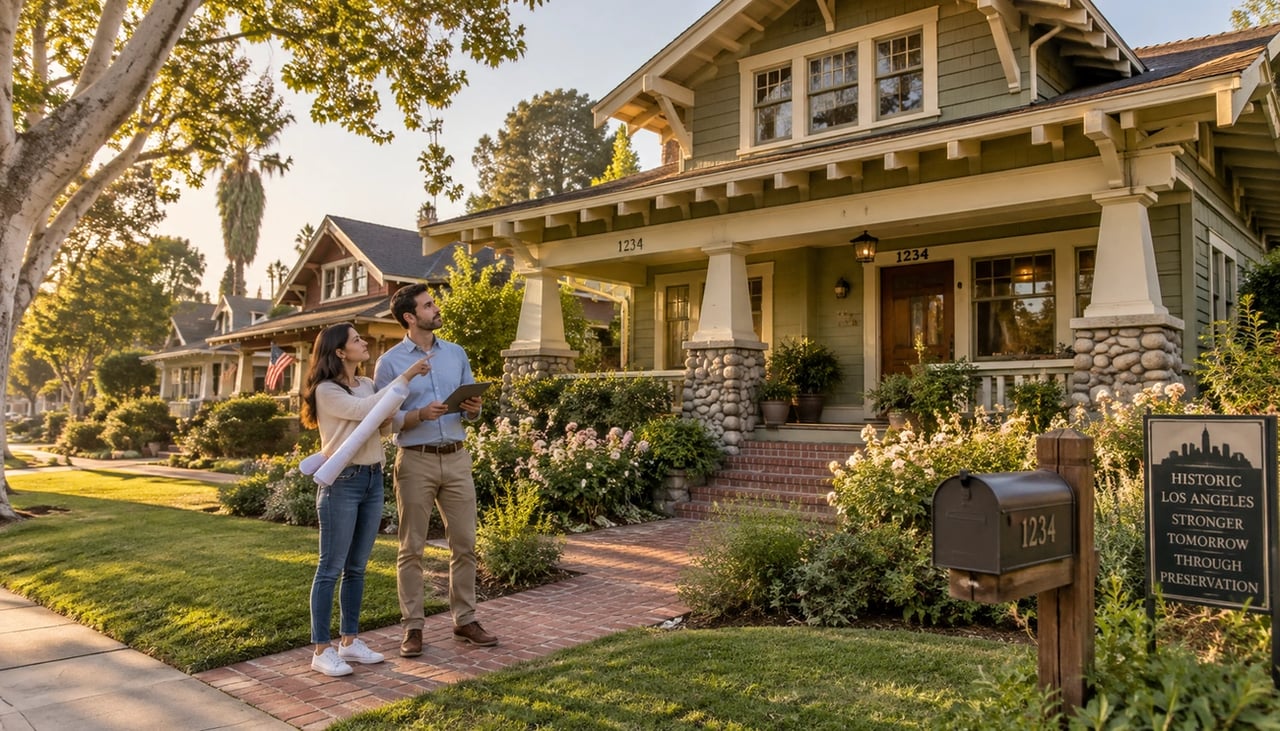
Buying a home in Los Angeles is exciting, but finding out your property sits in an HPOZ can feel overwhelming. The city has more than 30 HPOZs, and each one preserves distinct architectural periods and neighborhood character. These historic districts have grown steadily since 1983, when the first HPOZ was designated.
New homeowners need to understand what HPOZ means because these zones require board approval for major exterior changes. Knowing how to work with HPOZ guidelines becomes crucial. This piece covers the HPOZ ordinance requirements and shows you how to use the HPOZ Los Angeles map to locate your district. You'll learn the complete approval process and how to plan renovations that respect historic character while meeting modern needs within HPOZ Los Angeles regulations.
What New Homeowners Need to Know About HPOZ in Los Angeles
"The HPOZ is about ensuring that growth is compatible with the neighborhood, that each of us can improve and enlarge our own homes and protect our property values while maintaining the unique character of Holmby Westwood." — Holmby Westwood Property Owners Association, Community organization advocating for historic preservation
The Simple Facts About Historic Preservation Overlay Zones
A Historic Preservation Overlay Zone is a zoning tool that protects and preserves neighborhoods composed of architecturally and historically important structures. The City adopted the HPOZ Ordinance in 1979, and Angelino Heights became the city's first HPOZ in September 1983. City Council has designated thirty-five neighborhoods as HPOZs since then, with the dataset showing 36 records throughout the city.
Each district operates under its own preservation plan. This plan establishes design guidelines and treatment standards for that neighborhood. A five-member board administers each neighborhood's preservation plan with the Department of City Planning. These boards review alterations to contributing structures. Windows, doors, porches, roofs, additions and secondary structures all require review.
Properties fall into two categories. Contributing structures retain historical importance and contribute to the historic district. Non-contributing structures have been altered heavily or were constructed outside the period of importance. This classification determines the level of review required for proposed changes.
HPOZ review applies only to home or commercial building exteriors, accessory structure exteriors like garages, and landscaping projects. Interiors remain unregulated through HPOZ. All exterior work within an HPOZ requires additional review, including landscaping, alterations, additions and new construction. Work completed without proper HPOZ review may be subject to Department of Building and Safety Code Enforcement action and related fines.
Using the HPOZ Los Angeles Map to Locate Your District
The city publishes an interactive map showing the locations of each HPOZ. Homeowners can use this digital resource to determine whether their property falls within designated boundaries. The map can be accessed through the city's GeoHub platform, which was last updated on September 17, 2026.
Why HPOZ Rules Exist and What They Protect
HPOZs provide an additional layer of planning control during project review processes. These districts want to prevent demolition and inappropriate alterations of historic properties. The regulations ensure that new projects complement the neighborhood's historic character rather than erode architectural identity. Neighbors cannot tear down historic homes and replace them with oversized structures. This maintains the neighborhood's scale and character.
Before You Start: Assessing Your Property and Plans
Determine Your Property's Contributing Status
Every property within an HPOZ receives classification as either Contributing or Non-Contributing based on a professional evaluation. Contributing structures retain historical significance and contribute to the historic district. Non-contributing structures have been heavily altered or fall outside the period of significance. This designation shapes how strictly design review applies.
Homeowners should consult the Zoning Information and Map Access System (ZIMAS), the city's web-based mapping tool, to confirm a property's status. Each district's Historic Resources Survey identifies properties within these categories, and some properties may be listed as Contributing Altered. Contributing properties face stricter review for exterior work. Non-contributing properties have more flexibility but still must meet compatibility guidelines.
Review Your Specific HPOZ Ordinance Requirements
Each HPOZ operates under its own adopted Preservation Plan with design guidelines specific to that district's architectural character. These plans are unique to each zone and establish different treatment standards. Homeowners must review their specific district's Preservation Plan before planning any project, as guidelines vary between neighborhoods.
Identify Which Changes Need Board Approval
HPOZ review under LAMC 12.20.3 limits oversight to exterior features visible from the public right-of-way. Repainting in an already-approved color scheme requires no HPOZ review. Replacing a roof with in-kind or compatible materials often receives staff-level review. New windows, doors, or exterior siding changes require a Certificate of Appropriateness at either staff or Board level depending on visibility and scope. Additions visible from the public right-of-way require Board-level review.
Interior Work vs. Exterior Modifications
HPOZs regulate exteriors, so homeowners have flexibility inside their homes. Interior-only work with no exterior visibility is not subject to HPOZ design review. But if interior work requires exterior vents, window changes, or visible equipment, expect HPOZ review for those exterior elements.
The Complete HPOZ Approval Process for Homeowners
"If you make alterations to a building without working in partnership with relevant governmental agencies, you could face fines or even have your entire project shut down. It is vital to get these groups involved in your historic project earlier rather than later." — Thom Meek, GHP Architect
Step 1: Pre-Application Consultation With Historic Resources
Contact an Office of Historic Resources preservation planner before you finalize designs. Email or call with your address and scope summary to verify whether your project is exempt, staff-level, or Board-level. This feedback prevents expensive design revisions down the line.
Step 2: Prepare Your Certificate of Appropriateness
Submit nine sets of documentation. These include project description, color photographs of existing conditions and surrounding buildings, survey page from ZIMAS, dimensioned plans and elevations, and material samples. The application requires a Master Land Use Permit form with notarized signatures. Fees range from $708 to $1,706 and depend on project size.
Step 3: Present to Your HPOZ Board
Staff-level approvals take several weeks. Board-reviewed projects require public hearings that are held twice monthly. The 75-day review period begins once the application is deemed complete. Public notice must be posted on-site 10 days before the hearing.
Step 4: Get Your Building Permit
Once you have HPOZ approval, submit to the Department of Building and Safety. The COA clears the historic preservation requirement but does not authorize construction.
Step 5: Complete Work and Final Inspection
Completed work may be inspected to verify it matches approvals. Work that starts without approvals triggers stop-work orders, penalties, and restoration requirements.
Step 6: Understanding the Certificate of Economic Hardship Option
Property owners may apply to get a Certificate of Economic Hardship when a Certificate of Appropriateness is denied. They must demonstrate that denial prevents reasonable economic return. This narrow remedy requires extensive financial documentation.
Working Successfully Within HPOZ Guidelines
How to Plan Renovations That Meet Standards
Note that repair takes priority over replacement when planning work. Preserve original materials where feasible, as most HPOZ guidelines arrange with the Secretary of Interior's Standards. Match materials and hardware to reflect the home's period. Wood or historically appropriate siding proves more acceptable than generic modern materials. Retain character-defining features like original windows and rooflines, along with trim and doors.
Finding Architects and Contractors Experienced With HPOZ
Select professionals familiar with HPOZ procedures and historic materials. Architects experienced in preservation design can guide projects through technical review processes and prepare Certificate of Appropriateness applications. Tashman Home Center operates as an approved HPOZ vendor. They specialize in restoring and replacing windows and doors with historically correct materials and styles. Their team understands HPOZ requirements and assists homeowners through board meetings and approval processes.
Balancing Modern Needs With Historic Character
Adaptive reuse allows repurposing historic buildings to serve modern uses while maintaining architectural elements. Incorporating contemporary systems requires understanding construction opportunities and limitations. Place solar panels on rear-facing roof slopes or ground locations out of public view.
Financial Incentives and Tax Benefits Available
The Mills Act offers the city's most important financial incentive. It provides potential property tax reduction to owners of contributing HPOZ properties. The Federal Historic Rehabilitation Tax Credit equals 20% of qualifying expenditures for income-producing properties. State tax credit programs offer additional incentives for qualified rehabilitation projects.
Conclusion
Homeowners find HPOZ regulations straightforward once they understand the approval process and their district's specific requirements. Property owners can successfully renovate while preserving historic character when they use the step-by-step procedure outlined above. The key lies in early consultation and working with experienced professionals who understand preservation standards. HPOZ guidelines protect neighborhood character and property values. Homeowners can achieve renovations that honor the past while meeting contemporary needs with proper planning and patience.
Key Takeaways
Understanding HPOZ regulations is essential for LA homeowners in historic districts, as these zones require board approval for exterior changes while protecting neighborhood character and property values.
• Determine your property's contributing status using ZIMAS—this classification dictates review strictness and renovation flexibility for your home.
• Start with pre-application consultation before finalizing designs to avoid costly revisions and ensure compliance with your district's specific preservation plan.
• HPOZ review only applies to exterior features visible from public right-of-way; interior work remains unregulated unless it affects exterior appearance.
• The approval process takes 75 days minimum and requires detailed documentation including nine sets of plans, photographs, and material samples.
• Financial incentives like the Mills Act can significantly reduce property taxes for contributing HPOZ properties, offsetting compliance costs.
Working within HPOZ guidelines doesn't mean sacrificing modern comfort—it means thoughtfully integrating contemporary needs with historic preservation. By partnering with HPOZ-experienced architects and contractors, homeowners can navigate the approval process efficiently while accessing valuable tax benefits and protecting their investment in LA's architectural heritage.
FAQs
Q1. What does HPOZ mean and how does it affect my Los Angeles property? HPOZ stands for Historic Preservation Overlay Zone, a zoning tool that protects architecturally and historically significant neighborhoods in Los Angeles. If your property is in an HPOZ, you'll need board approval for major exterior changes like additions, new windows, doors, or alterations visible from the street. However, interior work generally remains unregulated unless it affects the exterior appearance.
Q2. How can I find out if my home is in an HPOZ district? You can use the city's interactive HPOZ Los Angeles map available through the GeoHub platform to determine if your property falls within designated boundaries. Additionally, the Zoning Information and Map Access System (ZIMAS) provides detailed information about your property's status, including whether it's classified as contributing or non-contributing to the historic district.
Q3. What types of home improvements require HPOZ approval? Any exterior work visible from the public right-of-way requires HPOZ review, including new windows, doors, siding changes, roof replacements with different materials, additions, and significant landscaping projects. Simple repainting in already-approved colors typically doesn't need review, while roof replacement with matching materials often receives staff-level approval rather than full board review.
Q4. How long does the HPOZ approval process take? The review period is 75 days once your application is deemed complete. Staff-level approvals for minor changes take several weeks, while board-reviewed projects require public hearings held twice monthly. It's recommended to start with a pre-application consultation with Historic Resources preservation planners to determine your project's review level and avoid delays.
Q5. Are there financial benefits to owning a home in an HPOZ? Yes, the Mills Act offers the most significant financial incentive, providing potential property tax reductions for owners of contributing HPOZ properties. Additionally, income-producing properties may qualify for the Federal Historic Rehabilitation Tax Credit equal to 20% of qualifying expenditures, plus state tax credit programs for qualified rehabilitation projects.