The question "is LA walkable" now carries the most important weight in luxury real estate conversations. The most meaningful decisions unfold through trusted networks rather than public listings. Walkability has become a premium feature that buyers seek and pay for. 78% of buyers say they'd pay more for a home in a walkable community. Home workers are willing to add $3,260 to their purchase price for pedestrian-friendly neighborhoods. This move reflects a broader transformation in how Angelenos assess property value. Buyers prioritize lifestyle and daily convenience rather than focusing on prestigious zip codes. This piece gets into the state of walkability in Los Angeles and explores why walkable neighborhoods command premium pricing. It reveals how lifestyle value has overtaken traditional status markers in shaping the city's real estate landscape.
The State of Walkability in LA: From Freeways to Footpaths
Los Angeles ranks as the 12th most walkable large city in the United States, home to 3,792,621 residents with a Walk Score of 68.6. This positioning reflects a city in transition. Decades of freeway-first planning gave way to targeted investments that created distinct pockets of pedestrian-friendly living.
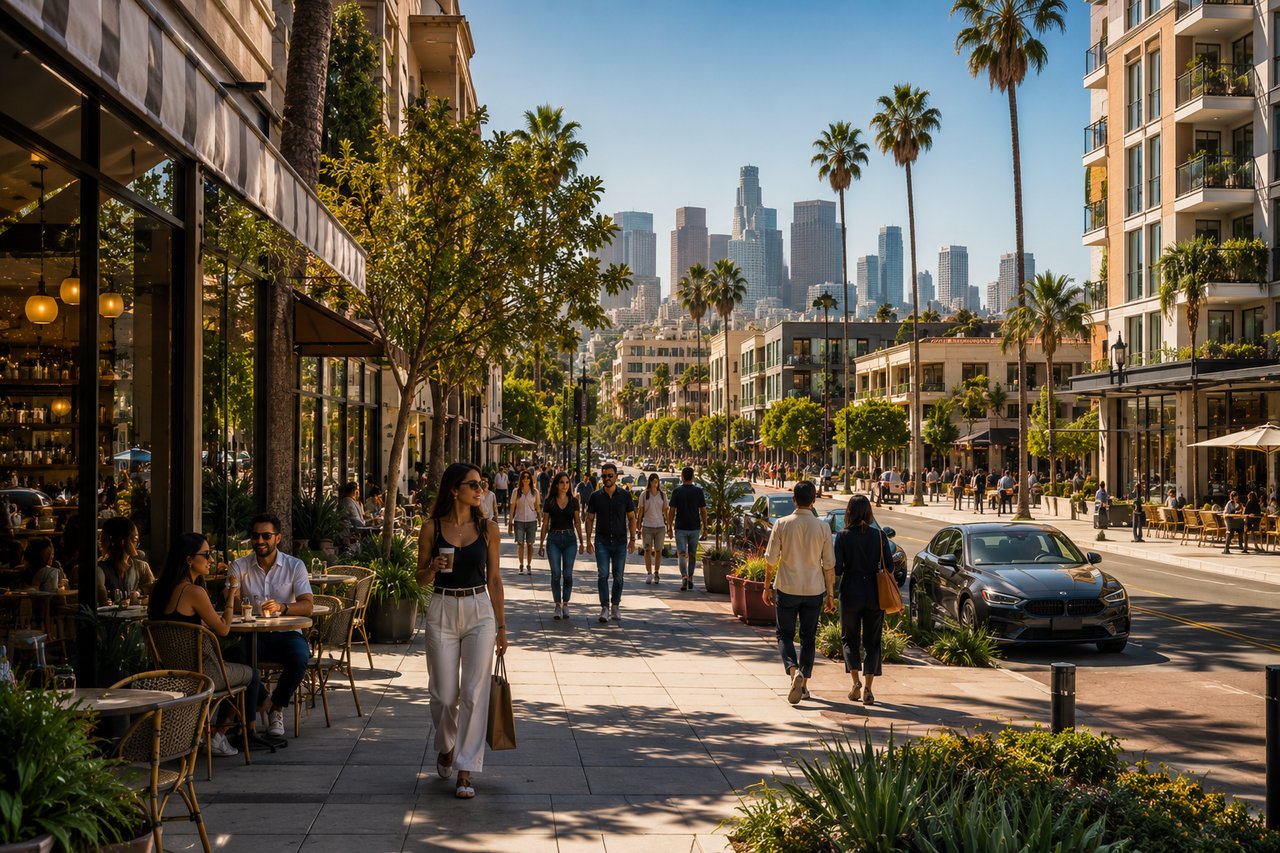
The most walkable neighborhoods in Los Angeles cluster around transit hubs and urban density. MacArthur Park and Downtown LA both score 94 on walkability metrics. Koreatown follows at 93. West Hollywood achieves a Walk Score of 91, while Santa Monica reaches 83 in downtown areas. These walkable areas in Los Angeles offer daily conveniences within a 10-minute walk, from groceries to medical offices.
Infrastructure spending signals the city's dedication to pedestrian access. The city allocated over $860 million in fiscal year 2022-2023 to improve public infrastructure, including sidewalk repairs and traffic safety improvements. An additional $139 million targets mobility upgrades before the 2028 Olympic Games. The funds will reconnect communities divided by highways. Measure HLA, approved by voters in March 2024, mandates implementation of the Mobility Plan 2035.
The transit network expanded with 175 bus lines, 6 rail lines, 2 subway lines, and 4 light rail lines that connect key neighborhoods. Downtown serves as the central hub, though Westwood, Hollywood, and Koreatown provide the urban density that supports car-free living.
What Drives the Premium for Walkable Neighborhoods in LA
Luxury real estate in Los Angeles operates through private conversations and trusted networks. The most important transactions unfold in quiet ways. Walkability has become a quantifiable asset that commands precise pricing premiums in these circles. Those who understand this market recognize that pedestrian access drives value in ways traditional amenities cannot match.
Each additional Walk Score point adds $3,948 to a home's sale price. This represents a 0.83% increase. The effect scales with existing walkability levels. A move from a Walk Score of 79 to 80 gets a $7,000 price jump, while a change from 19 to 20 adds just $181. Walkability premiums reach $8,225 for homes in the top 5% of the price spectrum in the most expensive neighborhoods.
The buyer profile driving these premiums has changed. Survey data shows 79% of Americans rate walkability as important when choosing homes. 78% would pay more for it. Gen Z and millennials show even stronger preferences: 90% are willing to pay premiums for walkable communities, and a third would pay much more. Half of buyers prefer walkable communities and shorter commutes even if it means accepting smaller yards.
Real estate data confirms this pattern. Walkable homes nationally sold for 23.5% more than car-dependent comparables. This translates to roughly $77,600 in additional value. Walkability adds nearly $82 per square foot to home values across property types.
Lifestyle Value vs. Traditional Status Markers in Modern LA
Traditional luxury markers once defined value in obvious terms: square footage, ceiling height, gated drives, dramatic foyers used twice yearly. Many West Los Angeles buyers now redefine what matters. They seek ease rather than excess. A morning coffee without parking negotiations. Dinner nearby on a Wednesday. Groceries and fitness studios woven into ordinary routines.
Time has emerged as the most prized resource. Buyers purchasing frictionless living understand that conveniences compound. Survey respondents living in walkable communities report 89% satisfaction with quality of life, and 48% express strong satisfaction. This happiness differential stems from benefits beyond convenience.
Transportation costs alone tell part of the story. Car ownership averages $9,500 annually and consumes 13% of household expenditures. Lower-income households spend between 17% and 29% of income on vehicles. Walkable neighborhoods eliminate or reduce this burden while delivering health advantages. Residents show 58% higher odds of optimal cardiovascular profiles. Thirty minutes of daily walking five days weekly adds 1.3 to 1.5 years to life expectancy.
The right home makes all the difference if you love to entertain. I'd be delighted to help you find spaces designed for elevated living and effortless hosting if you're thinking about a purchase in the near future or starting your search. Christina Pope  310-404-9931
  [email protected]
Conclusion
Walkable neighborhoods in Los Angeles now command measurable premiums because buyers know what matters. Lifestyle value has overtaken traditional status markers, with pedestrian access adding nearly $4,000 per Walk Score point. Those who understand this change position themselves to take advantage and know that convenience compounds daily. The savvy buyers seek neighborhoods where ordinary routines unfold without effort and where time saved translates to life lived fully.
Key Takeaways
Los Angeles is experiencing a fundamental shift in real estate priorities, where walkability has become a quantifiable luxury that commands premium pricing and reflects changing lifestyle values.
• Walkability commands measurable premiums: Each Walk Score point adds $3,948 to home values, with walkable properties selling for 23.5% more than car-dependent alternatives.
• LA's walkability varies dramatically by neighborhood: While the city scores 68.6 overall, top areas like MacArthur Park and Downtown LA achieve Walk Scores of 94.
• Younger buyers drive the walkable premium trend: 90% of Gen Z and millennials will pay more for walkable communities, prioritizing convenience over traditional luxury markers.
• Lifestyle value now trumps zip code prestige: Buyers increasingly choose daily convenience and time savings over square footage and traditional status symbols.
• Infrastructure investments support the trend: LA allocated $860+ million for pedestrian improvements, signaling long-term commitment to walkable development.
This transformation reflects a broader cultural shift where time, health, and daily convenience have become the new markers of luxury living in Los Angeles.
FAQs
Q1. Which Los Angeles neighborhoods are considered the most walkable? The most walkable neighborhoods in LA include MacArthur Park and Downtown LA (both scoring 94 on Walk Score), Koreatown (93), West Hollywood (91), and Santa Monica (83 in downtown areas). Other walkable communities include Los Feliz, Silver Lake, Culver City, Pasadena, and the Arts District. These areas offer daily amenities like groceries, restaurants, and services within a 10-minute walk.
Q2. How much more do homes cost in walkable LA neighborhoods? Walkable properties in Los Angeles command significant premiums. Each additional Walk Score point adds approximately $3,948 to a home's sale price, representing a 0.83% increase. Nationally, walkable homes sell for about 23.5% more than car-dependent properties, translating to roughly $77,600 in additional value. The premium effect scales with existing walkability levels, with higher Walk Scores generating larger price increases.
Q3. Can you live in Los Angeles without owning a car? Yes, it's possible to live car-free in LA, particularly in neighborhoods near Metro stations like Downtown LA, Koreatown, Little Tokyo/Arts District, and Santa Monica. Success depends on choosing housing close to your workplace and daily needs. Many residents combine walking, biking, Metro trains, buses, and occasional ride-sharing services. However, LA's car-free lifestyle differs significantly from cities like Chicago or New York, as walkable areas tend to be isolated pockets rather than continuous urban zones.
Q4. What makes walkable neighborhoods worth the higher cost? Walkable neighborhoods offer tangible lifestyle benefits beyond convenience. Residents save an average of $9,500 annually on car ownership costs and report 89% satisfaction with quality of life. Health advantages include 58% higher odds of optimal cardiovascular profiles and increased life expectancy. Time savings from eliminating commutes and parking hassles compound daily, while reduced transportation costs particularly benefit lower-income households who typically spend 17-29% of income on vehicles.
Q5. How is LA improving walkability and pedestrian infrastructure? Los Angeles has committed significant resources to walkability improvements, allocating over $860 million in fiscal year 2022-2023 for public infrastructure including sidewalk repairs and traffic safety enhancements. An additional $139 million targets mobility upgrades before the 2028 Olympics. Measure HLA, approved in March 2024, mandates implementation of the Mobility Plan 2035. The city has also expanded its transit network with 175 bus lines, 6 rail lines, 2 subway lines, and 4 light rail lines connecting key neighborhoods.