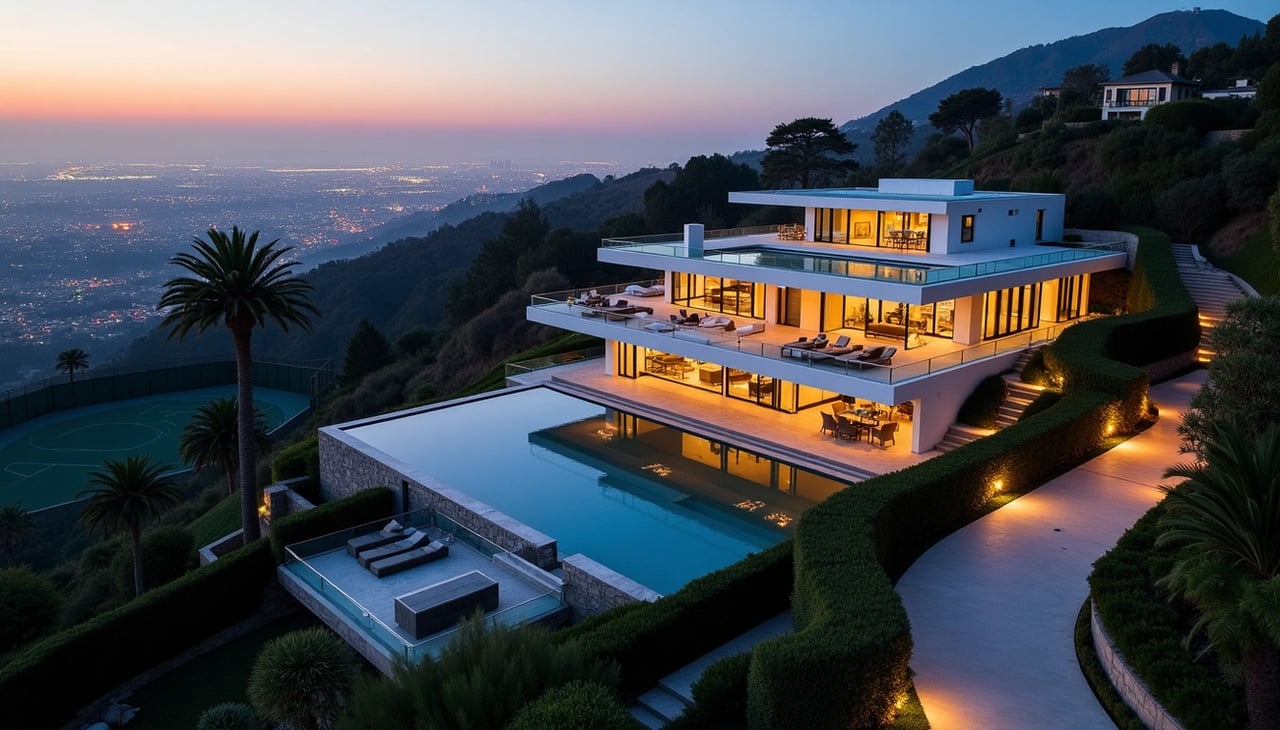
The richest neighborhoods in Los Angeles no longer compete for visibility. Luxury real estate in these enclaves operates through private conversations and off-market transactions, where discretion matters as much as value. Properties priced at $2 million and above account for 53% of total sales across California. Yet the most important deals unfold within trusted circles. Those looking to buy a luxury house in Los Angeles understand that the most affluent neighborhoods prioritize privacy infrastructure over prestige. This piece gets into what defines the most expensive neighborhoods in Los Angeles, from Hidden Hills to Bel Air. Wealthy neighborhoods in Los Angeles attract buyers who seek seclusion and controlled access with careful timing.
What defines the richest neighborhoods in Los Angeles in 2026
Wealth in Los Angeles real estate operates through layers most buyers never see. The most affluent neighborhoods in Los Angeles distinguish themselves through infrastructure that existed before technology made privacy difficult to maintain. Security protocols, estate dimensions, architectural lineage, and inventory scarcity create barriers that function independently of price alone.
Privacy infrastructure and security protocols
Security infrastructure in the richest neighborhoods in Los Angeles rivals international embassies. High-end properties incorporate double-gated entries, biometric access controls, safe rooms, perimeter motion detection, and dedicated security teams. These systems protect physical assets and digital infrastructure at the same time.
Simple home security systems start at $100,000, while complete security solutions cost over $1 million. Security personnel expenses range from $50,000 to $500,000 yearly. Beverly Park operates behind 24/7 security and surveillance, hidden deep inside the hills with restricted access. The Oaks features facial recognition technology and license plate readers that detect suspicious activity or unfamiliar vehicles entering the property.
Architectural choices that eliminate sightlines from public areas extend privacy features. U-shaped courtyards, strategic water features, floating walls, and underground garages preserve seclusion without sacrificing esthetic appeal. Expansive setbacks and mature landscaping help many estates maintain invisibility from street level. Reinforced entry points with ballistic-resistant doors and impact-resistant glazing are the foundations of physical security. Pressure-sensitive flooring systems detect unauthorized entry, while glass break detection sensors and panic button integration provide immediate emergency response.
Estate scale and land ownership
The wealthiest neighborhoods in Los Angeles offer residents an extraordinary combination of urban convenience with estate-like privacy, a balance virtually impossible to achieve elsewhere in the city. Beverly Hills Gateway properties exceed $20 million on a regular basis, featuring expansive lot sizes, private driveways, and gated entrances. Some estates sit on over 10 acres and create a rural feel within a major metropolitan area.
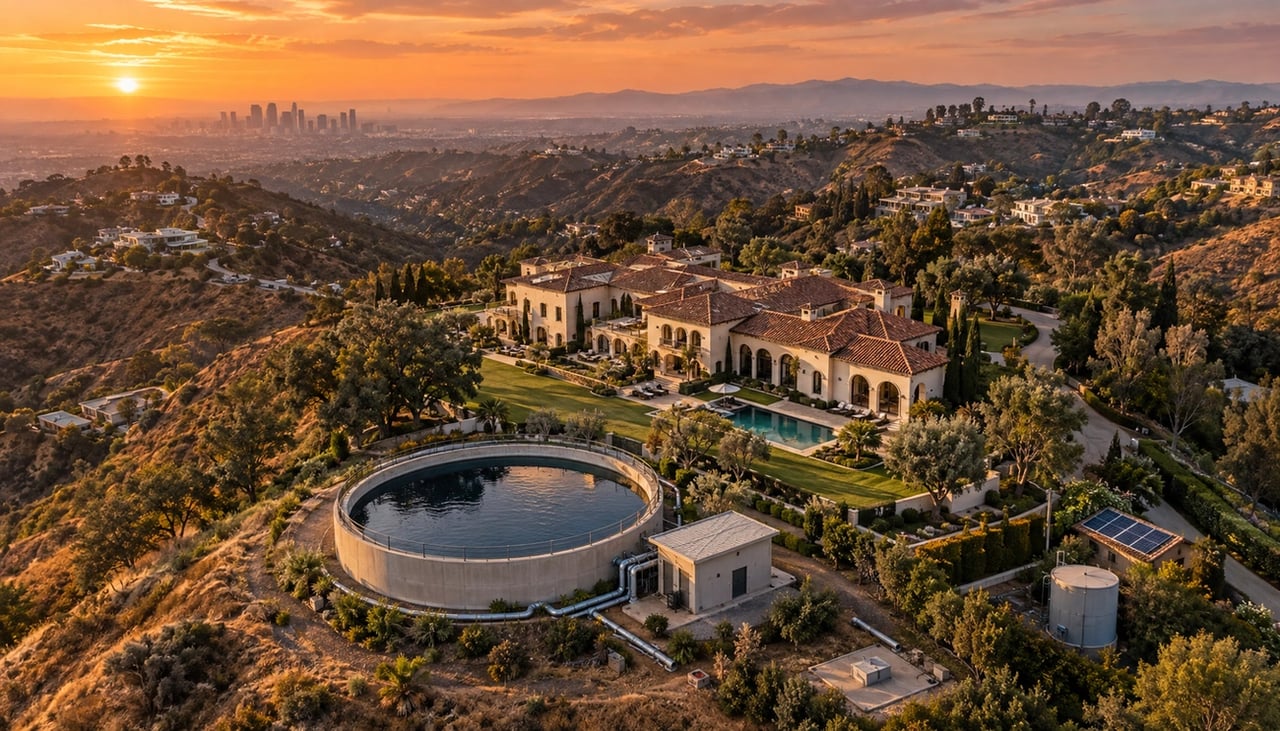
Bel Air estates span several acres and ensure unmatched seclusion. Properties feature long, gated driveways, high-tech security systems, and sweeping views of the city and ocean. Holmby Hills boasts some of the largest estates in Los Angeles, with meticulously landscaped grounds and historic mansions that have set records in real estate sales.
Architectural pedigree and historical significance
Homes designed by Paul Williams, Richard Neutra, or Gordon Kaufmann carry cultural significance that exceeds short-term market trends. Their historical importance creates a floor for valuation that rarely decreases. Authenticated Paul R. Williams homes in Beverly Hills and Hancock Park range from $5 million to $15 million as of 2026, with celebrity-owned estates commanding additional premiums.
Neutra homes in Los Feliz range from $2.50 million to $6 million as of 2026, with authenticated Neutra properties commanding premiums over comparable tract homes. Architect-designed homes command 20-100% premiums over comparable non-architectural properties depending on architect, condition, location, and design significance.
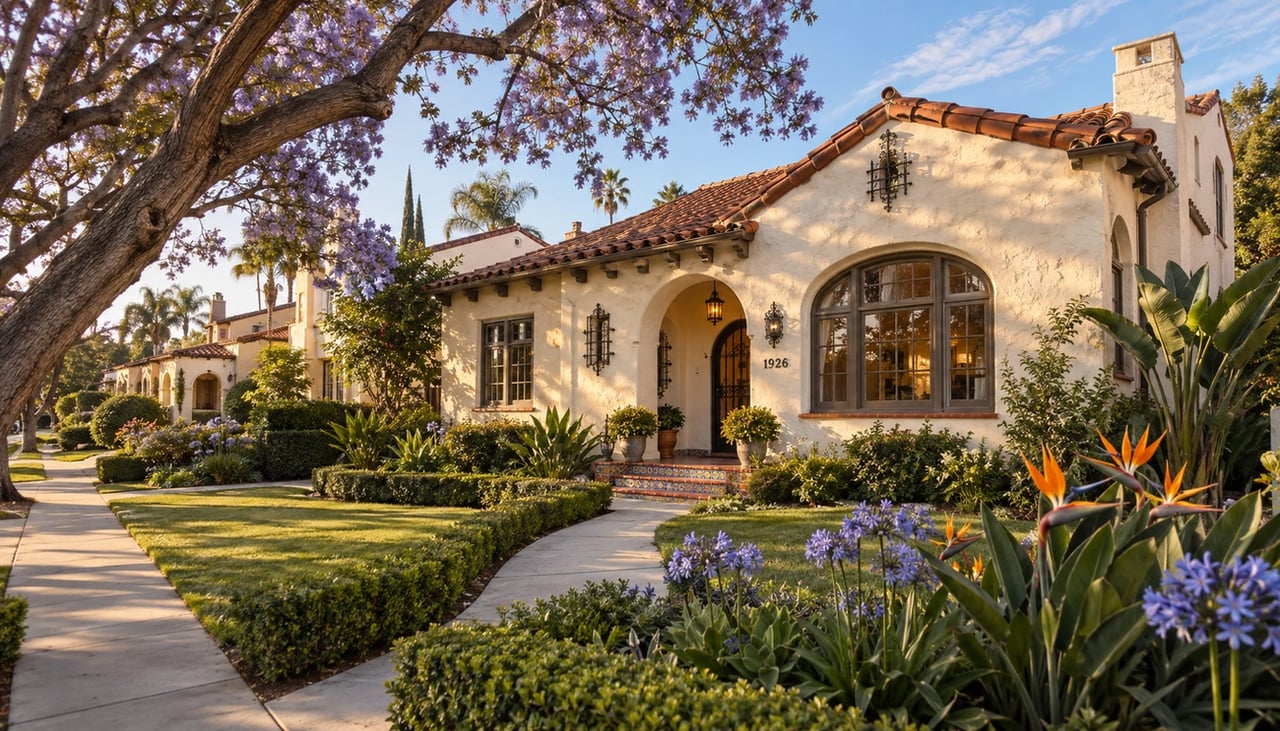
Elite neighborhoods in Los Angeles showcase architectural diversity rarely found elsewhere. Most cities favor uniformity, but wealthy neighborhoods in Los Angeles celebrate contrast. Modernism and Art Deco stand next to Mid-Century Modern and Postmodern designs, creating an extraordinary range of styles. Spanish Revival and Tudor esthetics create visual interest at every turn.
Limited inventory and controlled access
Exclusivity functions as both cause and effect in upscale neighborhoods in Los Angeles. Limited inventory creates natural scarcity—there are only so many homes on the best streets in Holmby Hills or Hidden Hills. This scarcity drives consistent demand whatever the economic cycle. Many properties in the most expensive neighborhoods in Los Angeles never enter the market formally. Private sales between connected parties create an invisible tier of transactions that maintain neighborhood prestige. These discreet exchanges often occur at premium prices because they offer something valuable: privacy from public scrutiny.
The most affluent neighborhoods in Los Angeles: A quiet hierarchy
Luxury real estate in Los Angeles operates through channels that prioritize access over exposure. The most meaningful transactions unfold within trusted networks, where timing and discretion determine outcomes. Therefore, the neighborhoods that command the highest values share a common thread: they function as sanctuaries that protect residents from visibility while maintaining proximity to urban infrastructure.
Hidden Hills: Gated equestrian privacy
Hidden Hills operates as both an incorporated city and a private guard-gated community with 25 miles of bridle trails connecting homes to three community arenas. The Hidden Hills Community Association maintains this internal trail network alongside private roads and gates, while the city government handles municipal services. A one-acre minimum building-site rule preserves estate character, with properties trading in the multi-million-dollar range despite thin inventory. Lots span one to several acres and accommodate barns with 2 to 8 stalls, private arenas, turnout paddocks, and secondary structures. The population stood at 1,725 as of 2020, concentrated within 1.688 square miles of land bordered by the Upper Las Virgenes Canyon Open Space Preserve. Real estate here ranges from $5 million to upwards of $30 million depending on size, location, and equestrian amenities.
Bel Air: Hillside estate seclusion
Bel Air's hillside topography creates natural privacy through canyon views and winding roads that shield properties from casual observation. The neighborhood divides into distinct enclaves: East Gate Bel Air emphasizes historic estates and classic architecture, while West Gate Bel Air offers larger lots with improved privacy. Upper Bel Air features elevated hilltop homes. Bel Air Crest and Bel Air Park function as guard-gated sub-communities. Zillow reported an average home value of $4,105,398 as of March 31, 2026, while Redfin cited a median sale price of $3,255,500 for February 2026. Properties feature multi-acre lots with guest houses, pool houses, and mature landscaping that took decades to establish.
Beverly Park: Guard-gated exclusivity
Beverly Park splits into North Beverly Park with 64 estates and South Beverly Park with 16 properties, all protected by 24-hour guard-gated entrances at multiple locations. Lot sizes range from 1.21 acres to 9.86 acres, with homes spanning 10,000 to 29,000 square feet and CC&Rs stipulating a 5,000-square-foot minimum. The community sits between Mulholland Drive and Sunset Boulevard and uses the 90210 Beverly Hills Post Office ZIP code. Recent transactions include properties selling for $58 million and above, with some estates listed in the nine-figure range. North Beverly Park favors larger homes on oversized lots with classical elegance, while South Beverly Park emphasizes contemporary architecture and innovative design.
Holmby Hills: Old money discretion
Holmby Hills ranked as the richest urban neighborhood in the United States in 2000. Zoning accommodates lot sizes up to 4 acres, with 1920s English-style street lamps still illuminating the tree-lined avenues. The Janss Investment Company developed the neighborhood with underground utilities, generous setbacks, and deed restrictions that preserved the park-like atmosphere. Properties include multi-structure estates with main residences, guest houses, pool houses, and elaborate gardens on parcels approaching four acres. Historical residents included Nancy and Ronald Reagan, who lived on Amalfi Drive starting in 1953 before moving to San Onofre until 1980.
Pacific Palisades Riviera: Coastal privacy
The Riviera was created in 1926 as an exclusive community with European charm and includes about 700 homes on larger lots with wide streets and deep setbacks. Streets bear names from the Italian and French Riviera, including Amalfi, San Remo, Corsica, Napoli, Monaco, and Sorrento. The neighborhood divides into Upper and Lower Riviera, separated by Sunset Boulevard, with many Upper Riviera homes offering views spanning from downtown Los Angeles to the ocean. Properties gain privacy from gated driveways and hedgerows, with parcels large enough for pools and tennis courts. The Reagan residence sold in 2013 for $5.20 million, though price appreciation has accelerated since then.
Malibu estates: Oceanfront isolation
Malibu Colony operates as a guard-gated enclave with about 120 landmark homes split evenly between landside and beachfront locations. The community maintains only two secluded public beach entrances and reinforces privacy that residents prioritize above all else. Older single-lot properties sell for $15 million and above, while completed double-lot estates command $40 million or more. Rental rates reach $350,000 per month for available properties. Landside estates attract residents seeking additional privacy and larger lots compared to beachfront locations with varying degrees of coastline access.
Why wealthy neighborhoods in Los Angeles prioritize privacy over visibility
Private conversations shape high-end real estate outcomes in Los Angeles more than public listings ever will. Transactions unfold through trusted relationships where discretion determines who learns about properties before anyone else. Those looking to buy a luxury house in Los Angeles must understand these behavioral patterns to separate themselves from buyers still searching public databases for homes that will never appear.
Off-market transaction patterns
Almost 25% of luxury deals now happen without ever touching the Multiple Listing Service. An exclusive tier has emerged where homes worth tens of millions trade hands through quiet negotiations. Properties listed on MLS sell for 13% more than those sold in private, yet many choose privacy over profits. California sellers who skip the MLS lose around $30,000 per property, and combined losses exceed $1 billion in recent years. The average off-market home sells for nearly $5,000 less than MLS-listed properties.
A mansion tax implemented in April 2023 intensified off-market activity. The tax just needs an extra 4% on property sales of $5 million or more and jumps to 5.5% when properties cross the $10 million mark. High-profile buyers and executives avoid public attention before company announcements, which makes discretion worth the potential pricing discount. One leading Los Angeles firm currently holds $1.30 billion in unlisted properties. Top Agent Network serves over 14,000 agents who automate one-to-one outreach for exclusive properties before MLS listings.
Geographic barriers and natural seclusion
Elevated terrain, natural buffers and long sightlines create privacy by design. Buyers seek properties with substantial natural screening and quiet surroundings more often. Pacific Palisades attracts those who prioritize seclusion through standalone properties on private roads with motor courts and gated entryways. Homes set far back from the street with mature landscaping achieve privacy without formal gated status. These protected areas offer visual and acoustic screening that technology cannot replicate.
Private road systems and controlled entry
Access controls reduce casual traffic and unsolicited visitors. Gated status commands a premium because of privacy, perceived security and limited supply. Beverly Park operates without sidewalks and reinforces that pedestrian access contradicts the neighborhood's purpose. Some gated areas include private road maintenance, landscaping and staffed security. The most expensive neighborhoods in Los Angeles function through 24/7 armed guards who operate several checkpoints that restrict access to residents.
Minimal commercial presence
Hidden Hills operates as a residential-only community with equestrian zoning and no commercial presence. This limitation preserves exclusivity and appeal for decades. Commercial intrusion would compromise the sanctuary atmosphere that defines upscale neighborhoods in Los Angeles. Residents value living environments free from retail traffic and delivery zones, along with the visibility that accompanies commercial activity.
Celebrity and high-net-worth buyer priorities
High-net-worth buyers view privacy as protection from public scrutiny. Control becomes an expectation when residential purchases trend in the eight-figure range. Buyers want private sanctuaries and welcoming hubs for entertaining without one infringing on the other. Properties protect residents' time, interests and personal life by design. Many transactions at the top end remain quiet by nature, with controlled distribution, high-quality materials and showing processes that protect sellers while respecting buyers. The wealthy neighborhoods in Los Angeles offer what matters most: knowing how to live without observation.
Market pricing in the most expensive neighborhoods in Los Angeles
Luxury real estate in Los Angeles operates through channels where public listings represent only a fraction of actual market activity. The most meaningful transactions unfold quietly within trusted circles, where discretion carries as much weight as value. Pricing transparency varies widely for those who want to buy a luxury house in Los Angeles, depending on neighborhood access and transaction structure. You need to examine not just list prices but sale patterns that reveal how the most expensive neighborhoods in Los Angeles function independently of broader market conditions to understand current market values.
Current median values by neighborhood
Beverly Hills Gateway commands median listing prices that approach $22.90 million, with average price per square foot reaching $2,972.46. Properties in this enclave reflect decades of controlled development and limited inventory turnover. Pacific Palisades maintains median listing prices at $3.60 million, though year-over-year values declined 18.5% recently as coastal inventory adjusts. The neighborhood's long-term appreciation remains protected by coastline lack that cannot be replicated.
Holmby Hills properties exceed $13.50 million at median listing levels, with homes that remain on market 238 days approximately. This extended marketing period reflects the selective nature of transactions in ultra-premium segments rather than weak demand. Current listings in Bel Air reveal median prices that approach $40.00 million for properties spanning several acres. The broader Los Angeles market reports median sale prices at $1.04 million, down 1.9% year-over-year. Westside LA commands $2.80 million median listing prices, while Hollywood Hills West reaches $3.00 million.
Price per square foot comparisons
Pricing per square foot reveals distinct tiers within the most affluent neighborhoods in Los Angeles. Pacific Palisades leads at $1,364 per square foot, followed by Venice at $1,160 and Hollywood Hills West at $1,085. Westside LA averages $1,092 per square foot, while Sherman Oaks and Encino command $752 and $739. The city-wide median stands at $633 per square foot, down 3.7% from the previous year.
Days on market and sale-to-list ratios
Properties across Los Angeles spend an average of 52 days on market, up from 49 days the previous year. Sale-to-list ratios average 99.4%, declining 0.54 percentage points year-over-year. Hot properties sell for 3% above list price within 26 days approximately, while standard inventory sells near list price after 48 days. Only 35.6% of homes sold above list price, down 3.1 percentage points from the prior year. The flip side shows 27.3% of properties experienced price reductions, increasing 3.0 percentage points annually.
Cash buyer concentration
Cash transactions dominate luxury segments in wealthy neighborhoods in Los Angeles. Between January and May, 25.4% of homes priced between $1 million and $5 million sold as all-cash deals. This represents the highest concentration in over a decade. Properties ranging from $5 million to $10 million saw 54.3% cash purchases, while homes exceeding $10 million reached 56.7% all-cash transactions[192]. Foreign buyers, particularly Chinese and Canadian purchasers, factored in nearly 15% of luxury sales. More than 6,600 properties in the $1 million to $5 million range traded hands during this period.
Architectural features that define upscale neighborhoods in Los Angeles
Physical architecture determines privacy outcomes before security systems ever activate. Buyer priorities shape the built environments in the most expensive Los Angeles neighborhoods to eliminate visibility while accommodating lifestyles that demand substantial space for private recreation and entertainment. These design choices create barriers that function independently of gates or guards.
Estate lot sizes and acreage requirements
Custom homeowners seek at least half an acre for their properties, though the trend favors parcels exceeding one acre. Larger minimum lot requirements allow developers to build homes that match buyer expectations for privacy and scale. Home design drives lot selection, with considerations extending beyond square footage to covenants and homeowner association requirements. Some custom builds occupy 40 acres, though typical luxury lots range from half an acre to five acres. This land allocation supports extensive front and back yards with dedicated entertaining zones.
Guest houses and secondary structures
Properties in upscale Los Angeles neighborhoods incorporate accessory dwelling units, casitas, guest apartments, and converted garages as secondary structures. One Bel Air compound features an underground guest house beneath a tennis court with a second guest home on the property. These additional units provide flexibility for multigenerational living, staff housing, or guest accommodation without compromising main residence privacy.
Private amenities: Tennis courts, home theaters, wellness centers
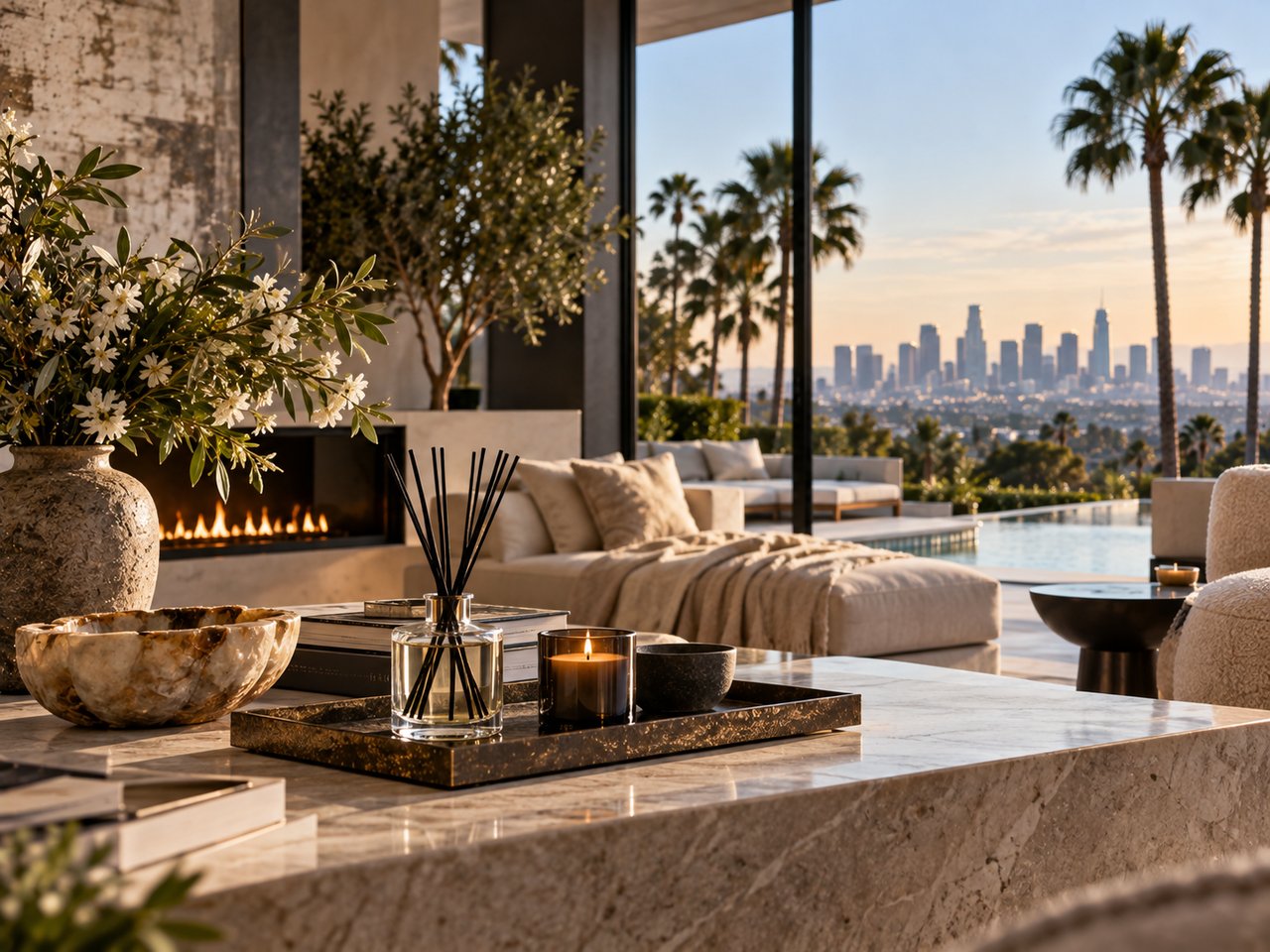
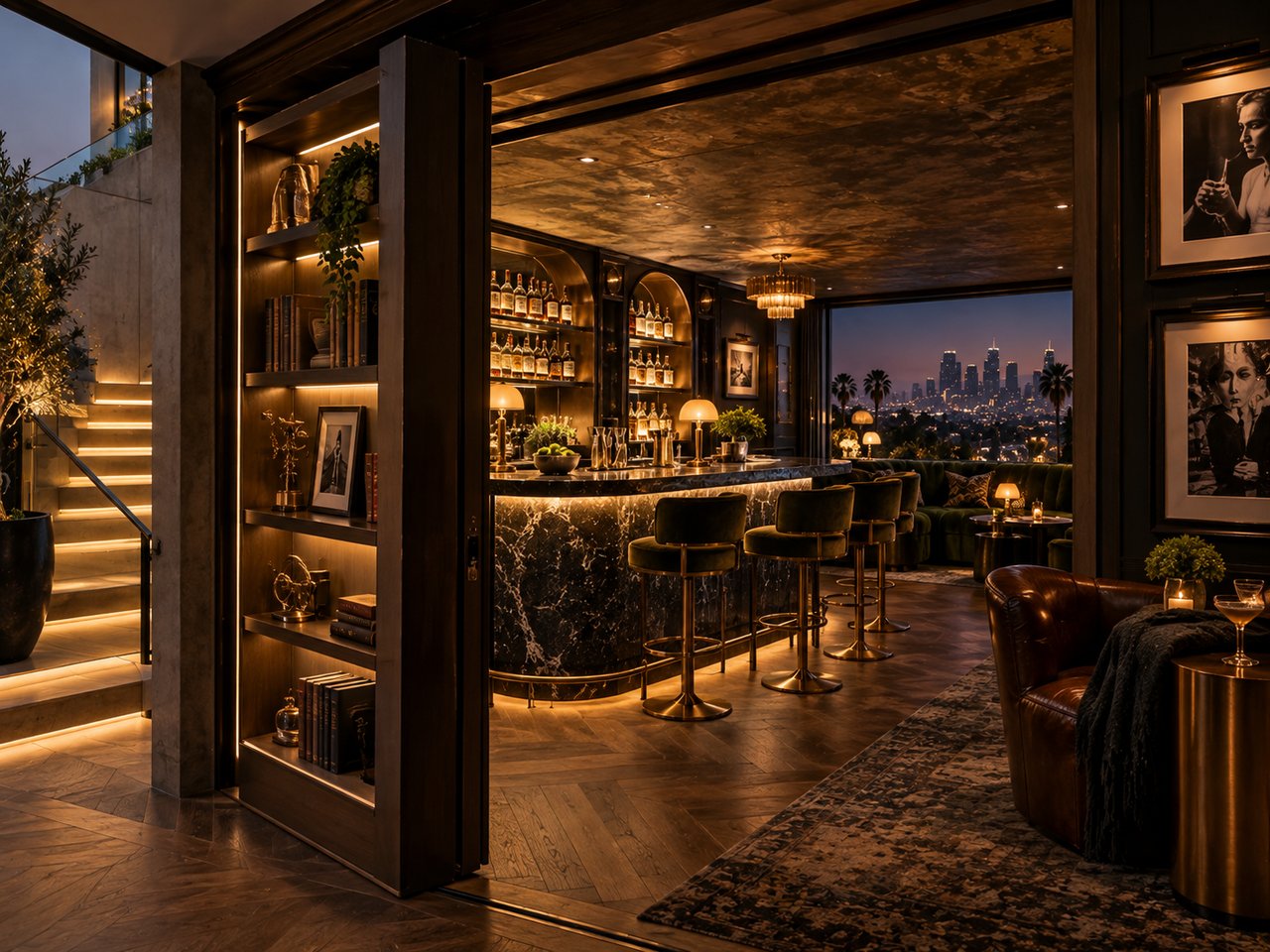
Tennis courts boost property luxuriousness and attract premium offers because they signal spacious lot dimensions. North-south orientation prevents distracting shadows from sunlight, though such courts require adequate space and favorable terrain. Los Angeles County restricts new court construction with lighting, making existing illuminated courts valuable. Beverly Hills properties with refinished courts and existing lights command premiums. Home theaters with bars, gyms, and wellness centers appear often in wealthy Los Angeles neighborhoods and transform estates into self-contained environments.
The right home makes all the difference for those who love to entertain. If you're thinking about a purchase in the near future or beginning your search, I'd be delighted to help you find spaces designed for elevated living and effortless hosting. Christina Pope  310-404-9931
  [email protected]
Landscaping and visual screening
Mature trees and tall hedges function as natural screens, coupled with decorative walls or fences that complement overall design. Strategic plantings create secluded areas, while sound-dampening water features shield properties from external noise without sacrificing visual appeal. Professional luxury landscaping increases property value up to 20% by establishing visual impact that distinguishes homes from surrounding inventory right away. These elements require years to develop, making them valuable to buyers seeking established elegance.
Smart security integration
Security systems merge with sophisticated architecture to ensure discreet protection without visual intrusion. Solutions complement refined interiors and architecture, making security feel smooth rather than visually distracting. This approach prioritizes discretion with functionality and ensures homes in the richest Los Angeles neighborhoods maintain esthetic integrity while providing advanced protection.
Investment strategy when you buy a luxury house in Los Angeles
Strategic acquisition in the richest neighborhoods in Los Angeles works differently than conventional real estate investment. Buyers focus on appreciation stability and advisor relationships that give access before properties reach public awareness.
Long-term appreciation in privacy-focused neighborhoods
Hidden Hills shows resilience through lack of land, strict zoning protections and strong buyer interest. Luxury home values in premier markets grew 3.9% year-over-year and outpaced typical homes. Properties benefit from organic appreciation regardless of interest rate volatility. Cash transactions account for 60-85% of sales.
Rental income potential in gated communities
High rental interest creates opportunities for investors seeking income properties in the luxury tier. Some buyers pursue long-term holds. They use short-term rental income and benefit from organic appreciation at the same time.
Legacy property considerations
Multi-generational wealth planning makes privacy and security ideal for legacy properties. Family enterprise estate planning uses governance structures and usage agreements. Maintenance funds preserve assets across generations.
The right home makes all the difference if you love hosting. Christina Pope would be delighted to help you find spaces designed for sophisticated living and effortless entertaining if you're thinking about a purchase in the near future or beginning your search. 310-404-9931 [email protected]
Working with specialized luxury real estate advisors
Top agents provide white-glove service. This includes $25,000-50,000 marketing investments per luxury listing and access to off-market pocket listings through industry networks. Luxury properties sit 4x to 5x the number of Days on Market than local averages. This requires specialized knowledge that doesn't transfer to other segments.
Conclusion
Luxury real estate in Los Angeles operates through channels that most buyers never access. The richest neighborhoods prioritize privacy infrastructure and controlled entry. Transactions unfold quietly within trusted networks. Properties in Hidden Hills, Bel Air, and Beverly Park reward those who value discretion over visibility.
Timing matters more than public listings. The most important deals happen off-market through specialized advisors. Buyers who understand these patterns separate themselves from those still searching databases for homes that will never appear.
Those seeking to buy a luxury house in Los Angeles should work with advisors who maintain access to exclusive inventory before it reaches public awareness.
Christina Pope – Sotheby's International Realty, EliteResidenceInternational.com
Key Takeaways
Los Angeles luxury real estate operates through private channels where discretion trumps visibility, and the wealthiest neighborhoods prioritize privacy infrastructure over public prestige.
• Privacy drives premium pricing: 25% of luxury deals happen off-market, with buyers paying premiums for discretion over MLS exposure and public scrutiny.
• Geographic barriers create natural exclusivity: Hillside terrain, gated access, and estate-sized lots (1+ acres) provide inherent privacy that technology cannot replicate.
• Cash dominates ultra-luxury transactions: 56.7% of homes over $10 million sell as all-cash deals, eliminating financing contingencies and enabling faster closings.
• Architectural pedigree adds lasting value: Homes by renowned architects like Paul Williams command 20-100% premiums over comparable non-architectural properties.
• Security infrastructure rivals embassy-level protection: Complete security solutions cost $100K-$1M+, featuring biometric access, safe rooms, and 24/7 surveillance systems.
The most expensive neighborhoods—Hidden Hills, Bel Air, Beverly Park, and Holmby Hills—function as sanctuaries where strategic timing and trusted advisor relationships determine access to the best properties before they ever reach public awareness.
FAQs
Q1. Which Los Angeles neighborhoods have the highest property values in 2026? The wealthiest neighborhoods include Hidden Hills, Bel Air, Beverly Park, Holmby Hills, Pacific Palisades Riviera, and Malibu estates. Beverly Hills Gateway commands median listing prices approaching $22.90 million, while Bel Air properties reach around $40 million at median levels. These areas prioritize privacy infrastructure, estate-sized lots, and controlled access over public visibility.
Q2. What makes Beverly Hills and Bel Air so exclusive compared to other LA neighborhoods? Beverly Hills and Bel Air offer a unique combination of urban convenience with estate-like privacy that's virtually impossible to replicate elsewhere in Los Angeles. Bel Air's hillside topography creates natural seclusion through canyon views and winding roads, while Beverly Hills features properties with expansive lot sizes, private driveways, and gated entrances. Both neighborhoods maintain strict zoning, limited inventory, and architectural pedigree that preserves long-term value.
Q3. How much do luxury homes cost per square foot in the most affluent LA areas? Pacific Palisades leads at $1,364 per square foot, followed by Venice at $1,160 and Hollywood Hills West at $1,085. Beverly Hills Gateway averages $2,972 per square foot. These premium prices reflect decades of controlled development, privacy infrastructure, and scarcity that cannot be replicated in other parts of the city.
Q4. Why do so many luxury properties in Los Angeles sell off-market? Almost 25% of luxury deals happen without ever appearing on the Multiple Listing Service. High-net-worth buyers prioritize discretion to avoid public scrutiny, especially before major company announcements or personal transactions. The mansion tax implemented in 2023 (4-5.5% on properties over $5 million) further incentivized private sales, despite off-market properties typically selling for slightly less than MLS-listed homes.
Q5. What percentage of ultra-luxury home sales in LA are cash transactions? Cash transactions dominate the highest price tiers: 56.7% of homes exceeding $10 million sell as all-cash deals, while properties between $5-10 million see 54.3% cash purchases. This concentration represents the highest level in over a decade and eliminates financing contingencies, enabling faster closings and greater privacy for buyers who value discretion.