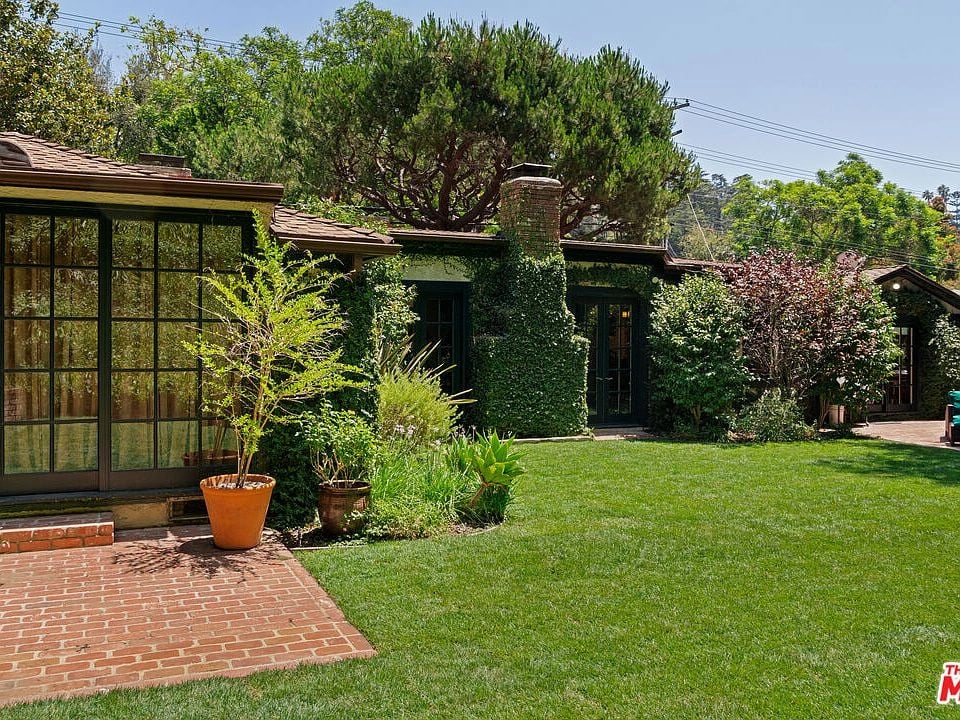
Mandeville Canyon operates under different market rules than the Brentwood Flats, where privacy and timing shape transactions more than public listings. The median sale price in Mandeville Canyon sits at $5.95 million, higher than the broader Brentwood median of $2.65 million. This price gap reflects more than location. It signals a submarket where estate-scale properties and gated seclusion command premiums that standard comparables cannot capture. Understanding these differences requires looking beyond listing data to the structural factors that separate canyon estates from flatland homes.
The Market Structure Difference Between Canyon and Flats
City planning documents shape how each Brentwood pocket functions at ground level. The Brentwood community plan describes the area as residential for the most part, with commercial activity concentrated along San Vicente, Wilshire, and the Barrington and Sunset corridor. Not every Brentwood address offers the same access to village-scale amenities. Flats properties trade on walkable proximity to those commercial nodes, while canyon homes trade on land, privacy, and topographic features that planning frameworks preserve.
The community plan notes that low-rise multifamily uses concentrate along Barrington north of San Vicente and the southeastern portion between San Vicente and Wilshire, while much of the rest remains low-density single-family housing. That change in permitted land use creates different buyer expectations. Flats buyers prioritize convenience and street pedigree within grid patterns that have been around for decades. Canyon buyers prioritize seclusion and irregular parcel configurations that planning documents describe as meandering patterns shaped by topography.
How City Planning Defines Each Area
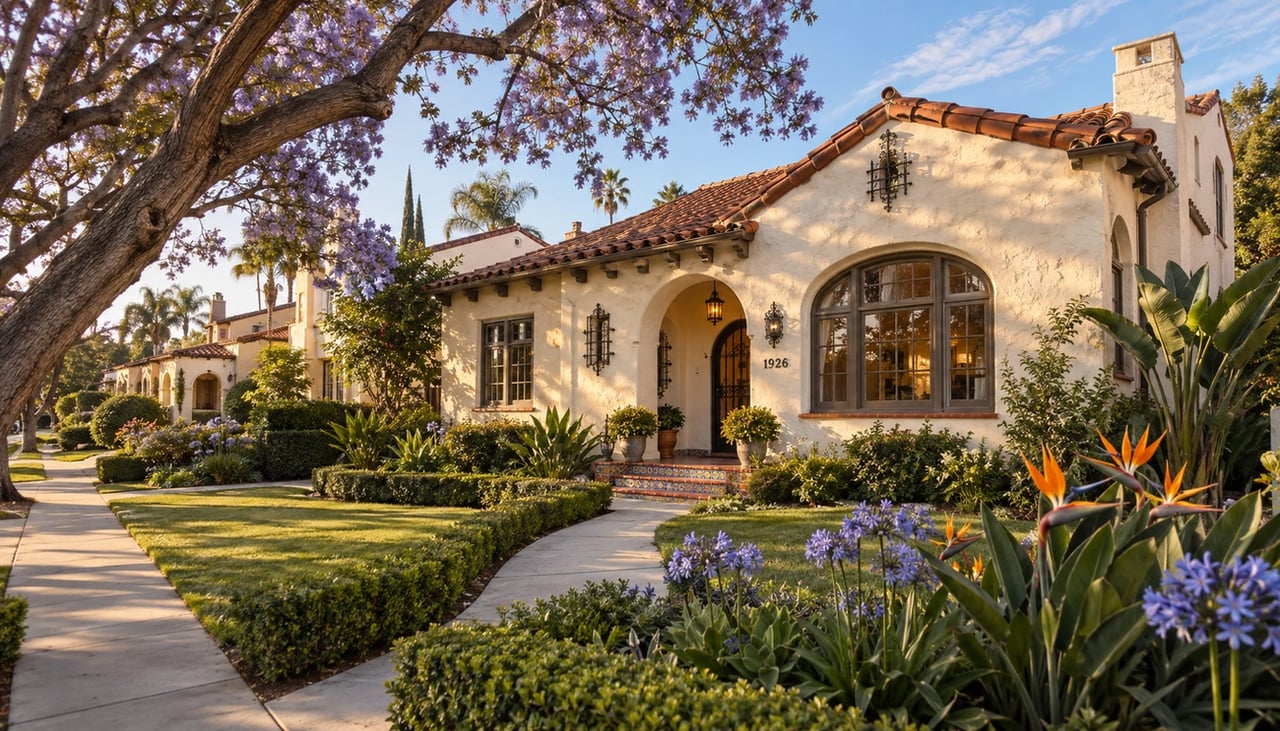
Brentwood's flats developed along grid-patterned streets south of San Vicente, where infrastructure followed more predictable subdivision patterns. SurveyLA describes Brentwood Park as an early subdivision dating to 1906 along the Westgate streetcar line, including roughly 500 parcels across 350 acres with curving interior streets, eight original traffic circles and ovals, and large residences on large lots. That early planning framework created a consistent estate character that still defines value.
Canyon development followed a different path. SurveyLA describes canyon streets as meandering patterns shaped by topography, with postwar development oriented around horse properties. Mandeville Canyon Road itself is described as narrow, relatively steep, winding, and no-parking in places. These physical constraints limit density and create a setting where each property relates more to terrain than to neighboring parcels.
Historical Development Patterns That Still Shape Value
Mandeville Canyon's residential character emerged over decades. The Santa Monica Mountain Park Company sold most of Lower Mandeville to Garden Foundation, Inc. in 1926, which designed and built an elaborate botanical garden with plantings from all over the world. Development of that garden slowed during the Great Depression, and by 1935 all building ceased. A major flood hit the area in 1938 and ravaged the lower Mandeville area hard.
Beginning in the early 1940s, Mandeville Canyon started to become a canyon neighborhood with rustic homes for the well-to-do, centered around horses. Garden Land resumed development in 1954 and began building homes again, with the first large tract including around 300 homes built in 1957-1958 in upper Mandeville. That equestrian-focused development pattern created infrastructure and lot configurations that still shape how properties are valued.
SurveyLA describes the lower canyon as containing a rare 1930s automobile bridge and remnants of the former California Botanical Garden, while upper Mandeville Canyon evolved into a landscape of large estates, paddocks, stables, and horse trails. Those legacy features create differentiation that standard residential comparables cannot capture.
Why Comparable Sales Are Harder to Find in Canyons
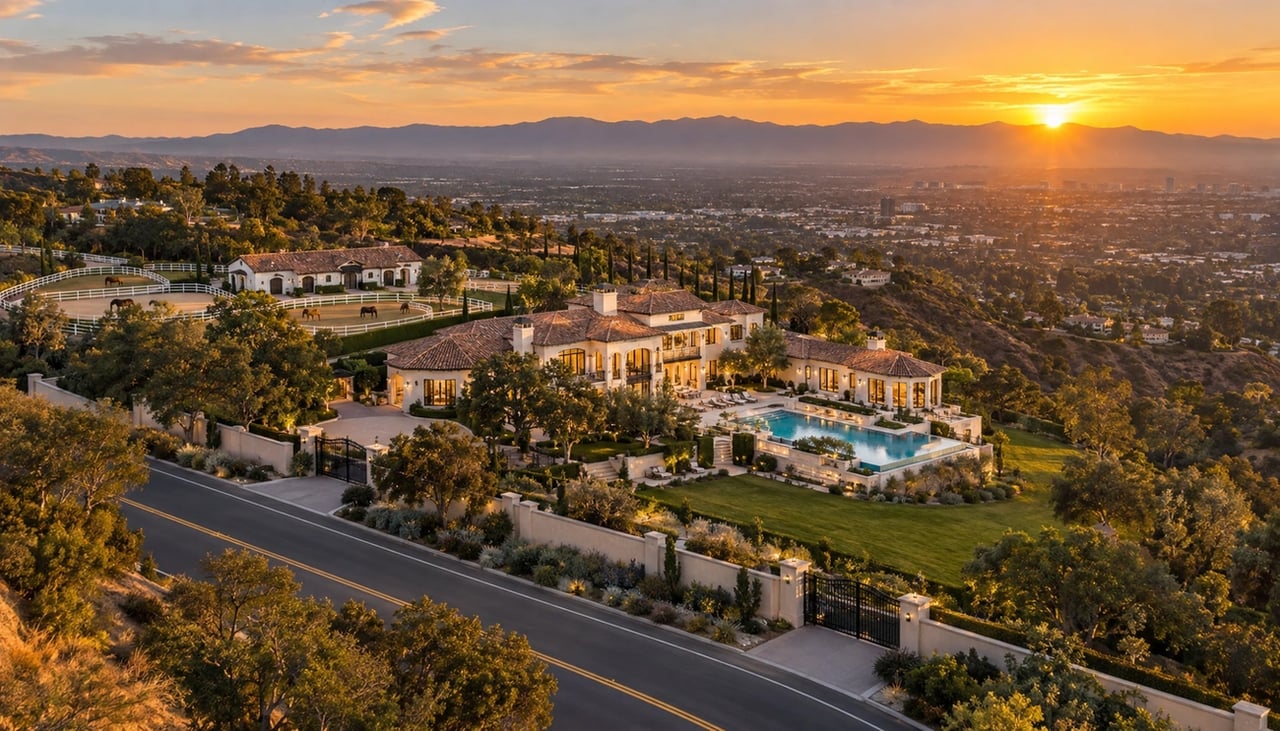
The land profile in Mandeville Canyon is different from the rest of Brentwood in material ways. Representative canyon parcels include a 10,347-square-foot rebuilt home, a 0.63-acre lower-canyon parcel, a nearly 20,000-square-foot gated compound, a 1.73-acre canyon estate, and a 5.95-acre vacant lot. That wider and more irregular range explains why two canyon properties with similar home sizes can have very different values.
Low inventory and small sample sizes make perfect comps rare, so appraisals can be conservative and may require larger down payments or experienced lenders. Fewer transactions mean each sale carries more weight in shaping perceived value. Off-market and private listings are common, which concentrates demand among well-connected buyers and can increase price volatility. Understanding Mandeville Canyon pricing requires reading beyond public listing data to the assemblage potential, equestrian features, and view corridors that define each estate, given these structural differences.
What Drives Value in Mandeville Canyon Homes
Acreage drives pricing conversations in Mandeville Canyon homes more than finished square footage. A 7-acre parcel with three usable flat building sites and an estimated 57,903 square feet of potential development represents a category that standard residential comparables don't deal very well with. The Robert Taylor Ranch spans 112 private acres and has approximately 13 acres of flat land and nearly 100 acres of surrounding canyons with private hiking trails. Another Upper Mandeville Canyon property occupies 48 acres in a secluded setting with mature grounds and mountain views. These assemblage opportunities exist within LA city limits, where multi-acre estates with subdivision potential command premiums that per-square-foot calculations miss.
Land Assemblage and Estate Potential
Buyers evaluating Mandeville Canyon properties assess terrain differently than flat-lot homes. The 7-acre legacy estate mentioned earlier has preliminary planning and permitting work valued at over $800,000, completed with architect Marmol Radziner, though no plans have been finalized. That preparatory work signals the complexity and cost of developing canyon estates. Properties offering flat, useable building pads within larger parcels allow for main residences and guest houses, equestrian facilities, and staff quarters on a single estate. The Robert Taylor Ranch has two detached guest casitas, each with two bedrooms, two bathrooms, full kitchens, and living rooms suited for multigenerational living or staff.
Equestrian Features and Legacy Compounds
Equestrian infrastructure forms a distinct value category in Mandeville Canyon California. The Robert Taylor Ranch features a renovated horse barn with tack room, stable manager's office, break room, full bathroom, four-car garage, and abundant storage. Lower Mandeville Canyon properties often retain period equestrian estates complete with stables and tack rooms, and access to Santa Monica Mountain Bridle Paths. One property built in 1947 by USC architecture graduate and avid polo player Jack Smith demonstrates how equestrian design shaped the area's physical layout. These legacy compounds attract buyers seeking horse facilities rather than building from scratch.
View Corridors and Seclusion Premium
Topography creates view corridors that justify price differentials between similar-sized homes. Properties in Upper Mandeville Canyon capture panoramic hillside views across private canyons. The 48-acre estate offers exquisite mountain ranges and ocean views from its elevated position. A 1.2-acre gated estate sits beneath a majestic canopy of mature sycamores and oaks and provides both seclusion and natural screening. Mature landscaping and lush hedging create privacy buffers that newer developments cannot replicate. View premiums in canyon settings reflect both the visual asset and the impossibility of future construction blocking those sightlines.
Gated Access and Advanced Security
Security infrastructure in Mandeville Canyon homes extends beyond standard residential systems. The Mandeville Canyon Property Owners Association oversees 24-hour surveillance cameras and hosted security patrols. Individual properties feature private gates, motor court parking for over 12 vehicles, and innovative security systems. Upper Mandeville Canyon's property owners association promotes community safety among environmental stewardship. Some gated communities within Mandeville Canyon provide additional perimeter security, including Brentwood Country Estates. Advanced systems have biometric access and enterprise-level firewalls, and integrated monitoring that operates via dedicated cellular connections independent of phone lines or internet.
What Drives Value in Brentwood Flats
"Our research shows that real estate values increase as neighborhoods became more walkable, where everyday needs, including working, can be met by walking, transit or biking." — Christopher Leinberger, Coauthor of the Brookings report and President of LOCUS: Responsible Real Estate Developers and Investors
What Drives Value in Brentwood Flats
Walkability to commercial amenities shapes pricing in the Brentwood Flats more than in canyon settings. Typical home prices range from about $2.50 million to over $6.00 million, with strong interest concentrated around updated homes in walkable locations. Buyers prioritize convenience, street recognition and lot utility over the privacy premiums that define Mandeville Canyon California properties. These factors create a submarket where liquidity and resale timing follow more predictable patterns than estate-scale canyon compounds.
Proximity to Brentwood Village Commercial Core
Distance to San Vicente Boulevard and the Brentwood Village commercial core creates measurable value differentials within the flats. Village-adjacent properties offer the easiest access to San Vicente and Brentwood Village, which matters in a neighborhood where the overall Walk Score sits at 52. That moderate walkability score reflects Brentwood's car-dependent character. Blocks around the commercial core support a different lifestyle rhythm. Residents in these locations walk to local restaurants, cafes and the Brentwood Country Mart without a vehicle for daily errands.
The Brentwood Country Mart and the Brentwood Village and Barrington cluster function as historic commercial nodes serving nearby neighborhoods. City planning identifies these areas as village-scale mixed-use centers rather than regional retail destinations. Proximity to these nodes translates into buyer premiums, given that convenience drives interest among flats purchasers more than seclusion or acreage.
Street Pedigree and Neighborhood Recognition
Brentwood Park carries specific historical weight that influences pricing expectations. Originally subdivided in 1906 along the Westgate streetcar line, the area has about 500 parcels across 350 acres. Early planning created curving streets, eight original traffic circles and ovals, and large lots with mature trees that define the pocket's character today. This well-known grid pattern and recognizable neighborhood branding appeal to a broad buyer pool.
Street pedigree in the flats functions differently than terrain features in Mandeville Canyon homes. Buyers assess blocks based on their proximity to the village core, architectural consistency and resale recognition rather than view corridors or equestrian infrastructure.
Lot Utility and Build-Out Flexibility
Flat topography in Brentwood's village-adjacent neighborhoods allows for straightforward construction and renovation timelines. Lot utility matters to buyers who assess build-out potential, accessory dwelling unit feasibility and landscaping flexibility. Canyon parcels need specialized grading and drainage engineering. Flats properties offer predictable development costs and permit timelines. This practical advantage attracts buyers who seek renovation projects or ground-up construction without the constraints that define Mandeville Canyon Brentwood CA estates.
Practical Ownership Considerations for Each Setting
"The roof, the sewer lateral, the insurance renewal that doubles overnight, none of them care what your cap rate looks like." — Piyush Rai, Property Management Expert
Practical Ownership Considerations for Each Setting
Luxury real estate in Los Angeles operates through private conversations and strategic timing rather than public visibility. The most important transactions unfold within trusted networks where discretion matters as much as price. Understanding operational realities shapes outcomes more than listing data alone for those who navigate high-end ownership decisions.
Time to Market and Buyer Pool Size
Mandeville Canyon homes average 63 days on market compared to 54 days in broader Brentwood. That nine-day differential reflects a narrower buyer pool focused on estate-scale properties rather than village-adjacent convenience. Canyon properties require buyers who seek privacy and land assemblage, which concentrates demand among well-connected purchasers. Flats properties appeal to a broader audience that prioritizes walkability and street recognition. This creates faster absorption rates during active market periods.
Maintenance and Property Management Differences
Estate-scale canyon properties demand specialized management beyond standard residential services. Multi-acre parcels with equestrian facilities, private gates and advanced security systems require coordinated oversight. Grounds maintenance, infrastructure monitoring and seasonal preparation all need attention. Flats properties operate with more conventional service schedules and predictable municipal utility access.
Brush Clearance and Fire Safety Requirements
Los Angeles requires clearing all native brush, weeds, grass, trees and hazardous vegetation within 200 feet of any structures in Very High Fire Hazard Severity Zones. Grass must be cut to 3 inches in height. Mandeville Canyon conducted large-scale evacuation drills that simulated fast-moving brush fires, with some areas designated as walking evacuations due to narrow roads. The canyon remains susceptible to both fires and floods, with dense brush and dry hillsides that create rapid fire movement potential. Canyon ownership involves year-round brush management and emergency preparedness protocols that flats properties avoid typically because of these requirements.
How Each Area Performs During Market Shifts
Canyon properties with substantial land holdings and limited availability tend to hold value through market corrections differently than commodity residential homes. Desirable locations with limited supply show resilience during downturns, analogous to premium mountain markets. Christina Pope—Sotheby's International Realty, EliteResidenceInternational.com provides strategic guidance on timing and positioning within these distinct submarkets.
Matching Your Strategy to the Right Brentwood Pocket
Strategic real estate decisions require property characteristics to line up with ownership objectives. Each Brentwood pocket rewards different buyer profiles based on hold period, lifestyle priorities and liquidity requirements.
At the Time Mandeville Canyon Makes Sense to Hold Long-Term
Mandeville Canyon represents lack through land and privacy. Market data shows a 44.25% three-year increase in median listing price and reinforces estate character. Buyers focused on long-term differentiation find advantages that other Brentwood pockets cannot match. Privacy, larger land profiles and equestrian history create this edge. The trade-off is a narrower buyer pool and more selective resale timing. Homes in this submarket may not move on the same timeline as flats with broad appeal.
At the Time Flats Offer Better Liquidity and Resale Timing
Brentwood Park and nearby flats appeal to a broad buyer pool. Lot sizes, neighborhood branding that people recognize and proximity to commercial nodes create advantages for resale. Broad appeal matters if you think about resale. Village-adjacent flats offer the easiest access to San Vicente and Brentwood Village.
How to Read Pricing Signals in Each Submarket
Pricing strength follows the feature hardest to replicate in each pocket. Broad neighborhood averages tell part of the story only. The real edge comes from understanding how Brentwood's submarkets behave block by block.
Christina Pope can help find spaces designed for elevated living if you think about Mandeville Canyon homes or begin a search. Contact Christina at 310-404-9931 or [email protected].
Conclusion
Strategic positioning in Brentwood requires understanding which pocket arranges with your long-term objectives. Mandeville Canyon offers a lack of available land, privacy, and equestrian infrastructure that fewer buyers can replicate. The flats provide liquidity and walkability. They also offer broader resale appeal tied to village proximity and street recognition. Each submarket rewards different strategies. The most important transactions unfold through private networks where timing and discretion shape outcomes more than public listings. Christina Pope at Sotheby's International Realty, EliteResidenceInternational.com, provides strategic guidance within these distinct markets. Contact Christina at 310-404-9931 or [email protected] for insight into properties designed for refined living.
Key Takeaways
Mandeville Canyon and Brentwood Flats operate as distinct submarkets with different value drivers, buyer pools, and ownership considerations—understanding these differences is essential for strategic positioning.
• Mandeville Canyon commands a $5.95M median vs. $2.65M in broader Brentwood, driven by estate-scale land, equestrian infrastructure, and privacy premiums that standard comparables cannot capture.
• Canyon properties average 63 days on market vs. 54 in the flats, reflecting a narrower buyer pool focused on multi-acre estates rather than village-adjacent convenience and walkability.
• Fire safety requirements are significantly more demanding in canyon settings, with mandatory 200-foot brush clearance zones and evacuation protocols that flats properties typically avoid.
• Flats properties offer superior liquidity and resale timing due to proximity to Brentwood Village, recognizable street pedigree, and flat topography enabling predictable development costs.
• Strategic buyers should match property type to hold period: canyon estates reward long-term differentiation strategies, while flats provide broader appeal for faster absorption during market shifts.
The most significant luxury transactions unfold through private networks where timing, discretion, and specialized market knowledge matter more than public listing data alone.
FAQs
Q1. Is Mandeville Canyon part of Brentwood? Yes, Mandeville Canyon is considered part of the greater Brentwood area in Los Angeles, though it operates as a distinct submarket with its own pricing dynamics. The canyon sits within Brentwood's boundaries but features different development patterns, with estate-scale properties and equestrian infrastructure that set it apart from the more walkable Brentwood Flats near the village core.
Q2. What makes Mandeville Canyon properties more expensive than other Brentwood homes? Mandeville Canyon's median sale price of $5.95 million significantly exceeds Brentwood's overall median of $2.65 million due to larger land parcels, privacy features, equestrian facilities, and scarcity. Properties often include multi-acre estates with view corridors, gated access, and legacy compounds that cannot be replicated in the flats, creating premiums that standard per-square-foot comparisons don't capture.
Q3. How long does it typically take to sell a home in Mandeville Canyon versus Brentwood Flats? Mandeville Canyon homes average 63 days on market compared to 54 days in broader Brentwood. This nine-day difference reflects a narrower buyer pool seeking estate-scale properties with privacy and land assemblage potential, while flats properties appeal to a wider audience prioritizing walkability and village proximity, resulting in faster absorption rates.
Q4. What are the fire safety requirements for Mandeville Canyon homeowners? Mandeville Canyon properties in Very High Fire Hazard Severity Zones must clear all native brush, weeds, grass, trees, and hazardous vegetation within 200 feet of structures, with grass cut to 3 inches in height. The area has conducted large-scale evacuation drills due to its susceptibility to fast-moving brush fires, requiring year-round brush management and emergency preparedness protocols.
Q5. Which Brentwood area offers better resale potential—Mandeville Canyon or the Flats? Brentwood Flats generally offer better liquidity and resale timing due to proximity to Brentwood Village, recognizable street pedigree, and appeal to a broader buyer pool. Mandeville Canyon properties reward long-term hold strategies with scarcity and differentiation but require more selective timing and attract a narrower group of estate-focused buyers.