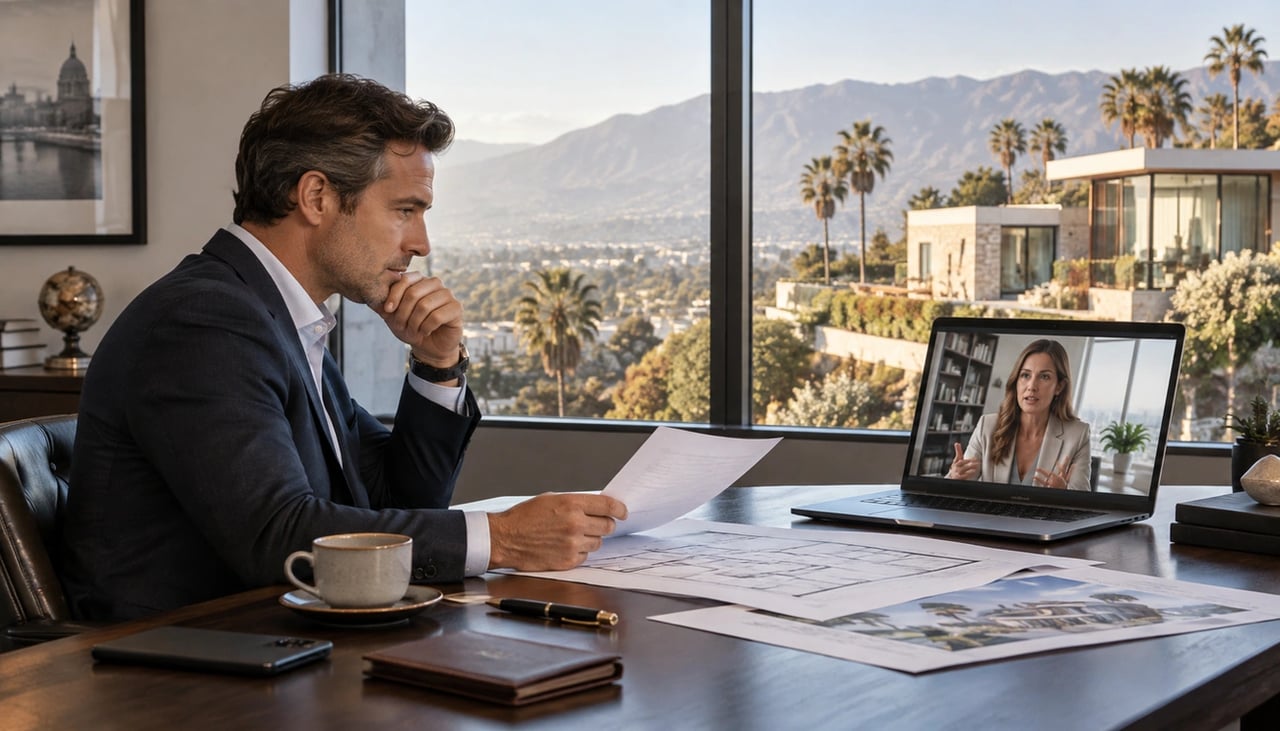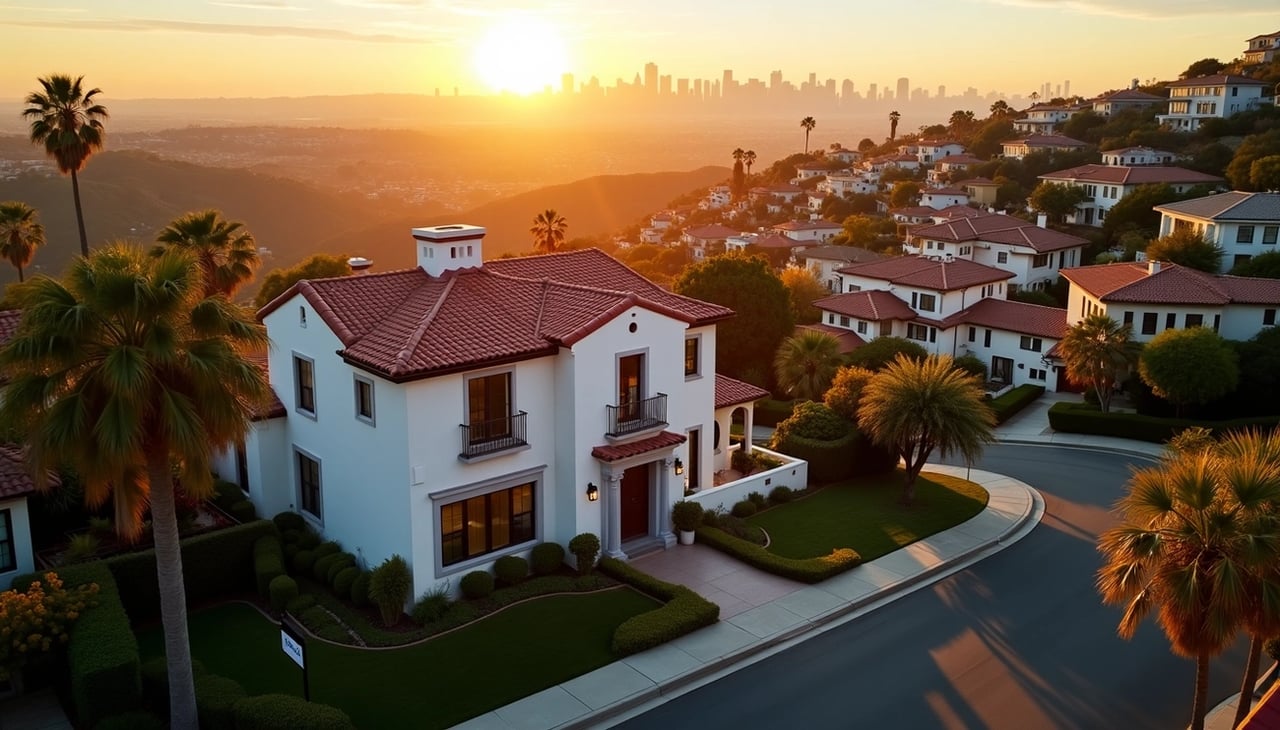
LA's housing market has slowed down considerably. Homes now take 56-80 days to sell, up from just 35 days in previous years. The median home prices range between $895,000 and $975,000, showing minimal growth with a tiny 0.1-0.6% increase year-over-year[-4].
The Los Angeles real estate market shows some interesting contrasts these days. Luxury home sales above $5 million have dropped by 70% since the mansion tax took effect in 2023. The market's transaction volume keeps shrinking too. Only 4,432 homes sold in May 2025, compared to 4,749 in May 2024. Experts predict a modest 1-4% price increase in 2026, and there's hope for some relief as mortgage rates might fall below 6% by year-end. However, many LA homeowners still don't want to sell. This piece looks at why homeowners are holding onto their properties and what it all means for buyers and sellers in LA's changing real estate market.
The Psychology Behind Holding: Why Timing Feels Risky in 2026
The Los Angeles housing market of 2026 reveals more than just numbers and statistics. Psychological factors shape how homeowners make decisions, and emotions often matter more than finances in today's market.
1. Emotional attachment to homes post-pandemic
The pandemic changed how LA homeowners feel about their properties. A recent study shows that 75% of homeowners feel more connected to their homes now than before the pandemic. People stay in their homes longer these days - about 13 years on average, up from 5-7 years in the 1980s and 2000s. The trend is even stronger among older residents. About 66% of people over 55 have deep emotional ties to their homes, and 56% have lived in the same place for more than 15 years. Real estate experts now talk about "emotional return on investment (E-ROI)" as something homeowners value just as much as financial returns.
2. Fear of market correction or missed equity
Fear drives many decisions in LA's 2026 real estate market. Buyers and sellers worry more about making mistakes than missing opportunities for profit. Many homeowners refuse to sell when they think the market is down. Their emotional connection makes them think their homes are worth more than the market suggests. The thought "What if prices go up after I sell?" stops many from taking action. This creates a standstill in the LA market - deals that make financial sense often don't happen because emotions get in the way.
3. Waiting for better conditions or clarity
Decision-making has become harder in LA's housing market. Sellers face changing interest rates, insurance issues, and new policies that make it tough to move forward. Everyone wants complete certainty before making a move, but that's rare in today's market. Real estate surveys paint a clear picture: only 31% of people feel calm during transactions, while 42% deal with stress and anxiety. This emotional rollercoaster makes owners wait for perfect conditions that might never come, which keeps inventory low in the Los Angeles real estate market.
External Pressures: Taxes, Insurance, and Policy Shifts
Market pressures and emotional factors both shape how long homeowners in Los Angeles hold onto their properties. Several structural barriers prevent transactions even when sellers want to list their properties.
1. Mansion tax and its chilling effect on luxury sales
The "Mansion Tax" (Measure ULA) has changed Los Angeles' luxury market dynamics. This tax adds a 4% fee to property sales over $5 million and 5.5% for deals above $10 million. High-value property deals dropped 30-50% after this tax came into effect. The effects reach way beyond single-family estates. Commercial properties, multifamily developments, and income-producing assets show similar declines in transactions. This drop has cut property tax reassessment opportunities and costs millions in yearly revenue.
2. Wildfire insurance crisis and underinsured properties
The Los Angeles wildfires of January 2026 left 31 people dead and destroyed 13,000 homes. This revealed a massive insurance coverage gap. Many fire victims with California FAIR Plan coverage, the state's last-resort insurer, didn't get enough money to rebuild. Major insurers left the market, which pushed FAIR Plan enrollment from 123,657 policies in 2019 to over 645,000. The FAIR Plan then asked for a 35.8% rate increase. This followed a state-approved $1 billion bailout where policyholders had to pay half the cost.
3. New zoning laws and development uncertainty
Los Angeles is updating its zoning code for the first time since 1946. The city wants to move from traditional Euclidean zoning to a hybrid model with five parts: Form, Frontage, Development Standards, Use, and Density. The CHIP Ordinance allows taller, denser multifamily buildings near transit hubs. However, it excludes single-family neighborhoods, which make up over 70% of residential land. A UCLA study shows this ordinance would only create 30% of needed housing. City officials made rebuilding easier after January's wildfires, but questions remain about how these emergency rules fit with broader zoning changes.
The Role of Mortgage Rates and Financial Lock-In

Image Source: Freddie Mac
Financial math drives today's Los Angeles housing market. This creates what economists call a "lock-in effect" that changes how people buy and sell homes.
1. Homeowners with sub-4% rates reluctant to refinance
The housing market has slowed because millions of homeowners locked in mortgage rates below 3% during 2020-2021. These homeowners would pay much more each month if they moved to a new home at current rates of 6.11%. The math makes it clear - staying put saves money. We saw this impact when first-time buyers made up just 21% of all US home purchases in 2025, the lowest number since records began in 1981.
2. Cost of upgrading vs. staying put
The numbers tell a clear story. A single percentage point increase in mortgage rates cuts buying power by about 10%. Homeowners who got a $500,000 mortgage at 3% would lose $150,000 in buying power at today's 6% rates. A modest 0.5% rate bump adds $133 monthly to a $400,000 home loan, which adds up to thousands over time. Many homeowners would pay 50% more for a home at the same price, thanks to higher interest rates.
3. Limited inventory of move-up homes
The market starts to move as rates hold steady near 6%. About 20% of current mortgages have rates above 6%, so these owners might think over selling soon. A one-point drop in rates could help about 5.5 million more households nationwide qualify to buy homes.
How the Market Is Adapting to Fewer Listings
Luxury real estate in Los Angeles thrives on private conversations, perfect timing, and exclusive access. The biggest deals happen behind closed doors, where trust and discretion matter as much as the property's value. The housing market in Los Angeles has adapted remarkably well to extended holding patterns.
1. Rise of off-market and private sales
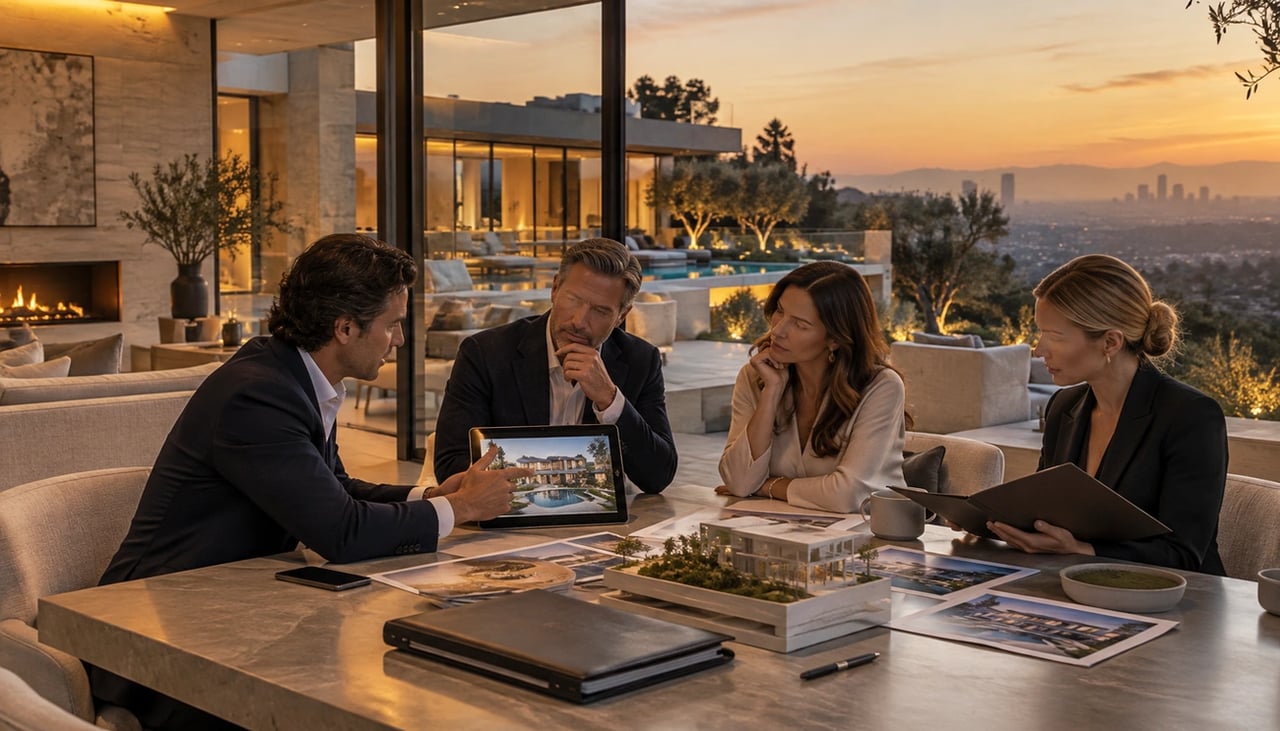
Off-market real estate deals have become the go-to choice for wealthy buyers who value their privacy. Properties worth over $20 million rarely appear on public listings because sellers prefer discretion. Westside luxury real estate owners use private listings to test the market without making a full commitment.
2. Increased use of creative financing tools
Creative financing has stepped up as traditional lending gets tighter. Non-QM loans let borrowers qualify through alternative documentation instead of standard income proof. DSCR loans are a great way to get approved based on rental income alone, not personal finances.
3. More buyers learning about emerging areas
Buyers now look at previously overlooked neighborhoods that offer better value as inventory remains scarce.
4. Agents focusing on long-term relationship building
Top agents build lifelong connections with clients, and up to 80% of business comes from referrals and repeat clients. The focus has moved from quick sales to lasting relationships.
Your perfect entertainment space awaits in Los Angeles. Let me help you find a home that matches your lifestyle and hosting dreams. Christina Pope  310-404-9931
  [email protected]
Conclusion
LA's housing market in 2026 shows a complex picture that psychological, financial, and regulatory forces shape. People's emotional bonds with their homes have grown substantially since the pandemic, leading to what experts now call "emotional return on investment." People hesitate to sell because they fear market corrections and potential losses. The mansion tax keeps luxury sales down, while the wildfire insurance crisis makes many properties risky and hard to insure.
Money math around mortgage rates creates the biggest barrier. Homeowners who locked in sub-4% mortgages would pay 50% more for similar homes due to higher rates. Their unwillingness to sell has reshaped market patterns, and these changes will likely stay through 2026 and beyond.
The market keeps moving forward in spite of these limits. Luxury sellers prefer off-market deals where privacy matters most. New financing options help bridge the affordability gap as buyers look at neighborhoods they once ignored. Smart agents build relationships instead of chasing quick sales.
Success in this market comes to those who stay patient, think creatively, and know the inside story. Though many buyers and sellers face challenges, opportunities exist for those who grasp the subtle details. Your perfect entertainment space awaits if you love hosting guests. I'm here to help you find spaces built for upscale living and easy entertaining. Christina Pope 310-404-9931 [email protected]
Without doubt, LA's real estate scene will keep changing throughout 2026. People who want to succeed in this complex market must understand both the clear statistics and hidden reasons why owners keep their properties longer than ever.
Key Takeaways
Los Angeles homeowners are holding properties longer in 2026 due to a perfect storm of psychological, financial, and regulatory factors that have fundamentally reshaped the housing market dynamics.
• Mortgage rate lock-in effect dominates decisions: Homeowners with sub-4% rates face paying 50% more for similar homes at current 6% rates, creating a powerful financial incentive to stay put.
• Emotional attachment has deepened post-pandemic: Over 75% of homeowners report stronger connections to their homes, with average residence length now exceeding 13 years compared to 5-7 years historically.
• External pressures create transaction barriers: The mansion tax caused a 70% decline in luxury sales, while the wildfire insurance crisis leaves thousands underinsured and reluctant to sell.
• Market adapts through private channels: Off-market deals surge in popularity, creative financing tools emerge, and agents focus on long-term relationships rather than quick transactions.
• Fear of market timing paralyzes sellers: Loss aversion and uncertainty about future conditions create analysis paralysis, with only 31% of market participants feeling calm during transactions.
This holding pattern reflects a market where emotional and financial logic align to favor staying put, forcing both buyers and sellers to develop new strategies for navigating LA's evolving real estate landscape.
FAQs
Q1. What is the outlook for the Los Angeles housing market in 2026? The Los Angeles housing market in 2026 is expected to see modest growth, with a slight increase in home sales and median prices. However, the market is characterized by extended holding periods, with homeowners reluctant to sell due to various psychological, financial, and regulatory factors.
Q2. Why are Los Angeles homeowners holding onto their properties longer? Homeowners are holding onto their properties longer due to a combination of factors, including emotional attachment to homes post-pandemic, fear of market corrections, and the financial disincentive of giving up low mortgage rates. Additionally, external pressures like new tax policies and insurance challenges are making some hesitant to sell.
Q3. How are mortgage rates affecting the Los Angeles real estate market? Mortgage rates are playing a crucial role in the market. Homeowners with sub-4% mortgages are reluctant to sell and take on higher-rate loans, creating a "lock-in" effect. This has led to reduced inventory and is influencing both buying and selling decisions across the market.
Q4. What types of properties are selling quickly in Los Angeles? Turnkey properties that are priced correctly are still moving quickly in the market. Homes that are in good condition, well-located, and realistically priced tend to sell faster, while overpriced or properties in need of significant work are staying on the market longer.
Q5. How is the luxury real estate market in Los Angeles performing? The luxury real estate market in Los Angeles, particularly for properties over $10 million, is showing strong activity despite challenges in other segments. This sector operates somewhat independently from the broader market trends, with high-end buyers still actively purchasing premium properties.