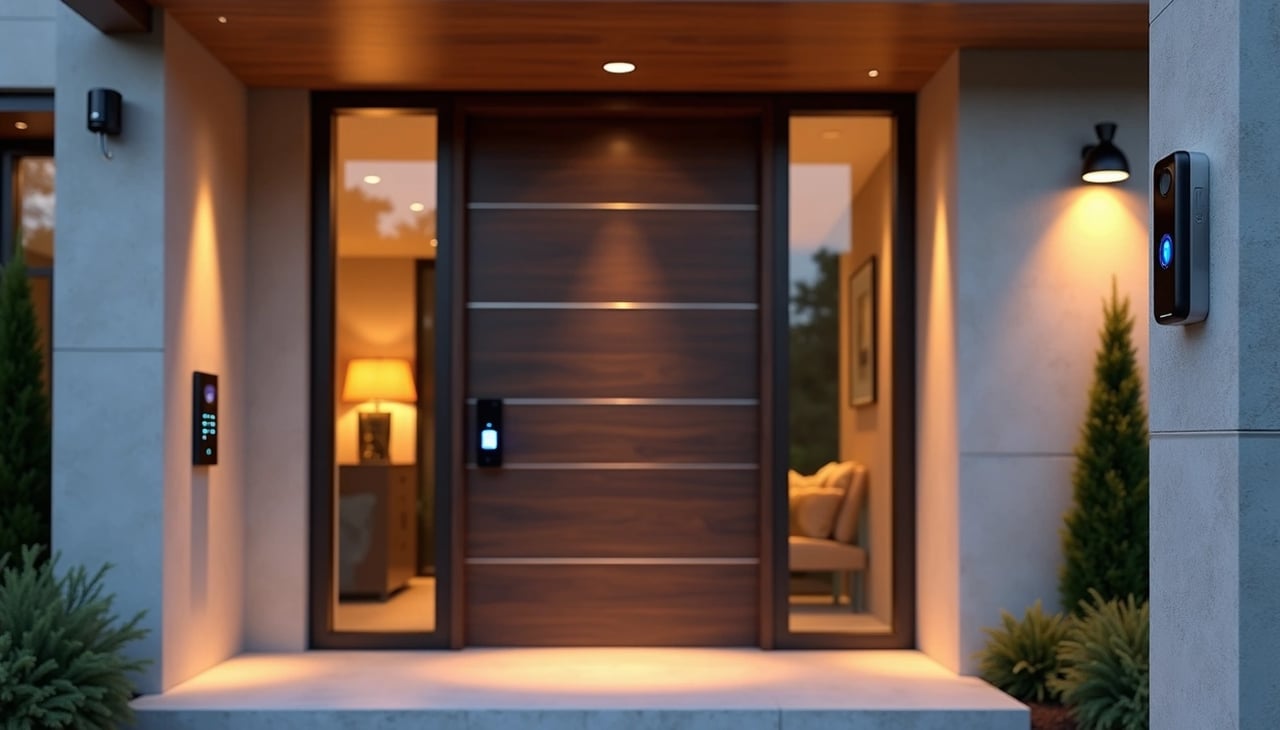
The modern tech home relies on much more than traditional security systems to protect high-value assets and ensure privacy. Luxury properties today need intelligent protection that integrates naturally with daily life and offers homeowners control with peace of mind. Modern security includes advanced features such as biometric access control, high-resolution surveillance cameras, smart locks and AI-powered monitoring systems that provide immediate alerts with protection around the clock. These luxury smart home devices work together as part of a detailed luxury home automation ecosystem. Motion sensors, facial recognition technology and integrated monitoring can connect directly with emergency services[-4]. This piece explores the smart home features every luxury homeowner should think over when building or upgrading their modern house technology infrastructure.
The Evolution of Smart Security in Modern Luxury Homes
From Simple Alarms to Intelligent Protection Systems
Home security systems trace their origins to the 1800s when mechanical alarms and bells provided the first line of defense. These rudimentary devices relied on physical components like tripwires that activated loud bells to scare off intruders. Electronic alarms emerged as the next major advancement and replaced mechanical alerts with motion detectors and door sensors that enabled faster threat responses.
Marie Van Brittan Brown developed the first modern home security system in 1966 while working as a nurse in Jamaica, Queens. Serious crimes in Queens jumped nearly 32 percent from 1960 to 1965, and police response times were slow. She conceived a device affixed to the front door featuring four peepholes with a motorized camera that could view visitors of different heights. The camera connected to an interior television monitor, while a microphone and speaker allowed occupants to question visitors. An alarm could alert police via radio. Her invention, cited in 35 U.S. patents, laid the foundation for closed-circuit television in residential security over 50 years ago.
Hardwired systems dominated for decades until wireless technology eliminated the vulnerability of wire cutters disabling whole networks. Wi-Fi and cellular signals now transmit data and enable live streaming video feeds with complete automation. The home security market grew into a USD 4.80 billion business in North America and is expected to triple by 2024. Global projections estimate the market will reach USD 153.00 billion by 2030.
Why Luxury Home Automation Demands Advanced Security
High-value properties face targeted burglaries, privacy breaches and sophisticated cyber threats that standard systems don't deal very well with. Criminals view luxury estates as attractive targets. Many upscale properties require layered security strategies beyond simple alarm panels.
Connected smart home devices create new vulnerabilities. Cybercriminals can hack cameras, unlock smart doors, access personal data and control devices remotely. Luxury homeowners need professional cybersecurity solutions with secured Wi-Fi networks that have firewalls, encrypted access control systems and multi-factor authentication.
Current Security Technology Standards
AI-powered surveillance systems with facial recognition, license plate detection and night vision now serve as baseline requirements. These systems monitor vulnerable areas and send alerts for suspicious activity. They integrate with mobile apps for remote access. AI distinguishes between normal activity and genuine threats and reduces false alarms while enabling informed decision making.
Biometric access control using fingerprint scanners and facial recognition ensures only authorized personnel enter sensitive areas. Drones patrol large estates and provide 360-degree visibility with thermal cameras and infrared technology for nighttime detection. Wi-Fi sensing technology detects movement by monitoring Wi-Fi waves and essentially sees through walls without blind spots.
Core Smart Security Components Every Luxury Home Needs
Multi-Layered Access Control Systems
Biometric authentication is the foundation of luxury property access management. Fingerprint scanners, iris recognition and facial recognition technology eliminate vulnerabilities that come with physical keys or stolen access cards. Iris recognition readers protect wine cellars, gun rooms and safe rooms in high-end residences. Military facilities once had exclusive access to this technology. These systems cost between USD 1,000 and USD 2,000 per reader. Facial recognition integrates with smart locks and disarms systems while unlocking doors for regular guests.
AI-Powered Surveillance and Monitoring
AI security cameras analyze video footage live and detect potential threats like unauthorized entry or suspicious behavior. These systems separate humans, vehicles and other objects to reduce false alarms. License plate recognition, intrusion detection and behavior analysis that recognizes loitering or unusual movements are key capabilities. The systems also monitor crowd density and detect environmental hazards like smoke or fire. Traditional systems exceed 97% false alarm rates, while AI detection reduces unnecessary alerts by a lot.
Live Threat Detection and Alerts
Smart notification systems deliver instant alerts through text, email, app notifications or phone calls. Context-aware alerts distinguish normal activity from genuine threats. AI systems trigger automatic responses like door locks, deterrence talkdowns and lighting activation before incidents escalate.
Integrated Door and Window Sensors
Door and window sensors create security perimeters around properties. The Aqara sensor maintains 99.5% accuracy over 878,364 cycles and provides battery life that exceeds two years. YoLink sensors offer a quarter-mile range. Four-sensor bundles cost USD 50 to USD 65. Most sensors mount with adhesive backing and require no drilling or complex wiring.
Professional Monitoring vs. Self-Managed Systems
Professional monitoring centers respond within 10 seconds of alarm activation. They dispatch emergency services automatically. Monthly costs range from USD 25 to USD 80. Self-monitored systems eliminate monthly fees but require homeowners to verify alerts and contact authorities personally. This creates delays when homeowners are unavailable.
Backup Power and Failsafe Mechanisms
UPS systems provide immediate power switching within 4 to 10 milliseconds during outages. The CyberPower LE1000DG keeps Wi-Fi networks running for three hours or powers home-office setups for 12 minutes under 300W loads. Fail-secure locks remain locked during power outages and protect sensitive areas, while fail-safe locks unlock automatically for emergency exits.
Customizing Modern Smart Home Security for Your Lifestyle
Lifestyle needs shape security requirements differently for each homeowner. The modern smart home adapts protection strategies to match travel patterns, asset portfolios, privacy needs, and property scale.
Security Solutions for Frequent Travelers
Automated lighting schedules create the illusion of occupancy while owners travel. Smart plugs control lamps and televisions on randomized timers that mimic natural routines. Smartphone apps make up-to-the-minute property checks possible from anywhere in the world. Professional monitoring services dispatch emergency responders when alarms trigger during extended absences. Smart locks allow trusted neighbors or service providers temporary access without physical keys. Motion-activated cameras detect unusual activity and send instant alerts. Pause mail delivery through USPS Hold Mail service and arrange package collection to eliminate visible vacancy indicators.
Protecting Art Collections and Valuables
Museum-grade protection systems use wireless RFID sensors that monitor artworks continuously, even when traditional security systems are disabled. Protection zones trigger video-verified alerts when visitors approach too closely and create incident recordings with before, during, and after footage. These systems detect 75 times more touches than guards alone and prevent over 92% of object touches. Invisible sensors hide above ceilings, below floors, or within furniture with battery life spanning 4 to 11 years. Advanced systems provide heat maps that show violation clusters across floor plans.
Privacy Considerations for High-Profile Residents
High-profile individuals just need discretion-focused security that operates invisibly. Fingerprint identification systems and 24/7 surveillance protect residences without drawing attention. Non-disclosure agreements and confidentiality protocols prevent security staff from revealing sensitive information. Legal structures like trusts and LLCs guard identities when purchasing properties. Encrypted communication platforms secure sensitive conversations. Technical surveillance counter-measures detect eavesdropping attempts. The right home makes all the difference if you love to entertain. I'd be delighted to help you find spaces designed for elevated living and effortless hosting if you're thinking about a purchase in the near future or beginning your search. Christina Pope  310-404-9931
  [email protected]
Scaling Security for Estate Properties
Large estates just need centralized management platforms that control cameras, access points, and alarms through unified interfaces across multiple structures. Standardized hardware configurations simplify maintenance and updates across properties. Perimeter security layers include fencing, motion sensors, strategic lighting, and video surveillance that covers entry points. Cloud-enabled systems provide up-to-the-minute visibility into all locations at once and benefit multi-site operations. Customized security plans address property-specific vulnerabilities and neighborhood crime trends rather than generic solutions.
Future-Proofing Your Luxury Smart Home Devices and Security Infrastructure
Investment decisions for the modern tech home extend beyond immediate security needs. The smartest approach prioritizes systems designed to develop rather than require replacement within five years.
Adaptable Technology Platforms
Modern control panels function as expandable platforms instead of static installations. These systems manage both wired and wireless devices, support new sensor types as they become available, and scale from simple protection to advanced multi-layered security. Wireless devices install without rewiring and extend protection into areas never considered during original installation. This approach reduces electronic waste and installation disruption while it extends equipment lifespan.
Integration with Emerging Security Innovations
Matter protocol certification ensures devices remain compatible whatever platform development occurs. This single standard guarantees investments stay functional as technology landscapes change. Cloud-based management enables oversight across multiple properties from centralized platforms. Organizations pursue cloud adoption at 94% rates for remote viewing and adjustment capabilities.
Maintaining System Updates and Cybersecurity
Firmware updates address security vulnerabilities that cybercriminals exploit. Over 1.5 billion cyber attacks targeted smart devices worldwide in the first half of 2021. Protections include WPA3 encryption for Wi-Fi networks and two-factor authentication. Network segmentation separates smart devices from computers that store sensitive data.
Working with Trusted Technology Partners
Professional installation ensures clean configurations without exposed wiring or security shortcuts. Expert teams provide ongoing support, system upgrades, and future expansions as needs develop. Luxury real estate in Los Angeles operates through private conversations where discretion carries as much weight as value. Christina Pope, Sotheby's International Realty, EliteResidenceInternational.com.
Conclusion
Smart security systems protect high-value properties through layered defense that evolves with emerging threats. The right technology partner will give a system that remains current and secure while combining smoothly with daily life. The right home makes all the difference for those who love to entertain. Christina Pope helps discerning buyers find spaces designed for elevated living and effortless hosting—where privacy and modern protection meet. Christina Pope, Sotheby's International Realty, EliteResidenceInternational.com. 310-404-9931 [email protected]
Key Takeaways
Modern luxury homes require sophisticated security systems that go far beyond traditional alarms to protect high-value assets and ensure privacy in an increasingly connected world.
• Layer multiple security technologies: Combine biometric access control, AI-powered surveillance, and real-time threat detection for comprehensive protection against sophisticated threats.
• Choose adaptable platforms over static systems: Invest in wireless, expandable security infrastructure that can evolve with emerging technologies and scale across properties.
• Customize security to match your lifestyle: Frequent travelers need automated occupancy simulation, while art collectors require museum-grade RFID monitoring and protection zones.
• Prioritize cybersecurity and professional monitoring: Use WPA3 encryption, unique passwords, and professional monitoring services to prevent the 1.5 billion annual cyberattacks targeting smart devices.
• Future-proof with Matter protocol certification: Ensure long-term compatibility and avoid costly replacements by selecting devices that meet universal smart home standards.
The most effective luxury security systems integrate seamlessly with daily routines while providing invisible, intelligent protection that adapts to both current needs and future innovations.
FAQs
Q1. What are the main challenges homeowners face with smart home security systems? Smart home security systems can experience connectivity issues requiring stable internet access, device compatibility problems when integrating different brands, privacy and security vulnerabilities to cyberattacks, unreliable voice control functionality, slow response times during critical moments, and occasional device failures that compromise protection.
Q2. What basic security measures do experts recommend for protecting luxury homes? Security experts recommend always locking all doors and windows even during brief absences, securing side gates that provide backyard access, installing proper locks on every entry point, and maintaining these security practices consistently. These fundamental steps form the foundation of any comprehensive home protection strategy.
Q3. Are smart home security investments financially worthwhile for luxury homeowners? Smart home security systems offer significant value through energy efficiency features, automated temperature controls that reduce utility costs, scheduled lighting and appliance management, and most importantly, comprehensive protection for high-value assets. The combination of cost savings and enhanced security makes these systems a worthwhile investment for luxury properties.
Q4. How do AI-powered security cameras reduce false alarms compared to traditional systems? AI-powered cameras analyze video footage in real-time to distinguish between humans, vehicles, and other objects, dramatically reducing false alarms. While traditional systems exceed 97% false alarm rates, AI detection technology recognizes genuine threats like unauthorized entry or suspicious behavior while filtering out harmless activity like pets or passing cars.
Q5. What cybersecurity measures are essential for protecting smart home devices? Essential cybersecurity protections include using WPA3 encryption for Wi-Fi networks, creating unique passwords for each device, enabling two-factor authentication, keeping firmware updated to address vulnerabilities, and segmenting networks to separate smart devices from computers containing sensitive data. These measures defend against the billions of annual cyberattacks targeting connected home systems.