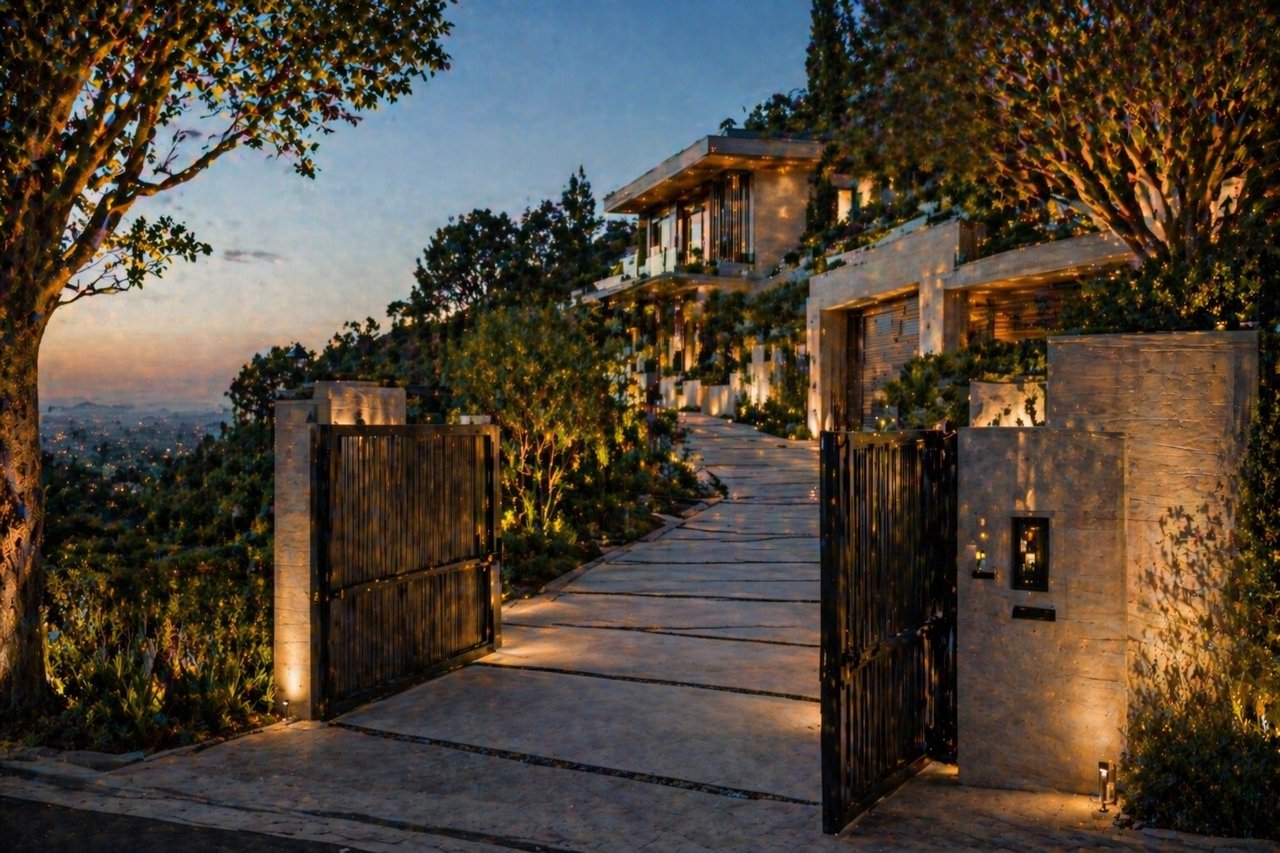
Luxury real estate in affluent neighborhoods in Los Angeles operates beyond public listings and headlines. The most important transactions unfold through private channels where discretion and strategic timing matter as much as property value. Homes in Beverly Hills command prices ranging from $5 million to over $100 million, with median values exceeding $10 million and appreciation rates between 8-10% each year. Hidden Hills maintains median sale prices around $8 million, with luxury estates surpassing $15 million. Security infrastructure has become a defining feature at these price points. Buyers in the most expensive neighborhoods in Los Angeles now expect detailed protection systems that integrate physical barriers, surveillance technology and smart home automation with community-level coordination.
Physical Security Infrastructure in Rich Neighborhoods in Los Angeles
Physical barriers are the foundations of security architecture in wealthy neighborhoods in Los Angeles. Protection begins before threats reach surveillance range. The infrastructure operates on multiple detection layers. Each addresses specific vulnerabilities that standard residential systems overlook.
Reinforced Entry Points and Safe Rooms
Ballistic-resistant doors and impact-resistant glazing anchor perimeter defense in most expensive neighborhoods in Los angeles. These entry points withstand forced entry attempts through construction methods that prioritize strength and discretion. Secure panic rooms engineered to resist intrusion attempts extend this protection inward.
Safe rooms built into luxury real estate los angeles california properties require steel-reinforced concrete or high-strength steel panels for wall, ceiling and floor construction. These materials provide protection from extreme weather conditions and break-in attempts. The walls maintain sufficient thickness to resist penetrating debris and wind pressure.
Modern safe room design integrates spaces into daily living rather than creating isolated bunkers. Wine cellars with artisan stonework and LED-lit racks double as fortified spaces resistant to fires and ballistics. Home offices feature biometric access integration capabilities and acoustically insulated walls for privacy while functioning as secure retreats. Wellness suites incorporate climate control and spa-style finishes over reinforced concrete and bulletproof walls.
Entry systems employ digital or biometric locks with multi-point locking mechanisms. Heavy-duty doors with steel frames eliminate windows to maintain security and protection. Remote communication systems connect to generators or battery packs and allow contact with emergency services during crises.
Pressure-Sensitive Flooring Systems
Pressure mat sensors installed in hallways, near safes or at entry points operate through normally open contacts that close when pressure activates them. The contact reopens as weight lifts from the mat surface.
Wireless pressure mat models embedded with transmitters detect intrusion into specific areas and signal wireless receivers to activate alarm panels. Each zone accommodates up to ten wireless mats. Systems support configurations from one to forty zones. Mats activate at either 25 lb pressure for maximum sensitivity or 60 lb pressure for pet-resistant applications.
Glass Break Detection
Glass break sensors monitor audio frequencies to recognize the distinct sound pattern of shattering glass. Acoustic detectors mounted on ceilings or walls cover multiple windows within their range and eliminate the need for individual sensors on each pane.
Active glass break detectors use transmitters that vibrate window panes paired with receivers evaluating these vibrations. Damage to glass changes transmission between elements and triggers alarms. Passive detectors register vibrations characteristic of breaking glass. Acoustic versions recognize sound waves from shattering and allow single sensors to monitor conservatories or window fronts within hearing range.
Detection systems identify the specific frequency glass breaking produces through microphones that analyze sound waves for distinct characteristics. Sensitivity adjustments minimize false alarms from high-frequency sounds like clinking dishes or slamming doors.
Panic Button Integration
Wearable panic buttons for buy a luxury house in los angeles properties use two-button activation requiring simultaneous press and hold of both buttons to get police, fire or medical assistance. The design features tactile, recessed buttons that minimize false alarms. Wearers carry devices on belt clips, lanyards or wristbands.
Professional monitoring centers operate around the clock and receive signals the moment buttons activate. The wireless systems integrate with detailed security platforms and trigger responses during emergencies. Silent activation options notify emergency services without alerting intruders. Audible versions sound alarms to alert everyone in the vicinity.
Surveillance and Monitoring Systems Luxury Real Estate Los Angeles California Demands
Visual monitoring systems in luxury real estate in Los angeles ca extend surveillance capabilities way beyond standard residential installations. The technology deployed across affluent neighborhoods in Los angeles prioritizes image clarity, complete coverage and intelligent threat assessment.
4K Resolution Camera Coverage
4K security cameras capture detail through over eight million pixels and deliver images four times sharper than 1080p HD cameras. Property owners can read labels on packages delivered to homes and identify faces or license plates with precision. The PRO-4KMSB model provides infrared-powered night vision capable of seeing up to 150 feet in total darkness.
Dual-lens systems stitch two 4K video feeds together. This creates panoramic 180-degree coverage from a single mounting point. High dynamic range technology balances lighting across frames and eliminates excessive glare and shadows that obscure details. Color night vision maintains image quality during evening hours without sacrificing clarity.
Cameras covering wealthy neighborhoods in Los Angeles can monitor wide areas while capturing detailed footage of specific zones through pan, tilt and zoom functions. Some configurations support viewing angles stretching up to 350 degrees through PTZ action. 4K footage demands substantial storage, requiring microSD cards up to 256 GB for local recording or subscription-based cloud services.
Night Vision and Thermal Imaging
Thermal security cameras detect infrared radiation emitted by objects and convert heat signatures into visible images without relying on ambient light conditions. These specialized devices distinguish between warm objects like people or animals and cooler surroundings through temperature variation display.
The technology operates in complete darkness, fog, smoke or dust where traditional visible-light cameras fail. Thermal imaging identifies potential threats even when obscured by obstacles or camouflage, making the systems especially valuable for perimeter monitoring in rich neighborhoods in los angeles. Advanced optics enable long-range surveillance while maintaining safe monitoring distances.
Thermal sensors capture infrared radiation and produce images where different temperatures appear as various colors through heat signature detection. Hotter objects display as brighter elements while cooler ones show as darker shades.
Motion Detection Zones
Customizable motion zones help detect activity in priority areas and reduce unwanted alerts from passing vehicles or environmental movement. Ring devices support up to three motion zones per camera with a standard detection range of 9 meters, though larger objects like vehicles trigger alerts at greater distances.
AI-powered detection identifies people, vehicles and animals to minimize false alerts. Battery-powered systems require Advanced Motion Detection activation to enable zone functionality. Users adjust zone boundaries by dragging boundary points to exclude high-traffic areas like busy streets or sections behind locked gates.
Cloud Storage with Redundancy
Modern surveillance platforms replicate data across multiple geographically dispersed data centers and reduce data loss risks from hardware failures or natural disasters. Enterprise-grade security features include end-to-end encryption, role-based access controls and expandable application keys. Cloud infrastructure supports deployments ranging from small properties to sprawling estates without capacity constraints as platform demands grow.
Local storage provides subscription-free recording on physical devices like NVRs or microSD cards and offers direct control over footage. Hybrid approaches store critical footage locally while uploading to cloud backups at the same time, combining privacy benefits with offsite redundancy.
Smart Home Security Integration Across Luxury Real Estate in Los Angeles CA
Control systems in luxury real estate in Los Angeles can unite security infrastructure with daily living environments through platforms that respond to voice commands, environmental triggers, and behavioral patterns. High-end systems merge with whole-home automation controllers like Savant or Control4, Lutron for lighting and shades, and voice assistants including Alexa or Google. Single applications consolidate management.
Voice-Activated Security Controls
Voice-activated platforms allow property owners to manage security through natural language commands processed by Amazon Alexa, Google Assistant, or Apple HomeKit. A command such as "Hey Siri, activate Security Scene" triggers multiple actions at once. Doors lock, alarm systems arm, and specific lighting configurations adjust.
Customizable voice commands give you control sequences. Owners can say "turn on the living room lights and adjust the volume to 50%" or "activate the goodnight scene" to start timed events that dim lights, secure locks, and turn on security systems while allowing families time to settle. Those who love to entertain know the right home makes all the difference. If you're thinking about a purchase in the near future or beginning your search, Christina Pope at 310-404-9931 can help you find spaces designed for elevated living and effortless hosting in affluent neighborhoods in los angeles.
Automated Threat Response Systems
AI analytics distinguish between routine movements and actual threats. The system identifies the difference between pets and intruders and reduces false alarms. Security systems detect breaches and automated responses activate exterior and interior lighting, turn on televisions or sound systems connected to smart outlets, and alert occupants to seek safety.
Smart cameras coordinate with security platforms to begin recording when motion sensors trigger or alarm signals indicate intrusions. Insurance companies recognize this improved protection and offer discounts up to 20% for homes equipped with monitored security systems.
Integration with Climate and Lighting
Smart thermostats connect to security platforms and lower temperatures when systems activate for the night. They send alerts when readings drop below or rise above designated thresholds. This integration extends to garage controllers that verify closure when evening security protocols turn on.
Lighting systems in wealthy neighborhoods in Los Angeles program responses based on security events. Motion-activated lights illuminate entry points and driveways when sensors detect movement, while scheduled patterns create occupancy illusions during absences.
Energy-Efficient Security Solutions
Automated systems reduce consumption by deactivating lights in unoccupied areas and adjusting climate controls based on actual room usage. LED technology paired with motion sensors ensures illumination occurs only when necessary and aligns security requirements with sustainability objectives. Smart platforms track energy usage patterns and identify appliances with excessive consumption.
Community-Level Security in Most Affluent Neighborhoods in Los Angeles
Collective protection in most affluent neighborhoods in Los Angeles extends individual property security through coordinated systems where whole communities function as unified defense networks. Shared infrastructure multiplies detection capabilities and distributes operational costs throughout resident populations.
24/7 Manned Guard Posts
Human guards stationed at neighborhood entrances screen every person attempting entry through ID verification and license plate checks against resident records. Officers monitor all entrance and exit points through CCTV systems from single stations and maintain detailed vehicle and visitor logs. Guards recognize residents over time and flag unfamiliar individuals for additional verification. Security personnel connect directly with 24/7 command centers and coordinate with local law enforcement to address potential threats.
Neighborhood-Wide Communication Systems
Cloud-based infrastructure connects surveillance equipment throughout residential areas, schools, shopping centers and law enforcement agencies. These partnerships overcome limited police visibility into specific community zones by providing shared camera access throughout neighborhoods. Live command centers dispatch officers faster to changing situations and maintain public security without intrusive physical presence.
Coordinated Response Protocols
Two-way intelligence sharing between communities and federal, state and local law enforcement makes threat identification faster. Constant communication with police departments before crises ensures responders arrive prepared to act immediately rather than familiarizing themselves with facilities during emergencies.
Vehicle Recognition Technology
Passive UHF RFID tags allow residents contactless access from long distances without stopping vehicles and maintain optimal traffic flow during peak hours. ANPR and ALPR systems scan license plates automatically, opening gates for authorized vehicles and logging visitor entries with time-stamped records. Systems detect unauthorized vehicles instantly and alert security personnel to suspicious activity.
Visitor Management Systems
Digital platforms replace manual gate logs through resident-controlled pre-registration systems. Guests receive QR code passes or temporary PIN codes for specified durations and streamline entry without gatehouse delays. Cloud-based software maintains audit trails of all access events and supports security investigations when incidents occur.
Emergency Evacuation Planning
Multiple exit routes along roads and highways prevent overcrowding during mandatory evacuations. Plans identify shelter assembly points with cellular service and unobstructed road access outside danger zones. Coordination structures establish command chains and communication mechanisms for multi-jurisdictional aid before events occur.
Future Security Innovations Wealthy Neighborhoods in Los Angeles Are Adopting
Emerging technologies reshape protection standards in wealthy Los Angeles neighborhoods as property owners seek capabilities beyond traditional surveillance and monitoring frameworks. These innovations address detection gaps and anticipate threats before they materialize.
Drone Surveillance Technology
Autonomous drone systems launch within seconds through motion sensor triggers, randomized schedules, or manual commands. The platforms travel to destinations while avoiding obstacles. They operate in 99% of weather conditions including rain, snow, and sustained winds up to 40 mph. Advanced AI detection identifies people, vehicles, and animals during flights. The systems track movement and follow targets in real-time. Thermal and low-light cameras enable nighttime patrols on large properties. Drones return to charging stations on their own once missions complete, preparing for immediate redeployment.
Predictive Security Analytics
AI-powered threat detection reduces false alarm rates by 90% compared to traditional systems. These platforms alert property owners within 2-5 seconds when suspicious activity registers. Machine learning algorithms analyze behavior patterns and historical data to anticipate security risks. They identify break-in patterns and send warnings about potential threats at specific times.
Cybersecurity for Connected Homes
Smart home devices faced over 1.5 billion cyberattacks worldwide during the first half of 2021. Protection requires WPA2 or WPA3 encryption for network security, two-factor authentication when available, and separate network segments isolating smart devices from primary systems. Regular firmware updates address vulnerabilities as manufacturers release security patches.
Autonomous Security Patrols
Security robots patrol properties without interruption. They feature facial recognition capabilities extending up to 50 meters. These platforms coordinate in fleets on large estates and recharge at docking stations between patrol cycles. The systems integrate with existing security infrastructure through standard protocols, operating in temperatures ranging from -20°C to +55°C.
Conclusion
Security infrastructure has evolved from optional amenity to essential requirement in luxury properties in Los Angeles. Buyers at these price points now expect detailed protection systems that span physical barriers, surveillance technology and smart automation. The most sophisticated estates integrate these elements and do not compromise esthetic appeal or daily functionality.
Drone patrols and predictive analytics have become standard features, and the definition of secure luxury real estate keeps advancing. Properties with layered protection systems maintain stronger market positions as long as they balance technology with livability. Those who want to purchase in the near future or begin their search can contact Christina Pope at 310-404-9931 or [email protected]. She can help find spaces designed for raised living and effortless hosting.
FAQs
Q1. What physical security features are most important in luxury Los Angeles homes? Reinforced entry points with ballistic-resistant doors and impact-resistant glazing form the foundation of physical security. Modern luxury properties also incorporate safe rooms built with steel-reinforced concrete, pressure-sensitive flooring systems that detect unauthorized entry, glass break detection sensors, and panic button integration for immediate emergency response.
Q2. How do 4K security cameras improve home surveillance compared to standard systems? 4K security cameras capture over eight million pixels, delivering images four times sharper than 1080p HD cameras. This enhanced resolution allows homeowners to read package labels, identify faces clearly, and capture license plate details with precision. Many systems also include infrared night vision capabilities extending up to 150 feet in complete darkness.
Q3. What smart home security features can be controlled by voice commands? Voice-activated platforms allow homeowners to manage security through natural language commands using Amazon Alexa, Google Assistant, or Apple HomeKit. A single voice command can simultaneously lock doors, arm alarm systems, adjust lighting configurations, and activate customized security scenes throughout the property.
Q4. How do community-level security systems work in affluent neighborhoods? Community-wide security includes 24/7 manned guard posts that screen all visitors, vehicle recognition technology using RFID tags and license plate readers, and neighborhood-wide communication systems connecting surveillance equipment across the area. These coordinated systems also feature visitor management platforms and established emergency evacuation protocols.
Q5. What emerging security technologies are luxury homeowners adopting? Autonomous drone surveillance systems that launch within seconds and patrol properties in most weather conditions are becoming increasingly popular. Other innovations include predictive security analytics using AI to reduce false alarms by 90%, enhanced cybersecurity measures for connected homes, and autonomous security robots with facial recognition capabilities extending up to 50 meters.